Power strips usually become important only after every phone, lantern, router, and charger is fighting for the same wall outlet. This APC SurgeArrest 11-Outlet Surge Protector review is really about a smaller but important outage-planning question: can one strip organize and protect the electronics you still care about when the lights go out?
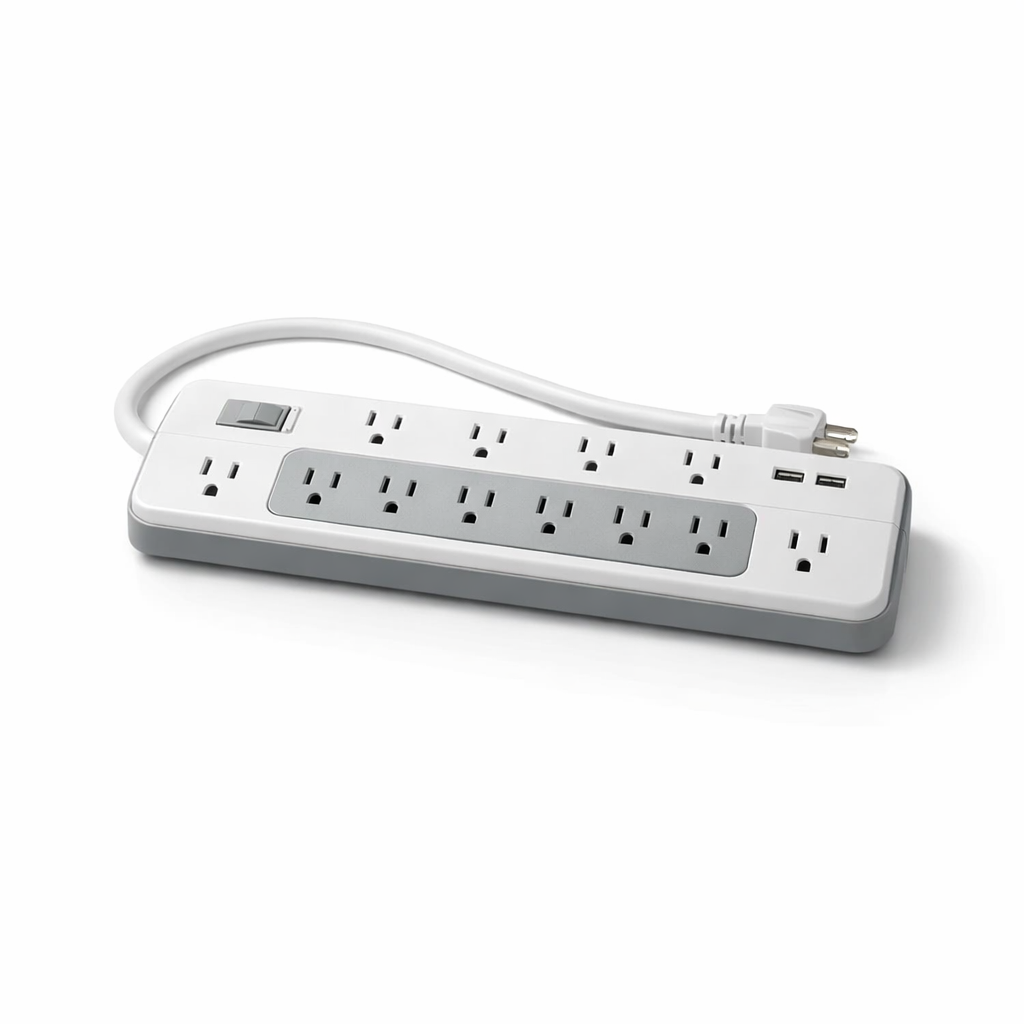
APC SurgeArrest 11-Outlet Surge Protector
A sensible choice for households that need basic surge protection for outage electronics, routers, chargers, and desk gear
Hardwired surge protection, dedicated circuits, and generator transfer connections should be carried out by a qualified electrician to meet local electrical code, manufacturer instructions, and applicable safety standards.
Quick verdict: the APC SurgeArrest 11-Outlet Surge Protector is a solid, practical accessory for everyday electronics and small outage-support setups, as long as you treat it as surge protection and outlet organization—not as backup power, overload protection for heavy appliances, or a substitute for a UPS.
Product overview
The APC SurgeArrest 11-Outlet Surge Protector is a plug-in surge protector from APC’s SurgeArrest family. It is designed for household and office electronics that need multiple AC outlets in one place, with surge protection between your devices and the wall outlet.
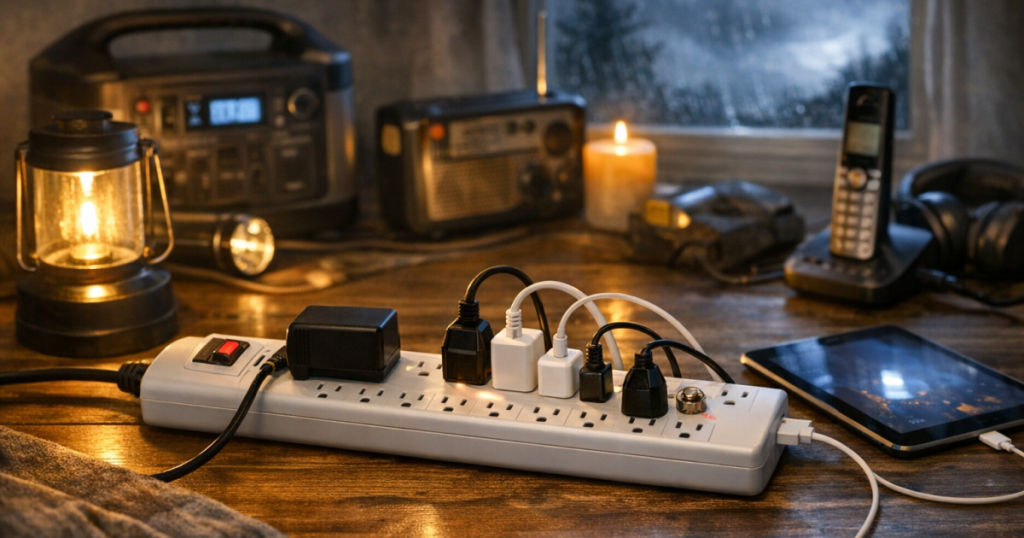
For blackout planning, that makes it useful in a very specific role. It can help keep a modem, Wi-Fi router, phone chargers, rechargeable lanterns, weather radio, and laptop charger organized on one protected strip during normal use. If the grid goes down, it can also be part of a tidy low-load setup when paired with an appropriate power source, such as a UPS or portable power station.
What it does not do is just as important. It does not store energy, run devices by itself, make a generator safe indoors, or magically raise the capacity of the circuit it is plugged into. If your outage plan includes battery stations, indoor electronics, or mixed charging gear, it is worth reading the broader portable power station safety guidance for indoor use before building a setup around any power strip.
Key specs
- Product type: plug-in surge protector / power strip.
- Brand and family: APC SurgeArrest.
- Outlet count: 11 outlets, based on the product name.
- Main role: surge protection and outlet organization for compatible household electronics.
- Backup power capability: none; it must be plugged into a live wall outlet, UPS, portable power station, or another appropriate power source.
- Details to verify before buying: exact model number, cord length, plug orientation, surge rating, indicator lights, outlet spacing, connected-equipment policy, UL listing, and whether the current retail listing matches the version you expect.
Pros and cons
Pros
- Plenty of outlets for a charging zone: 11 outlets can reduce the tangle around routers, lamps, phone chargers, battery chargers, and home-office gear.
- Useful for everyday outage readiness: keeping essential electronics on one organized strip makes it easier to move, label, test, and prioritize your backup loads.
- Recognizable surge-protector brand: APC is a familiar name in home and office power protection, which makes the product easier to compare against other strips.
- Simple, low-maintenance accessory: there is no fuel, battery chemistry, runtime estimate, or app setup to manage.
- Good fit for light electronics: it makes the most sense for modest loads such as networking gear, chargers, small lamps, and desktop accessories.
Cons
- Not backup power: it will not keep anything running during an outage unless it is connected to a suitable backup power source.
- Not for high-draw appliances: refrigerators, space heaters, microwaves, sump pumps, and window air conditioners need careful load planning and should not be casually added to a strip.
- Listing details matter: APC has sold multiple surge-protector designs over time, so buyers should confirm the exact model and current specifications.
- Surge protection is not permanent: surge protectors can wear out after significant surge events, so indicator lights and replacement guidance matter.
- Can create false confidence: more outlets do not mean more safe electrical capacity.
Performance in real use
The APC SurgeArrest 11-Outlet Surge Protector makes the most sense as a “control point” for small electronics. In a typical US household outage plan, that might mean your cable modem or fiber gateway, Wi-Fi router, phone chargers, rechargeable lantern charger, laptop charger, and a compact desk lamp. Keeping those items together helps you see what is actually essential before you start sizing a UPS, portable power station, or generator.
Ease of use is the main strength. A surge protector like this is familiar: plug it into the wall, plug compatible devices into it, and avoid overloading it. The practical advantage is not that it changes your power math, but that it gives your electronics a predictable place to live. When a storm is coming, you are not searching behind furniture for the router brick or borrowing outlets from the kitchen counter.
For internet backup, this kind of strip is most useful before the outage, when it keeps networking gear consolidated and protected. During an outage, the strip needs to be fed by something that actually provides power. That could be a UPS for short interruptions or a correctly sized portable power station for longer runtime. If your priority is staying online, pair this review with the site’s guide to keeping Wi-Fi running during a blackout, because router runtime depends on the power source, not the surge protector.
Safety and compatibility are where many households need to slow down. A surge protector should be matched to the outlet, the total load, and the devices attached. It should not be daisy-chained into another power strip or extension cord, placed where it can be covered by rugs, or used as a workaround for too few wall outlets in an overloaded room. It also should not be treated as a generator accessory unless the generator, transfer setup, cords, grounding approach, and connected loads are all appropriate for that use.
Durability is harder to judge without the exact current model and long-term use history in front of you. The sensible buying move is to inspect the listing carefully, check the warranty and connected-equipment terms directly from APC, and confirm that the unit has the safety markings and indicator behavior you expect. If the surge indicator shows protection is no longer active, replace the strip rather than continuing to rely on it.
Value depends on what problem you are solving. If you want one neat charging and electronics hub, this is a good fit. If you are trying to run a fridge, medical device, sump pump, or several rooms during a long outage, money is better spent first on a correctly sized backup power plan.
Who it’s best for / who should skip it
Best for: households that want a cleaner, safer-feeling electronics station for low-draw outage essentials. It is especially useful for renters, remote workers, and families who want phones, routers, battery chargers, and lamps in one predictable spot before storm season.
Also a good fit for: a home office where surge protection and outlet count matter more than battery backup. If you already own a UPS, the APC SurgeArrest 11-Outlet Surge Protector may still be useful elsewhere in the room for non-critical chargers and accessories.
Skip it if: you need runtime during an outage. In that case, start with a UPS, portable power station, or generator plan. Also skip it as a solution for heavy loads, heat-producing appliances, outdoor generator runs, or medical equipment planning where the power source, runtime, alarms, and backup process need to be more carefully documented.
Alternatives
If your real goal is short-term power for a router, modem, or desktop computer, a UPS is the more relevant alternative because it contains a battery. A surge protector can help organize devices, but a UPS is what bridges a short blackout or gives you time to shut down equipment properly.
If your goal is a longer outage plan, compare the strip against a portable power station or generator setup rather than another power strip. The APC unit may still be part of the electronics corner, but it should not be the centerpiece of the plan. For whole-room or multi-room backup, the main questions become watts, runtime, fuel or charging, safe placement, and what you are willing to leave off.
Things readers ask
Will the APC SurgeArrest 11-Outlet Surge Protector keep my router running in a blackout?
No. It does not have a battery. It can organize and protect the router’s plug, but runtime must come from a UPS, portable power station, or another suitable backup source.
Can I plug a refrigerator into it during an outage?
That is not the right use case. Refrigerators have startup loads and should be planned around a properly rated circuit, cord, generator, transfer setup, or power station. Do not treat a multi-outlet strip as an appliance backup solution.
Is it safe to use with a portable power station?
It can be appropriate for small electronics if the power station manufacturer allows power strips, the total load stays within limits, and the setup remains dry, ventilated, and monitored. Always follow both product manuals.
Does surge protection wear out?
Yes, surge protection can degrade after surge events. Check the unit’s indicator lights and manufacturer guidance, and replace it when protection is no longer active.
Should every blackout kit include a surge protector?
Not every kit needs one, but many households benefit from a protected charging and networking station. It is an accessory, not the backup power plan itself.
Verdict + score
The APC SurgeArrest 11-Outlet Surge Protector is a sensible, easy-to-understand upgrade for households that want one organized place for everyday electronics and outage-adjacent charging gear. Its strengths are outlet count, simplicity, and usefulness around routers, chargers, lamps, and desk equipment. Its limits are equally clear: it does not provide backup power, it is not for heavy appliances, and buyers should verify the exact current model details before relying on listing photos or older specs. For a home blackout plan, it is a strong supporting accessory rather than the main event. I’d rate it 8.0 out of 10.
Final thoughts
Overall, APC SurgeArrest 11-Outlet Surge Protector earns a score of 8.0/10. It is a strong option for readers who want the benefits discussed above, while still being worth comparing against the alternatives before buying.
APC SurgeArrest 11-Outlet Surge Protector
A sensible choice for households that need basic surge protection for outage electronics, routers, chargers, and desk gear
You might also like: Battery Types in Portable Power Stations: What Matters for Outage Backup.