When the lights blink, the first scramble is usually for phone chargers, a router plug, a lamp, and maybe a laptop. This AmazonBasics 8-Outlet Surge Protector review looks at whether a simple, budget-minded power strip deserves a place in a home blackout setup, and where its limits matter.
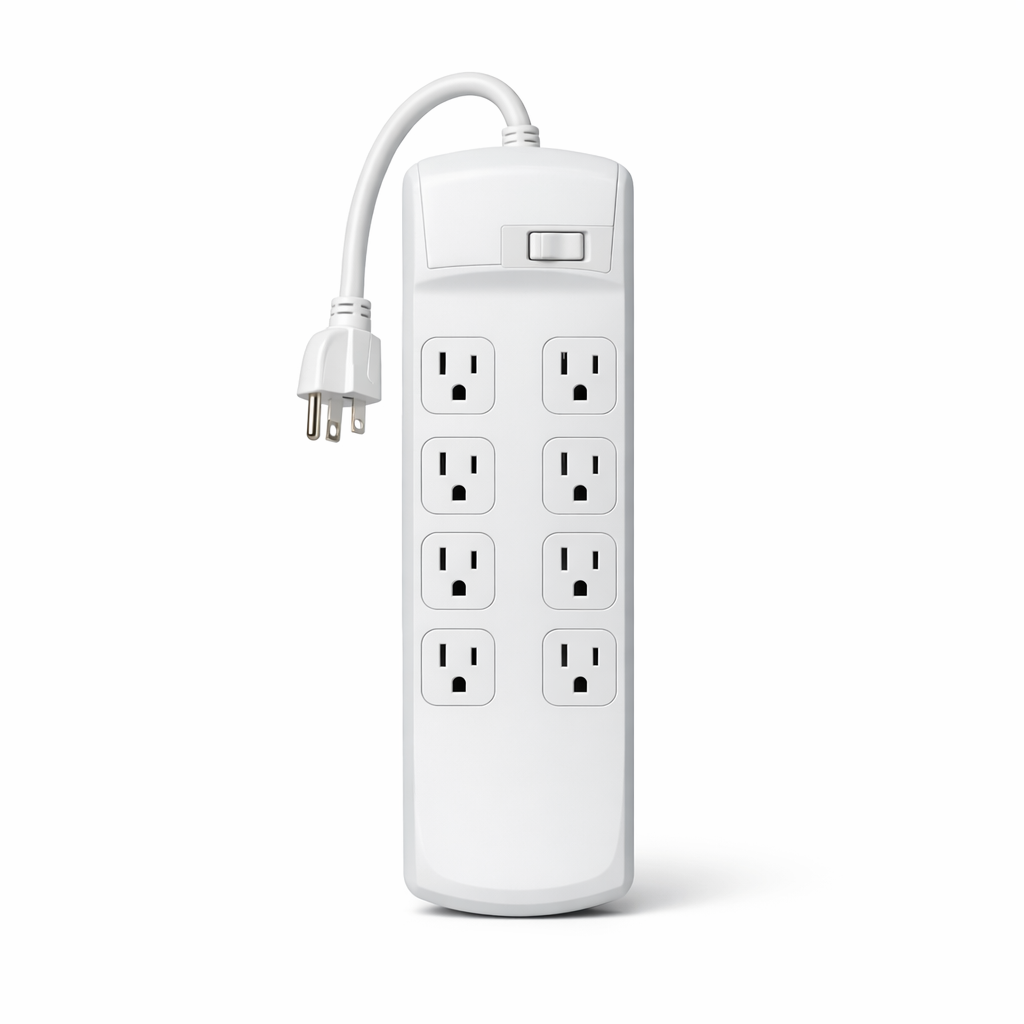
AmazonBasics 8-Outlet Surge Protector
A sensible low-cost choice for organizing small blackout electronics when you understand its limits
Hardwired transfer switches, interlock kits, and any permanent home electrical connections should be installed by a qualified electrician in compliance with local electrical codes and safety requirements.
The short version
The AmazonBasics 8-Outlet Surge Protector is best viewed as an organizing and basic surge-protection tool for everyday electronics, not as backup power. It can help keep chargers, a modem, a router, a desk lamp, or small electronics in one predictable place before and after an outage. It will not keep anything running when the grid is down, and it should not be treated as a way to expand the safe output of a UPS, portable power station, or generator.
For households building a calm blackout routine, the appeal is simple: one strip, eight outlets, and a familiar plug-in format. The caution is just as important: verify the exact listing, label ratings, cord length, safety certification, and surge rating before buying, because product listings and versions can vary.
Product overview
The AmazonBasics 8-Outlet Surge Protector is an indoor plug-in surge protector for standard household electronics. In a blackout-preparedness kit, it sits in the “keep things organized and protected” category rather than the “create power” category. That distinction matters. A surge protector may help reduce risk from certain voltage spikes, but it does not store energy, regulate every power-quality problem, or make overloaded circuits safe.
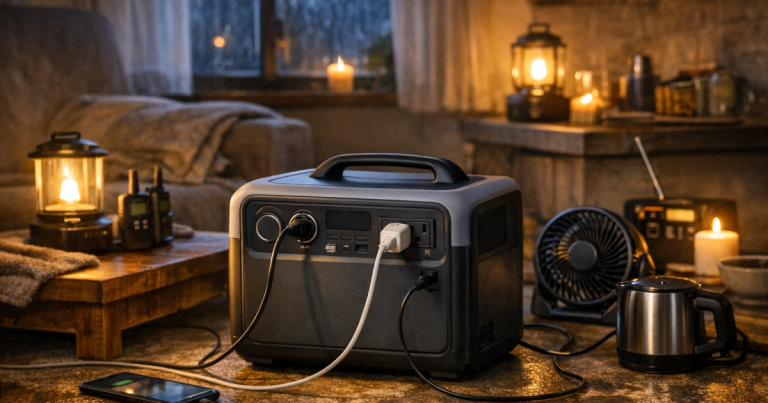
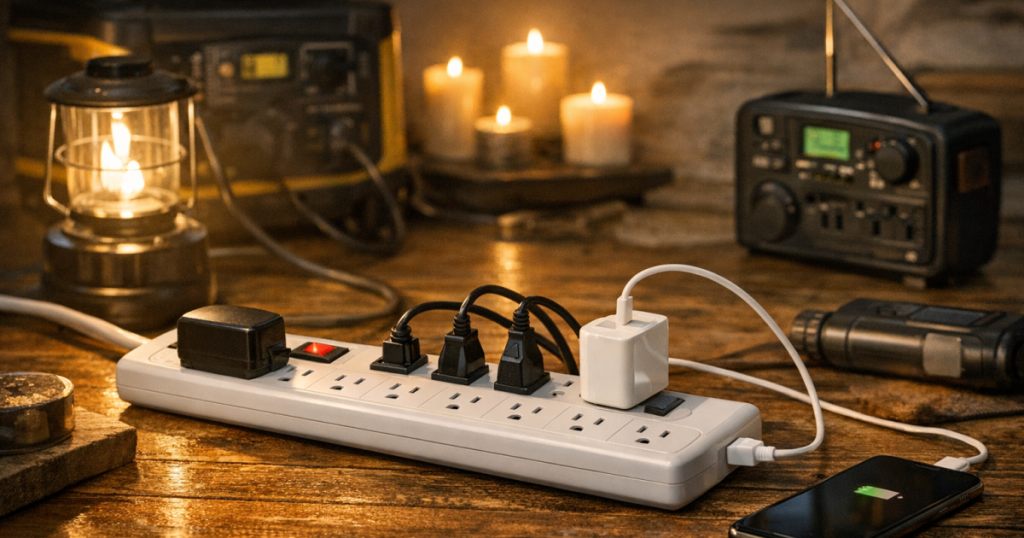
Used sensibly, it can be a practical part of a larger setup. For example, a renter might use it at a desk where the router, phone chargers, and a rechargeable lantern are normally kept topped off. A homeowner might use it in a family charging station so everyone knows where USB wall adapters and small devices live when storm alerts start. If you are planning a more complete backup stack, see our guide to layering a UPS, power station, and generator so each device has the right job.
The AmazonBasics 8-Outlet Surge Protector is not a magic shield for everything plugged into it. A direct lightning event, faulty wiring, overloaded circuit, damaged cord, or improper generator setup can still create serious risk. It is a modest, useful accessory when paired with good habits: avoid high-draw appliances, keep it dry, inspect it periodically, and do not daisy-chain strips together.
Key specs
- Product: AmazonBasics 8-Outlet Surge Protector.
- Brand: AmazonBasics.
- Product type: Indoor surge-protected power strip.
- Outlet count: 8 grounded AC outlets.
- Backup power: None. It does not contain a battery and does not provide runtime during an outage.
- Typical use: Small household electronics, chargers, networking gear, lamps, and similar low-to-moderate draw devices within the strip’s rated capacity.
- What to verify before purchase: Joule rating, maximum amp/watt rating, cord length in feet, plug orientation, safety listing such as UL or ETL, indicator lights, warranty language, and the exact version shown on the current product page.
Pros and cons
Pros
- Eight outlets in one place: Useful for creating a predictable charging and electronics station before bad weather arrives.
- Simple to understand: No app, settings, fuel, battery chemistry, or runtime math to manage.
- Good fit for small electronics: Appropriate for many everyday loads when used within the label rating.
- Can reduce clutter: Helps avoid chargers scattered across the house during a storm watch.
- Budget-friendly category: It is the type of accessory many households can add without redesigning their whole backup plan, though current price should always be checked.
Cons
- No outage runtime: It will not power a router, phone, light, or laptop when the wall outlet is dead.
- Not for high-draw appliances: Space heaters, microwaves, refrigerators, freezers, sump pumps, and similar loads should not be treated as power-strip devices.
- Version details can vary: Buyers need to confirm the exact rating, cord length, layout, and safety markings on the current listing.
- Can be misused: Daisy-chaining, overloading, outdoor use, or pairing it casually with generators can create unsafe conditions.
- Not whole-home surge protection: It protects only connected devices within its design limits; it is not a substitute for panel-level protection or correct wiring.
Performance in real use
The strongest use case is not dramatic. It is the everyday desk, nightstand, or utility shelf where blackout-related electronics live. A surge strip is useful when it prevents the “where is the charger?” problem and keeps small devices easy to disconnect, move, or recharge from another source.
For phone chargers, rechargeable lanterns, small radios, and laptop adapters, the AmazonBasics 8-Outlet Surge Protector can make a tidy home base. The eight outlets are helpful, but check the physical outlet layout before buying if you use bulky wall adapters. Large plugs can block neighboring sockets on many strips, and product photos are often the quickest way to tell whether the spacing will work for your setup.
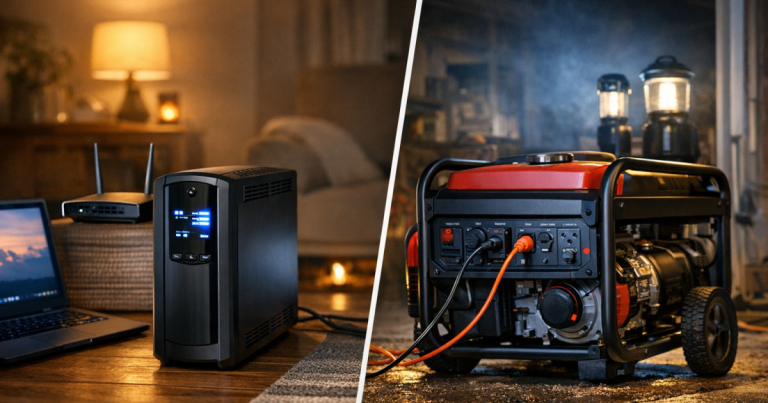
For networking gear, the answer is more nuanced. A modem, router, or mesh node may be a reasonable low-draw load for a surge protector when plugged into wall power. But if you need internet to stay on during an outage, you need stored energy from a UPS or power station. Many UPS manufacturers recommend plugging the UPS directly into the wall rather than into a surge strip, so do not assume this strip belongs upstream or downstream of every backup device. Check the manuals for both pieces of equipment.
For portable power stations, the same common-sense rule applies: a power strip does not increase the station’s output capacity. If you plug multiple items into a strip connected to a power station, the combined load still counts against the power station’s AC output limit. That can be fine for several small chargers, but it is not a workaround for running bigger appliances.
Generator use is where homeowners should be especially careful. Household surge strips are not outdoor generator distribution equipment. A portable generator should be operated outdoors, placed correctly, and connected with cords and transfer equipment that match the generator and load. Do not run a power strip through a window as a casual substitute for a safe generator plan.
Durability is also about behavior, not just materials. Keep the strip off damp floors, avoid crushing the cord under furniture, unplug it during severe electrical storms when practical, and replace it if the cord, plug, housing, or indicator lights suggest damage. A surge protector is a consumable safety accessory, not something to ignore for a decade behind a cabinet.
Who it’s best for / who should skip it
The AmazonBasics 8-Outlet Surge Protector makes sense for households that want a simple, inexpensive way to organize small electronics before storm season. It is especially practical for renters, remote workers, students, and families who keep phones, tablets, radios, rechargeable lights, and network gear in regular use.
It is also a sensible add-on for people who already understand their backup layers. If your UPS handles the router, your power station handles phones and a lamp, and your generator handles larger approved loads, a surge strip can still be useful as a normal wall-power accessory for the devices that need charging ahead of time.
Skip it as a primary outage solution. If your goal is to keep a modem alive, run a CPAP machine, protect refrigerated medication, or power a freezer, this is the wrong category. You should be looking at a properly sized UPS, portable power station, generator setup, or a planned combination of those tools. Also skip it for high-wattage appliances, outdoor use, damp basements, garages with questionable wiring, or any setup where you are tempted to daisy-chain multiple strips.
Common questions
Will it keep my Wi-Fi on during a blackout?
No. A surge protector has no battery. It can organize the router and modem plugs when power is available, but you need a UPS or power station for runtime.
Can I plug a refrigerator into it?
No. Refrigerators and freezers should be powered through properly rated circuits and backup equipment, not a household surge strip.
Does a surge protector protect against every power surge?
No. It can help with certain spikes within its design limits, but it is not a guarantee against lightning, wiring faults, severe utility events, or misuse.
How often should it be replaced?
Replace it if it is damaged, has been overloaded, shows abnormal heat or discoloration, or if its protection indicator no longer shows normal status. Also follow the manufacturer’s guidance.
Can I use it with a portable power station?
Only within the power station’s instructions and output rating. The strip may add outlets, but it does not add watts or make large loads safe.
Alternatives
If you want a more flexible outlet layout for bulky adapters, the Belkin 12-Outlet PivotPlug is one direct surge-protector alternative to compare. It may suit a desk or media area where plug shape is the bigger frustration than outlet count, but you should still verify current ratings and dimensions before buying.
If the real problem is keeping electronics running after the power goes out, move up a category. A UPS is a better fit for short runtime on routers, modems, desktop computers, and sensitive electronics. Our APC BR1500MS2 Back-UPS Pro review explains what that kind of device does differently from a basic surge strip.
Verdict + score
The AmazonBasics 8-Outlet Surge Protector is a solid, sensible accessory for organizing small blackout-related electronics, but it is not a backup power device and should not be used beyond its label rating. Its value depends heavily on the exact version you buy, so confirm the surge rating, cord length, safety listing, and outlet layout before relying on it. For a simple charging station or everyday electronics strip, it earns 7.8 out of 10.
Final thoughts
Overall, AmazonBasics 8-Outlet Surge Protector earns a score of 7.8/10. It is a strong option for readers who want the benefits discussed above, while still being worth comparing against the alternatives before buying.
AmazonBasics 8-Outlet Surge Protector
A sensible low-cost choice for organizing small blackout electronics when you understand its limits
You might also like: How Home Backup Power Works During an Outage.