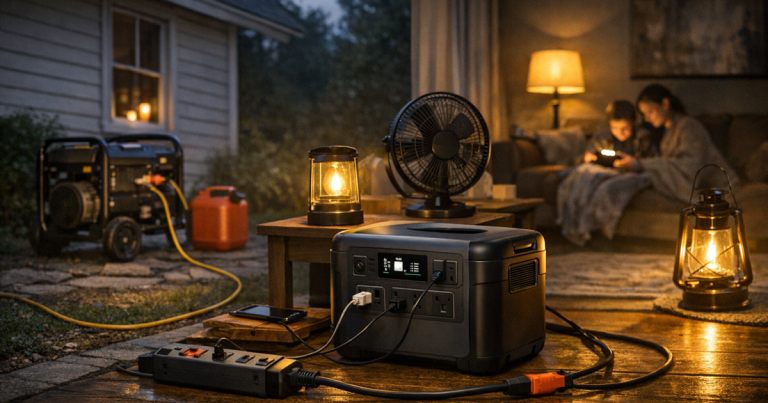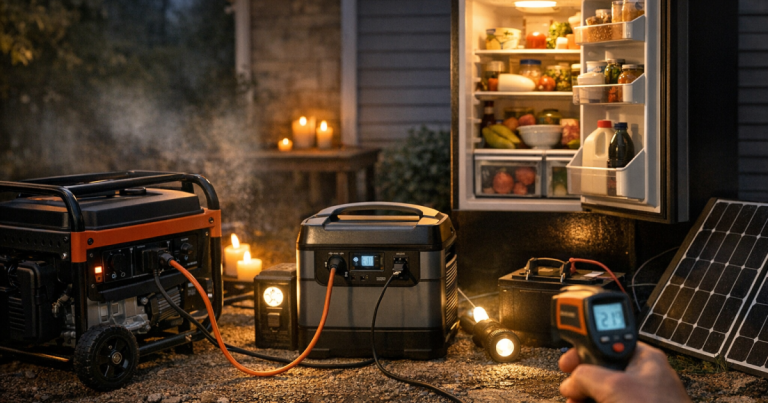
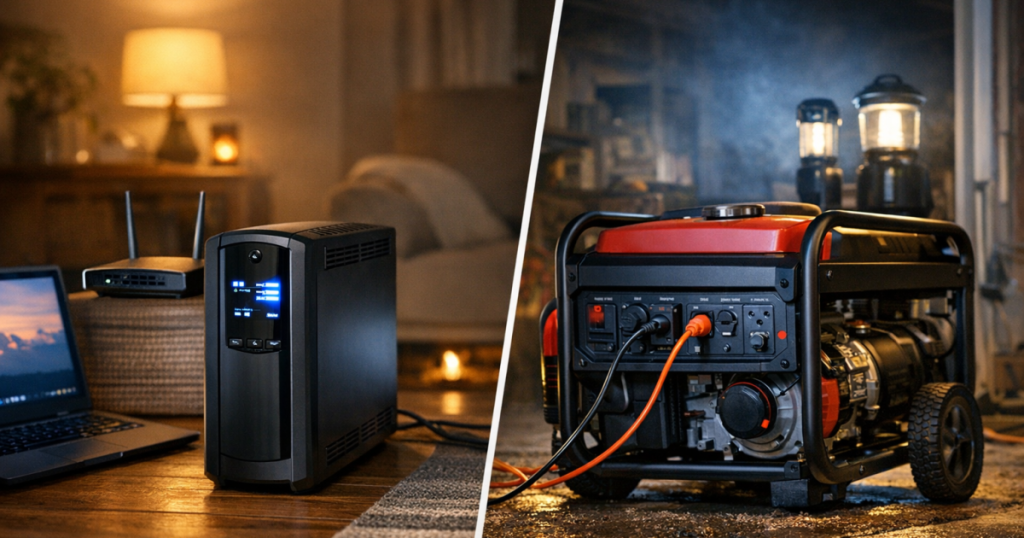
A desktop outage plan lives or dies in the first few seconds: the router drops, the PC hard-crashes, or the modem stays up long enough for you to save work and switch plans. This CyberPower CP1500PFCLCD PFC Sinewave UPS System review looks at a 1500 VA / 1000 W line-interactive UPS built for that short bridge, not for running a house. My take: it is a strong fit for electronics ride-through and orderly shutdowns, as long as you respect its short runtime at heavier loads.
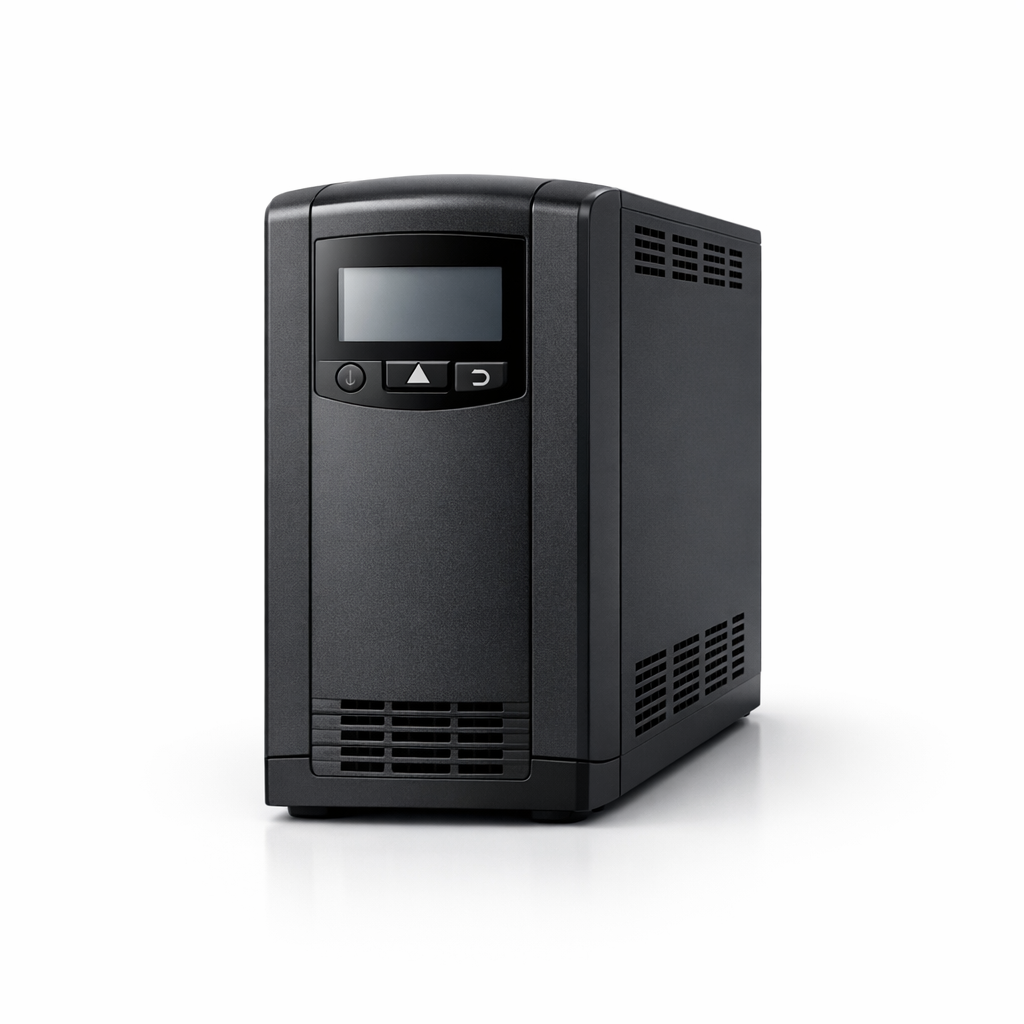
CyberPower CP1500PFCLCD PFC Sinewave UPS System
Best for keeping sensitive electronics alive long enough to ride out blips, save work, and shut down cleanly
The CyberPower CP1500PFCLCD PFC Sinewave UPS System is a mini-tower uninterruptible power supply for standard US 120 V plug-in electronics. It belongs in the same planning conversation as battery stations and generators, but it plays a different role: instant device-level backup and surge protection rather than long-duration energy storage. For a wider look at those categories, see our guide to portable power stations, generators, and UPS units for blackouts.
Product Details
- Type: line-interactive uninterruptible power supply with sine wave output on AC and on battery.
- Output capacity: 1500 VA / 1000 W.
- Outlets: 12 NEMA 5-15R total, with 6 battery-and-surge outlets and 6 surge-only outlets; 2 are widely spaced.
- Input: NEMA 5-15P right-angle 45° offset plug, 5 ft cord, 120 VAC nominal input, 88-144 VAC input range.
- Runtime rating: 2.5 minutes at full load and 10 minutes at half load.
- Battery system: 2 sealed lead-acid 12 V / 9 Ah batteries, user replaceable, not hot-swappable, with an 8-hour typical recharge time.
- Size and weight: 3.9 x 11.0 x 14.0 in and 24.9 lb.
- Operating limits: 32-104 °F, 0-95% non-condensing humidity, and 0-10000 ft elevation.
- Warranty and certifications: 3 Year Limited Warranty, lifetime $500,000 Connected Equipment Guarantee, ENERGY STAR certified, UL1778, cUL 107.3, FCC DOC Class B, and RoHS compliant.
The main job: clean short-duration backup
The strongest reason to consider the CyberPower CP1500PFCLCD PFC Sinewave UPS System is its combination of 1500 VA / 1000 W output capacity and sine wave output. For blackout planning, that points toward computers, networking equipment, workstations, and home entertainment gear that you do not want to drop instantly when utility power blinks.
CyberPower lists the topology as line-interactive, with a typical 4 ms transfer time and Automatic Voltage Regulation with single boost. In plain English, this is meant to smooth certain voltage dips and switch to battery quickly when incoming power falls outside its working range. That makes sense for a home office, router shelf, or media cabinet where a sudden shutdown is more costly than a few minutes of battery runtime.
The outlet layout is useful, but you have to sort your plugs
The 12 total NEMA 5-15R outlets look generous, and they are, but only half provide battery backup. Six outlets are battery-and-surge protected, while the other six are surge-only. That distinction is central to setting it up well.
A practical setup step is to decide what needs continuity versus what only needs surge protection before you start plugging things in. For example, a desktop tower and one monitor usually deserve battery outlets because you need enough screen time to save work and shut down. A printer, powered speakers, desk lamp, external decorative lighting, or a charger for a nonessential device can usually live on the surge-only side. Laser printers in particular are a poor match for the battery-backed outlets because their startup draw can be high and can shorten runtime fast.
It also helps to think in terms of plug shape, not just outlet count. Twelve outlets does not always mean twelve easy connections if several devices use oversized power bricks. Put the largest adapters in the widely spaced positions first, then fill the remaining outlets with standard plugs. If a short extension cord or outlet saver is needed to fit a bulky adapter, keep it light-duty and simple, and avoid turning the UPS into a chain of power strips.
After setup, label the cords or take a quick photo of the outlet arrangement. During a real outage, you do not want to guess which plug belongs to the router or which accessory is quietly draining battery time. A five-minute test with the UPS unplugged from the wall can also confirm that the right devices stay on and the noncritical ones drop off as expected.
Put the equipment that must stay alive on the battery side: a desktop PC, monitor you need for shutdown, modem, router, network switch, or a single critical peripheral. Use the surge-only side for noncritical accessories that need protection but do not need to run during an outage. The two widely spaced outlets help with bulky plugs, which can be a small but real quality-of-life improvement when a power brick wants more room than it deserves.
Runtime is the honest limiter
The CyberPower CP1500PFCLCD PFC Sinewave UPS System is not a substitute for a portable power station or generator. CyberPower rates it for 2.5 minutes at full load and 10 minutes at half load. Those numbers define the product’s practical personality: it is for saving work, avoiding abrupt shutdowns, keeping network gear up through short interruptions, and buying time to move to another backup plan.
If you connect close to the 1000 W limit, expect the useful window to be short. If your load is modest, such as networking gear and a small electronics setup, the runtime picture can be more comfortable, but it still should be treated as short-duration backup rather than all-evening power. Households trying to keep a refrigerator, freezer, furnace blower, or larger essentials running need a different plan and should review home backup power safety basics before choosing cords, generators, or transfer equipment.
Battery ownership is straightforward, with one important detail
The battery system uses two sealed lead-acid 12 V / 9 Ah batteries. They are user replaceable, which helps the long-term ownership case, but they are not hot-swappable. Plan battery work as a maintenance task, not something to do while the UPS is actively carrying critical equipment.
Replacement cartridge selection depends on the unit’s serial-number prefix: RB1290X2 for serial numbers beginning with CXX, and RB1280X2B for serial numbers beginning with CR9, CXF, or CQC. That is not complicated, but it is the kind of detail worth recording in your home-office power notes before the battery is near end of life. Typical recharge time is listed as 8 hours, so after a real outage, do not assume it is immediately back to full reserve.
Protection and management features add real flexibility
Beyond battery backup, the CyberPower CP1500PFCLCD PFC Sinewave UPS System includes 1445 J surge suppression, EMI/RFI filtration, and 1-in/1-out RJ45 10/100/1000 network protection with PoE compatibility. For a router, modem, small network rack, or workstation area, that gives it a more complete role than a simple battery box.
The two USB charge ports share 3.1 A and include one Type-A and one Type-C port. There is also a HID-compliant USB port and PowerPanel Business software support. SNMP/HTTP remote monitoring is possible with the optional RMCARD205, so that capability should be treated as an upgrade path rather than included hardware. The official page also includes a California Proposition 65 chemical warning, which is useful context for placement and handling.
Where it fits best in a blackout plan
This UPS makes the most sense for households that want a reliable buffer for electronics rather than a long-running backup source. Good use cases include a home office desktop, a modem-and-router setup, a small media system, or a workstation that needs orderly shutdown time. It is also a useful companion to a larger outage plan: the UPS handles the instant gap, while a portable power station or generator handles longer runtime after you are ready to switch over.
It is less convincing if your main goal is overnight power, whole-room backup, or appliance support. The 24.9 lb weight is manageable for a mini-tower UPS but not grab-and-go portable in the way a small lantern or power bank is. Its 120 V NEMA 5-15 plug-and-outlet format also keeps it firmly in device-level territory, not hardwired home circuits.
Verdict
Score: 8.4/10. The CyberPower CP1500PFCLCD PFC Sinewave UPS System earns its recommendation by doing a specific job well: sine-wave, device-level backup for sensitive electronics during brief outages, voltage dips, and shutdown moments. The most influential factors are the 1500 VA / 1000 W capacity, the sine-wave line-interactive design, and the sensible 12-outlet layout. The main compromise is equally clear: runtime is short at higher loads, so this is best viewed as an electronics safety net, not a long-duration blackout power source.
CyberPower CP1500PFCLCD PFC Sinewave UPS System
Best for keeping sensitive electronics alive long enough to ride out blips, save work, and shut down cleanly
You might also like: How to Run a CPAP on a Portable Power Station During an Outage.