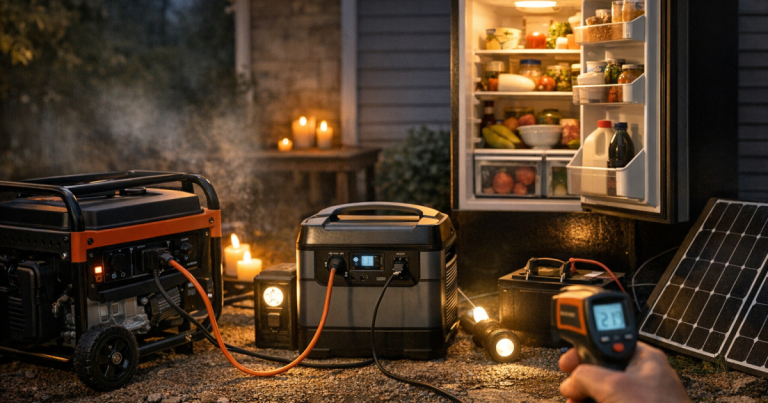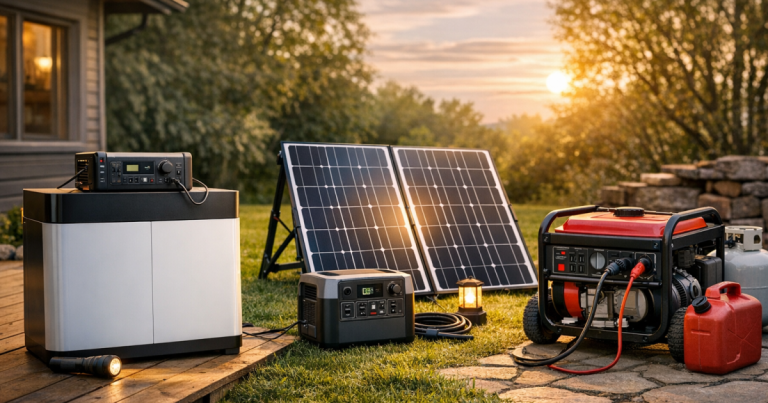
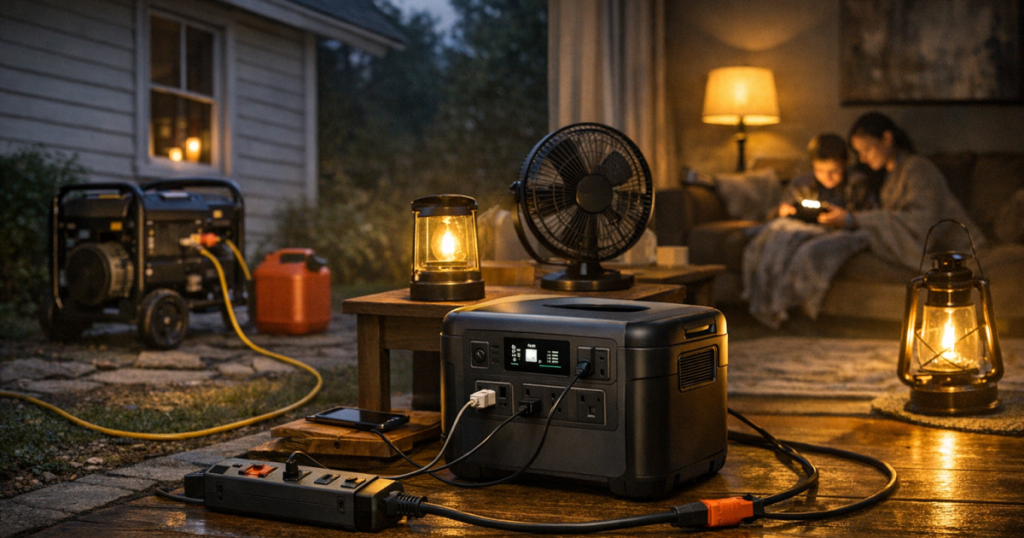
A blackout is easier to manage when you know what can be powered, what should stay off, and where the real hazards are. Good home backup power safety is not about buying the largest generator or filling a room with batteries; it is about using backup equipment in a way that protects people, pets, appliances, and utility workers while keeping the essentials running.
Generator transfer switches, inlet boxes, interlock kits, and any wiring tied to household circuits should be installed by a qualified electrician to meet local electrical codes, manufacturer instructions, and safety requirements.
Main points
- Run fuel-burning generators outdoors only, well away from doors, windows, vents, garages, and enclosed spaces.
- Never backfeed a home through a wall outlet or dryer outlet. Use proper cords, inlets, transfer equipment, or keep loads plugged directly into the generator where appropriate.
- Size your backup plan around essential loads, not every appliance you own.
- Use portable power stations indoors only as directed, with clear airflow, correct chargers, and realistic load limits.
- Keep carbon monoxide alarms, smoke alarms, and a simple shutdown plan ready before the outage starts.
Start with the loads that actually matter
The safest backup setup is usually the one that does fewer things well. During a short outage, most households care about a refrigerator or freezer, phone charging, a few LED lights, internet gear, medical equipment, and maybe a small fan or heated blanket depending on the season. Trying to run an electric range, central air conditioning, electric dryer, or whole-home heating from a small backup source is where people often run into overloads, unsafe cords, or unrealistic expectations.
Make a simple list of must-run items and write down their wattage from the label, manual, or manufacturer information. Motors such as refrigerators, sump pumps, and some furnace blowers can draw more power when starting than when running. That startup surge matters. If you are building a broader household plan, connect this safety thinking with a whole-home outage plan so food, heat, communications, pets, and mobility needs are handled together instead of as separate emergencies.
Generator safety begins with placement
Portable generators can be useful during longer outages, but they are also the backup option with the most serious safety rules. Any generator that burns gasoline, propane, natural gas, or diesel produces carbon monoxide. Carbon monoxide is invisible and can build up fast in spaces that feel partly open, including garages, carports, covered patios, sheds, crawlspaces, and enclosed porches.
Place a running generator outdoors on a stable surface, away from openings into the home. A common safety benchmark is at least 20 feet from doors, windows, and vents, with exhaust directed away from the house and neighboring homes when possible. Local conditions matter too: wind, fences, snow, and narrow side yards can all affect where exhaust travels.
Keep battery-powered carbon monoxide alarms inside the home, especially near sleeping areas. If an alarm sounds, treat it seriously: get people and pets to fresh air and call emergency services. Do not move the generator closer because it is raining, too noisy, or inconvenient to reach. Weather protection should come from equipment designed for generator use, not from bringing the generator under a roof or inside a partly enclosed space.
Do not improvise home electrical connections
The most dangerous generator mistakes often happen at the connection point. Backfeeding power through a household outlet can energize utility lines and put line workers, neighbors, and your own wiring at risk. It can also damage equipment when grid power returns.
For small setups, plugging appliances directly into the generator with properly rated outdoor extension cords may be the simplest safe approach. For powering selected household circuits, a manual transfer switch, approved interlock setup, and exterior inlet are the more organized route when installed correctly. The details matter: connector type, amperage, cord length, circuit selection, grounding instructions, and local code requirements all have to line up. For a deeper explanation of safe connection paths, see this guide to generator power connections.
Cords, strips, and surge protection are not all the same
Extension cords are part of the safety system, not an afterthought. Use cords rated for outdoor use when they are outside, match the cord to the load, and keep connections elevated and protected from standing water. Long, undersized cords can heat up and cause voltage drop, especially with motor loads. If a cord feels hot, smells odd, or shows damaged insulation, stop using it.
Avoid daisy-chaining power strips, adapters, and light-duty indoor cords. A surge protector can help organize small electronics, but it does not make an overloaded circuit safe and it does not replace a transfer switch. During an outage, the safest layout is usually simple: one correctly rated path from the power source to the load, with as few adapters as possible.
Fuel handling needs its own routine
Gasoline and propane create different outage chores. Store fuel only in approved containers, away from living spaces, ignition sources, and appliances with pilot lights. Follow local rules for how much fuel can be stored at home, especially in apartments, townhomes, and dense neighborhoods.
Refuel a generator only after it has been turned off and allowed to cool according to the manufacturer’s instructions. Spilling gasoline on a hot engine can start a fire. Keep a flashlight or headlamp available so you are not refueling in the dark by phone light while tired, cold, or rushing. Label fuel cans, rotate stored gasoline as recommended, and keep the generator manual where you can find it without internet access.
Portable power stations are indoor-friendly, not risk-free
Battery power stations avoid carbon monoxide and fuel storage, which makes them a strong fit for apartments, nighttime loads, and electronics. They still have limits. Every unit has a maximum output, a battery capacity, charging rules, temperature limits, and ventilation requirements. Overloading a battery station can shut it down, while blocking airflow can cause heat buildup.
Use the charger and cables specified by the manufacturer. Keep the unit on a firm surface with room around its vents. Do not cover it with blankets, place it on a bed, or run high-draw appliances unless the manufacturer clearly supports that use. For indoor battery habits, storage, charging, and placement, the portable power station safety guide is the better next step.
Plan for refrigerators, freezers, and food without rushing
Food safety decisions often happen under stress. A refrigerator does not need constant power every minute of an outage, but it does need a plan. Keep doors closed as much as possible, use appliance thermometers, and decide ahead of time how you will rotate power if you have one backup source serving several loads.
When using a generator or battery station for cold food storage, account for startup surge and duty cycles. A refrigerator may run intermittently, but the compressor can still demand more power at startup than its running wattage suggests. If the backup source struggles, trips, or shuts down, stop and reassess instead of repeatedly restarting the appliance.
Medical equipment and communications deserve priority
If someone in the home uses a CPAP machine, oxygen equipment, powered mobility device, refrigerated medication, or other essential medical equipment, do not treat that load like an ordinary convenience item. Document power requirements, runtime needs, backup battery instructions, and emergency contacts before outage season. Many medical devices have specific guidance about power sources, extension cords, batteries, and alarms.
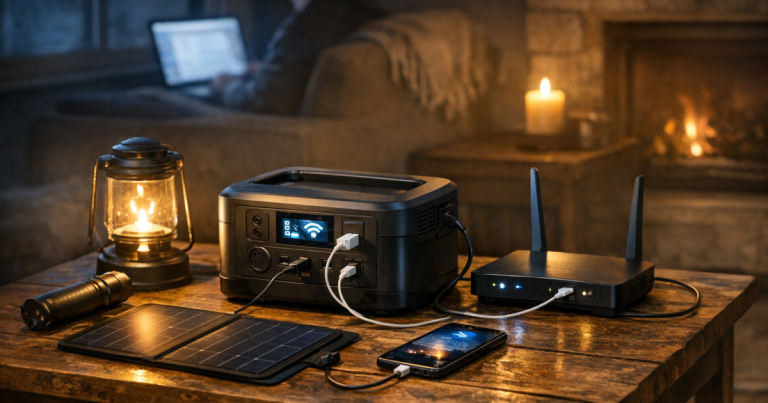
Internet equipment can also be important, especially for remote work, school alerts, weather updates, and contacting family. A modem and router often need much less power than kitchen appliances, but they still need clean cabling and a stable backup source. Keep phone charging simple too: charge early, use low-power mode, and avoid draining a large battery station on nonessential screens.
Test the setup before the storm
A dry run on a calm afternoon is one of the best safety steps you can take. Set up the generator outdoors, route the cord as you would during an outage, plug in the planned loads, and watch what happens. For batteries, charge the unit fully, run the intended devices, and note the displayed load and estimated runtime. Treat runtime numbers as estimates, not guarantees, because appliance cycles, room temperature, battery age, and charging losses all affect results.
Testing also reveals practical problems: a cord that is too short, a refrigerator plug hidden behind a cabinet, a battery station that lives in the wrong closet, or a fuel can you cannot open with gloves on. Fixing those small issues ahead of time keeps an outage from turning into a scramble.
Shutdown and recovery are part of the plan
When grid power returns, do not rush. Turn off or unplug sensitive loads before changing power sources. Shut down a generator according to the manual. Let hot equipment cool before storing it, and check cords for damage before coiling them. Recharge battery stations promptly so they are ready for a second outage, which can happen after storms when repairs are still underway.
Restock fuel safely, reset clocks and alarms, review what worked, and update your load list. The goal is not a perfect setup on the first try. It is a reliable routine your household can repeat when tired, distracted, or dealing with bad weather.
FAQ
Can I run a generator in my garage if the door is open?
No. A garage is still an enclosed or partly enclosed space, and carbon monoxide can enter the home even with the door open. Run fuel-burning generators outdoors, away from openings.
Is a portable power station safer than a generator?
It avoids carbon monoxide and fuel handling, which is a major advantage indoors. It still needs proper ventilation, correct charging, load limits, and safe storage.
Can I power my whole house with a portable generator?
Some larger generator setups can power selected circuits through proper transfer equipment, but whole-house expectations need careful sizing and electrical planning. Do not connect a generator to home wiring without approved equipment and qualified installation.
What is the simplest home backup power safety habit to start with?
Make an essential-load list and test it before an outage. Knowing what you can safely run prevents overloads, rushed cord choices, and unsafe improvising.
What to remember
Backup power works best when it is modest, planned, and repeatable. Put generators outside, keep connections code-conscious, respect battery limits, and prioritize the loads that protect health, food, communications, and basic comfort. A safe outage setup is not the one that powers everything. It is the one your household can use correctly when the lights go out.