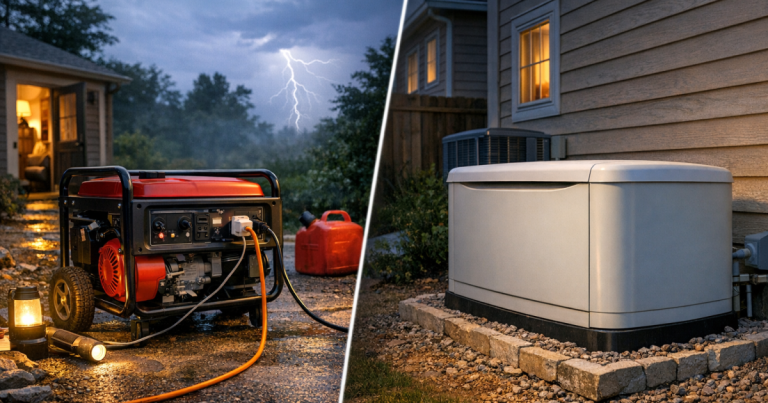
A blackout is easier to manage when the generator is connected in a way that matches the loads you actually need. For most homes, generator power connections come down to three safe paths: extension cords to individual devices, an outdoor inlet tied to approved switching equipment, or a transfer switch/interlock that feeds selected circuits without backfeeding the grid.
Electrical work that connects a generator inlet, transfer switch, or interlock to a home panel should be carried out by a qualified electrician to meet the National Electrical Code, manufacturer instructions, and local permit requirements.
Main points
- Extension cords are the simplest approach for a fridge, a few lights, a router, and chargers, but they do not energize wall outlets or hardwired equipment.
- A power inlet is not a standalone safety device. It is the outdoor connection point for a properly wired transfer switch or interlock setup.
- Transfer switches and panel interlocks are designed to prevent utility backfeed, which can endanger line workers and damage equipment.
- Generator size matters, but the connection method matters just as much. A large generator connected poorly is not safer than a small generator used correctly.
- Never run a generator indoors, in a garage, under a porch, or near open windows. Carbon monoxide can build up quickly and silently.
Start with the loads, not the cord
The safest connection plan starts with a short list of what must stay powered during an outage. For many households, that list is smaller than expected: refrigerator, freezer, phone charging, Wi-Fi equipment, a few LED lamps, a sump pump, a medical device, or a furnace blower. Central air conditioning, electric ranges, clothes dryers, and electric water heaters usually move the plan into a much larger and more expensive setup.
Make a room-by-room list, then separate plug-in loads from hardwired loads. Plug-in loads can often be powered with outdoor-rated extension cords when used correctly. Hardwired loads, such as a furnace blower, well pump, or selected lighting circuits, generally require approved switching equipment connected by a qualified electrician.
If you are still deciding whether a portable generator, battery system, solar charging setup, or mixed approach fits your household, the broader overview of home backup power options can help you frame that decision before you commit to a connection method.
Using extension cords during a blackout
Extension cords are the most accessible way to use a portable generator. The generator stays outdoors. A heavy-duty outdoor-rated cord runs from the generator to the appliance or to a small group of low-watt devices. This approach works well when you only need to power a handful of essentials and you can route cords without creating trip hazards, pinch points, or weather exposure problems.
Use cords that are rated for outdoor use and for the amperage of the equipment you are powering. Shorter, heavier-gauge cords reduce voltage drop, which becomes more important as loads increase or cord runs get longer. Avoid thin household cords for refrigerators, freezers, pumps, heaters, or other higher-demand equipment. If the cord feels warm in use, the setup needs to be reassessed.
Good cord practice includes:
- Running one properly rated cord per significant appliance instead of daisy-chaining strips and cords.
- Keeping connections off wet ground and away from puddles.
- Using GFCI protection where required by the generator, cord set, or local electrical conditions.
- Leaving enough slack so cords are not pulled tight across doorways or sharp edges.
- Checking the appliance wattage and starting surge before assuming a generator can run it.
A cord-only setup has real limits. It will not power built-in ceiling lights, a hardwired furnace, most well pump circuits, or normal wall outlets. It also requires careful cord management inside the home, which can become tiring during a multi-day outage.
Why a power inlet is not the whole system
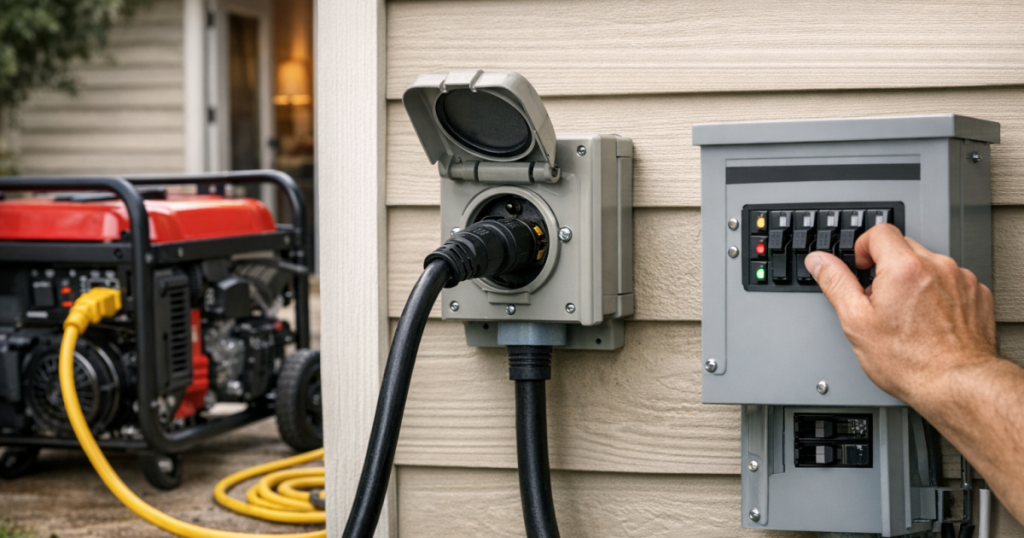
A generator inlet is the weather-resistant connection point mounted outside the house. It lets you connect a generator cord outdoors instead of running individual cords through a cracked door or window. From there, wiring runs to the approved switching equipment that controls which circuits can receive generator power.
The inlet itself does not prevent backfeed. The protection comes from a properly installed transfer switch or interlock that makes it impossible for generator power and utility power to feed the same circuits at the same time. That separation is the core safety function of a home generator connection.
Most portable-generator inlets use a twist-lock style connection matched to the generator outlet and the switching equipment. Before buying cords or inlet hardware, verify the generator outlet type, voltage, amperage, plug configuration, and the requirements of the transfer equipment. Similar-looking plugs are not automatically interchangeable.
For longer generator cord runs between the generator and the inlet, cord rating matters. A real-world example many homeowners compare is the Southwire 65172840 20-Foot 30A Generator Cord, but the important point is not the brand name. The cord must match your generator, inlet, transfer equipment, amperage, and intended distance.
Transfer switch basics in plain English
A manual transfer switch is a dedicated switching panel installed next to or near the main electrical panel. It lets you choose specific circuits that can be powered by the generator during an outage. Common choices include the refrigerator, freezer, furnace blower, sump pump, garage door opener, internet equipment circuit, and a few lights.
The advantage is control. Instead of dragging cords to several rooms, you start the generator outdoors, connect the generator cord to the inlet, flip the selected circuits from utility to generator, and manage the loads from one place. The trade-off is that you must decide in advance which circuits matter most, and the system must be matched to both the generator output and the household panel.
Six-circuit kits are popular because they can cover several essential loads without pretending to power the whole house. If you are trying to understand what that kind of setup looks like, the Reliance Controls 306CRK Pro/Tran 2 transfer switch kit review gives a useful example of a manual transfer-switch approach for essential circuits.
A transfer switch does not increase generator capacity. If a generator can only support a certain combination of loads, the switch does not change that limit. It simply provides a safer and cleaner way to connect those loads through selected circuits.
Panel interlocks: useful, but not universal
A panel interlock is a mechanical device fitted to a compatible breaker panel. It prevents the main breaker and the generator breaker from being on at the same time. In practical terms, it allows more panel flexibility than a small transfer switch because you can choose which breakers to energize, as long as you stay within the generator’s output.
That flexibility can be helpful, but it also places more responsibility on the user. You need to know which circuits are heavy loads, which ones can run together, and which ones should stay off. An interlock is not a license to energize every breaker in the house.
Compatibility is critical. Interlocks are panel-specific, and installation involves the electrical panel. The correct device, breaker position, labeling, wiring method, and inspection path all matter. This is not a shortcut around professional electrical work.
What not to do
Some unsafe connection methods keep showing up after storms because they seem convenient. They are also the setups most likely to create hidden danger.
- Do not use a male-to-male cord. These are sometimes called suicide cords because exposed energized prongs can shock or kill someone.
- Do not plug a generator into a dryer outlet, range outlet, or wall receptacle to “power the house.” That can backfeed utility lines and bypass proper protection.
- Do not run a generator in a garage, basement, shed, carport, enclosed porch, or near open windows and vents.
- Do not refuel a running or hot generator. Shut it down and let it cool according to the manufacturer’s instructions.
- Do not assume a generator with a high starting-watt number can run all major appliances at once.
Carbon monoxide alarms should be installed and working before storm season, not searched for after the lights go out. Place the generator outdoors with exhaust directed away from the home and neighboring openings, following the manufacturer’s instructions and public safety guidance. A common safety baseline is to keep portable generators at least 20 feet from doors, windows, and vents when practical, but placement still needs to account for wind, exhaust direction, and the specific home layout.
Matching the setup to real outage scenarios
Short outage: phones, Wi-Fi, lights, and fridge
For a few hours, a small cord-based plan may be enough. You might run the refrigerator intermittently, keep phones charged, and power a lamp or router. In this scenario, cord routing, fuel on hand, and noise are often bigger practical issues than panel wiring.
Overnight outage: heat, sump pump, and food safety
Once an outage runs overnight, the plan needs to be more disciplined. A sump pump or furnace blower may be more important than convenience loads. If those loads are hardwired, a transfer switch or interlock setup becomes much more useful than extension cords.
Multi-day outage: repeatable routines matter
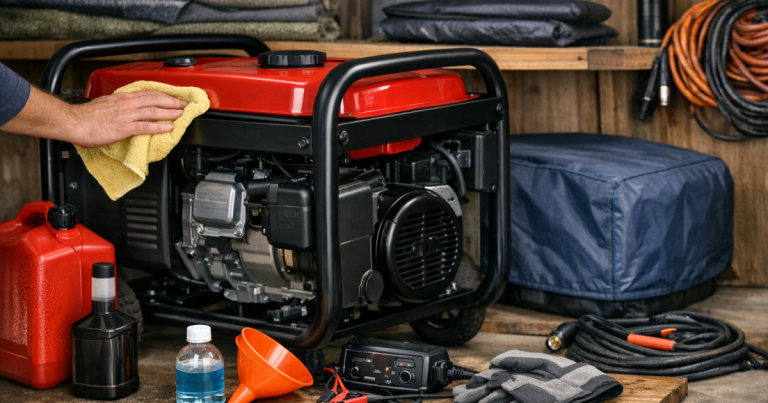
During a longer outage, you need a setup someone in the household can repeat safely: roll the generator out, check oil and fuel, place it in the right outdoor location, connect the cord, start it, switch selected circuits, monitor loads, and shut it down for refueling. The more improvised the setup, the more likely fatigue will lead to mistakes.
Noise, placement, and neighbor reality
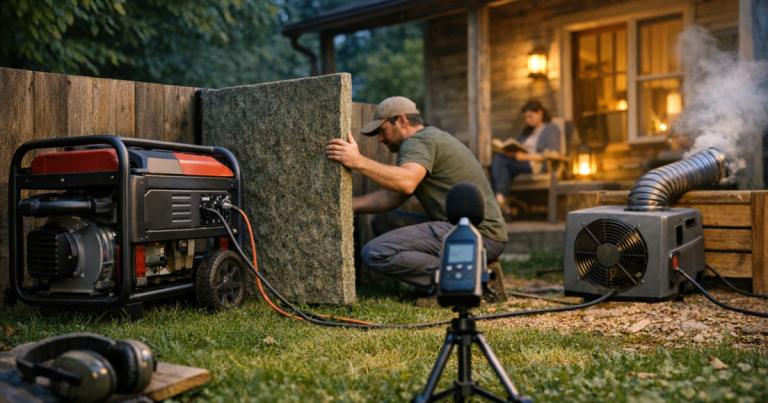
The electrical connection is only one part of the blackout plan. Portable generators also bring noise, exhaust, weather exposure, and security concerns. An inlet can help because it lets the generator sit in a safer outdoor location while feeding the home through one properly rated cord, but it does not solve every placement issue.
Avoid building tight boxes or placing the generator against walls just to reduce sound. Generators need airflow and clear exhaust paths. If neighborhood noise is a concern, focus on safe distance, orientation, load management, and choosing quieter operating windows where possible. The separate guide on how to quiet a portable generator without creating safety risks goes deeper into those trade-offs.
A simple planning sequence
If you are building your setup from scratch, work through the decisions in this order:
- List the essential loads, including starting watts where relevant.
- Identify which loads are plug-in and which are hardwired.
- Decide whether cords alone can meet the need safely.
- If hardwired circuits matter, discuss a transfer switch or interlock with a qualified electrician.
- Match the generator outlet, inlet, cord, breaker, and switch ratings as a complete system.
- Label the setup clearly so another adult can operate it during an outage.
- Run a daylight practice session before storm season, without rushing.
Good generator power connections are not about powering everything. They are about powering the right things in a way that is repeatable, legal, and safe when the house is dark and routines are disrupted.
Common questions
Can I run my refrigerator with an extension cord from a generator?
Yes, if the generator can handle the refrigerator’s running and starting load and the cord is outdoor-rated, properly sized, and used safely. Do not use a thin indoor cord or daisy-chain multiple cords.
Do I need a transfer switch for every portable generator?
No. If you are only powering individual plug-in devices with properly rated cords, a transfer switch is not required for that use. A transfer switch or interlock is needed when feeding home circuits from a generator.
Is a generator inlet safe by itself?
No. An inlet is only the exterior connection point. It must be part of an approved system that includes a transfer switch or interlock to prevent backfeeding the utility grid.
Can a 30-amp inlet power my whole house?
Not usually. A 30-amp generator connection is commonly used for selected essential circuits, not unrestricted whole-home operation. The actual capacity depends on the generator, voltage, wiring, transfer equipment, and loads.
Should I choose a transfer switch or an interlock?
A transfer switch is simple because it limits the generator to selected circuits. An interlock can offer more flexibility but requires more careful load management and must be compatible with the panel.
What to remember
For blackouts, the best connection method is the one that fits your real loads and can be used safely under pressure. Cords are fine for a small plug-in plan. An inlet paired with a transfer switch or interlock is cleaner for selected home circuits. Unsafe shortcuts, especially backfeeding through outlets or using improvised cords, are not worth the risk.
Build the setup before the storm, label it clearly, and practice while the power is still on. That preparation turns a generator from a noisy machine in the garage into a dependable part of your household outage plan.