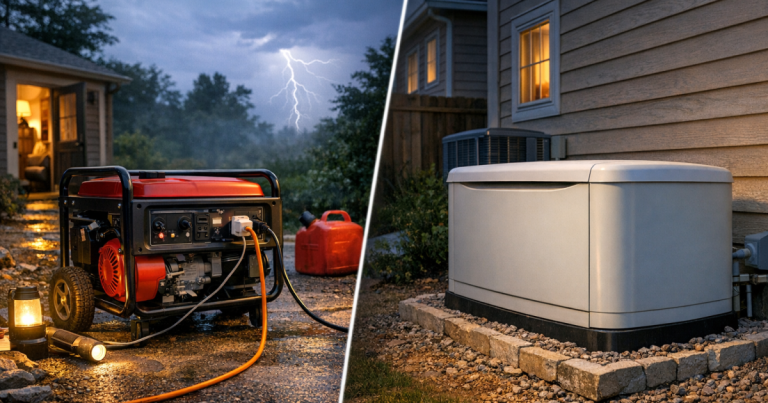
Generator noise gets old fast when the power is out, especially at night or in a close neighborhood. If you need to quiet a portable generator during a blackout, the safest fixes are usually distance, direction, load control, and open-air sound deflection—not boxes, tarps, or muffler hacks.
The goal is to reduce the noise that reaches your house without blocking cooling air, trapping exhaust, overheating the engine, or making carbon monoxide more dangerous. A quieter setup should still let the generator breathe, stay dry, and sit where exhaust cannot drift into living spaces.
Professional guidance: Permanent generator connections, inlet boxes, interlocks, and transfer-switch wiring should be installed by a qualified electrician to meet the National Electrical Code, local utility rules, and permitting requirements.
The safest quieting moves first
Before building anything or buying accessories, start with the basic adjustments that lower perceived noise without changing the generator itself.
- Move it farther away: Distance is the simplest noise reducer, as long as you can still use properly rated outdoor cords or a safe transfer setup.
- Point the exhaust away: Exhaust direction affects both sound and carbon monoxide risk. Aim it away from doors, windows, vents, garages, crawl spaces, and neighboring homes.
- Use the lowest safe load: A generator working hard is usually louder than one carrying a modest, steady load.
- Put it on a stable surface: A generator rattling on a deck, trailer, loose gravel, or thin plywood can sound much louder than the engine itself.
- Use open-air sound barriers: Barriers can help when they reflect noise away while leaving plenty of air around the generator.
What you should not do is just as important: do not run a generator indoors, in a garage, in a shed, under a porch, in a basement, or inside a homemade enclosed box. Do not drape blankets, tarps, foam, or insulation over it. Do not modify the muffler unless the generator manufacturer specifically supports the change for that model.
Step 1: Choose the right operating spot
A safe generator location solves three problems at once: noise, exhaust, and convenience. Place the unit outdoors on firm, level ground where it is away from openings into the home and where exhaust can disperse freely. Follow the distance and clearance instructions in the generator’s manual, because different models have different cooling and ventilation needs.
For noise, avoid hard corners that bounce sound back toward your windows. A generator tucked between a house wall and a fence may seem out of the way, but those surfaces can amplify sound and concentrate exhaust. An open part of the yard, driveway, or patio often works better if it keeps fumes away from people and buildings.
Think about your neighbors, too. During a widespread outage, everyone is tired, warm or cold, and trying to sleep. Aim the loudest side away from bedrooms when you can, and avoid pointing exhaust or sound directly toward a neighboring window. A few minutes of planning can make the same generator feel much less intrusive.
Step 2: Put distance to work without creating cord problems
Moving a generator farther from the house can noticeably reduce noise, but only if the electrical side stays safe. Use outdoor-rated extension cords with the correct gauge and rating for the load. Keep cords out of standing water, avoid pinching them in doors or windows, and inspect them for cuts, heat damage, or loose plugs before use.
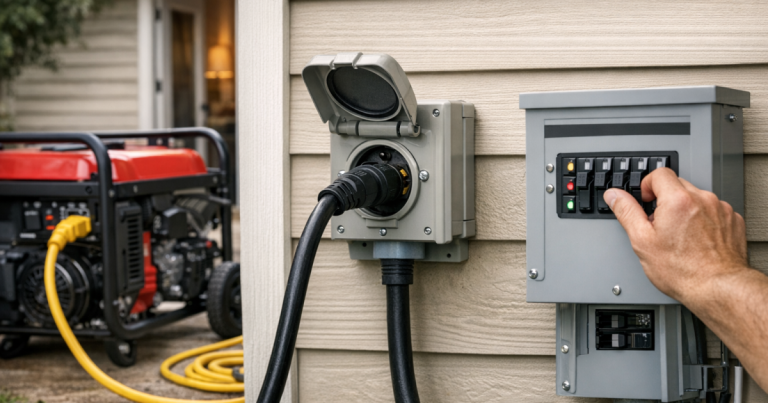
If your generator connects to home circuits, the quietest placement may depend on where the inlet and transfer equipment are located. A safe connection is more important than a perfect noise location. For households using a transfer setup, review the steps for using a manual transfer switch during an outage so the generator is not backfeeding utility lines or powering circuits you did not intend to run.
For plug-in loads, keep the setup simple. A refrigerator, a few lights, a router, and device charging may be easier to manage quietly than trying to run half the house through a web of cords. The more complicated the cord layout gets, the more likely someone trips, overloads a cord, or accidentally routes power where it does not belong.
Step 3: Reduce vibration before chasing engine noise
Some “generator noise” is actually vibration. A unit sitting on a hollow wooden deck, metal trailer bed, or wobbly surface can transmit a harsh buzzing sound through the structure. Move it to firm ground, concrete, or compacted soil when safe and practical.
Use only manufacturer-approved feet, mats, or pads if you add anything under the generator. The surface must remain level and stable, and the generator should not be able to walk, tip, or shift as it runs. Avoid soft foam or improvised padding that can trap heat, soak up fuel, or interfere with airflow under the engine.
Also check for simple rattles. A loose handle, wheel kit, panel, or nearby object can create an annoying metallic sound that travels farther than you expect. Tightening a loose accessory or moving tools and gas cans away from the unit can make the area feel calmer without affecting the generator at all.
Step 4: Use sound barriers, not sealed boxes
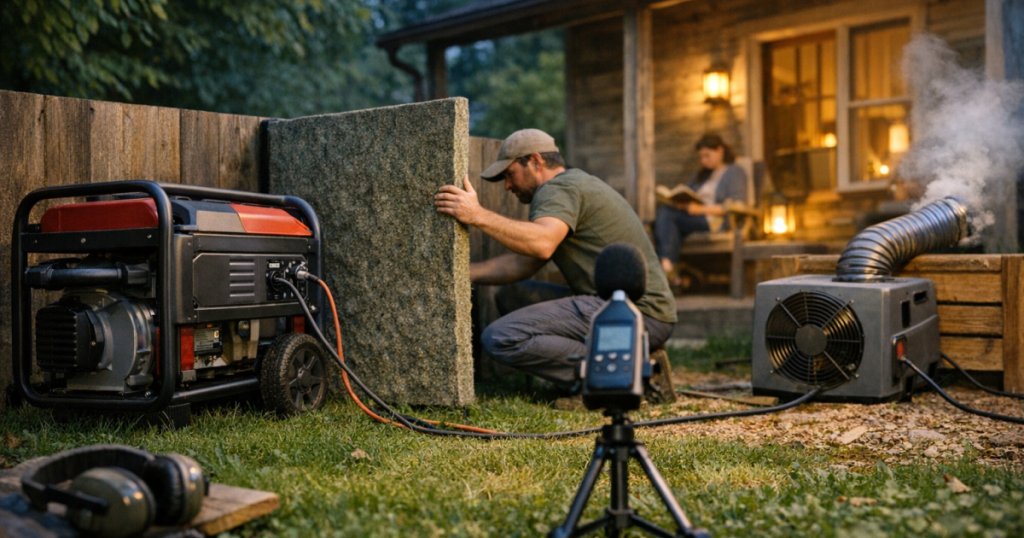
A safer way to quiet a portable generator is to deflect sound while keeping the generator fully outdoors and well ventilated. Think “shield,” not “enclosure.” A solid barrier placed between the generator and the house can reduce the direct path of noise, but the generator still needs open air on all sides as required by the manual.
Good barrier materials are stable, nonflammable or heat-tolerant for their location, and heavy enough not to blow over. Examples include a masonry wall, a sturdy fence section, or purpose-built outdoor acoustic panels set at a safe distance. The barrier should never block exhaust, cooling vents, service access, or the path for heat to escape.
A common mistake is building a plywood box lined with foam. That can create several risks at once: restricted cooling air, heat buildup, flammable material near a hot engine, and carbon monoxide collecting in a concentrated space. Even if the box seems to lower sound for a few minutes, it can turn a manageable noise problem into a dangerous operating condition.
If you use a temporary barrier, secure it so wind cannot knock it into the generator. Leave clear walkways for refueling and shutoff access. You should be able to reach the controls quickly, see the generator clearly, and hear if the engine starts running badly.
Step 5: Let load management lower the volume
Generators tend to get louder when they are working harder. You may not be able to make the engine silent, but you can often avoid the loudest operating behavior by keeping loads realistic and staggered.
Start with essentials: refrigerator or freezer cycling, a few LED lights, phone charging, internet gear, medical devices that your household depends on, and perhaps a fan or small appliance as conditions require. Large heating loads, central air conditioning, electric ranges, and clothes dryers can quickly push a portable generator beyond a calm, efficient setup.
If your outage plan is still fuzzy, it helps to estimate the loads before the storm. Our guide to how much backup power your outage plan needs can help you separate must-run items from comfort items. That matters for noise because a smaller, steadier load is usually easier to live with than constant surging and overload alarms.
Eco or economy mode can help some inverter generators run at lower engine speed under lighter loads. Use it according to the manual, and turn it off if the generator struggles with starting surges from appliances. The goal is not to force quiet mode at all costs; it is to keep the load appropriate for the equipment.
Step 6: Match your generator type to your noise expectations
Open-frame portable generators are often louder than enclosed inverter-style models, though exact sound levels vary by model, load, distance, and surroundings. If noise is a major concern for your home, apartment-adjacent rental, or tight suburban lot, generator type matters before the outage ever starts.
Inverter generators are commonly chosen for lighter essential-load backup because they can be easier to place, fuel, and tolerate near living spaces when operated safely outdoors. A model such as the Honda EU2200i is a familiar example of a compact enclosed inverter generator, though every household still needs to verify wattage, runtime, fuel storage, and local use rules before relying on any unit.
Larger dual-fuel and tri-fuel generators can support more circuits, but they are not automatically quieter in real use. More output can mean more engine, more exhaust, more fuel handling, and more placement constraints. For a deeper planning view, see when inverter generators make sense for home blackouts.
Step 7: Keep fuel, refueling, and weather protection safe
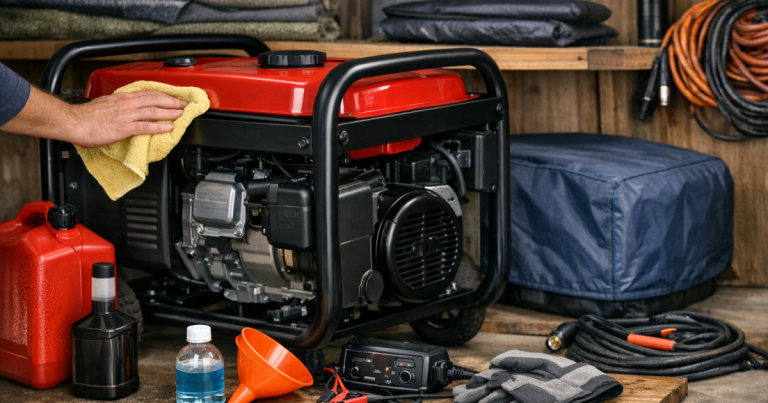
Noise fixes should never make refueling more dangerous. Shut the generator down and let it cool according to the manufacturer’s instructions before adding fuel. Gasoline spilled on a hot engine or muffler can ignite. Keep fuel containers closed, away from the running generator, and stored according to local fire-safety rules.
Weather protection is another place where people accidentally create an enclosure. A generator needs protection from rain and snow, but it also needs airflow and exhaust clearance. Use only weather covers, canopies, or shelters that are designed for generator operation and that match the manufacturer’s safety requirements. A tarp thrown over a running generator is not a safe rain plan.
If longer cord runs help you place the generator in a safer, quieter spot, use the right cord for the connection. For example, a Southwire 65172840 20-Foot 30A Generator Cord is the kind of specific generator cord some households compare for compatible 30-amp setups, but plug type, length, amperage, wire gauge, and transfer equipment must all match your system.
Step 8: Use timing and household routines
One of the simplest noise strategies is not running the generator nonstop unless your situation requires it. Many households can run in planned windows: cool the refrigerator and freezer, recharge devices, power internet equipment, run a well pump if applicable, then shut down for quieter hours. This depends on your appliances, weather, medical needs, and food-safety situation, so do not treat it as a universal schedule.
Nighttime is where planning pays off. Charge phones, battery lanterns, power stations, and UPS units while the generator is running during the day. Then you may be able to keep lights, communication, and small electronics going overnight without engine noise. If someone in the home uses a powered medical device, plan that load separately and conservatively.
Tell the household what the generator is powering and when it will run. A simple routine prevents someone from plugging in a space heater, microwave, or hair dryer at the wrong moment and making the generator surge loudly or trip offline.
Unsafe quieting ideas to skip
- Running it in a garage or shed: Open doors do not make this safe. Carbon monoxide can still build up and enter the home.
- Building a sealed quiet box: Heat and exhaust need to escape freely. A sealed box can overheat the generator and concentrate fumes.
- Covering it with blankets or foam: Soft materials can block cooling air, absorb fuel, melt, or burn.
- Pointing exhaust at a wall to “muffle” it: Exhaust can bounce back, collect, or drift toward openings.
- Improvised muffler changes: Exhaust modifications can affect heat, back pressure, warranty coverage, and safe operation. Use only manufacturer-approved parts and instructions.
- Ignoring carbon monoxide alarms: Working CO alarms belong on every level of the home and near sleeping areas according to alarm placement guidance.
Questions people ask
Can I put a portable generator in a soundproof box?
No, not in a sealed or homemade insulated box. Portable generators need open airflow for cooling and exhaust dispersal. Use open-air barriers at safe clearances instead of enclosing the machine.
How far away should a generator be to reduce noise?
Farther usually sounds quieter, but the safe distance depends on the generator manual, exhaust direction, cord rating, and site conditions. Never trade proper outdoor placement and carbon monoxide safety for convenience.
Do inverter generators make less noise?
Many enclosed inverter generators are designed for quieter essential-load use than open-frame models, especially at lighter loads. Actual noise still depends on the model, load, placement, and surrounding surfaces.
Can I run a generator only part of the day?
Often, yes, if your essential needs allow it. Many households use scheduled run times to cool appliances and recharge devices, then rely on batteries, UPS units, or lanterns during quiet hours.
Will a longer extension cord make my setup safer and quieter?
It can help with placement, but only if the cord is outdoor-rated, properly sized, in good condition, and compatible with the load. Undersized or damaged cords can overheat.
Main points
The safest noise reduction plan is simple: keep the generator outdoors, give it plenty of air, aim exhaust away from people and openings, reduce vibration, manage loads, and use barriers that deflect sound without enclosing the unit.
You do not need a perfect, silent setup to make a blackout easier. A well-placed generator running essential loads, with a clear fueling routine and safe connection method, can be much easier to live with than a louder, overloaded setup placed too close to the house.
When in doubt, choose the quieter safe option over the clever shortcut. Generator noise is temporary; carbon monoxide, fire, and electrical backfeed risks are not worth taking.