When the lights go out, the generator decision gets real fast: do you want a unit you roll out and connect when needed, or a permanently installed system that starts on its own? The choice between portable vs standby generators comes down to outage length, household needs, budget, fuel access, and how much hands-on setup you are comfortable doing during bad weather.
Generator wiring, transfer switch installation, and standby generator gas and electrical connections should be handled by qualified electricians or licensed contractors to meet local codes, manufacturer instructions, and safety requirements.
What to know first
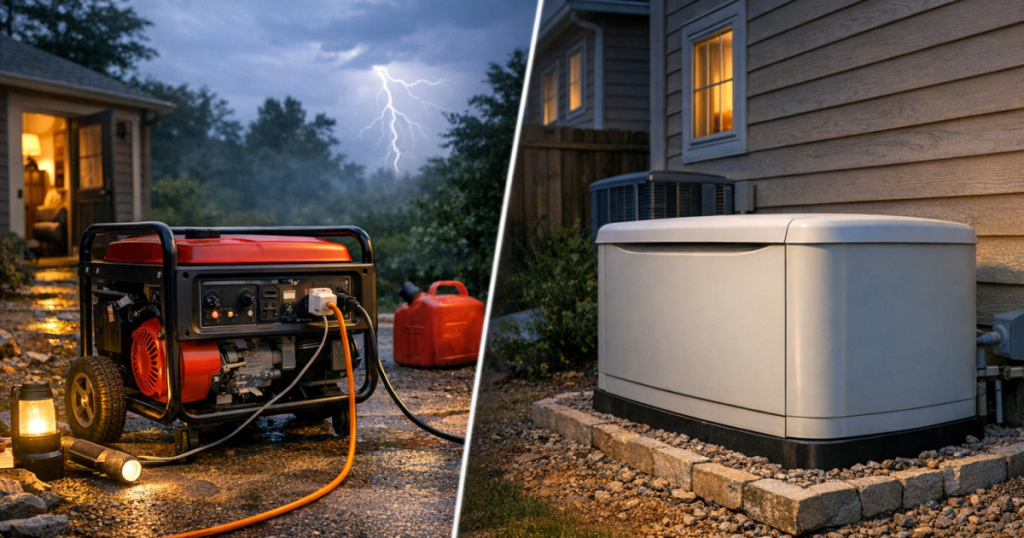
A portable generator is a temporary backup power source. You store it between outages, move it outdoors when needed, fuel it manually, and connect selected loads with heavy-duty cords, a power inlet, an interlock, or a transfer switch. It can be a smart fit for keeping a refrigerator, freezer, lights, router, sump pump, or a few essential circuits running without paying for a permanent whole-home system.
A standby generator is a permanently installed outdoor unit. It is usually connected to natural gas or a propane supply and paired with an automatic transfer switch. When utility power fails, the system can start automatically and feed preselected circuits or, if sized and installed for it, much of the home. That convenience is the main reason people consider one, especially where outages are frequent, long, or hard to manage manually.
The important point: neither choice is automatically “better.” A suburban family with occasional storm outages may be well served by a portable inverter generator and a safe connection plan. A rural household with a well pump, medical equipment, and recurring multi-day outages may have a stronger case for standby power. Renters, apartment dwellers, and townhome residents may not be able to use either in some situations and may need battery backup instead.
How each option behaves during a real blackout
Portable generator reality
Portable units are flexible but hands-on. You need to store fuel safely, wheel the generator outside, keep it far from doors and windows, start it, manage loads, and refuel only after shutting it down and letting it cool according to the manufacturer’s instructions. Inverter generators such as the Honda EU2200i are often discussed for essential-load backup because they are designed for portable use and can be easier to live with than large open-frame units, but every household still needs to verify wattage, runtime, fuel needs, cord ratings, and connection method.
Portable generators are not safe indoors, in garages, on porches, or near open windows. Carbon monoxide can build up quickly and can be deadly. The generator belongs outdoors, positioned according to the manual and local guidance, with working carbon monoxide alarms inside the home.
Standby generator reality
Standby systems trade flexibility for automation. Once properly installed, they can detect an outage, start themselves, and transfer selected loads without someone dragging cords through the rain. That matters for households with limited mobility, frequent travel, home medical needs, sump pumps, or outages that happen overnight.
Standby units still are not magic. They need professional sizing, installation, regular maintenance, adequate fuel supply, and clear expectations. A standby generator may not run every appliance at once unless the system is sized and managed for that. Large electric loads such as central air conditioning, electric ranges, water heaters, dryers, and well pumps can change the calculation quickly.
Power capacity: essential loads or most of the house?
The cleanest way to decide is to list what you truly need powered, not what you wish could stay normal. Start with food safety, heat-related needs, communication, medical devices, sump pump protection, lighting, and work-from-home basics. Then separate “must run” from “nice to have.”
A small portable generator may cover a refrigerator, a few lights, phone charging, and a router if the total running watts and starting surge fit within the unit’s rating. A larger portable generator connected through a proper inlet and transfer setup can power selected circuits more neatly, but it still has limits. For a deeper look at safe cords, inlets, and transfer equipment, see our guide to generator power connections for blackouts.
A standby generator can support a broader set of loads, but the design matters. Some systems are set up for critical circuits only. Others use load management to prevent too many large appliances from running at once. The installer should calculate loads based on actual equipment, not a rough guess or a promise that it will “run the whole house.”
Fuel and runtime are different problems
Portable generators usually depend on fuel you store and replenish: commonly gasoline, propane, or both on dual-fuel models. Gasoline can be convenient during short outages, but storage life, safe containers, stabilizer, and local fuel availability all matter. Propane stores differently and can be simpler for some households, but runtime depends on tank size, load, temperature, and the generator’s fuel consumption.
Standby generators commonly use natural gas or propane. Natural gas can reduce the need to store cans of fuel, but it depends on utility service remaining available. Propane standby systems depend on tank size and delivery access. In a long regional emergency, fuel logistics can become just as important as generator size.
For real planning, avoid assuming a generator will run “all night” or “for days” without checking the manual and estimating the load. Runtime claims are usually tied to specific load levels. A refrigerator that cycles on and off, a sump pump during heavy rain, and a furnace blower during a cold snap can create very different fuel use patterns.
Connection method: cords, transfer switch, or automatic transfer
The way power gets from the generator to the loads is one of the biggest differences between the two approaches. With a portable generator, the simplest setup is plugging appliances directly into properly rated outdoor extension cords. That can work for a short outage, but it becomes awkward if you need to power hardwired circuits, a furnace blower, a well pump, or multiple rooms.
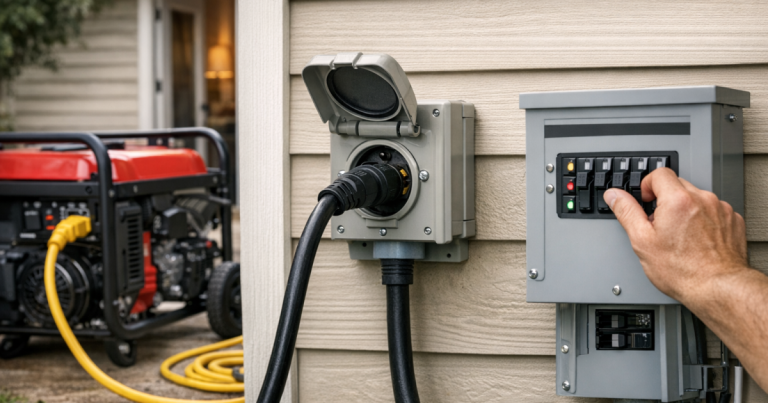
A safer and cleaner portable setup usually involves a generator inlet and a manual transfer switch or interlock installed by a qualified electrician. This keeps generator power separated from utility lines and helps avoid dangerous backfeeding. It also lets you choose specific circuits instead of running cords through the house.
Standby generators use an automatic transfer switch as part of the installed system. When the utility fails, the switch isolates the home from the grid and transfers the selected load to generator power. When utility power returns and stabilizes, the system transfers back. That automation is the biggest day-to-day difference for people who do not want to manage a generator manually during storms.
Noise, neighbors, and placement
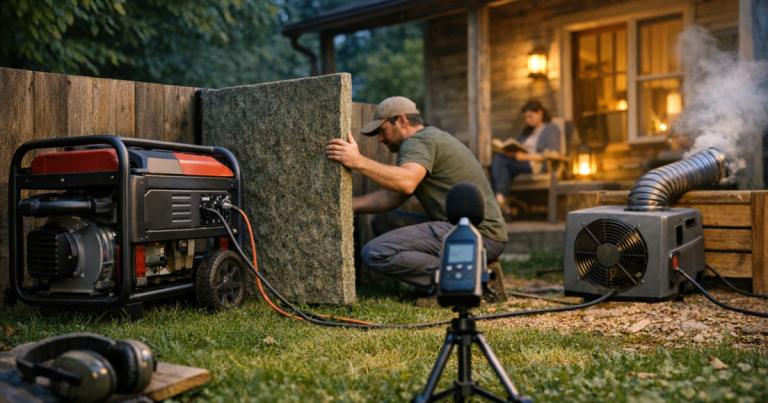
Portable generators vary widely in noise. Smaller inverter models can be more neighborhood-friendly than many large open-frame units, but they still make sound and must be placed safely outdoors. You also need a practical route for cords or an inlet, a level operating surface, weather protection that does not trap exhaust, and storage space between outages.
Standby generators also produce noise during operation and scheduled exercise cycles. Placement is governed by manufacturer clearances and local requirements, including distance from windows, doors, property lines, vents, and combustible materials. For tight lots, homeowners associations, or close neighbors, placement can become a deciding factor before brand or size even enters the discussion.
Cost trade-offs without pretending there is one simple answer
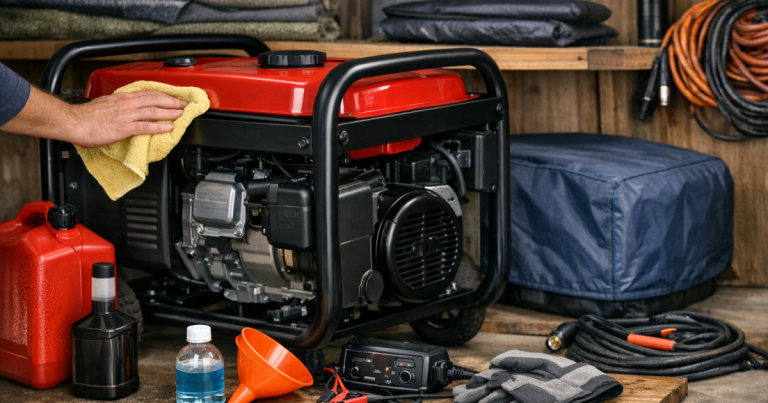
Portable generators usually have a lower upfront equipment cost, but the total setup may include fuel cans, cords, inlet hardware, a manual transfer switch, storage covers, maintenance supplies, and electrician work. A portable system is often the budget-aware path for essential-load backup, especially when outages are occasional and someone in the home can operate it safely.
Standby generators have a much higher installed-system cost because the generator, transfer switch, electrical work, gas or propane work, permits, site preparation, and maintenance all matter. The payoff is convenience, capacity, and automatic operation. That can be worth it for households where an outage creates more than inconvenience: flooded basements, lost well water, critical medical routines, extreme heat or cold risks, or repeated multi-day grid failures.
If you want a broader look at where generators sit alongside batteries and solar charging, our overview of home backup power options can help you think beyond a single equipment type.
Where portable generators make the most sense
A portable generator tends to fit when you want controlled backup for selected essentials and can manage the setup. It is especially practical for homeowners who experience occasional storm outages, have outdoor space to run the unit safely, and are comfortable maintaining fuel and equipment.
- Short to moderate outages: Good for keeping food cold, phones charged, and a few lights or small appliances running.
- Essential-circuit planning: Works well when paired with a properly installed inlet and manual transfer solution.
- Flexible use: Can be stored away when not needed and, depending on the model and local rules, used in other outdoor settings.
- Lower commitment: Usually easier to start with than a permanent installed system.
For a real example of a dual-fuel inverter generator aimed at essential outage loads, see the Champion Power Equipment 201531 review. Use examples like that as a way to understand load planning, not as a shortcut around checking your own appliances and setup.
Where standby generators earn their keep
A standby generator is strongest when the outage plan needs to work even when nobody is ready to set up equipment. That includes households with older adults, people who travel often, homes with sump pumps, rural properties with wells, and places where utility failures are frequent enough that manual setup becomes a burden.
- Automatic response: The system can start and transfer power without someone going outside in bad weather.
- More integrated backup: Selected household circuits can be powered through a permanent transfer setup.
- Better for hard-to-manage loads: Well pumps, sump pumps, heating equipment, and other hardwired essentials can be planned into the system.
- Less manual fuel handling: Natural gas or a dedicated propane supply can reduce the need for gasoline storage, though fuel planning still matters.
Installed systems from manufacturers such as Generac Guardian 22kW Home Standby Generator are common reference points in the standby category, but the model size and configuration should be based on a load calculation, available fuel, local installation requirements, and the circuits you actually need backed up.
The middle ground many homes overlook
Some households do not need a full standby system, but they also outgrow extension cords quickly. A properly installed manual transfer switch paired with a capable portable generator can be a strong middle path. It keeps the system simpler than standby power while allowing selected circuits to run in a controlled way.
Another middle-ground approach is combining a small generator with battery backup. A portable power station or UPS can keep Wi-Fi, phones, laptops, and medical-adjacent low-power devices running quietly indoors, while the generator handles refrigeration or recharging during safe outdoor operating windows. This can reduce noise at night and stretch fuel, as long as the charging and load limits are understood.
A simple decision path
Use these questions before getting lost in wattage charts:
- Do you need automatic startup? If yes, standby moves to the top of the list.
- Can someone safely set up and refuel a generator during an outage? If no, a portable system may not be realistic.
- Are your critical loads plug-in or hardwired? Plug-in loads are easier for portable setups; hardwired loads often require transfer equipment.
- How long do outages usually last? A few hours calls for a different plan than repeated 2- or 3-day failures.
- What fuel is dependable where you live? Stored gasoline, propane delivery, and natural gas each have trade-offs.
- Are there placement limits? Lot size, neighbors, windows, vents, and local rules can narrow the choice.
If the honest answer is “we only need fridge, phones, router, and lights,” portable backup may be enough. If the answer is “we need heat controls, a sump pump, well water, medical equipment support, and automatic operation,” standby power deserves a serious look.
Things readers ask
Can a portable generator power a whole house?
Sometimes it can power selected household circuits, but “whole house” is often misleading. Large appliances and hardwired loads require proper transfer equipment, load planning, and enough generator capacity.
Is a standby generator safer than a portable generator?
A properly installed standby generator reduces manual setup and cord mistakes, but it still needs correct placement, maintenance, and fuel planning. Portable generators can be used safely when operated outdoors and connected correctly.
Do I need a transfer switch?
You need a safe, code-compliant way to keep generator power separated from utility lines. For powering home circuits, that usually means a transfer switch or approved interlock installed by a qualified electrician.
What size generator do I need for outages?
Size it around the loads you must run at the same time, including starting watts for motors. Refrigerators, pumps, furnace blowers, and air conditioners need more careful calculation than lights and chargers.
Should renters use a generator?
Many renters cannot safely or legally operate a fuel-burning generator because of placement, lease, or building restrictions. Indoor battery backup is often a more realistic option for phones, routers, lights, and small devices.
Why it matters
The right generator choice is less about buying the biggest machine and more about building a blackout plan you can actually use. Portable generators reward preparation: safe storage, safe placement, the right cords or inlet, and a short list of essential loads. Standby generators reward planning up front: professional sizing, installation, fuel supply, permits, and maintenance.
For many US households, the best answer is not “power everything.” It is “keep the important things running safely.” Start with the rooms, devices, and routines that matter most during the first 24 hours. Then choose the generator setup that supports those needs without creating new risks during the outage itself.