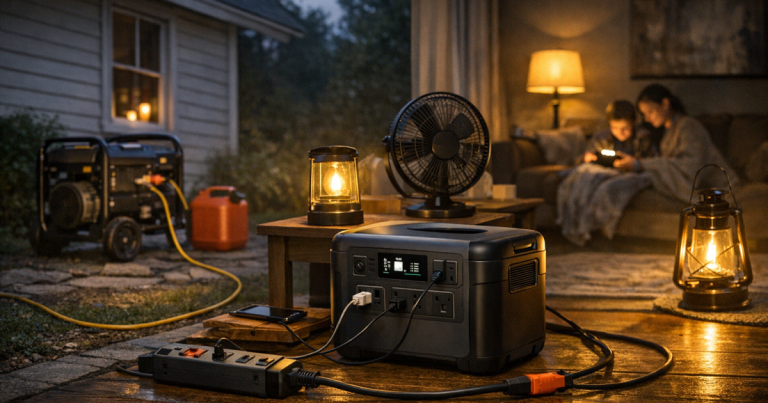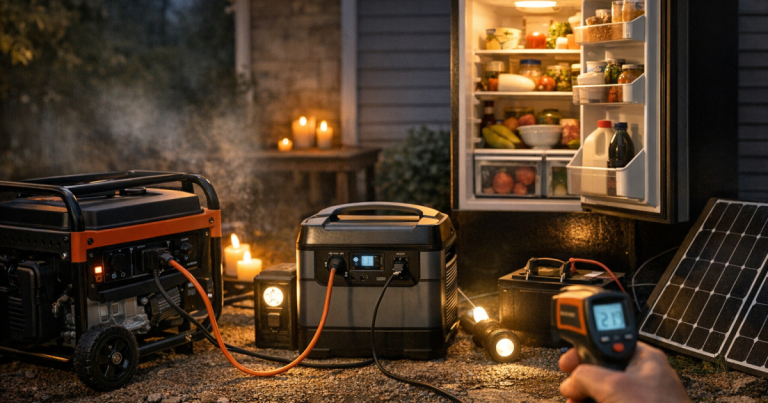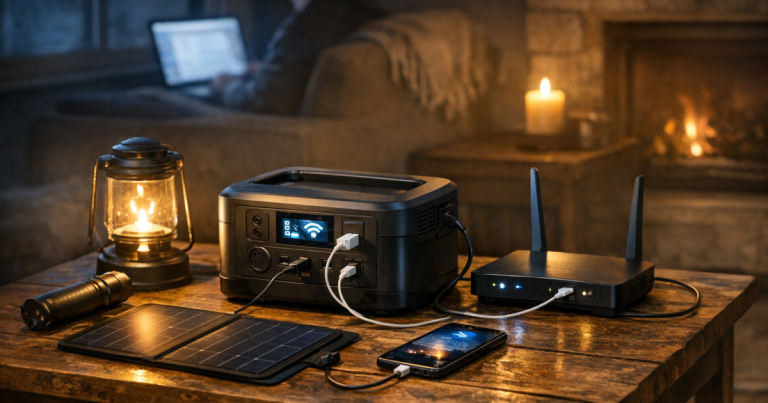
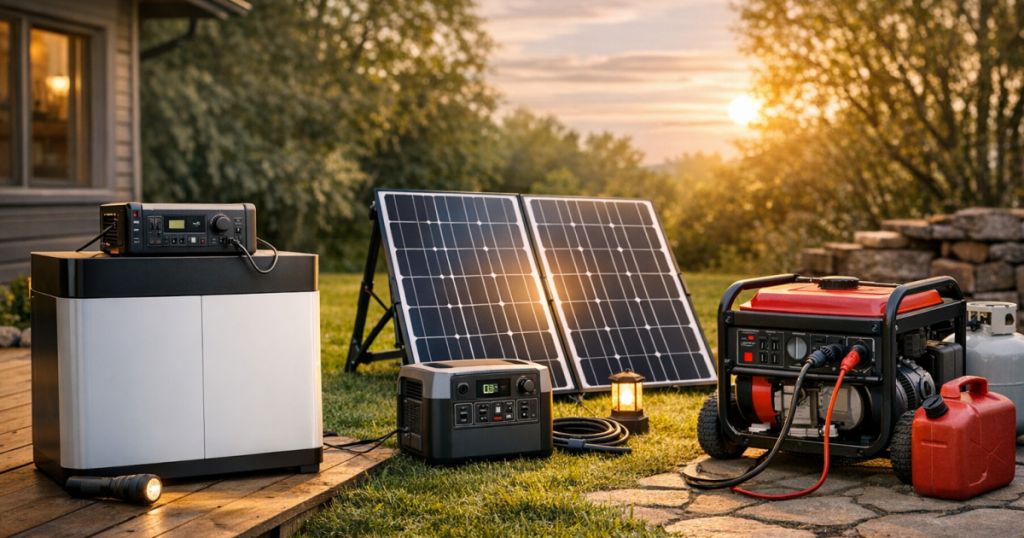
A blackout plan gets easier once you stop thinking in terms of powering the whole house and start thinking in terms of what must keep working. The right home backup power options depend on whether you need quiet overnight power, days of refrigerator runtime, medical equipment support, or a safe way to run selected household circuits.
Generator transfer switches, interlock kits, and any connection to household wiring should be installed by a qualified electrician to comply with the National Electrical Code, manufacturer instructions, and local electrical requirements.
The short version
Batteries are quiet, indoor-safe, and simple for phones, routers, laptops, lights, and some medical devices, but runtime is limited by battery capacity and the size of the load. Solar panels do not replace a battery or generator on their own; they recharge compatible batteries when sunlight, panel placement, and weather cooperate. Fuel generators provide the strongest outage runtime for refrigerators, freezers, pumps, and selected circuits, but they bring noise, fuel storage, maintenance, and carbon monoxide risks.
For many US households, the most resilient setup is not one single device. It is a layered plan: a UPS for internet gear, a portable power station for indoor essentials, solar as a supplemental recharge path, and a generator for higher-demand or longer outages when outdoor operation is safe.
What batteries do well during an outage
Battery backup usually means either a small UPS for electronics or a portable power station for broader household use. A UPS is designed to keep sensitive electronics alive through short interruptions and safe shutdowns. A portable power station is more flexible, with outlets and charging ports for everyday outage loads such as phones, lamps, laptops, a modem and router, or small medical devices that fall within the unit’s output rating.
The big advantage is where you can use it. Battery systems do not burn fuel, so they can operate indoors without exhaust. They are quiet enough for apartments, bedrooms, and overnight use. That matters when the load is a CPAP machine, a baby monitor, a refrigerator thermometer receiver, or a router you want running while the neighborhood is dark.
The limit is math. Every device pulls watts, and every battery has a usable capacity. A laptop and router may be modest loads. A microwave, space heater, well pump, sump pump, or central air conditioner can quickly exceed what a small portable battery can supply. Manufacturer runtime estimates are useful starting points, but your actual results depend on the connected load, battery condition, temperature, inverter losses, and whether the device cycles on and off.
If you are new to this category, start with the basics of how portable power stations work during home outages before relying on one for a long storm weekend.
Where solar fits, and where it does not
Solar is best understood as a recharge method, not a standalone appliance. A folding solar panel connected to a compatible portable power station can extend runtime for phones, radios, lights, and low-draw electronics. It is especially useful during multi-day outages when fuel is hard to get or you live somewhere a generator is impractical.
Solar also has real constraints. It depends on sunlight, roof or yard exposure, panel angle, weather, and safe placement. Smoke, heavy cloud cover, shade from trees, and short winter days can all reduce output. A panel leaning behind a window will usually perform worse than one placed outside in direct sun, and outdoor placement means you need to think about theft, rain ratings, cable routing, and tripping hazards.
Portable solar also needs compatibility checks. Before counting on a panel and battery together, verify the input voltage and connector type, the battery’s maximum solar input, whether adapters are required, and whether the manufacturer allows charging in the conditions you expect. Products such as the Jackery Explorer 1000 v2 and EcoFlow DELTA 3 Plus are useful reference points for comparing portable battery systems, but the label and manual matter more than the brand name when you are matching panels, loads, and recharge expectations.
What generators add to the plan
A portable generator is the workhorse option when you need more power for longer. It can support heavier outage loads than most portable batteries, including refrigerators, freezers, some sump pumps, selected kitchen appliances, power tools, and essential circuits when connected through proper transfer equipment.
The trade-offs are serious but manageable. A generator must run outdoors, away from doors, windows, vents, garages, crawlspaces, and enclosed areas. Carbon monoxide is the central safety concern, and extension cords or transfer connections must be rated for the load and used correctly. Refueling should happen only after the unit is shut down and cooled according to the manufacturer’s instructions. Fuel storage also needs planning: gasoline, propane, and natural gas each bring different shelf-life, storage, and availability issues.
Noise is another practical factor. An inverter generator is usually more neighborhood-friendly than an open-frame construction-style unit, but no generator is silent. If your outage plan depends on running one overnight, think through distance, security, weather protection that does not trap exhaust, and local noise rules before the first storm warning. A small inverter model, such as the Honda EU2200i, can be a useful benchmark for essential-load planning; our Honda EU2200i review looks at that kind of role in more detail.
How the options compare in real household scenarios
Apartment or condo with no safe generator space
A battery-first plan usually makes the most sense. Prioritize a UPS for the modem, router, and work computer, plus a portable power station for phones, rechargeable lights, fans, and small essentials. Solar may help if you have a balcony, patio, or safe outdoor access with enough sun, but many apartment dwellers should treat solar as a bonus rather than the foundation of the plan.
Suburban home with refrigerator, internet, and basic lighting needs
A blended plan works well here. A UPS can bridge short outages without anyone rushing around. A portable power station can cover indoor electronics and nighttime loads. A generator can then be reserved for refrigerator cycles, freezer protection, sump pump use, or recharging batteries during longer outages. This approach reduces generator runtime, fuel use, and noise while still giving you a stronger fallback.
Rural home with well pump, freezer, and longer restoration times
Fuel-based backup often becomes more important when outage restoration takes longer or critical loads are larger. The key is to avoid assuming that one generator automatically runs everything. Well pumps, electric water heaters, large HVAC systems, and cooking appliances can have high starting or running loads. Map what actually matters, then size and connect the system around those loads instead of guessing.
Essential loads matter more than appliance wish lists
The phrase “whole home” sounds comforting, but it can lead to overspending or unsafe assumptions. Most households can get through a short-term outage by protecting a smaller list: refrigeration, communication, medical needs, safe lighting, limited cooking, a way to charge devices, and temperature management within reason.
A good starting exercise is to walk room by room and write down what truly needs power. Then note whether each item must run continuously, occasionally, or only in an emergency. A refrigerator cycles. A router may run constantly. A sump pump may sit idle until heavy rain hits. A CPAP machine may need dependable overnight power. Those differences change the backup plan.
For a more accurate plan, use circuit labels, appliance nameplates, and real-world testing where safe. Our guide to mapping essential circuits for backup power can help you separate must-have circuits from nice-to-have convenience loads.
Where reasonable people choose differently
There is no single right answer because outage risk is local and household needs vary. Someone in a wildfire shutoff area may value silent battery backup and solar recharging because generator use can be restricted by smoke, fire danger, fuel shortages, or local rules. A homeowner in a hurricane-prone area may put more weight on a generator because outages can last several days and refrigeration losses add up quickly. A renter may need a plan that requires no wiring changes, no fuel storage, and no outdoor exhaust management.
Budget also changes the order of operations. A basic preparedness path might start with power banks, rechargeable lights, and a UPS for network gear. The next step could be a portable power station sized around communications and overnight essentials. A more robust plan might add solar charging or a generator once the household understands its real loads. The strongest setups are usually built over time, tested during calm weather, and adjusted after each outage.
Safety and maintenance should shape the decision
Backup power is only helpful if it is ready and safe when the lights go out. Batteries should be stored and recharged according to the manual, kept away from extreme heat, and tested with the devices you expect to use. Solar panels should be inspected for cable damage and paired only with compatible charging equipment. Generators need routine exercise, fresh or properly stabilized fuel, oil checks, clean air filters, and safe cords or transfer equipment.
Do not wait until a storm is already overhead to learn the startup sequence, fuel shutoff, overload behavior, or charging settings. A calm Saturday test can reveal whether the refrigerator cord reaches, whether the router is on the correct UPS outlet, whether the battery fan is too loud for a bedroom, or whether the generator location needs a longer properly rated cord.
Helpful questions
Can a battery backup run my refrigerator?
Sometimes, but it depends on the refrigerator’s starting surge, running watts, duty cycle, and the battery’s output and capacity. Verify both the appliance label and the battery manual, then test under normal conditions before relying on it.
Is solar worth adding if I already have a generator?
It can be. Solar can reduce generator runtime by recharging smaller battery systems for phones, lights, routers, and laptops, but it should not be treated as guaranteed daily power in cloudy, smoky, shaded, or winter conditions.
Can I plug a generator into a wall outlet?
No. Backfeeding through a wall outlet is dangerous and can put utility workers, neighbors, and your home at risk. Use properly rated extension cords for direct loads or a professionally installed transfer switch or interlock system.
What should I power first during a blackout?
Start with health and safety: medical devices, communication, safe lighting, refrigeration, and any pump or heat-related load that protects people or property. Comfort loads come after the essentials are stable.
What stands out
Batteries, solar, and generators are not rivals so much as tools with different jobs. Batteries make outages calmer indoors. Solar can stretch stored power when conditions cooperate. Generators provide stronger backup for heavier or longer-running loads, as long as they are operated outside and connected safely.
The most dependable plan is built around your home, not around a marketing phrase. List the loads that matter, estimate realistic runtime, decide what must work indoors, and decide what can safely wait for generator power. When those pieces are clear, home backup power options become less confusing and much easier to match to the outage you are actually preparing for.