When the lights go out, the most useful backup plan is not the biggest one. A little time to map essential circuits turns a confusing breaker panel into a clear plan for keeping the refrigerator cold, the internet on, key lights working, and critical pumps or medical equipment supported.
The goal is simple: know which circuits matter, what they serve, and whether your backup power setup can handle them safely.
Professional guidance note: Panel labeling, transfer switch installation, interlock setup, and any wiring changes should be carried out by a qualified electrician to comply with local electrical codes, manufacturer instructions, and safety requirements.
Main points
- Essential circuits are the breaker-panel circuits that support your highest-priority outage needs, not everything you normally use.
- A good circuit map connects each breaker to rooms, outlets, hardwired equipment, and priority level.
- The circuit label alone is not enough. Confirm what each breaker actually controls before relying on it during a blackout.
- Starting watts matter for motors such as refrigerators, sump pumps, furnace blowers, and well pumps.
- Your final list should match your backup method, whether that is a UPS, portable power station, inverter generator, or generator with a transfer switch.
Step 1: Decide what must keep working
Start with household needs, not the breaker panel. A circuit is essential only because something on it supports safety, communication, food protection, medical needs, basic comfort, or property protection.
Common essential loads include:
- Refrigerator and freezer circuits.
- Furnace blower or boiler controls for homes with gas, propane, or oil heat.
- Sump pump, septic pump, or well pump circuits.
- One or two lighting circuits in central areas.
- Router, modem, phone charging, and a small work-from-home setup.
- Garage door opener, if it is needed for access during an outage.
- Medical equipment circuits, with backup planning based on the equipment provider’s guidance.
Also write down what is not essential. Electric ranges, clothes dryers, electric water heaters, large central air conditioners, and space heaters can overwhelm many portable backup setups. Some homes can support larger loads with the right equipment, but they should not be assumed.
Step 2: Make a simple circuit worksheet
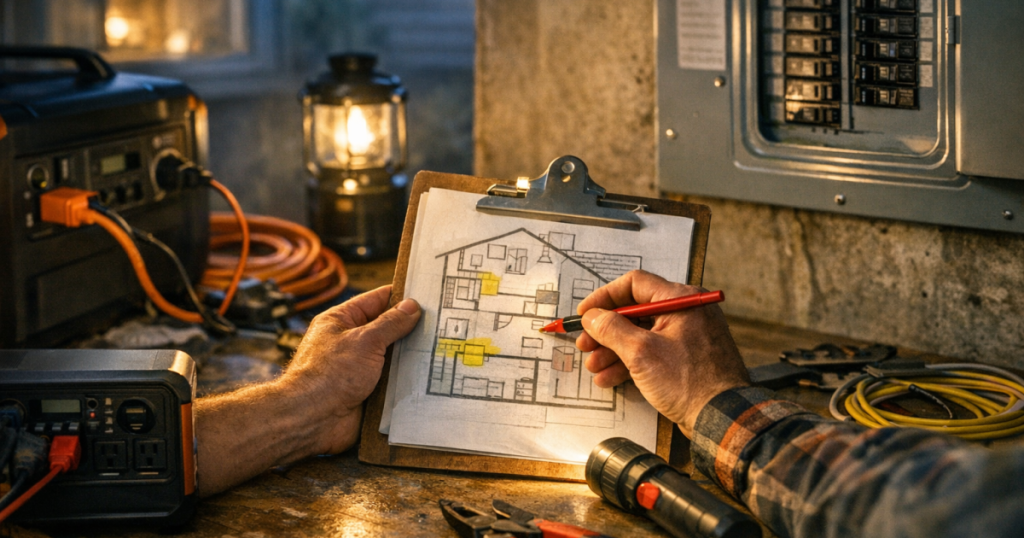
You do not need special software. A notebook, spreadsheet, or printed panel schedule is enough. Create one line for each breaker position and leave room for notes.
Useful columns include:
- Breaker number or panel position.
- Breaker rating in amps.
- Single-pole or double-pole breaker.
- Room, outlet, appliance, or hardwired equipment served.
- Priority level: critical, useful, or leave off.
- Known running watts or nameplate information.
- Starting-load note for motors, pumps, compressors, or blowers.
- Backup method: UPS, power station, generator receptacle, or transfer switch circuit.
If the existing panel labels say things like lights, kitchen, or plugs, treat them as starting clues. Older homes, remodels, finished basements, and added outlets often leave panels partly mislabeled.
Step 3: Confirm what each breaker controls
Work slowly and avoid making changes inside the electrical panel. You are identifying circuits, not rewiring anything.
For plug-in outlets and lights, use a safe, low-risk process:
- Tell everyone in the home what you are doing before switching breakers off.
- Shut down computers, sensitive electronics, and anything that could be damaged by sudden power loss.
- Use a plug-in lamp, outlet tester, or small radio to check which outlets lose power.
- Have one person at the panel and another person in the room, communicating by phone or voice.
- Turn off one breaker at a time, identify what changed, then turn it back on before moving to the next one.
- Mark your worksheet immediately so you do not rely on memory.
Do not switch off circuits that support critical medical equipment, active sump pumping, aquarium life support, or any load that cannot be interrupted without a plan. Schedule those checks carefully or have an electrician help identify them.
Step 4: Mark the hardwired equipment separately
Hardwired equipment deserves special attention because it may not be obvious from room outlets. Look for dedicated breakers feeding equipment such as furnace blowers, boiler controls, sump pumps, well pumps, septic pumps, radon fans, garage door openers, and built-in smoke or security systems.
Write down whether each item appears to be on a dedicated circuit or shares a circuit with other outlets or lights. A refrigerator on a kitchen circuit with several countertop outlets behaves differently from a refrigerator on a mostly dedicated circuit.
Double-pole breakers usually indicate 240-volt loads or multi-wire arrangements. Many portable generators and power stations cannot support every 240-volt household load. Treat double-pole circuits as electrician-review items before including them in a transfer switch or generator plan.
Step 5: Sort circuits into outage priority levels
Once you know what each breaker controls, sort the list into practical tiers.
Critical circuits
These are the loads you plan around first: refrigeration, medical support, heat controls in cold weather, sump pump protection, well pump service, and basic communication. If your backup system cannot handle all of them at once, create a rotation plan.
Useful circuits
These improve comfort but may not need continuous power. Examples include a living room lighting circuit, bedroom outlets for phone charging, a microwave circuit for short use, or a home office outlet for a laptop and router.
Leave-off circuits
These are loads you deliberately exclude during most outages. High-draw heating appliances, laundry equipment, electric cooking, large HVAC equipment, and workshop tools usually fall here unless your system has been designed for them.
This is where realistic load planning matters. A generator or battery does not care how many circuits are connected; it cares how many watts are being used at the same time. For a plain-English refresher, see our guide to starting watts, runtime, and priorities.
Step 6: Match circuits to the backup method
Different backup setups use your circuit map differently.
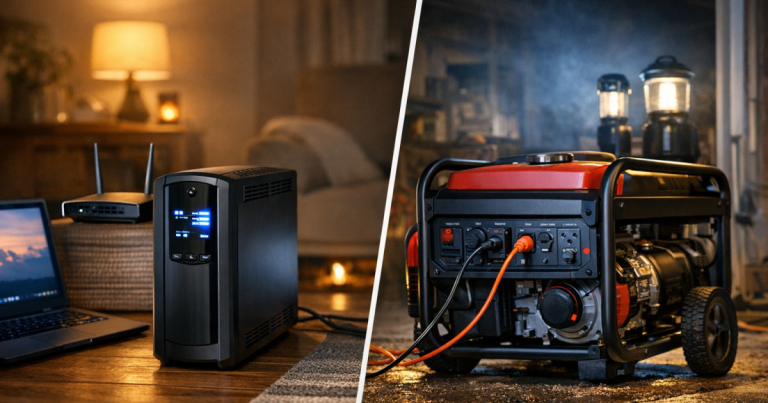
A UPS is best for short, seamless backup to electronics such as a router, modem, desktop computer, or network gear. It usually does not power a household circuit through the panel.
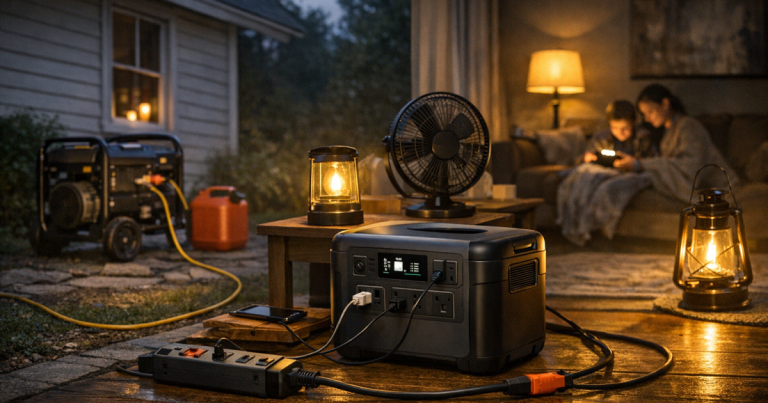
A portable power station is typically used by plugging loads directly into the unit. Your circuit map still helps because it tells you where the refrigerator, router, lamps, and medical equipment are located, but most portable power stations are not tied into a home panel unless installed as part of a code-compliant system designed for that use.
A portable generator can power selected items with properly rated extension cords, or it can feed selected household circuits through a properly installed transfer switch or approved interlock setup. Never backfeed a home through a dryer outlet, range outlet, or homemade cord. That can endanger utility workers, damage equipment, and create fire or shock hazards.
If your plan includes powering panel circuits from a generator, read how a manual transfer switch is used during an outage so your circuit map lines up with real operating steps.
Step 7: Add rough wattage notes
You do not need perfect lab numbers, but you do need realistic planning numbers. Check appliance labels, equipment manuals, or manufacturer information for running watts, amps, and voltage. For amps-to-watts estimates on 120-volt loads, watts are roughly volts multiplied by amps, but motors and compressors can draw more when starting.
Pay close attention to:
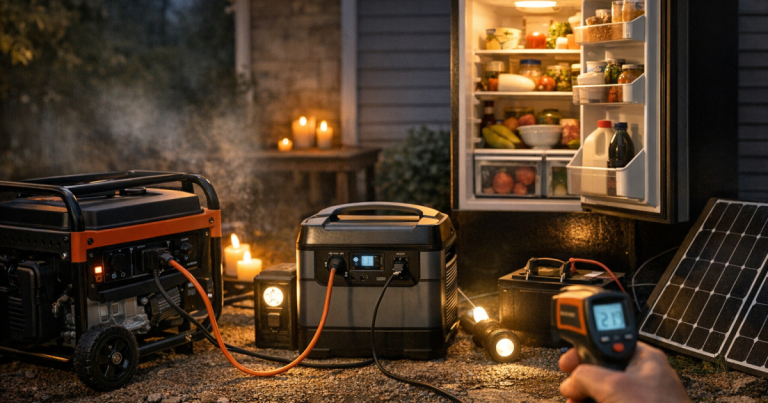
- Refrigerators and freezers, which cycle on and off.
- Sump pumps, which may start under load during storms.
- Well pumps, which may require 240-volt support and higher starting capacity.
- Furnace blowers, which are often essential in cold climates but still need proper transfer equipment.
- Microwaves and coffee makers, which can draw a lot for short periods.
After you list loads, compare the combined running watts and likely starting surges with your actual backup equipment. For broader sizing, use how much backup power your outage plan needs as the next step.
Step 8: Turn the map into an outage routine
A circuit map is most valuable when it becomes a simple operating plan. Keep a printed copy near the panel and another copy with your generator, power station, or household blackout binder.
Your routine might say:
- Start with refrigerator, freezer, router, and one lighting circuit.
- Run the sump pump circuit when rain is active or the pit level rises.
- Use the furnace blower circuit in heating cycles, not alongside other heavy startup loads.
- Charge phones and battery packs during low-load periods.
- Keep nonessential breakers off during generator operation.
This keeps the plan understandable under stress. Nobody wants to interpret a messy breaker panel by flashlight during a storm.
Step 9: Test the plan before bad weather
Testing exposes weak spots while you still have time to fix them. Choose a calm day, tell the household what you are doing, and walk through the process without rushing.
During the test, check:
- Whether panel labels match real rooms and equipment.
- Whether your selected loads can run without tripping breakers or overloading backup equipment.
- Whether extension cords, if used, are the right type, length, and rating for the load and environment.
- Whether the generator can be placed outdoors, away from doors, windows, vents, and attached garages.
- Whether everyone knows which circuits stay off.
Write down anything confusing. A backup plan does not need to be fancy, but it does need to be repeatable.
FAQ
How many circuits should be considered essential?
For many homes, five to eight carefully chosen circuits cover the basics: refrigeration, heat controls, internet, lighting, pumps, and a few outlets. The right number depends on your equipment capacity and household needs.
Can I include my whole kitchen?
Usually not as one broad assumption. A refrigerator circuit may be essential, while countertop outlets, microwave use, and small appliances should be planned separately because they can add large short-term loads.
Should renters map circuits too?
Yes, but keep it simple and do not alter the panel. Renters can identify which outlets serve the refrigerator, router, medical gear, and lighting so a UPS or portable power station plan is easier to follow.
Do I need a transfer switch for every backup plan?
No. Plug-in UPS units and portable power stations can support individual devices without connecting to the panel. A transfer switch or approved interlock becomes relevant when a generator is intended to power home circuits.
What if my panel labels are completely wrong?
Stop treating the labels as reliable. Rebuild the map one breaker at a time, and have an electrician identify hardwired, double-pole, or critical circuits that are not easy to confirm safely.
What to remember
Essential-circuit mapping is not about running your house as usual. It is about choosing the few circuits that protect food, heat, communication, medical needs, and property during a blackout.
Once those circuits are identified, your backup power choices get clearer. You can size equipment more realistically, avoid overloading it, and give everyone in the household a simple plan they can follow when the grid goes quiet.