A fridge outage feels urgent because food safety, comfort, and family routines all depend on one quiet appliance. The goal is to power a refrigerator safely without overloading a battery, misusing a generator, or guessing whether food stayed cold enough.
Start with the refrigerator, its location, and how long the outage is likely to last. Then choose the lowest-risk power source that can handle startup surge, run time, and safe placement.
Electrical work that connects a generator to household wiring, including transfer switch or inlet installation, should be carried out by a qualified electrician in compliance with local electrical codes and safety requirements.
In brief
- Keep the refrigerator and freezer doors closed as much as possible before you connect backup power.
- Use a refrigerator thermometer so you are not relying on guesswork. Perishable food should stay at or below 40°F.
- A generator must run outdoors, far from doors, windows, vents, garages, and crawl spaces.
- A portable power station can be used indoors, but it must have enough inverter capacity for the refrigerator’s startup surge.
- Never backfeed a home through a wall outlet. Use direct cords only, or a properly installed inlet and transfer equipment.
Step 1: Decide whether the fridge needs power right away
A closed refrigerator can usually keep food cold for several hours, but that time depends on room temperature, how full the fridge is, the appliance condition, and how often the door is opened. A full freezer generally holds temperature longer than a half-empty one.
Your first move is not always to plug something in. If the outage has just started, close the doors, check your flashlight or lantern, and make a calm plan. Opening the fridge to “check quickly” lets cold air escape and shortens your margin.
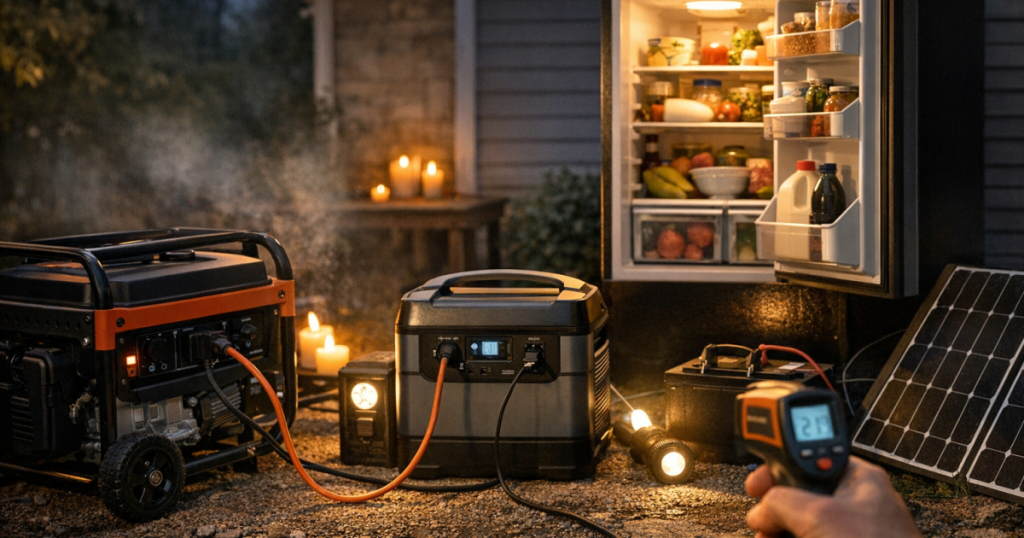
Use a refrigerator thermometer in the fridge compartment and, ideally, another in the freezer. If the fridge rises above 40°F for an extended period, treat meat, seafood, dairy, cut fruit, leftovers, and similar perishables carefully. When in doubt, follow current USDA food safety guidance rather than relying on smell or appearance.
Step 2: Find the refrigerator’s real power needs
Refrigerators are tricky because they do not draw the same amount of power every minute. The compressor cycles on and off. When it starts, it can require a brief surge that is higher than the normal running load.
Look for the appliance nameplate, usually inside the fridge, behind the kick plate, or on the back of the unit. You may see amps, volts, watts, or a combination. If the label gives amps, multiply amps by 120 volts for a rough watt estimate. This does not always capture startup surge, so leave a safety margin when choosing backup power.
A plug-in watt meter can help you understand your own refrigerator’s behavior during normal operation. Measure on a regular day, not during an emergency, and remember that older refrigerators, garage refrigerators, and large models may behave differently from compact or newer units.
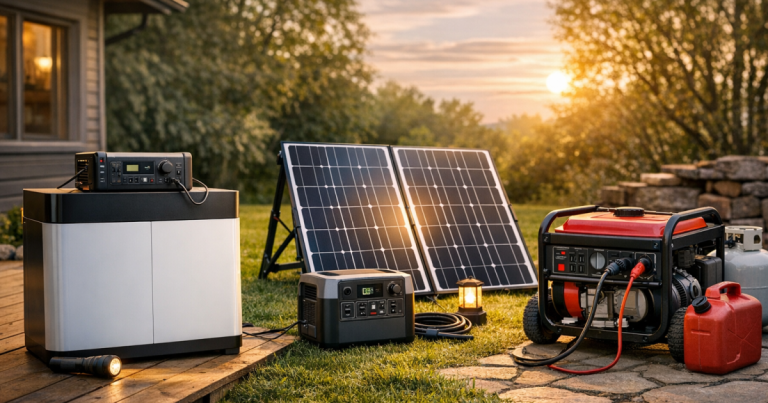
Step 3: Choose the safest backup source for your situation
Portable power station
A portable power station is the simplest indoor option for many households because it stores electricity in a battery and does not produce exhaust. The key checks are inverter capacity, usable watt-hours, outlet type, recharge options, and whether the unit can handle the refrigerator’s startup surge.
Runtime estimates vary because refrigerators cycle. A battery that looks large on paper may run down faster in a hot kitchen, with an older fridge, or if other devices are plugged in. Treat manufacturer runtime examples as estimates, then test your own setup before storm season if you can.
Place the power station on a dry, stable surface with ventilation around it. Do not cover it with blankets, stack items on top, or run it where it could be splashed. For more indoor battery precautions, see this portable power station safety guide.
Portable generator
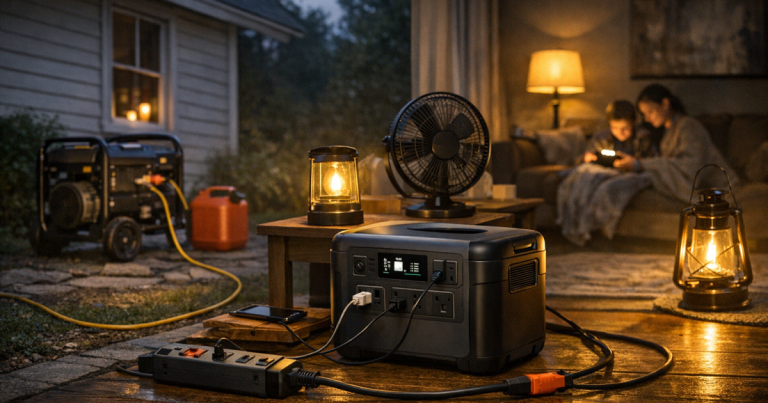
A portable generator can run a refrigerator for long outages, but it introduces carbon monoxide, fuel, noise, hot surfaces, and cord-management risks. It must operate outdoors only, well away from the house and any openings. A garage with the door open is still not a safe generator location.
If you power the refrigerator directly from a generator, use a heavy-duty outdoor-rated extension cord that matches the load and the generator outlet. Keep the cord out of standing water, avoid pinch points under doors, and do not daisy-chain power strips. If the cord feels warm, stop and reassess.
If you want the generator to feed selected home circuits, use a properly installed transfer switch or interlock arrangement. For a deeper explanation of cords, inlets, and safe connection paths, read generator power connections for blackouts.
Whole-home or standby backup
A standby generator or home battery system can keep the refrigerator running with less manual setup, but it still needs correct sizing, maintenance, and a clear load plan. Do not assume “whole-home” means every appliance can run at once without limits. Refrigerators, freezers, HVAC equipment, well pumps, sump pumps, and cooking appliances can compete for capacity.
If your setup is already installed, know which circuits are backed up before the outage. Label the fridge circuit, test the system according to the manufacturer’s instructions, and keep maintenance current.
Step 4: Connect only what the power source can handle
During an outage, the refrigerator should usually get priority over convenience loads. Avoid plugging in a microwave, space heater, coffee maker, toaster, or other high-draw appliance on the same small backup source unless you have confirmed the system can handle it.
For a battery, check both continuous output and surge capacity. For a generator, check rated running watts rather than focusing only on the largest number on the label. For any setup, leave headroom so the fridge compressor can start without tripping the inverter, breaker, or overload protection.
Use this simple order of operations:
- Turn off or unplug nonessential loads connected to the backup source.
- Connect the refrigerator with the correct cord or outlet arrangement.
- Let the compressor start and settle before adding anything else.
- Watch for warning lights, overload beeps, tripped breakers, odd smells, or warm cords.
- Recheck the fridge temperature rather than assuming the outlet means the food is safe.
Step 5: Run the fridge in cycles if power is limited
If your backup source cannot run the refrigerator continuously, cycling can help stretch fuel or battery capacity. The idea is to power the refrigerator long enough to pull the temperature down, then disconnect and keep the doors closed while the insulation does its work.
This is not an exact science. The safe interval depends on food load, kitchen temperature, refrigerator efficiency, and starting temperature. A thermometer is what makes cycling practical. Without one, you are guessing.
For a short outage, you might choose to run the fridge periodically while reserving battery power for phones, lights, or medical equipment. For a longer outage, you may decide the refrigerator gets scheduled generator time during the day, while a cooler with ice handles the most frequently used items.
Step 6: Make the fridge easier to keep cold
Backup power works better when the refrigerator does not have to fight warm air and constant door openings. Small habits make a real difference.
- Set the refrigerator near 37°F before storm season if your appliance allows it.
- Keep the freezer near 0°F.
- Freeze water bottles or jugs ahead of severe weather to add cold mass.
- Group frequently needed items in one quick-access area.
- Move drinks to a separate cooler so the fridge door stays closed.
- Use a cooler for meal ingredients once opened, rather than repeatedly opening the fridge.
- Avoid placing a garage refrigerator in extreme heat without accounting for the harder workload.
If you have pets, medications, remote work needs, or family members who rely on powered equipment, the refrigerator is only one part of the household plan. A room-by-room and priority-load approach, like the one in this home blackout preparedness planning guide, helps you avoid competing demands during the outage.
Step 7: Know when food safety matters more than saving food
Backup power is useful, but it is not a guarantee that every item stayed safe. If the refrigerator warmed above safe temperatures, if the outage lasted longer than expected, or if you were away and cannot verify conditions, be conservative with high-risk foods.
Keep appliance thermometers visible and write down key times if the outage is long: when power failed, when backup power started, when it stopped, and what the fridge temperature showed. This quick record can help you make better decisions later, especially if several people are managing the kitchen.
Food that still contains ice crystals in the freezer is generally easier to evaluate than refrigerated perishables that sat warm. When the safety of a food item is uncertain, replacing it is better than risking illness.
Common mistakes to avoid
- Running a generator indoors: Carbon monoxide can build up quickly in enclosed or partly enclosed spaces.
- Backfeeding through a dryer outlet or wall outlet: This can endanger utility workers, neighbors, and your home’s wiring.
- Using a light-duty indoor cord outside: Undersized or damaged cords can overheat and fail.
- Assuming a battery can start any fridge: Startup surge is the detail that often causes overloads.
- Opening the refrigerator repeatedly: Door openings can waste the cold you are trying to preserve.
- Powering too many appliances at once: The refrigerator may shut off if another appliance overloads the system.
FAQ
Can I plug a refrigerator into a portable power station?
Yes, if the power station’s AC inverter can handle the refrigerator’s startup surge and the battery has enough usable capacity for your planned runtime. Test the setup before an outage when possible.
Can I use a regular extension cord for my refrigerator during an outage?
Use a properly rated cord for the load and location. For generator use, choose an outdoor-rated heavy-duty cord in good condition, and keep it dry, uncoiled, and away from pinch points.
How long should I run a generator to cool a refrigerator?
There is no universal time because refrigerators, room temperatures, and food loads differ. Use a thermometer and run the fridge long enough to bring the compartment back to a safe temperature.
Is it safe to run a generator in the garage if the door is open?
No. A generator should run outdoors only, away from doors, windows, vents, and attached spaces. An open garage can still allow carbon monoxide to enter the home.
What temperature makes refrigerated food unsafe?
Perishable refrigerated food should generally be kept at or below 40°F. If food has been above that temperature for too long or you cannot verify conditions, follow USDA guidance and discard risky items.
Final thoughts
The safest way to keep a refrigerator running is to plan before the outage: know the appliance’s load, choose a safe power source, keep thermometers in place, and avoid unsafe generator shortcuts. With a clear priority list and a few simple checks, you can protect food without turning a blackout into a wiring, fuel, or carbon monoxide problem.