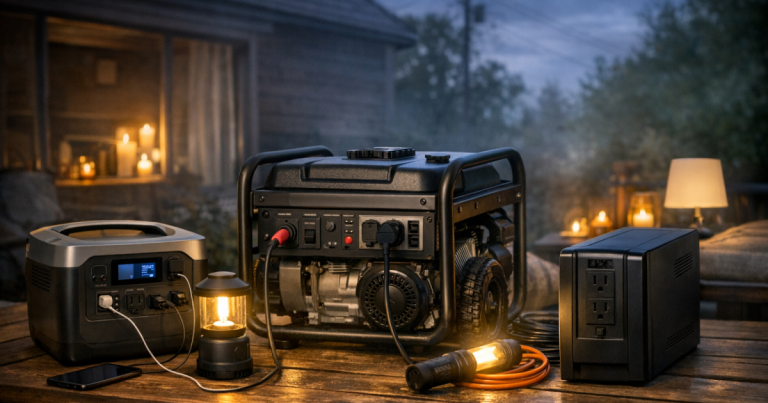
Portable Power Stations
Portable Power Station vs Generator vs UPS for Blackouts
Choosing the wrong backup can leave key devices uncovered. Here’s how each option fits real home outage needs.
Read article →
Make sense of home blackout backup planning with clear guides, honest reviews and practical comparisons. Whether you are weighing up a purchase or exploring the subject, Outage Essentials helps you focus on the details that matter.
Browse articles
Choosing the wrong backup can leave key devices uncovered. Here’s how each option fits real home outage needs.
Read article →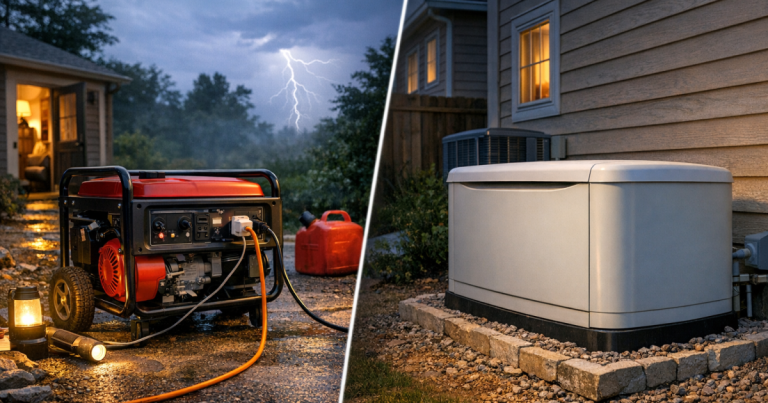
The right generator depends on what you need to keep running, how long outages last, and how much setup you want to…
Read article →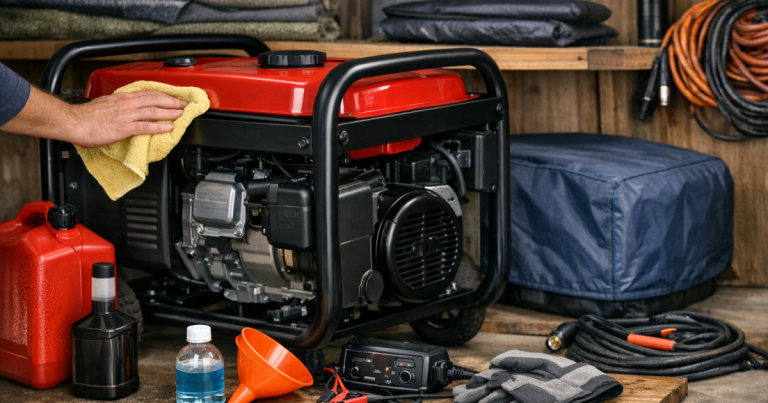
A stored generator should be clean, safe, fueled correctly, and ready to start when the next outage arrives.
Read article →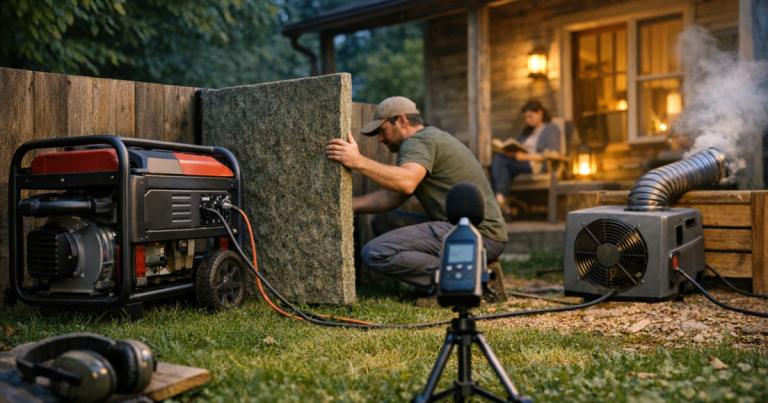
Generator noise is annoying, but the wrong quieting trick can trap heat or carbon monoxide. Use safer distance, barriers, and load habits.
Read article →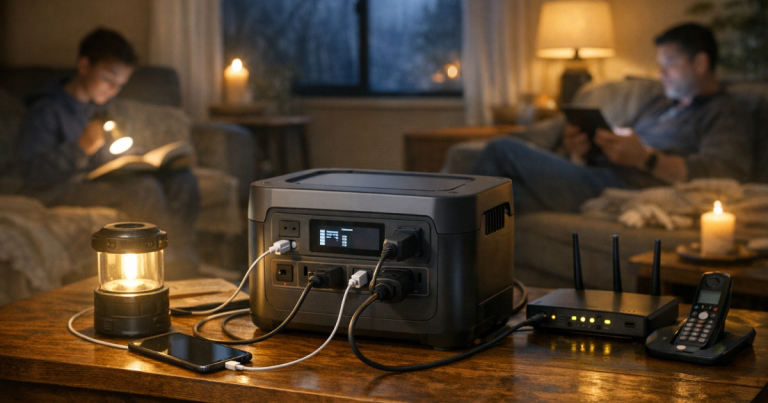
Keep the lights, router, phones, and small essentials running with fewer surprises when the grid drops out.
Read article →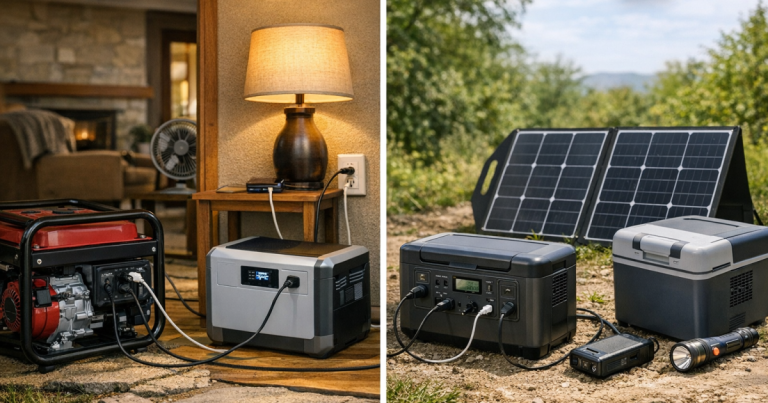
Know which outage devices need wall-style power, battery power, or an inverter before the lights go out.
Read article →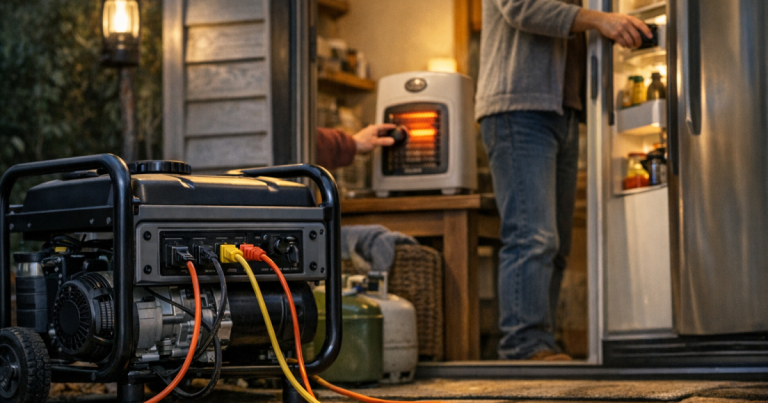
Keep essentials running longer by giving each appliance a turn without tripping the generator or risking unsafe hookups.
Read article →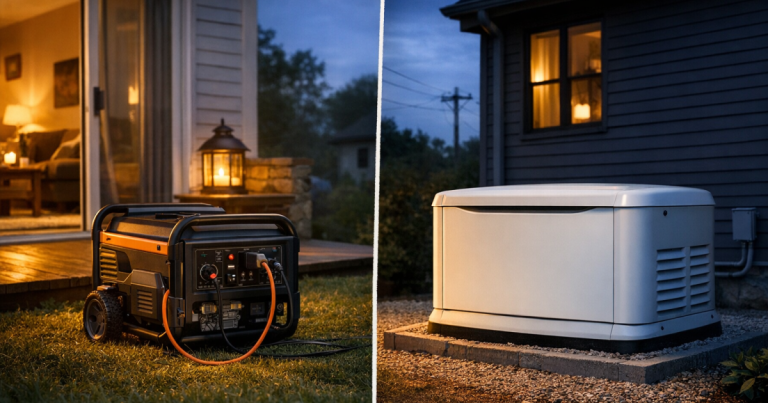
The right outage setup depends on what must keep running, how long outages last, and whether you need automatic power.
Read article →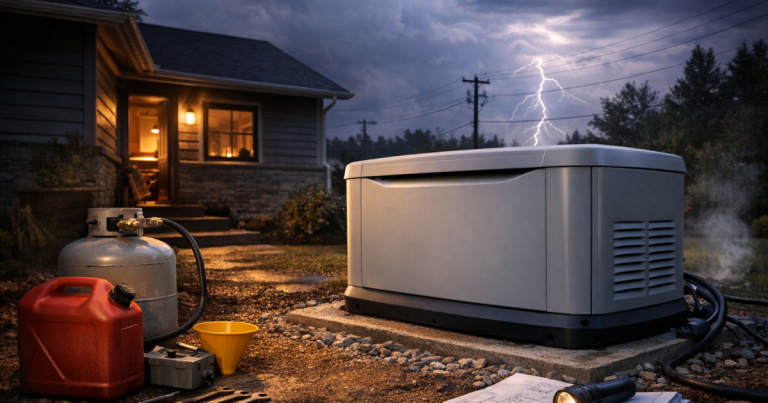
Permanent backup can feel calm and convenient, but only when the load plan, fuel supply, permits, and maintenance match your home.
Read article →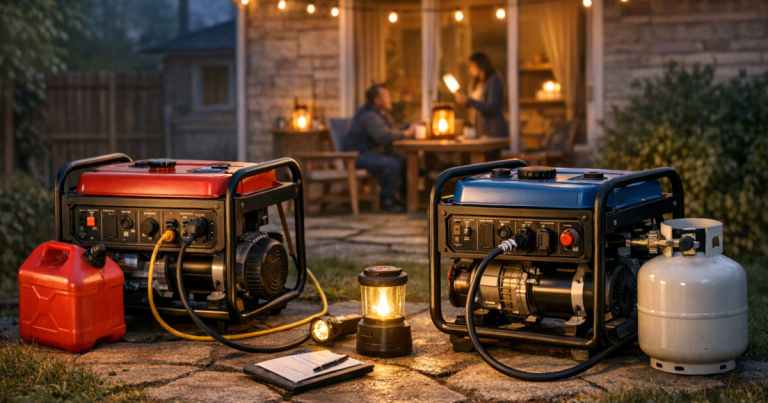
Gasoline gives flexibility; propane stores cleanly. The trick is sizing around real outage loads, not the biggest number on the box.
Read article →