A short outage is annoying; a longer one starts exposing the gaps in your household plan fast. The choice of portable vs standby backup power matters because it affects what you can run, how quickly power comes back, how much fuel or battery capacity you need, and how much electrical work is involved. The goal is not to power every comfort at once. It is to keep the right essentials running safely: cold food, phones, medical devices, internet gear, lighting, heat-related needs, and a few basics that make the house manageable.
Standby generator installation, transfer equipment, and any connection to a home’s electrical panel should be handled by a qualified electrician or generator installer to meet the National Electrical Code, manufacturer instructions, and local permitting requirements.
The short version
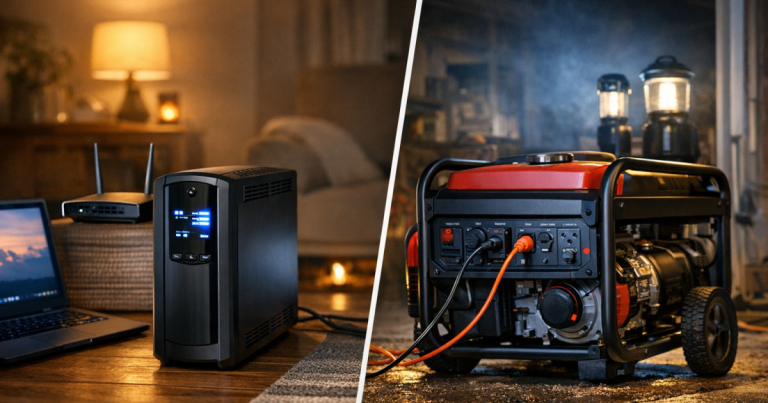
Portable backup power is usually the more flexible and approachable path. It can mean a battery power station, a UPS for internet gear, or a portable inverter generator used outdoors. It suits renters, smaller homes, remote workers, and households that mainly need phones, lights, a fridge plan, and a few critical devices.
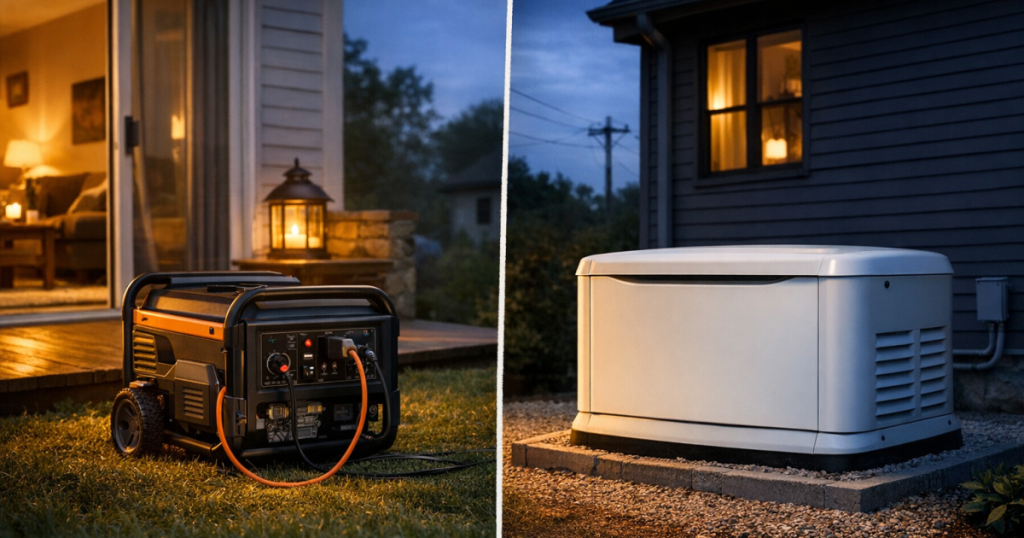
Standby backup power is a permanent system. It is installed outside, connected to fuel and transfer equipment, and can start automatically when utility power fails. It is better suited to households that need fast, whole-home or near-whole-home coverage, frequent outage protection, support for hardwired systems, or backup for essential medical, heating, cooling, well pump, or sump pump needs.
Neither route is automatically “better.” The better choice is the one that matches your outage pattern, your must-run loads, your fuel situation, your tolerance for setup work, and your budget. If the basic concepts still feel fuzzy, this overview of how home backup power works during an outage is a useful foundation before you get into sizing.
How portable backup power works in real life
Portable power is a broad category, so it helps to split it into three everyday roles.
- Small electronics backup: A UPS, such as the APC Back-UPS Pro 1500VA, can keep a modem, router, desktop computer, or network gear from dropping immediately when the grid blinks. It is not a long-duration home backup system, but it can buy time and prevent abrupt shutdowns.
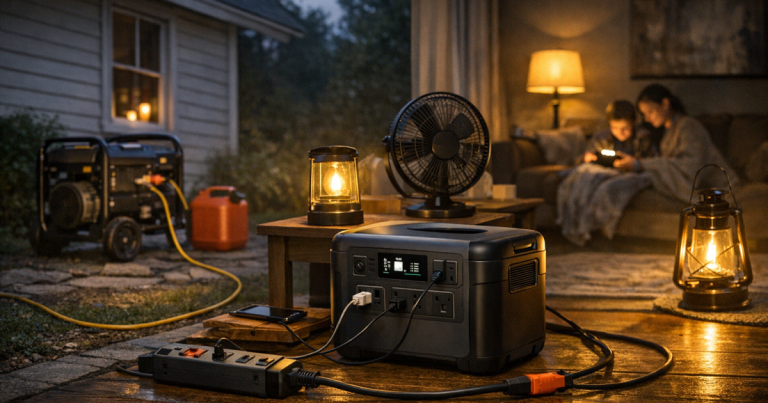
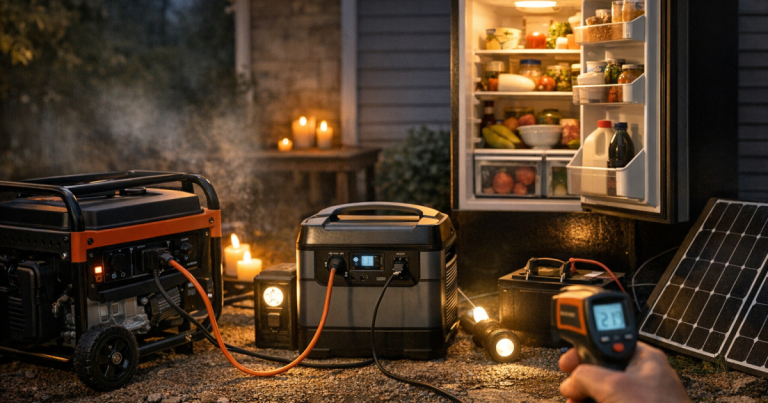
- Battery power stations: A portable power station can run phones, laptops, LED lamps, a router, small medical devices within its limits, and sometimes a fridge for a limited period depending on capacity and load. It is quiet indoors, produces no exhaust, and can be recharged from a wall outlet before a storm or from compatible solar panels when conditions allow.
- Portable inverter generators: A model such as the Honda EU2200i is an example of a small inverter generator class many households consider for essentials. Any generator must be used outdoors, far from windows, doors, vents, and garages, with proper cords and carbon monoxide awareness.
The strength of portable backup is control. You decide what to plug in, when to conserve power, and whether to prioritize food, communication, work, sleep, or medical needs. That flexibility is helpful during 4-hour, 12-hour, or overnight outages where you do not need the whole house energized.
The trade-off is effort. You may need to carry equipment, manage extension cords, rotate devices, monitor battery percentage, refuel safely, or move food to a cooler if the fridge is not part of your plan. Portable systems also have hard limits. A battery that easily handles phones and a router may struggle with heat-producing appliances. A small generator that runs a fridge may not also run a microwave, space heater, and window air conditioner at the same time.
How standby backup power changes the outage experience
A standby generator is built into the home’s electrical system through approved transfer equipment. When utility power fails, the system can detect the outage and start without someone dragging equipment outside in bad weather. Depending on sizing and installation, it may power selected circuits or a much larger portion of the home.
The biggest benefit is continuity. If your household includes a sump pump, well pump, hardwired furnace components, refrigerated medication, mobility needs, or frequent multi-day outages, automatic backup can reduce stress and reduce the number of manual steps required at the worst possible moment.
The trade-offs are real. Standby systems require professional installation, permitting, fuel planning, maintenance, and adequate space outdoors. They are not a casual plug-in solution. Before assuming you need one, read more about standby generators for blackouts so you can understand sizing, fuel, installation, and long-term ownership in plain English.
What each option can realistically support
Think in household jobs, not just watts. Most people do not need everything powered at once. They need the right sequence.
Phones, lights, and basic communication
Portable battery power is usually enough for this layer. Rechargeable lanterns, power banks, a small power station, and a UPS for networking gear can make a short outage feel controlled. Standby power can handle it too, but it may be more system than you need if your only goal is device charging and lighting.
Internet and remote work
A UPS or portable power station can often keep a modem, router, and laptop running for a workday-style outage if the local internet service remains online. Runtime depends on your equipment draw and battery size, so test your actual setup before relying on it. Standby power is helpful if internet backup is part of a larger need, such as keeping a home office, fridge, and HVAC-related systems online together.
Refrigerator and freezer protection
A fridge does not run at full draw every minute, but startup surge and cycling matter. Portable generators are commonly used for refrigerator support, and some larger power stations may work if their output and capacity fit the appliance. You should verify surge capacity, outlet type, extension cord rating, and expected runtime instead of assuming compatibility from watt-hours alone. Standby systems can make fridge and freezer protection more seamless if those circuits are included.
Heating, cooling, pumps, and hardwired systems
This is where standby power often becomes more compelling. Central air conditioning, well pumps, sump pumps, furnaces, and hardwired circuits can be difficult or unsafe to support with ad hoc cords. Some portable generators can feed selected circuits only through approved transfer equipment, but that becomes a more planned electrical setup, not a casual extension-cord arrangement.
The safety difference that matters most
The most important generator rule is simple: never connect a generator to your home wiring without approved transfer equipment. Backfeeding can put utility workers, neighbors, and your own household at risk. If you are considering any generator that might power circuits in the house, read this guide on how to prevent generator backfeed before making a setup plan.
Portable generators also create carbon monoxide risk. They belong outdoors only, never in a garage, enclosed porch, basement, shed, or near open windows. Refueling should happen only after shutdown and cooling, following the manufacturer’s instructions. Battery power stations avoid exhaust, which makes them much easier to use indoors, but they still have load limits and charging instructions that matter.
Standby generators reduce some manual handling risks because they are permanently placed and wired, but they are still engines with fuel, exhaust, maintenance requirements, and electrical integration. Automatic does not mean maintenance-free.
Cost, convenience, and commitment
Portable systems usually let you start smaller. You might begin with a UPS for internet gear, add a power station for devices and lights, then later decide whether a generator makes sense. This staged approach is useful for renters, apartment dwellers, and homeowners who are still learning what their outage pattern looks like.
Standby systems require a larger commitment. The installation is part of the home, not just gear on a shelf. That can be the right move when outages are frequent, when household needs are high, or when manual setup is unrealistic for the people living there. But it is worth being honest about what you are solving. If your biggest problem is keeping phones charged and food cold during occasional afternoon outages, a permanent system may be more than your situation demands.
Noise matters too. Battery systems are the quietest option. Portable inverter generators are generally quieter than many open-frame generators, but they are still engines. Standby generators also make noise when running and during exercise cycles, so placement and local rules matter.
A practical decision path
Start with the outage you are actually preparing for. A household that loses power for two hours twice a year has a different need than a rural home with a well pump and repeated storm outages.
- If outages are short and your needs are light: Focus on lighting, phones, a router plan, and a fridge thermometer. Portable battery backup may be enough.
- If you need quiet indoor power: A battery power station or UPS is the safer fit than any fuel-burning generator.
- If you need to run a refrigerator, freezer, or several essentials for longer: A portable generator may make sense, but only with outdoor placement, rated cords, fuel storage planning, and clear load management.
- If you need hardwired systems or automatic operation: A standby generator, or a professionally installed transfer setup for selected circuits, becomes more relevant.
- If someone in the home depends on powered medical equipment: Build redundancy. Confirm device power requirements with the equipment provider, test runtime under realistic conditions, and have a backup location plan for extended outages.
In brief
Portable backup power is flexible, scalable, and easier to start with. It works well when you are willing to manage the outage manually and when your essentials are plug-in loads. Standby backup power is more automatic, more integrated, and better suited to homes where outages are frequent, setup needs to be hands-off, or critical systems are hardwired.
The smartest plan may be layered. A UPS can bridge short interruptions. A power station can keep communication and lighting steady. A generator can support heavier essentials when used safely. A standby system can take over when the household needs automatic, installed coverage. The right answer is not the biggest system; it is the system your household can use safely when the power is already out.
Things readers ask
Can a portable power station replace a standby generator?
Sometimes, but only for lighter loads and limited runtime. It may handle phones, laptops, lights, internet gear, and some small appliances, but it will not automatically power home circuits the way a properly installed standby system can.
Is a standby generator worth it for occasional outages?
It depends on what the outage disrupts. If occasional outages threaten a sump pump, medical equipment, well pump, or home heating system, standby power may be reasonable. If the main inconvenience is charging devices, portable backup may be enough.
Can I plug a portable generator into a wall outlet?
No. That can create dangerous backfeed. A portable generator should power devices directly with proper outdoor-rated cords or connect to home circuits only through approved transfer equipment installed correctly.
Which is better for apartments?
Battery-based portable backup is usually the practical apartment choice because fuel-burning generators cannot be used indoors, on many balconies, or near neighboring windows and vents. Check building rules and focus on quiet, exhaust-free power for essentials.
Should I test my backup setup before storm season?
Yes. Test the actual devices you plan to run, note runtime, label cords, charge batteries, check fuel storage limits, and make sure everyone in the household knows the safe setup steps before an outage.