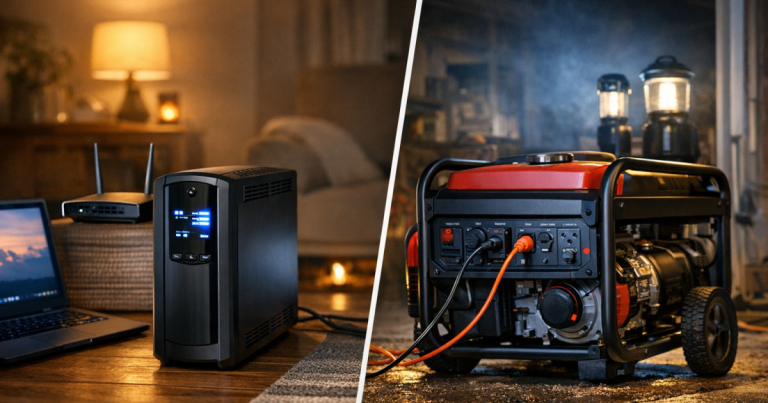
During an outage, a portable generator can keep the essentials running, but only if it is connected the right way. The one mistake to avoid is generator backfeed, which can energize home wiring or utility lines in a way that creates serious shock, fire, and equipment risks.
The safest plan is simple: power individual devices directly with proper cords, or connect the generator to your home through approved equipment installed for that purpose. Do not improvise a house connection during a storm, wildfire shutoff, or overnight blackout.
Professional guidance: Transfer switches, interlock kits, inlet boxes, and any connection between a generator and home wiring should be installed by a qualified electrician in compliance with the National Electrical Code, manufacturer instructions, utility requirements, and local codes.
At a glance
- Never plug a generator into a wall outlet, dryer outlet, range outlet, or any homemade cord meant to feed power backward.
- Use a manual transfer switch or listed interlock kit when connecting a generator to household circuits.
- Keep the main breaker isolated from generator-fed circuits according to the installed equipment’s instructions.
- Run portable generators outdoors, away from doors, windows, vents, garages, and enclosed areas.
- Label the setup, test it before storm season, and make sure everyone in the household knows what not to touch.
What backfeeding means in plain English
Backfeeding happens when electricity flows in a direction the system was not set up to handle. In a home outage, the dangerous version usually starts with a portable generator connected to the house through the wrong opening, such as a wall receptacle or appliance outlet.
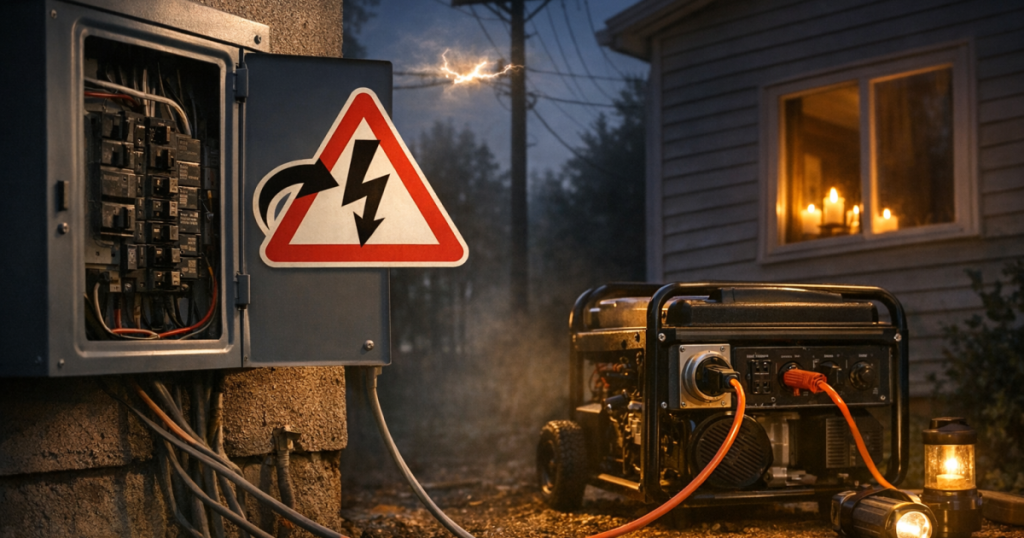
That can make parts of your home’s electrical panel live even when the grid is down. Worse, if the home is not properly isolated from utility power, electricity can move out toward utility lines. A lineworker, neighbor, or first responder may believe those lines are de-energized when they are not.
Backfeeding can also damage your own equipment. Household circuits, cords, receptacles, and generator outlets are designed for specific directions, loads, and protections. Using them outside that design can overheat wiring, defeat breakers, or create energized metal parts where nobody expects them.
If you are still sorting out the bigger picture of panels, circuits, batteries, and generators, it helps to understand how home backup power works during an outage before choosing a connection method.
The unsafe shortcut to avoid every time
The classic backfeed mistake is using a cord with two male plug ends, sometimes called a suicide cord. One end plugs into the generator and the other end plugs into a wall outlet or appliance outlet. This is unsafe for two reasons at once: the exposed prongs can become energized, and the cord can send power into circuits that were never isolated from the grid.
Do not use a dryer outlet, range outlet, garage receptacle, or extension cord adapter as a substitute for a proper generator inlet and transfer equipment. Even if lights come on, that does not mean the setup is safe. It means electricity is going somewhere, and you may not know exactly where.
A safer blackout plan does not depend on clever wiring tricks. It depends on either keeping generator power separate from the house wiring or using approved equipment that prevents utility power and generator power from being connected at the same time.
Step 1: Decide whether you are powering devices or circuits
The first safe decision is whether your outage plan is device-level or circuit-level.
Device-level power
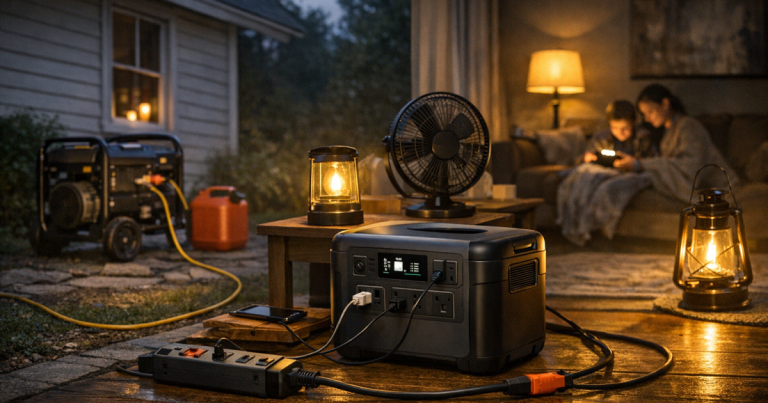
This is the simpler approach. The generator stays outdoors, and you run properly rated extension cords from the generator to individual loads such as a refrigerator, freezer, phone charger, lamp, or small appliance. This does not energize the home’s built-in wiring, so it avoids the backfeed problem as long as you do not plug the generator into the house.
Use outdoor-rated cords in good condition, keep connections dry and off the ground when possible, and stay within the generator outlet and cord ratings. Avoid running cords under rugs, through pinch points, or across wet walkways. For many renters and smaller homes, this direct-cord method is the most practical short-term setup.
Circuit-level power
This approach lets selected household circuits run from a generator, such as the refrigerator circuit, furnace blower circuit, some lighting, or a well pump if the generator and wiring setup are sized for it. Circuit-level power requires a transfer switch or a listed interlock system with a proper inlet. It is not a DIY shortcut.
The benefit is convenience and cleaner power routing. The responsibility is higher too: the setup must prevent utility power and generator power from being connected together.
Step 2: Use transfer equipment that blocks the wrong connection
A manual transfer switch is a dedicated device that moves selected circuits between utility power and generator power. When installed correctly, it creates a controlled path for the generator while keeping those circuits isolated from the utility feed.
An interlock kit is different. It is a listed mechanical blocking device installed on a compatible electrical panel. Its job is to prevent the main breaker and the generator breaker from being on at the same time. Interlocks must match the panel and be installed according to the kit and panel requirements; a random plate or homemade bracket is not the same thing.
For permanently installed automatic systems, the transfer equipment is built into the design. Standby units are a different level of project than rolling out a portable generator, so homeowners should understand standby generator sizing, fuel, cost, and installation before assuming whole-home backup is the right path.
Step 3: Install a proper inlet instead of feeding through an outlet
If a portable generator will feed household circuits, it should connect through a proper outdoor-rated or location-appropriate generator inlet that leads to the transfer switch or interlocked panel setup. The inlet is designed for this job. A normal household receptacle is not.
The inlet also makes your outage routine more predictable. Instead of snaking cords through windows or trying to remember which outlet someone used last time, you have one known connection point. That reduces confusion when the power fails at night or when a planned shutoff lasts longer than expected.
Label the inlet, the generator breaker, and the selected circuits clearly. Labels are not just for electricians; they help household members avoid guessing under pressure.
Step 4: Confirm the shutdown sequence before the outage
A safe setup needs a practiced sequence. Your exact steps should follow your installed equipment, but the overall idea is to keep power sources separated and loads controlled.
- Turn off or reduce major loads before switching power sources.
- Move the transfer switch or interlock into the correct position before energizing generator-fed circuits.
- Start and stabilize the generator outdoors before applying household loads.
- Add loads gradually instead of turning on everything at once.
- When utility power returns, transfer back according to the equipment instructions before shutting down and disconnecting the generator.
Do not rely on memory alone. Keep a laminated or printed checklist near the panel, generator accessories, or outage bin. A calm written sequence is especially useful if a spouse, adult child, neighbor, or house sitter may need to operate the setup.
Step 5: Match loads to the generator’s real limits
Preventing generator backfeed is mostly about connection safety, but load planning matters too. An overloaded generator can stall, trip breakers, damage sensitive equipment, or leave essential circuits without power.
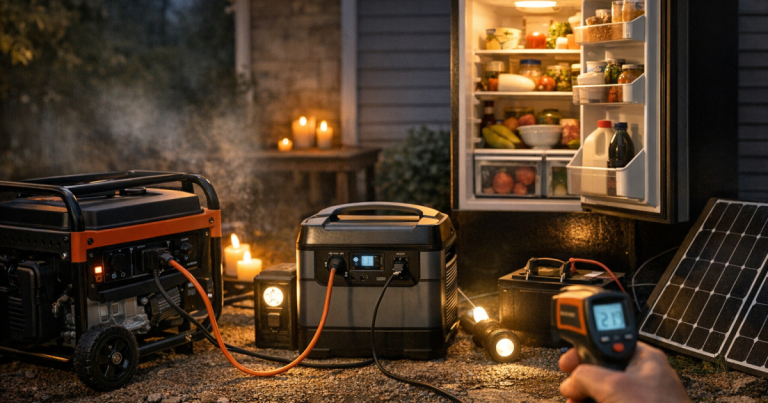
Start with essentials: refrigerator or freezer, a few lights, phone charging, internet gear if needed, and any medically necessary equipment with a backup plan. Larger loads like central air conditioning, electric water heaters, electric ranges, and clothes dryers can exceed what many portable setups can safely handle.
Fuel type also affects real-world planning. Gasoline, propane, and dual-fuel setups each have storage, runtime, and maintenance trade-offs. If you are building a portable setup around flexible fuel choices, read more about dual-fuel generators for blackouts before sizing cords, circuits, and storage space.
Step 6: Keep carbon monoxide safety separate from electrical safety
Backfeed is an electrical hazard. Carbon monoxide is a separate hazard, and both need attention. A generator should run outdoors only, placed away from doors, windows, vents, crawlspace openings, and attached garages. Do not run one in a garage with the door open, on a porch, in a shed, or near an open window.
Use working carbon monoxide alarms on every level of the home and near sleeping areas. If an alarm sounds, leave the home and call emergency services. Do not move the generator closer to the house just because rain, snow, theft concerns, or cord length make it tempting. Plan placement and cord routing before the outage so safety does not depend on improvising in bad weather.
Step 7: Test the setup before you need it
A short blackout drill can reveal problems while the weather is calm. Test the generator outdoors, inspect cords, confirm fuel, check labels, and walk through the switching sequence without rushing. If you have a transfer switch or interlock, verify that the household members responsible for operating it understand which circuits are included and which appliances stay off.
You do not need to run every appliance for hours. The goal is to answer practical questions: Can the generator sit far enough from the house? Do the cords reach without crossing unsafe paths? Are the refrigerator and freezer on the circuits you expected? Is the panel labeling clear? Does anyone in the home know not to use a wall outlet as a generator connection?
Common warning signs your setup needs attention
- You have a cord with two male plug ends anywhere in the garage, shed, or outage kit.
- Your plan involves plugging the generator into a dryer, range, or wall outlet.
- The panel has a generator breaker but no listed interlock or transfer equipment.
- The inlet, breaker, or switch is unlabeled and nobody can explain the sequence clearly.
- You are unsure which circuits are powered during generator operation.
- Lights brighten, dim, or behave strangely when loads turn on.
- Cords feel hot, breakers trip repeatedly, or the generator struggles under normal loads.
Any one of these is enough reason to pause the plan. Outage gear should make a stressful evening more manageable, not create hidden hazards inside the walls.
Questions people ask
Can I turn off the main breaker and plug a generator into an outlet?
No. Turning off the main breaker is not a safe substitute for proper transfer equipment. Breakers can be mislabeled, fail, or be turned back on by mistake, and a wall outlet is not designed as a generator inlet.
Is an interlock as safe as a transfer switch?
A listed interlock installed on a compatible panel can be a valid way to prevent simultaneous utility and generator connection. It must be matched to the panel, installed correctly, labeled clearly, and used according to instructions.
Can I power my whole house with a portable generator?
Usually not in the way people imagine. Some portable generators can feed selected circuits through proper equipment, but large electric loads may be unrealistic. Whole-home backup requires careful sizing, fuel planning, and approved transfer equipment.
What should renters do?
Renters should avoid any connection to building wiring unless the property owner has an approved installed system. For most rentals, the safer path is direct device-level power with outdoor generator placement where allowed, or battery backup for indoor essentials.
How often should I review my generator setup?
Review it before storm season, before planned shutoffs, after electrical panel work, and any time you change the generator, cords, circuits, or major appliances. A quick check can catch unsafe assumptions before an outage.
What to remember
The safe rule is straightforward: never feed a generator into your home through a normal outlet. Use direct cords for individual devices, or use a professionally installed transfer switch or listed interlock system for household circuits.
A good outage setup should be boring in the best possible way: labeled, practiced, properly connected, and easy to explain. That is what keeps the refrigerator running, the lights on, and the people around your home and neighborhood safer when the grid goes down.