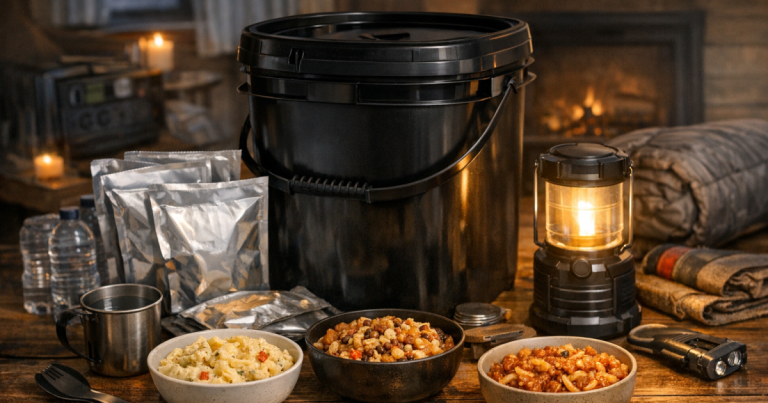
A sealed food bucket earns its space only when it helps during the messy middle of an outage: the fridge is warming, the stove may be offline, and nobody wants to build dinner from snacks. This Classic Meal Assortment Bucket review looks at Mountain House’s 12-pouch freeze-dried assortment as blackout pantry food, not as a fantasy all-in-one survival plan.
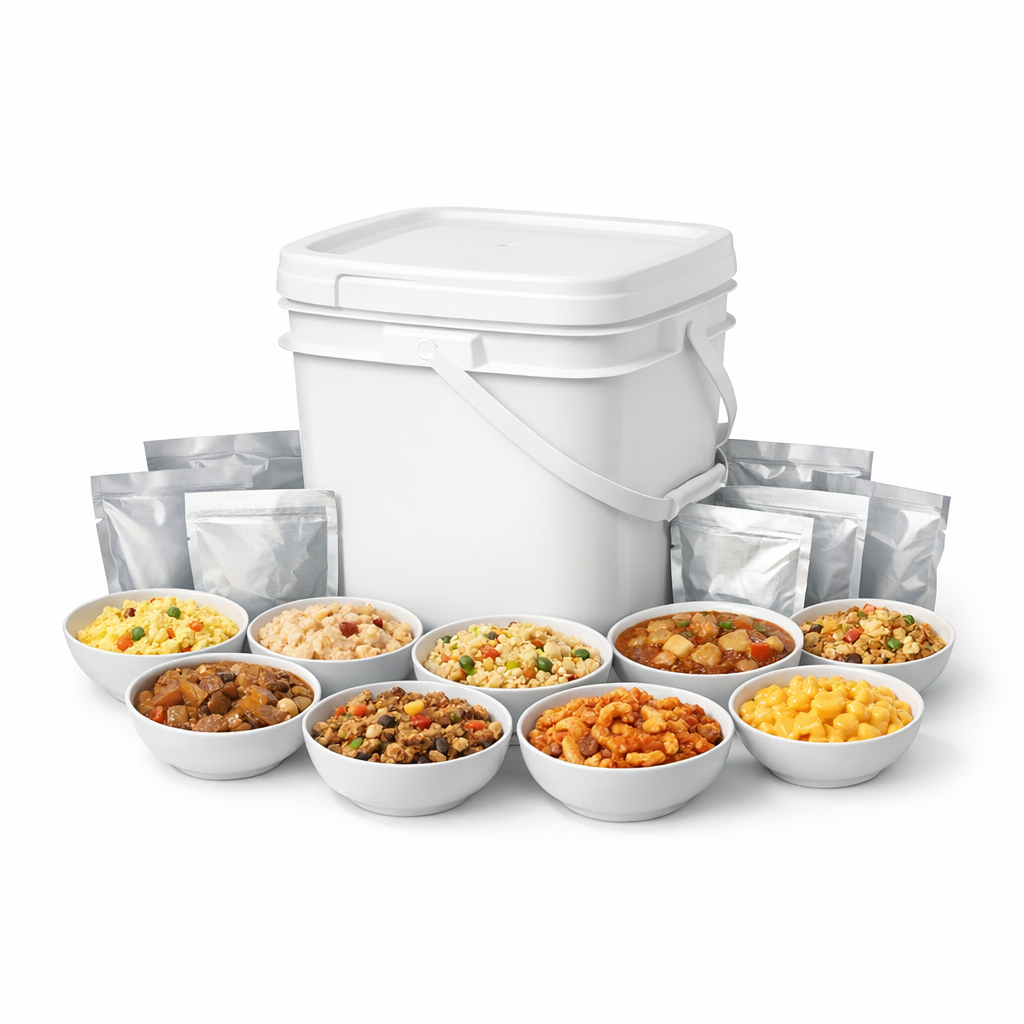
Mountain House Classic Meal Assortment Bucket
Best for households that want compact shelf-stable meals and already store enough potable water
The Mountain House Classic Meal Assortment Bucket is a freeze-dried meal assortment with 24 total servings. It is not standalone food in the same way canned soup or shelf-stable bars are. Every pouch needs potable water for rehydration, and hot water is the better fit if you want the listed preparation speed.
Product Details
- Brand and product: Mountain House Classic Meal Assortment Bucket.
- Type: freeze-dried meal assortment bucket for emergency food storage, camping, backpacking and at-home use.
- Contents: 12 pouches with 24 total servings.
- Meal mix: 3 Beef Stew, 3 Beef Stroganoff with Noodles, 2 Granola with Milk & Blueberries, 2 Spaghetti with Beef Marinara and 2 Chicken Fried Rice.
- Water needed for all meals: 18 cups, which is a little over 1 gallon.
- Preparation time: Mountain House lists less than 10 minutes; room-temperature water requires doubling the listed wait time.
- Bucket weight and size: 5.52 lb; 12 x 10 x 12.31 inches.
- Direct price listed by Mountain House: $134.49.
- Shelf-life positioning: Mountain House gives a 30-year taste guarantee from date of manufacture.
- Storage guidance: store unopened, dry and sanitary, and avoid prolonged exposure above 75°F.
The real buying question is water
For blackout planning, the biggest strength and the main catch are the same thing: these meals are light and shelf-stable because the water is not in the pouch. That is useful for storage, but it shifts part of the job to your home water plan.
The full bucket needs 18 cups of potable water to prepare. For a household that already stores drinking water, that is manageable. For a household that keeps food buckets but only a half case of bottled water in the closet, it is a gap. In a power outage tied to a storm, water service may be fine, or it may not. The bucket works best when it sits next to stored water, not somewhere else in the house as a hopeful afterthought.
Hot water also changes the experience. Mountain House lists preparation at less than 10 minutes, while room-temperature water requires doubling the listed wait time. That does not make the bucket useless without a working stove, but it does mean a hot-meal plan should include a safe off-grid way to heat water outdoors or an indoor-safe electric option powered by an appropriate backup setup.
Twenty-four servings is useful, not a complete food plan
The 24-serving count is helpful, but it should not be read as 24 full days of food. Serving adequacy depends on the people in the house, appetite, activity level and what else is in the pantry. For blackout use, the better way to think about this bucket is as a compact meal reserve that reduces decision fatigue when normal cooking is inconvenient.
The 12-pouch format is practical for short outages because it gives you individual meals rather than one large container that has to be managed once opened. The math averages two servings per pouch, so a couple, a parent and child, or one hungry adult can plan around it more cleanly than a large bulk can. For larger families, it becomes part of the pantry rather than the pantry.
A smart setup pairs this kind of food bucket with the basics: stored water, no-cook snacks, shelf-stable proteins, a manual can opener, paper plates and a food-safety plan for the refrigerator. If you are building that wider setup from scratch, our home blackout preparedness planning guide gives the meal bucket a more realistic place in the overall kit.
The meal mix is broad, but allergens narrow the fit
The included meals cover familiar comfort-food territory: Beef Stew, Beef Stroganoff with Noodles, Granola with Milk & Blueberries, Spaghetti with Beef Marinara and Chicken Fried Rice. That variety is a plus in an outage because dinner that feels normal can calm the room down. Nobody is at their best negotiating dinner by flashlight.
The limitation is dietary fit. This is not a strict gluten-free bucket. The included recipes list wheat-containing meals such as Beef Stroganoff, Spaghetti with Beef Marinara and Granola with Milk & Blueberries. Mountain House also lists allergens across the included meals including milk, egg, wheat, soy, sesame and tree nut coconut, and states that its facility processes peanut butter and other allergens including milk, soy, wheat, eggs, crustaceans, tree nuts, fish and peanut.
For households without those dietary conflicts, the assortment makes sense as simple blackout food. For households managing celiac disease, wheat avoidance, major food allergies or very specific diets, this bucket is a poor one-size-fits-all answer. In that case, a pantry built from known safe foods is more dependable than buying a general assortment and hoping everyone can use it.
Storage is simple, with one temperature catch
The bucket’s physical footprint is modest: 12 x 10 x 12.31 inches and 5.52 lb. That makes it easy to place on a pantry floor, closet shelf or utility-room storage rack without giving it a dramatic amount of real estate. It is much easier to store than cases of canned meals, though canned food has the advantage of already containing water.
Mountain House’s 30-year taste guarantee from date of manufacture is one of the product’s strongest ownership advantages. The useful caveat is storage temperature. Mountain House says unopened food should be stored dry and sanitary and should avoid prolonged exposure above 75°F. In real homes, that points away from hot garages, sheds and attic storage. A climate-controlled closet is boring, but boring is exactly what long-term food storage wants.
After a pouch is opened, Mountain House recommends using dry contents within one week for best results and treating hydrated leftovers like fresh food. That is a normal-food rule, not a special emergency loophole. Once water goes in, the meal belongs in the same common-sense category as other prepared leftovers.
Price, ordering limits and pantry value
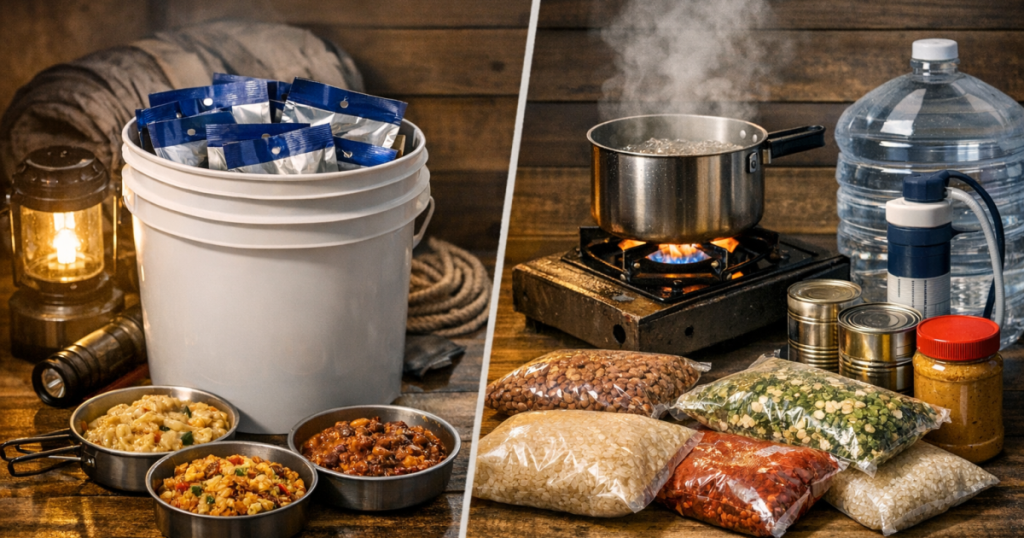
At Mountain House’s listed direct price of $134.49, the Classic Meal Assortment Bucket is not the cheapest way to put calories on a shelf. Rice, beans, canned chili and peanut butter can all stretch a food budget further. The reason to consider this bucket is convenience: long storage life, familiar meals, compact packaging and fast preparation when hot water is available.
That value case is strongest for households that want an easy, set-aside emergency meal option and do not want to rotate a large pantry constantly. It is weaker for households that already cook from shelf-stable staples, have serious dietary restrictions, or need a food kit that can be eaten without added water.
Mountain House states that it does not ship food products outside the United States and does not deliver to PO boxes. Its return policy also states no returns on food items unless they are damaged, defective or there is a receiving discrepancy with the order. That makes this the kind of purchase where the meal mix and allergen fit should be right before it lands in your pantry.
Compared with larger emergency-food buckets, this Mountain House option feels more like a compact meal reserve than a deep pantry. If you are comparing it with bigger entree-focused kits, our ReadyWise WFS 120 Serving Entree Only Grab & Go Bucket review shows a different approach: more servings, a more pantry-first role and a different set of trade-offs.
Verdict
Score: 8.3/10. The Mountain House Classic Meal Assortment Bucket is a strong fit for households that want compact, familiar emergency meals and already store enough potable water to prepare them. The score is driven most by the practical 12-pouch format, the 24-serving assortment, the long shelf-life positioning and the clear water requirement. Its main compromises are not hidden: it is not ready to eat without water, room-temperature preparation takes longer, and the allergen profile rules it out for some homes.
For a blackout pantry, I like it as a dependable meal layer rather than the whole food plan. Store it indoors, pair it with water, and treat it as the thing that keeps dinner simple when the rest of the day has already been annoying enough.
Mountain House Classic Meal Assortment Bucket
Best for households that want compact shelf-stable meals and already store enough potable water
You might also like: Portable Power Station vs Generator vs UPS for Blackouts.