ReadyWise’s WFS 120 Serving Entree Only Grab & Go Bucket is the kind of food storage that looks simple from the outside, but the buying decision depends on a few practical details. This WFS 120 Serving Entree Only Grab & Go Bucket review treats it as a pantry tool rather than a complete survival stash: it gives you shelf-stable entree pouches, but you still need potable water, containers, and utensils to turn them into meals.
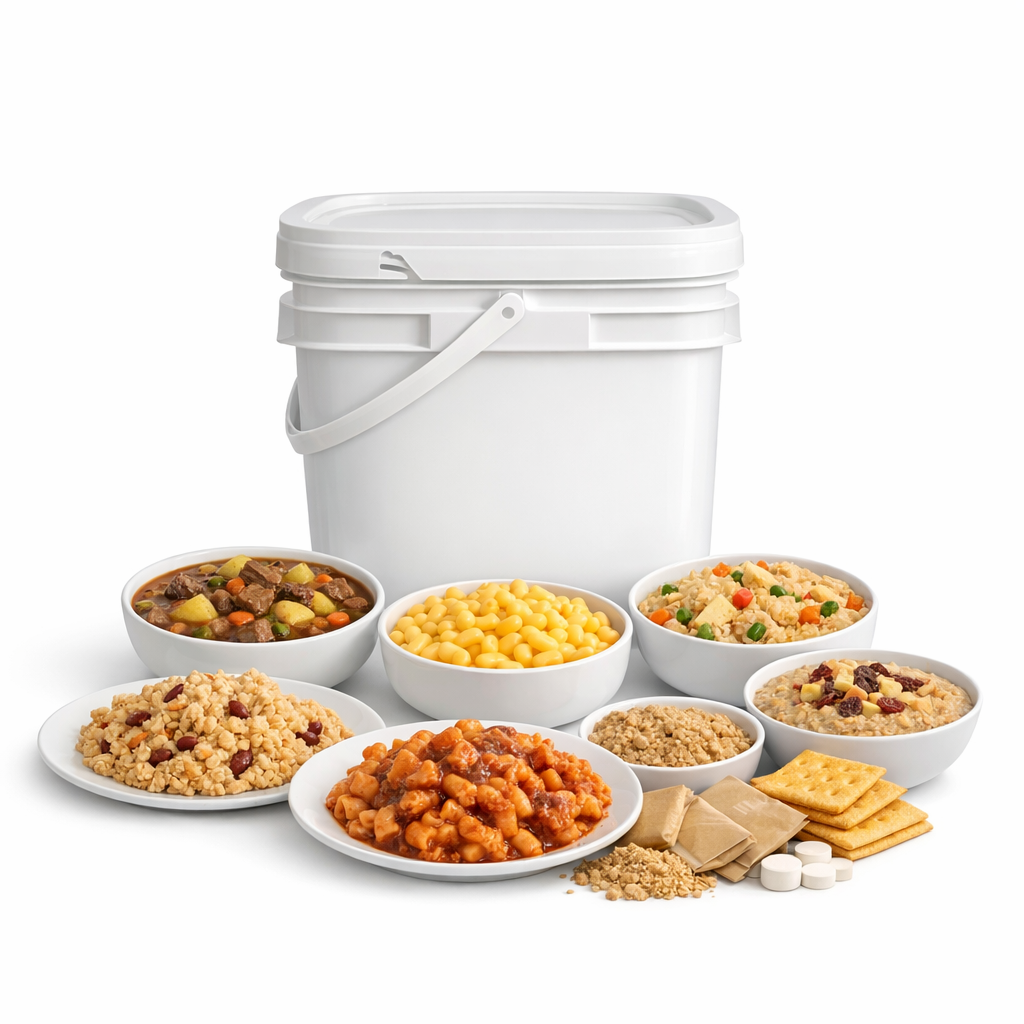
ReadyWise WFS 120 Serving Entree Only Grab & Go Bucket
A sensible entree reserve for households that store water and want blackout meals beyond everyday cans
My editorial take: the ReadyWise bucket makes the most sense for households that want a compact, long-life entree reserve for blackouts and storm outages, not for anyone expecting a full no-prep food plan. The appeal is real: one bucket, many pouches, a long shelf-life claim, and meals that can be prepared with hot or cold water. The catch is that water, allergens, calories, and pouch size decide whether it fits your household.
Product Details
- Reviewed product: WFS 120 Serving Entree Only Grab & Go Bucket by ReadyWise.
- Product type: freeze-dried and dehydrated emergency food bucket.
- Total food: 120 servings and 24,360 total calories.
- Bucket: one total bucket; the lid color can be black or red.
- Shelf-life claim: up to 25 years when stored properly.
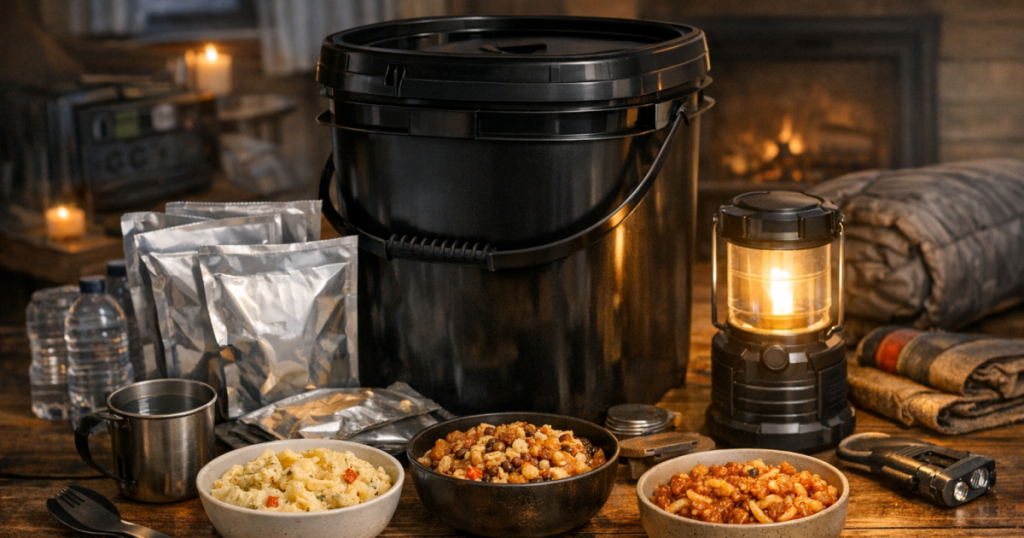
- Packaging: food is sealed in individual Metallyte pouches, with each pouch containing 6 servings.
- Preparation: ready in minutes when water is added, hot or cold.
- Water requirement: on average, each individual serving requires 1 cup of water.
- Common allergens disclosed: milk, soy, and wheat gluten are common allergens found in Wise products.
- Listed sale price: $159.99.
- Return policy: unopened, unused merchandise may be returned within 30 days of purchase.
The calorie math is more useful than the serving count
The headline number is 120 servings, but for blackout planning, the stronger number is 24,360 total calories. That works out to roughly 203 calories per serving, which is useful context if you are imagining “servings” as full meals. These are entree portions, not a complete day-by-day meal plan with breakfast, snacks, beverages, protein add-ons, and water.
A simple way to use the bucket is to think in meal components. For a short outage, one pouch could help turn a stressful evening into a normal-feeling dinner when the fridge is off and cooking options are limited. For a multi-day outage, the bucket should sit beside ordinary pantry foods: canned vegetables, nut butters, crackers, oats, shelf-stable milk, tuna packets, rice, or other staples your household already eats.
Using total calories also keeps expectations realistic. At 24,360 calories, the bucket represents about 12 days of food at 2,000 calories per day for one person, before accounting for individual needs, appetite, children, activity level, or the fact that this is entree-only food. Split across four people, that same calorie pool disappears much faster. That does not make the bucket weak; it means it is a reserve, not a magic pantry.
If you are building a broader outage plan around meals, water, lighting, medication, and device charging, pair this food decision with a household checklist such as home blackout preparedness planning. Food storage works better when it is connected to the rest of the house plan.
Water is the real companion purchase
This bucket is not ready-to-eat food. ReadyWise states that each individual serving requires, on average, 1 cup of water. Across 120 servings, that is about 120 cups of prep water, or 7.5 gallons, before you count drinking water, handwashing, pet bowls, or cleanup.
That water requirement is not a tiny footnote. It is the difference between a convenient blackout food kit and a bucket you cannot use when the taps are questionable or water service is disrupted. For most homes, the sensible pairing is stored potable water plus a simple way to measure and mix meals without relying on a full kitchen routine.
The hot-or-cold preparation detail is helpful in a blackout. Hot water usually makes emergency entrees more comfortable, but cold-water preparation gives you a fallback if you do not want to run a stove, fuel burner, or electric appliance. The product still needs time, water, and a container; it is not the same kind of convenience as ready-to-eat canned soup or pouch meals.
Six-serving pouches favor families and planned meals
Each Metallyte pouch contains 6 servings. For a family dinner, that can be tidy: open a pouch, add water, serve a shared meal component, and move on. For a one-person apartment outage, the same pouch size is less neat because opening a multi-serving pouch creates leftovers or repeated meals.
That is the trade-off with many emergency food buckets. Bulk packaging helps make the bucket compact and organized, but it is not as portion-flexible as single-serve ready meals. If your household is one or two people, it helps to decide ahead of time how you would handle an opened pouch during an outage, particularly if refrigeration is unavailable.
The included entree varieties give you more range than a single-flavor case: Cheesy Lasagna, Creamy Pasta, Pasta Alfredo, Chicken Flavored Noodle Soup, Savory Stroganoff, Hearty Tortilla Soup, Potato & Chicken Flavored Pot Pie, Teriyaki and Rice, Tomato Basil Soup, Southwest Beans and Rice, and Cheesy Macaroni. That variety is useful for morale. In a long, dark evening, dinner feeling a little ordinary can be a small win.
Storage life is appealing, but storage conditions still count
ReadyWise claims up to a 25-year shelf life for this bucket. For households that do not want to rotate short-dated food constantly, that is the main draw. You can add the bucket to a closet, pantry shelf, basement storage area, or emergency tote and treat it as a long-term backup layer.
The “up to” wording deserves respect. ReadyWise storage guidance says products should be stored in cool, dry places and that temperature, moisture, oxygen, and light affect the food. In plain terms, the best home location is boring: dry, stable, and away from heat. A hot garage or damp corner is a poor match for a product bought for long storage life.
The one-bucket format is convenient for grab-and-go storage, but it also means this is a single reserve, not a distributed pantry system. If your home has multiple floors, an outbuilding, or a storm shelter area, decide whether one central bucket is practical or whether you would rather split food types across locations. The bucket lid color can vary between black and red, which does not change the food decision.
Allergens and household fit need a serious look
ReadyWise discloses that milk, soy, and wheat gluten are common allergens found in Wise products. That makes this bucket a poor fit for households that need gluten-free, dairy-free, or soy-free emergency meals unless every eater’s needs are covered separately. Emergency food is not helpful if someone in the house cannot safely eat it when options are already limited.
This also matters for guests, older relatives, kids, and neighbors you might feed during a storm outage. If your plan includes sharing meals beyond your immediate household, keep a small backup of simpler allergy-conscious foods you already trust. The best blackout pantry is not always the biggest one; it is the one people can actually eat.
Pet owners should treat this as human food storage, not a household-all-needs bucket. If animals are part of your outage plan, build their water, food, medication, and comfort supplies separately. The guide to planning for a blackout with pets at home is a useful next stop before you call the pantry done.
Where it fits in a blackout pantry
The strongest use case is a household that already stores water and wants an entree reserve that can sit quietly until storm season, wildfire shutoffs, winter outages, or short-term grid failures make normal cooking harder. It is a pantry-first food kit: helpful, compact, and easy to understand, but dependent on the rest of your setup.
It is less compelling as an evacuation food choice if you want meals that require no water, no mixing, and no cleanup. It is also not a complete preparedness kit. There are no breakfasts, beverages, meat-only packs, snacks, or drinking water included in the product facts. If you buy it, plan the missing pieces intentionally instead of assuming the serving count covers every mealtime problem.
At the listed $159.99 sale price, the value case depends on whether you will use it as long-term insurance or as part of a rotating pantry. The calorie count and long shelf-life claim support the case for storage. The entree-only scope, water demand, allergens, and six-serving pouches keep it from being a universal answer.
Verdict
Score: 7.9/10. The ReadyWise WFS 120 Serving Entree Only Grab & Go Bucket earns its place as a solid blackout pantry reserve because it combines 120 shelf-stable entree servings, 24,360 total calories, a useful variety of meals, and an up-to-25-year shelf-life claim in one portable bucket. The decision is driven most by calorie reality, water dependence, and household fit.
I would consider it for a home that already stores potable water and wants an organized entree backup for short outages or as one layer in a longer plan. I would not treat it as a complete food system on its own, and I would be cautious in homes with milk, soy, or wheat gluten restrictions. Buy it for what it is: a convenient entree reserve that becomes much better when paired with water, familiar pantry staples, and a realistic meal plan.
ReadyWise WFS 120 Serving Entree Only Grab & Go Bucket
A sensible entree reserve for households that store water and want blackout meals beyond everyday cans
You might also like: Portable Power Station vs Generator vs UPS for Blackouts.