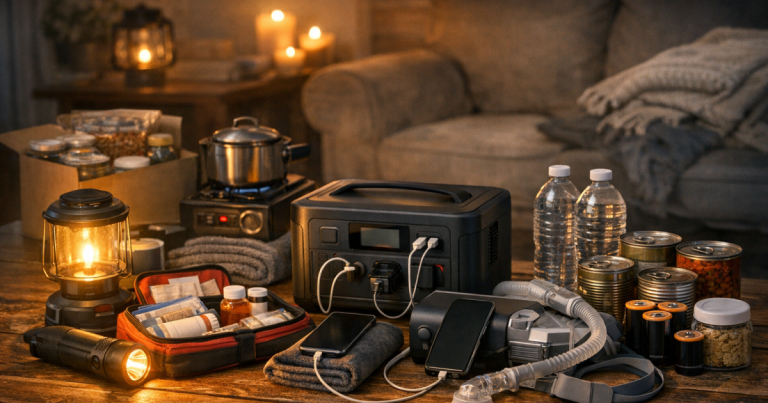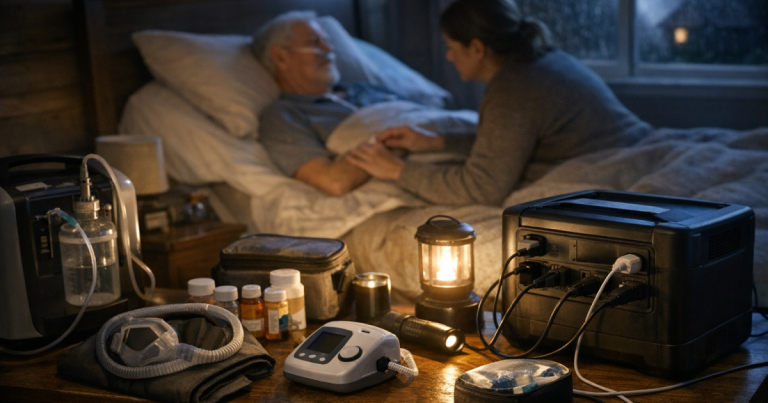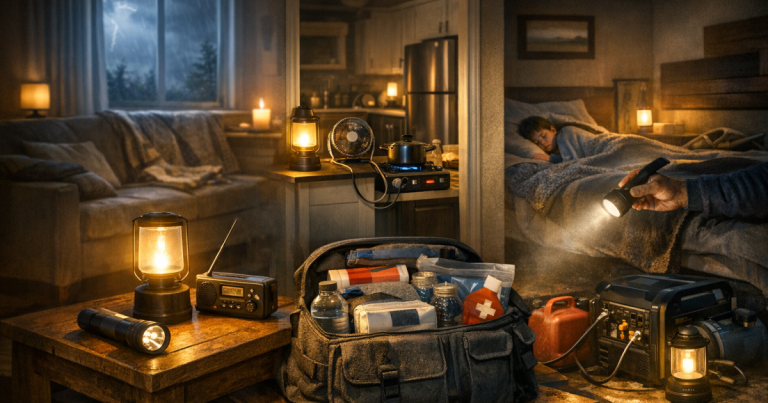
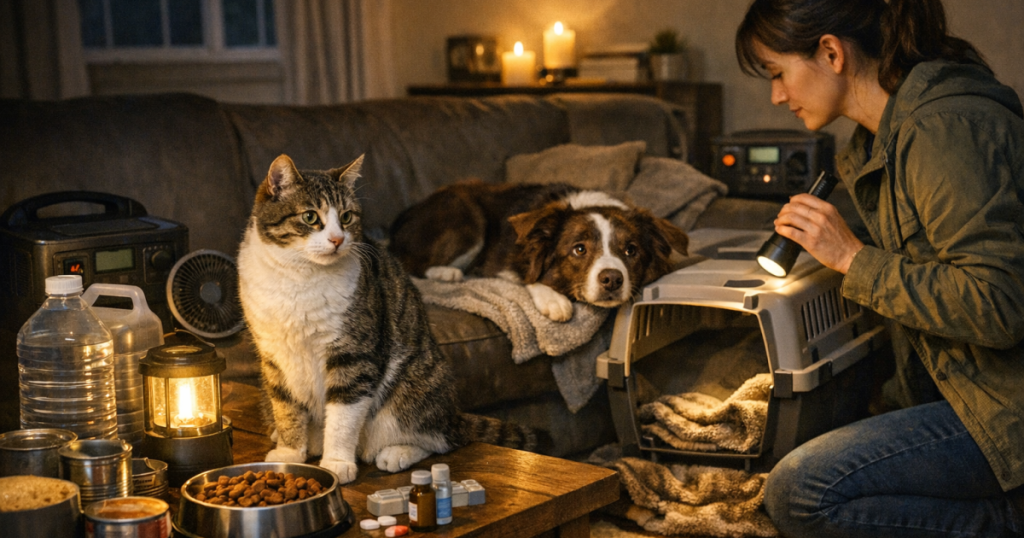
A power outage gets more complicated when an anxious dog, indoor cat, caged bird, reptile, fish tank, or senior pet depends on the routines your home normally provides. Planning for a blackout with pets means thinking beyond flashlights: temperature, water, medication, safe confinement, noise, and a calm place to wait it out all matter. A little prep now can keep the night boring, which is the goal.
Veterinary medication plans, heat-sensitive animal care, and any permanent electrical backup connections should be handled by qualified veterinarians or licensed electricians as appropriate, in line with local regulations, electrical codes, and safety requirements.
In brief
A good pet outage plan answers five practical questions before the lights go out:
- Where will each pet stay if the house is dark, hot, cold, noisy, or crowded?
- How will you provide clean water, safe food, medication, and basic sanitation?
- Which animals need power-dependent care, such as aquarium filtration, heat lamps, or climate control?
- How will you keep pets secure if doors are opening, neighbors are outside, or crews are working nearby?
- When will you leave home instead of trying to ride out the outage?
If you already have a general household outage plan, add a pet section to it rather than creating a separate checklist that nobody remembers. For the broader home setup, use a practical home blackout preparedness plan as the base, then layer in the needs of each animal.
Step 1: List every pet and what changes when power is out
Start with a simple pet-by-pet note. Do not rely on memory during a storm, wildfire shutoff, or nighttime outage. Write down the animal’s name, species, age, daily feeding routine, medications, hiding spots, carrier location, and any health or behavior concerns.
For many dogs and cats, the biggest issues are anxiety, heat, cold, and disrupted routines. For birds, reptiles, small mammals, and fish, temperature and ventilation can become serious much faster. For senior pets, puppies, kittens, brachycephalic breeds, and animals with chronic conditions, your threshold for leaving home should be lower.
Include one emergency contact outside your household who could take the pet temporarily. If local shelters fill up or a hotel will not accept animals, knowing a friend, relative, boarding facility, or veterinary clinic option ahead of time can save hours.
Step 2: Choose one safe pet room
During an outage, pets do better when their space is predictable. Pick one room that can become the pet-safe room for most blackout situations. It should be easy to access, away from exterior doors, free of loose cords and candles, and comfortable enough for a few hours at a time.
For dogs, that might be a familiar bedroom, crate area, or laundry room. For cats, choose a room with hiding spots, litter, water, and a closed door so they are not bolting into a dark hallway. For birds and small mammals, avoid drafts and sudden temperature swings. For reptiles, the right room depends on how quickly you can maintain safe warmth without unsafe improvised heating.
Build the plan around actual rooms, not vague intentions. A room-by-room blackout plan helps you decide where pets, lighting, food, power, and people should go instead of improvising in the dark.
Step 3: Prepare water, food, and sanitation without the fridge
Keep at least several days of pet food on hand, and rotate it the same way you rotate household supplies. Dry food is simple, but canned food needs a manual can opener and a plan for leftovers if refrigeration is unavailable. If your pet eats refrigerated prescription food, raw food, or fresh food, ask your veterinarian for safe backup feeding options before storm season.
Store extra water for pets, not just people. A large dog may need much more than you expect in hot weather, while cats may drink less but still need clean, familiar water sources. If your home uses an electric well pump, plan as if tap water may not be available.
For sanitation, keep extra litter, waste bags, cleaning wipes, paper towels, trash bags, and an odor-control plan. Apartment households should think through elevator outages and stair trips with dogs. If going outside is unsafe because of downed lines, high winds, smoke, or flooding, indoor pads or a temporary protected area may be needed for short-term use.
Step 4: Handle temperature before it becomes urgent
Temperature is one of the most important pet issues during an outage. In hot weather, focus on shade, airflow, cool water, and limiting activity. Do not leave pets in parked vehicles as a cooling strategy. If indoor temperatures climb and your pet is panting heavily, weak, disoriented, vomiting, or acting abnormally, treat it as urgent and contact a veterinarian or emergency clinic.
In cold weather, use safe bedding, draft reduction, and shared living space to conserve warmth. Avoid open flames, camp stoves, grills, or fuel-burning heaters indoors unless the heater is specifically rated for indoor use and you are following the manufacturer’s instructions exactly, including ventilation and carbon monoxide protection. Pets can knock things over, chew cords, or settle too close to unsafe heat sources.
Reptiles, tropical fish, birds, very young animals, older pets, and medically fragile animals may have narrower comfort ranges than people. Your plan should name a relocation point before the house becomes unsafe. That might be a friend’s home with power, a pet-friendly hotel, a boarding facility, or a veterinary hospital.
Step 5: Identify power-dependent pet needs
Some pet care depends directly on electricity. Aquariums may need filtration, aeration, and stable water temperature. Reptiles may need controlled heat. Some pets need refrigerated medication. A few animals depend on powered medical or mobility-related equipment.
Do not assume one battery or generator can cover every need. Write down which devices are truly essential, their labels or manuals, and how long they must run. If the equipment supports animal health, ask your veterinarian what interruption window is safe and what backup method they recommend.
For aquariums, prioritize aeration and water temperature over convenience lighting. For reptiles, do not improvise with unsafe heat sources. For refrigerated medication, use a thermometer and cooler plan so you are not guessing. If humans in the home also rely on powered health equipment, the pet plan should fit around the same priorities, not compete with them.
Step 6: Keep pets calm when the house feels different
Outages often bring strange sounds: generators, wind, transformers, sirens, neighbors outside, and utility trucks. Pets may also react to your stress. Keep routines as normal as possible. Feed at the usual time if safe, use familiar bedding, and keep voices calm.
Use battery-powered lanterns instead of candles around pets. A steady lantern on a high shelf is safer than an open flame on a coffee table. Keep leashes, harnesses, carriers, and collars in one known place. Even indoor cats should have identification because doors may open more often during an emergency.
If your dog is noise-sensitive, practice quiet confinement before storm season. If your cat hides during disruptions, learn the hiding spots and keep a carrier nearby rather than trying to find it during an evacuation order. For birds and small animals, covering part of the cage may reduce stress, but make sure ventilation and temperature remain safe.
Step 7: Use generators and backup power safely around animals
Portable generators can be useful during longer outages, but they create serious carbon monoxide and electrical hazards when used incorrectly. Never run a generator indoors, in a garage, on a porch, or near open windows. Pets are not a reason to bend that rule; they are one more reason to keep the setup safe.
Place fuel, cords, and running equipment where animals cannot chew, trip, spill, or investigate. Keep pets inside and away from generator noise and exhaust. If you are powering hardwired home circuits, use the proper inlet and transfer equipment installed for that purpose, not a backfeed shortcut. For a clearer explanation of safe connection methods, read about generator cords, inlets, and transfer switches.
Battery power stations can help with smaller loads such as phones, some lamps, or limited pet equipment, but runtime depends on the device load, battery capacity, temperature, and age of the unit. Test your setup in normal conditions so you know whether it runs the actual equipment your pet needs.
Step 8: Decide when to leave
The safest plan is not always staying home. Decide in advance what conditions trigger relocation. Examples include indoor heat that is unsafe for your pet, a reptile enclosure you cannot keep warm, an aquarium losing aeration for too long, smoke entering the home, flood risk, extended water loss, or a medically fragile animal needing stable conditions.
Pack a grab-and-go pet bag with food, water, bowls, medication, vaccination records, leash, carrier, litter supplies, waste bags, a familiar blanket, and a current photo of each pet. Keep carriers accessible, not buried behind holiday decorations or garage storage.
If you might use hotels or shelters, check pet rules ahead of time. During regional outages, pet-friendly spaces can fill quickly. For households with multiple animals or exotic pets, call likely destinations before you need them and ask what they can realistically accept.
Questions people ask
How much pet water should I store for an outage?
Store more than the normal daily amount, especially in hot weather. A practical starting point is enough for several days of drinking, cleaning bowls, and basic sanitation, then adjust for your pet’s size, diet, health, and climate.
Should I keep my pet in a crate during a blackout?
Use a crate only if the pet is already comfortable with it and the room temperature is safe. For many animals, a familiar closed room is calmer than sudden confinement in a crate they rarely use.
What should I do if my aquarium loses power?
Prioritize oxygen and stable temperature. Battery air pumps, insulated covers, and a tested backup plan may help, but the right response depends on tank size, stocking level, species, and room conditions.
Can pets be near a portable generator?
No pet should be near generator exhaust, fuel, or cords. Keep generators outdoors at a safe distance from living areas, and keep animals secured away from the operating equipment.
When is it time to relocate with pets?
Leave before conditions become dangerous. Heat, cold, smoke, flooding, medical needs, unsafe water loss, or power-dependent animal care can all justify moving to a safer location.
Key takeaways
A pet outage plan does not need to be complicated. It needs to be written down, tested in small ways, and realistic about your home. Focus first on safe space, water, food, medication, temperature, containment, and relocation.
The best outcome is a quiet one: your pets stay secure, you know what to do, and nobody is making urgent decisions by flashlight. Review the plan before storm season, after adopting a new pet, or any time an animal’s health needs change.