A portable generator can make a long outage much easier, but only if it is connected the right way. The goal is to connect a generator safely so it can power selected essentials without sending electricity where it does not belong: back into your panel, the utility lines, or overloaded household wiring.
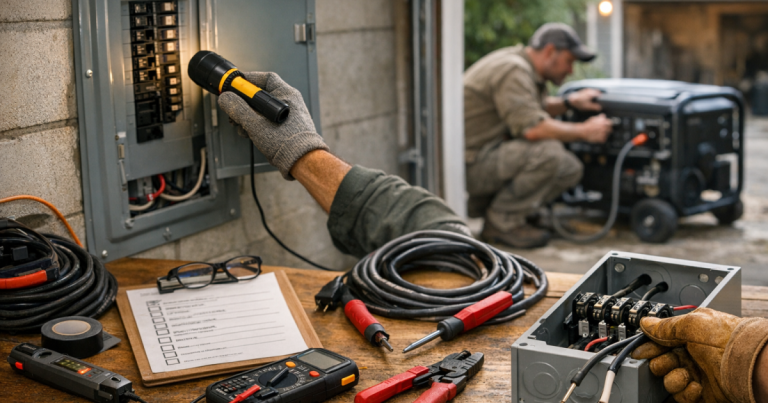
Generator transfer equipment, inlet boxes, interlocks, and any connection to your home’s electrical panel should be installed by a licensed electrician in compliance with the National Electrical Code, manufacturer instructions, and local permit requirements.
The short version
The safe way to use a generator with home wiring is to isolate your house from the grid before generator power enters any circuit. That isolation is handled by approved transfer equipment, not by a homemade cord, a dryer outlet, or a “just this once” workaround.
- Use a manual transfer switch or a listed generator interlock installed by a qualified electrician.
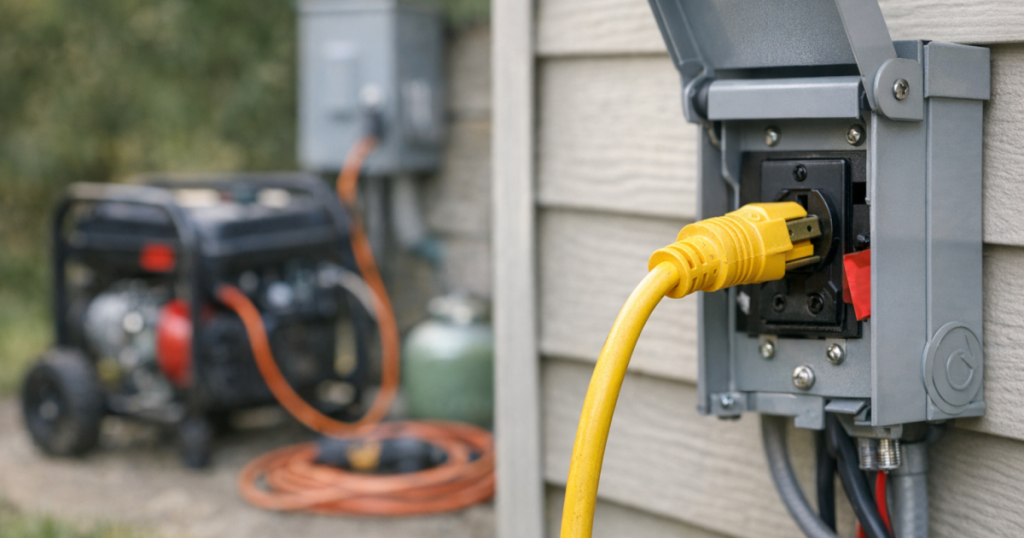
- Feed the home through a properly installed outdoor inlet box and the correct generator cord.
- Run only the circuits or appliances your generator can support.
- Keep the generator outdoors, far from doors, windows, vents, garages, and crawl spaces.
- Never plug a generator into a wall outlet, dryer outlet, or range receptacle.
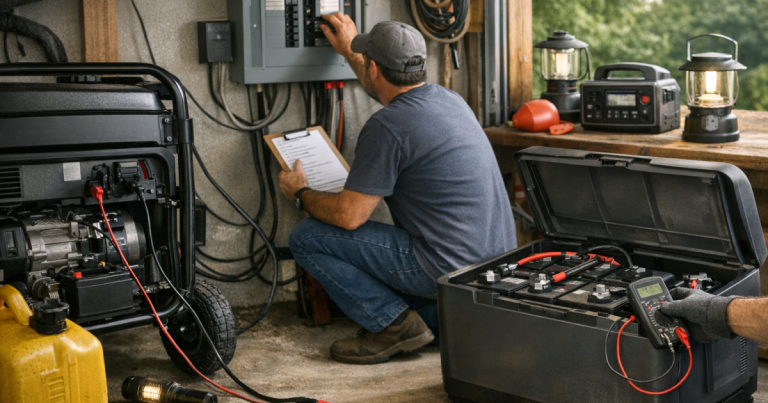
If you are still deciding whether a generator is the right tool, it helps to understand how it differs from batteries and UPS units. Our guide to portable power stations, generators, and UPS backup explains the practical trade-offs.
Why backfeeding is so dangerous
Backfeeding happens when generator power is pushed into household wiring without approved transfer equipment. The obvious risk is that the generator can energize utility lines outside your home, creating a serious hazard for line crews and neighbors. It can also damage your generator, damage appliances, overheat wiring, or create fire risk inside the house.
The dangerous part is that backfeeding can look like a shortcut. A generator might appear to power lights after being connected through an improper cord, but that does not make the setup controlled, isolated, or safe. A safe connection has a clear mechanical or electrical barrier that prevents utility power and generator power from meeting.
Step 1: Decide what the generator is actually powering
Before anyone installs hardware, make a short essentials list. Most homes do not need every circuit during an outage. A more realistic plan might include the refrigerator, a freezer, a furnace blower if compatible and properly wired, a few lights, phone charging, internet equipment, and one or two medical or work essentials.
This step keeps the installation practical. A smaller generator can be useful when the load list is disciplined; a larger generator can still be unsafe if it is connected poorly or asked to run incompatible equipment. For a room-based planning exercise, use a room-by-room blackout preparedness checklist and mark only the loads that truly matter.
Step 2: Choose an approved connection method
Option 1: Manual transfer switch
A manual transfer switch lets you move selected circuits from utility power to generator power. It is a clean approach for households that know exactly which circuits they want during outages. The switch prevents the generator from energizing the utility side when it is set up correctly.
Option 2: Generator interlock with inlet box
A listed interlock kit works with compatible electrical panels and prevents the main breaker and generator breaker from being on at the same time. This arrangement can offer more circuit flexibility than a small transfer switch, but it still depends on correct installation, panel compatibility, labeling, and load management.
Option 3: Direct extension cords for individual devices
If you do not have transfer equipment installed, the safer temporary approach is to power individual appliances directly from the generator using properly rated cords. This does not energize your home wiring. It is less convenient, but it avoids the backfeed hazard when done carefully and within cord and generator limits.
Step 3: Have the inlet and panel work installed correctly
For a home-wiring setup, the usual pieces are an outdoor generator inlet, a generator cord matched to the inlet and generator receptacle, and transfer equipment at the panel. The electrician should confirm breaker sizing, wire sizing, grounding and bonding requirements, weather exposure, labeling, and whether the panel supports the chosen interlock or transfer equipment.
Do not improvise neutral or ground connections. Generator grounding and bonding can vary by generator design and transfer setup, so this is a place for the installer to follow the equipment instructions and local code rather than internet shortcuts.
Step 4: Set up the generator outdoors before connecting loads
Place the generator outside on a stable, dry surface where exhaust cannot drift into the house. Keep it out of garages, basements, sheds attached to the home, and covered porches that trap fumes. Use battery-powered carbon monoxide alarms inside the home as a separate layer of protection.
Keep cords away from standing water, sharp edges, vehicle paths, and places where people will trip in the dark. If rain is possible, use a generator shelter or canopy designed for safe generator ventilation rather than enclosing the unit.
Step 5: Start, transfer, and load the system in order
A calm startup routine prevents many avoidable problems. Turn off or disconnect major loads first. Start the generator outdoors and let it stabilize. Connect the generator cord to the generator and inlet, then use the transfer switch or interlock exactly as labeled.
Bring loads on gradually instead of all at once. Refrigerators, freezers, pumps, and motors can draw extra power at startup, so a generator that handles a running load may still struggle if several devices start together. If food storage is one of your priorities, pair the power plan with basic temperature discipline from our guide to keeping fridge and freezer food safe during outages.
Step 6: Shut down without rushing
Shutdown matters too. Turn off connected loads, switch the transfer equipment back to utility position when utility power has returned and conditions are stable, then disconnect the generator cord. Let the generator cool before refueling or storing it. Hot engines, fuel vapors, and hurried handling are a bad mix during storm cleanup.
After the outage, note what worked and what felt awkward. Did the cord reach cleanly? Were the right circuits labeled? Did the generator handle the actual loads? Small corrections after a real outage make the next one smoother.
Shortcuts to avoid every time
- Do not use a male-to-male cord, sometimes called a suicide cord.
- Do not feed a generator through a dryer, range, or wall outlet.
- Do not run a generator indoors or in an attached garage, even with the door open.
- Do not exceed the generator’s rated output or the transfer equipment’s limits.
- Do not refuel a hot or running generator.
- Do not remove safety devices, defeat breakers, or modify plugs to make a cord fit.
The reason these shortcuts are so tempting is that they often seem to solve the immediate problem: the fridge comes on, a few lights work, or the furnace starts running. But the real test is not whether power flows. The real test is whether the setup keeps generator power contained, limits current to the right wiring, and prevents someone from making one wrong move in the dark. A connection that depends on memory, luck, or “nobody will touch that breaker” is not a safe plan.
Be especially careful with adapters. Some adapters are legitimate when they match the generator receptacle, cord rating, inlet type, and transfer equipment. Others are warning signs because they make incompatible equipment fit together. If an adapter changes the shape of a plug so it can connect to a household receptacle, bypass a missing neutral, defeat a ground pin, or connect two male ends, stop and reassess. The safer answer is usually the correct cord and inlet, not a clever adapter.
- Do not rely on tape, notes, or verbal instructions to keep the main breaker off. Use transfer equipment that physically prevents the wrong combination.
- Do not assume a previous homeowner’s generator hookup is safe just because it is already installed. Have it inspected before using it.
- Do not run undersized cords to large loads. A cord that feels warm, smells hot, or causes voltage drop is a problem, not an inconvenience.
- Do not split one generator outlet into too many devices just because there are open plug spaces. The outlet, cord, and generator all still have limits.
- Do not operate the generator where exhaust can collect under decks, near open basement windows, or beside an intake vent.
If you are helping a neighbor or family member during an outage, avoid becoming part of an improvised setup you would not use at your own home. It is fine to share fuel, lend a heavy-duty outdoor-rated extension cord, or help move a generator farther from the house. It is not fine to help build a backfeed cord, force a plug, or guess at panel wiring. In an emergency, the best help is the kind that keeps everyone safer after the power comes back, too.
Key checks before the first real outage
Label the circuits that can run on generator power, keep the operating steps near the panel, and test the setup on a clear day rather than during a storm. Store the correct cord with the generator, not somewhere mysterious in the garage. Check fuel storage rules for your area, rotate fuel as recommended, and keep carbon monoxide alarms working.
A safe generator connection is not complicated once the right equipment is in place. The important habit is repeatability: the same outdoor placement, the same transfer sequence, the same load discipline, and no backfeeding shortcuts when the lights are out.