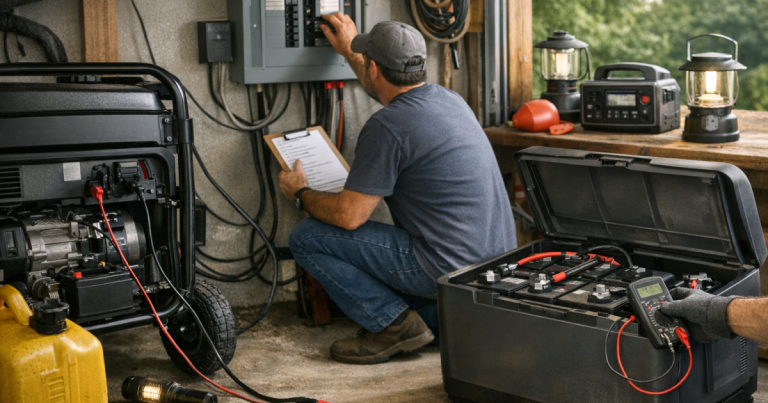
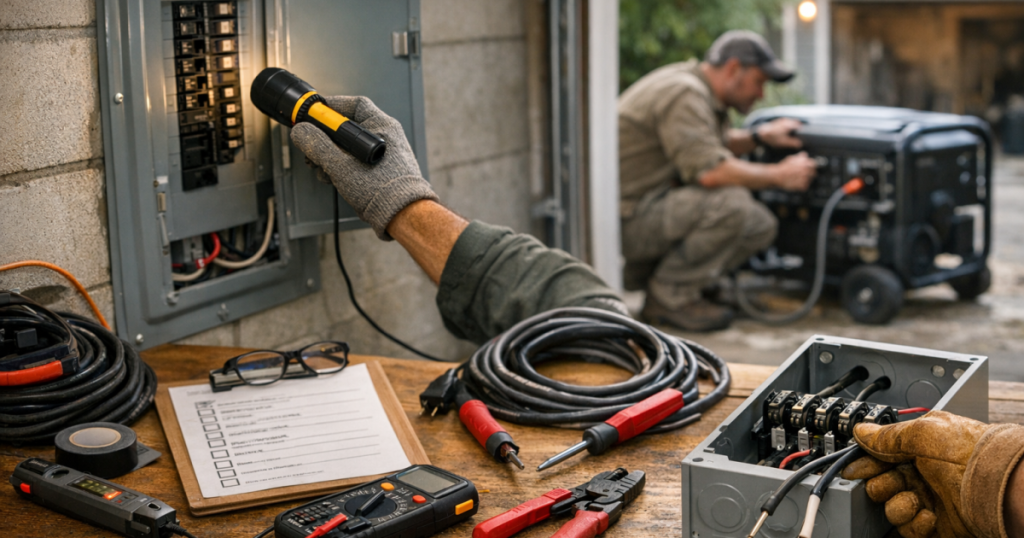
Getting ready for a generator transfer switch installation starts before anyone opens the electrical panel. The calmer path is to decide what must run during an outage, gather the right generator details, and make the work area easy for a qualified electrician to inspect and access.
Electrical panel work, generator inlet wiring, and transfer switch connections should be carried out by a licensed electrician to meet local code, permit, and safety requirements.
What to know first
A transfer switch lets a generator power selected household circuits without energizing utility lines. That matters for two reasons: it protects utility workers and neighbors from backfeed, and it keeps your generator from being asked to run more than it can safely handle.
The homeowner’s job is not to wire the equipment. Your job is to define the outage goal, provide accurate generator information, clear access, and learn the operating sequence after the work is complete.
- Decide the essentials: refrigerator, freezer, furnace blower, sump pump, lights, router, well pump, or medical support needs.
- Know the generator: running watts, starting watts, voltage, fuel type, outlet type, and whether it will be used as portable or permanent backup.
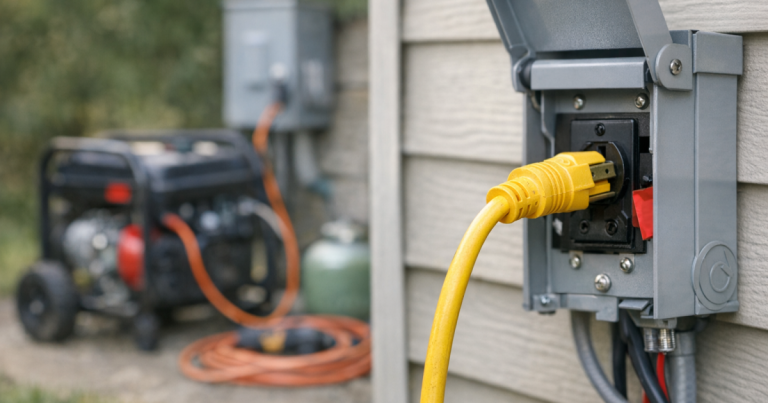
- Plan the location: a safe outdoor generator spot, a practical inlet location, and a route that does not create cord hazards.
- Expect limits: a transfer switch does not make a small generator act like full utility power.
Step 1: Make a realistic circuit list
Start with the loads that preserve safety, food, communication, and basic comfort. A good transfer switch plan is usually built around essential circuits, not every outlet in the house. That keeps the setup easier to operate and reduces the chance of overload during a long outage.
Walk through the house and write down what you would want during a 12-hour, 24-hour, and 3-day outage. Separate true essentials from conveniences. For example, a refrigerator may be essential, while a laundry circuit can usually wait. A gas furnace blower may be reasonable to include, while central air conditioning may require far more generator capacity than the rest of the list.
If temperature-sensitive prescriptions are part of your household plan, treat them as a priority load and build redundancy around them. Our guide to backup power for refrigerated medications can help you think through timing, cooling, and backup layers before you finalize the circuit list.
Step 2: Gather the generator details your electrician will need
Before the appointment, collect the generator manual or specification plate information. The electrician needs to know the generator’s output and connection type before choosing or confirming compatible transfer equipment. Guessing from the generator’s advertised size is not enough, because outlet configuration, voltage, and load capacity all affect the finished setup.
- Generator make and model
- Rated running watts and starting watts
- Available 120-volt or 240-volt output
- Outlet type used for home connection
- Fuel type and expected run plan
- Whether the generator has built-in carbon monoxide shutoff or other safety features
This is also the moment to confirm whether you are planning a portable generator with a manual transfer switch, a panel interlock arrangement, or a permanent standby system. Those are not interchangeable projects, and the installation path can change quickly once whole-home loads, automatic operation, or fuel plumbing enter the picture.
Step 3: Choose a safe outdoor operating spot
The generator must run outdoors, away from doors, windows, vents, crawlspace openings, and attached garages. Many safety agencies advise keeping portable generators at least 20 feet from the home when practical, with exhaust directed away from living spaces. Carbon monoxide is the quiet danger in generator planning, so treat placement as part of the installation, not an afterthought.
Stand in the likely generator spot and imagine a wet, windy outage night. The location should be level, drain well, allow airflow, and avoid pedestrian paths. It should also be close enough to the power inlet for the correct generator cord without stretching across steps, sidewalks, or driveways.
- Do not run a generator in a garage, basement, porch, sunroom, or open doorway.
- Keep the cord route visible and protected from tripping and vehicle damage.
- Install and maintain carbon monoxide alarms on each level of the home.
- Plan fuel storage and refueling away from ignition sources and living areas.
Step 4: Prepare the panel area and inspection path
Clear the area around the main electrical panel before the electrician arrives. Move shelves, storage bins, paint cans, laundry baskets, and anything else that blocks safe access. As a homeowner prep rule, aim for roughly 3 feet of clear working space in front of the panel and enough side clearance for a person to work without twisting around obstacles.
Take photos of the panel, the outside wall near the panel, the proposed generator location, and any existing exterior outlets or service equipment. These photos can help the electrician spot routing issues, panel crowding, or installation constraints before the visit.
If you are weighing a permanent standby generator instead of a portable setup, the planning scope expands to fuel supply, placement, permits, maintenance, and automatic transfer equipment. For that larger project, read our overview on whole-home generator installation and maintenance planning before you commit to a design.
Step 5: Ask the right pre-installation questions
A short question list prevents confusion on install day. You are not trying to manage the wiring details; you are making sure the finished system matches the way your household will actually use it during an outage.
- Which circuits will be connected, and what loads should stay off while on generator power?
- Will the setup use a manual transfer switch, an interlock, or another approved method?
- Where will the exterior inlet be located?
- What generator cord type and length will be required?
- Will permits or inspections be handled as part of the job?
- What labeling will be added to the panel or transfer equipment?
- What is the exact startup, transfer, shutdown, and return-to-utility sequence?
Ask for the operating sequence in plain language. During an outage, especially at night or in bad weather, you want labels and steps you can follow without improvising.
Step 6: Plan for load discipline
The most common disappointment after a safe installation is expecting too much from the generator. Starting loads can be higher than running loads, and several motors starting at once can overload a system that seemed fine on paper. Refrigerators, sump pumps, well pumps, furnace blowers, and some power tools can all create temporary startup demand.
Your electrician can help explain which circuits should not run together. After the installation, make a simple household rule sheet: which switches are allowed, which appliances stay off, and which loads get priority when fuel is limited. This is not fussy paperwork. It is the difference between a backup system that feels steady and one that keeps tripping when the house is already under stress.
Step 7: Set up the first test before the first outage
Do not wait for a storm warning to learn the transfer sequence. Schedule a calm-weather test after installation so the person who will operate the system can practice under normal conditions. The test should include moving the generator outdoors, connecting the cord, starting the generator, transferring selected loads, watching for overload signs, and shutting everything down in the proper order.
Keep the generator manual, transfer switch instructions, inspection paperwork, and circuit list together in a waterproof folder or clearly labeled binder. Then revisit the setup periodically, because fuel, cords, batteries, labels, and household priorities all age or change. Our guide to testing and maintaining backup power before an outage walks through that recurring check.
Common questions
Can I install a transfer switch myself?
Electrical panel connections and transfer equipment installation should be handled by a licensed electrician. The homeowner can prepare the circuit list, clear the work area, provide generator information, and learn the operating procedure, but the wiring and code-compliance work belong with a qualified professional.
Do I need a transfer switch if I only want to run a few things?
If you are powering individual devices directly from a generator with properly rated outdoor extension cords, a transfer switch is not always involved. If you want the generator to power household circuits through the electrical panel, you need approved transfer equipment or another code-compliant method that prevents backfeed.
Will a transfer switch power my whole house?
Not by itself. A transfer switch controls how power is routed; it does not increase generator capacity. Whole-home operation depends on generator size, fuel supply, load management, wiring design, and the specific transfer equipment installed.
What should be ready on installation day?
Have the generator details, desired circuit list, panel access, outdoor inlet location idea, and permit or scheduling information ready. If the generator is already owned, make sure it is accessible so the electrician can verify outlets and ratings.
Main lessons
Safe preparation is mostly about making good decisions before tools come out. Choose the loads that matter, respect the generator’s limits, keep carbon monoxide safety at the center of the plan, and let a licensed electrician handle the regulated wiring. Once the transfer equipment is installed, practice the sequence in calm weather so an outage feels like a routine setup, not a guessing game.