When the lights go out, a temperature-sensitive prescription changes the outage plan immediately. The right backup power for refrigerated medications is less about running the whole kitchen and more about preserving a narrow storage window, keeping proof of temperature, and having a way to recharge before the battery is empty. Start with the medication label and your pharmacist’s instructions, then build a power plan around the actual fridge, cooler, or medical travel case you will use.
Medication storage decisions after a temperature excursion should be handled by a pharmacist or qualified healthcare professional using the drug label and manufacturer guidance; generator transfer-switch installation should be carried out by a qualified electrician in compliance with local electrical codes and safety standards.
The short answer: use layers, not one miracle box
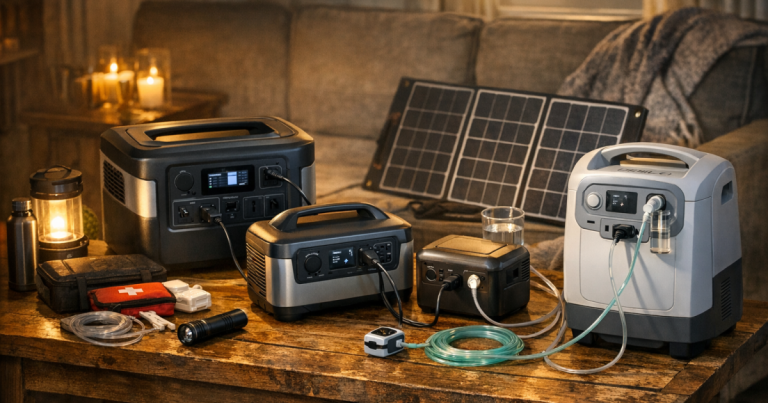
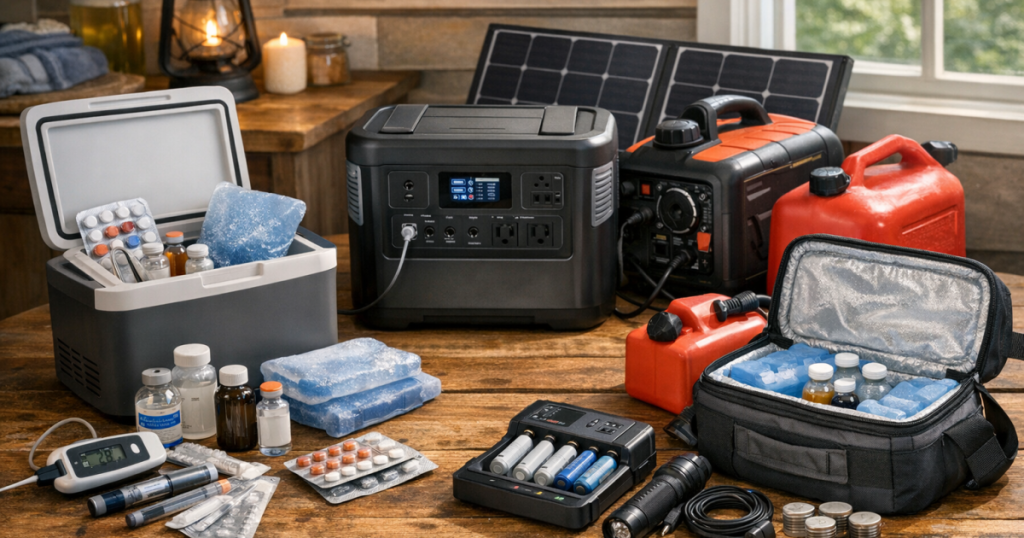
For refrigerated medications, the strongest outage plan is layered: a verified temperature range, a thermometer, a cold storage container, a battery source for short to moderate outages, and a recharge method for longer ones. A portable power station is usually the cleanest indoor power option for a refrigerator, mini fridge, or powered medical cooler. A generator can extend the plan during multi-day outages, but only outdoors and never in a garage, apartment hallway, balcony, or enclosed space.
For medical devices during blackouts, the best portable power stations are not simply the largest units on the shelf. They are units with enough usable battery capacity for the appliance, continuous AC output above the fridge or cooler’s running demand, a clear state-of-charge display, safe indoor operation, and a recharge plan that matches the likely outage length.
Step 1: confirm what temperature you must protect
Many refrigerated medications are labeled for storage around normal refrigerator temperatures, often in a narrow Fahrenheit range, but the exact requirement belongs to the medication, not the fridge. Before you size power equipment, write down three things: the labeled storage range, how long the medication can tolerate a brief interruption if the label or pharmacist gives that information, and whether freezing would damage it.
That last point matters. Tossing a prescription into direct contact with ice packs can be a bad plan for some medications. If you use a cooler, separate the medication from frozen packs with a towel or divider unless the manufacturer’s instructions say otherwise. The goal is controlled cold, not an ice bath with a prescription label.
Step 2: decide what you are actually powering
There are three common storage setups, and each changes the backup choice.
- Your main refrigerator: convenient because the medication is already there, but it uses more energy than a small cooler and tempts people to open the door for food.
- A dedicated mini fridge: easier to reserve for medications, but still needs a power source that can handle compressor startup.
- A powered medical or portable refrigerator: useful when you need a smaller, controlled cold space, but you still need to verify its power input, temperature controls, and storage guidance for your medication.
If you are also trying to protect groceries, separate the food plan from the medicine plan. Food can often be moved into coolers and managed by category; prescriptions deserve a quieter, better-monitored workflow. For general fridge and cooler strategy, see how to pack a cooler when the fridge loses power.
Step 3: match the outage length to the power source
For short outages: insulated storage plus a thermometer
For a short interruption, the first defense is usually not electricity. Keep the refrigerator door closed, move medication only if your plan says to, and monitor temperature with a refrigerator thermometer. A model such as the AcuRite Refrigerator Freezer Thermometer is the kind of simple tool that helps you stop guessing. A thermometer with minimum and maximum readings is especially useful because it shows whether the storage area drifted outside the target range while you were asleep or away.
For overnight outages: portable power station
A portable power station is often the most practical indoor answer for a refrigerator, mini fridge, or powered cooler. It does not burn fuel, does not need to sit outside, and can be placed near the appliance without running extension cords through a cracked window. The trade-off is capacity: every watt you power drains the battery, and compressor-based appliances cycle on and off rather than drawing one perfectly steady number.
Use the appliance label or a plug-in power meter to estimate demand, then leave a margin. If the battery must also run phones, lights, internet equipment, or a CPAP, do not size it as if the medication fridge is the only load. For broader outage-duration planning, the guide to portable power stations by blackout duration helps frame what different battery sizes are realistically asked to do.
For multi-day outages: battery plus generator or solar recharging
For a long outage, the battery is only half the plan. You need a way to put energy back into it. In suburban and rural homes, an inverter generator can recharge a power station or run selected loads, but it must operate outdoors, far from doors, windows, vents, and attached spaces. A familiar example in this category is the Honda EU2200i Portable Inverter Generator, which many households compare when looking for a portable gasoline inverter generator.
Solar charging can also help, especially during daytime outages, but it should be treated as weather-dependent unless you have tested it in your real conditions. Clouds, shade, panel angle, and short winter days all matter. For medication storage, solar is best as part of a layered plan, not a promise that every day will cooperate.
Step 4: avoid the backup choices that create new problems
Some power options look useful until the outage gets messy. A small computer UPS can bridge a brief power flicker, but most are not sized for refrigerators or compressor startup. A car inverter can work in limited situations, but it depends on fuel, safe vehicle placement, ventilation, and not draining the starting battery. Extension cords can be appropriate when correctly rated and routed, but they should not become a trip hazard in the dark or a substitute for permanent wiring.
Do not plug a generator into a wall outlet. That is dangerous for utility workers, neighbors, and your own home. If you want generator power to feed household circuits, the transfer equipment belongs in electrician territory. For most renters and many homeowners, the simpler plan is a portable power station indoors and, if needed, an outdoor generator used only to recharge it.
Step 5: build the medication power kit before storm season
Keep the kit small enough that someone else in the household can use it without a lecture. The essentials are:
- A written list of refrigerated medications and their storage instructions.
- The pharmacy phone number and prescriber contact information.
- A refrigerator or cooler thermometer, ideally with minimum and maximum readings.
- An insulated pouch or small cooler that protects against direct contact with ice packs.
- A charged portable power station sized for the chosen fridge, mini fridge, or powered cooler.
- Charging cables and any manufacturer-approved power adapter for the cooler or fridge.
- A simple outage log for temperature readings and battery state of charge.
That log may feel fussy now. During an outage, it saves you from trying to remember whether the fridge was at 41°F at midnight or whether that was yesterday’s number. Power planning has enough drama without turning memory into the weak link.
Step 6: test the setup on an ordinary weekend
Do a dry run before severe weather is in the forecast. Put a bottle of water in the fridge or cooler instead of medication, plug the appliance into the power station, and watch how quickly the battery percentage changes over several hours. Track the temperature, the room conditions, and which other devices were plugged in. This does not guarantee exact runtime in a real outage, but it gives you a much better estimate than the box or product page alone.
Repeat the test after major changes: a new fridge, new medication cooler, new battery, or a move to a hotter room or garage. Keep the power station charged according to the manufacturer’s storage instructions, and inspect cords and adapters before storm season. The broader checklist in how to test and maintain backup power before an outage is a useful companion step.
Helpful questions
Can I just keep refrigerated medication in the main fridge?
Sometimes, yes, but only if the temperature stays within the medication’s required range. Keep the door closed, use a thermometer, and avoid storing medication in spots that tend to run too warm or too cold unless your pharmacist has confirmed the setup is appropriate.
Is a portable power station safer than a generator for apartments?
For indoor use, yes. Portable power stations are battery devices and do not create engine exhaust. Fuel-burning generators must never be used indoors, on balconies, in garages, or near openings into the building.
How much runtime should I plan for?
Plan for the outage pattern your area actually gets, then add margin. A household facing routine short outages may need a different setup than one in wildfire shutoff territory or a rural area with slower restoration. Runtime estimates should always be treated as estimates because appliance cycling, room temperature, battery condition, and extra loads all change the result.
What to do next
The best plan is the one you can run calmly at 2 a.m. Confirm the medication requirements with your pharmacist, choose one storage method, size power for that specific device, and test it before the next storm. For most households, a monitored cooler or dedicated cold space, a correctly sized portable power station, and a realistic recharge plan provide the strongest balance of safety, simplicity, and everyday usability.