When power cuts out, the cooler is not a magic fridge; it is a short-term holding plan. The goal is simple: keep food safe during outage conditions while you preserve cold air, move only the right foods, and avoid the expensive mistake of opening everything repeatedly. A little order matters more than heroic ice stacking.
For licensed food service, shared kitchens, or food prepared for medically vulnerable people, temperature decisions and discard procedures should be handled by a qualified food-safety professional or local health authority according to local health codes and food-safety requirements.
The first 10 minutes: protect the cold you already have
Start by keeping the refrigerator and freezer doors closed. An unopened refrigerator generally keeps food cold for about 4 hours. A full freezer can often hold a safe temperature for about 48 hours, while a half-full freezer is closer to 24 hours. Those times are not guarantees; room temperature, appliance condition, door openings, and how full the compartments are all matter.
If you expect the outage to be short, the best cooler move may be no move at all. Every fridge opening dumps cold air. If the outage is likely to stretch past a few hours, use the cooler for the foods that matter most: meat, poultry, fish, dairy, eggs, cut fruit, leftovers, and anything labeled keep refrigerated.
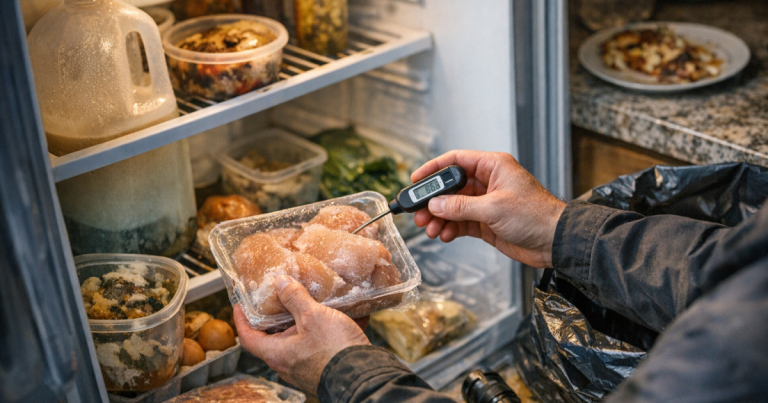
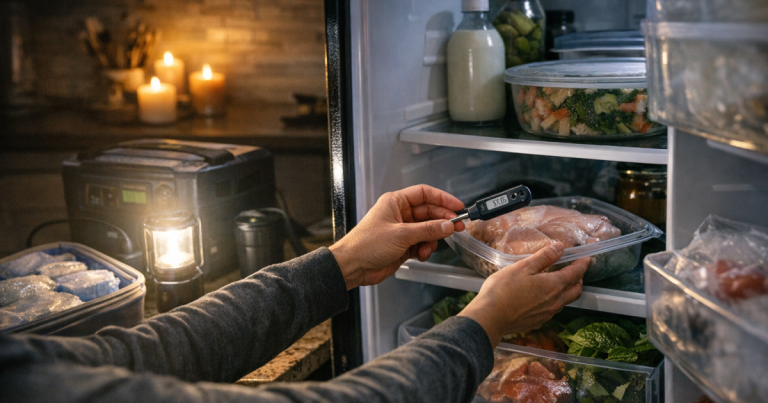
- Put a refrigerator thermometer or cooler thermometer where you can read it quickly.
- Keep perishable foods at 40°F or below.
- Do not taste food to decide whether it is safe.
- Discard perishable food that has been above 40°F for more than 2 hours.
- When timing or temperature is unknown, be conservative. Nobody enjoys throwing away food, but food poisoning is a miserable way to save a casserole.
If you are building a bigger outage routine around food, water, lighting, and communications, a 72-hour power outage checklist helps you decide what should be ready before storm alerts start.
Set up the cooler before you empty the fridge
Pack the cooler beside the refrigerator, not across the kitchen. The less time food spends on the counter, the better. If you have more than one cooler, assign jobs before you start moving food.
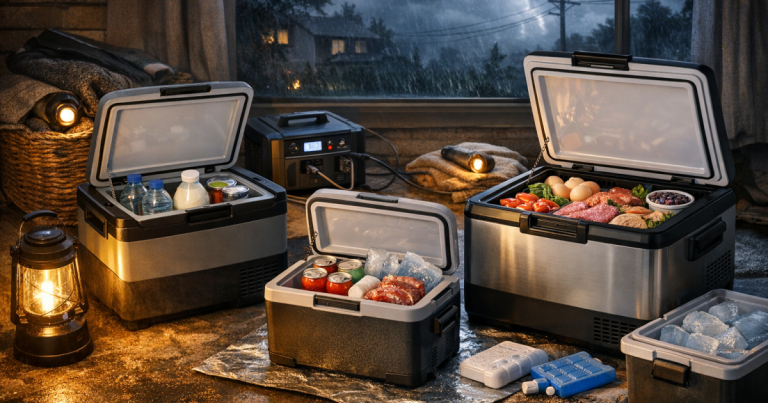
- Cooler one: high-risk perishables you want to keep cold and unopened as much as possible.
- Cooler two: drinks, condiments, snacks, and items people will open repeatedly.
- Freezer support: frozen gel packs, ice blocks, or frozen water bottles that can be moved into the cooler without melting into the food.
Two coolers are often better than one oversized cooler because they reduce door-opening chaos. Drinks are the usual culprit. Once someone starts fishing around for a seltzer, the carefully packed chicken and milk are along for the ride.
The best packing order
A well-packed cooler is built in layers. Cold air sinks, ice melts, and raw meat leaks at the least convenient moment. Pack for those realities.
1. Chill the cooler if you can
If you have warning before a storm or planned shutoff, pre-chill the cooler with ice or frozen packs. Dumping cold food into a warm cooler wastes valuable ice. If you have no warning, do not overthink it; move quickly and pack tightly.
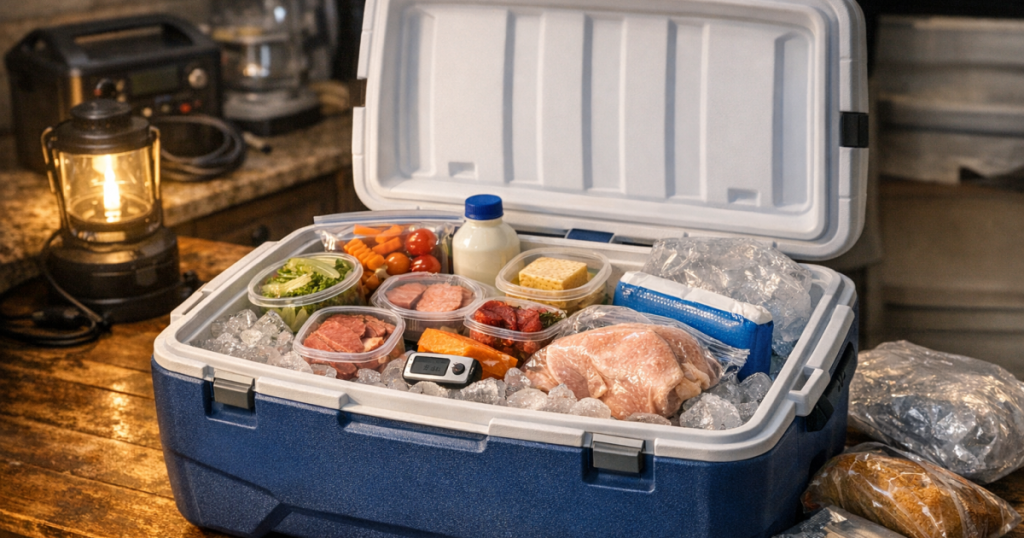
2. Put block ice or frozen bottles on the bottom
Block ice and frozen water bottles usually last longer than loose cube ice. Use them as the cold base. Frozen bottles also give you drinking water later if they thaw, which is a useful bonus during a messy outage.
3. Add raw meat in sealed bags or containers
Raw meat, poultry, and seafood should sit low in the cooler so juices cannot drip onto ready-to-eat food. Keep store packaging inside a zip-top bag or sealed container. If you know you cannot keep raw meat cold enough, prioritize cooking it safely while it is still cold or discarding it; do not let it become a gamble.
4. Pack dense perishables next
Add milk, yogurt, cheese, eggs, deli meat, cooked leftovers, and prepared foods. Keep similar items together so you do not have to dig. If leftovers are still warm when the outage begins, they are not a great candidate for the cooler; warm containers raise the temperature around everything else.
5. Fill gaps with cube ice or gel packs
Air space is the enemy. Fill pockets with cube ice, gel packs, or frozen vegetables you are willing to use as temporary cold mass. The tighter the pack, the slower the warming.
6. Put a thermometer near the top
The top of the cooler is usually warmer than the bottom, so a thermometer near the top gives you a practical warning. If the top is holding at 40°F or below, the lower layers are more likely to be in good shape. Check quickly, then close the lid.
What should go in first, and what can wait
Not every refrigerator item deserves cooler space. Use the cooler for foods that can make people sick if they warm up, not for every bottle with a fancy label.
- Move first: meat, poultry, seafood, eggs, milk, cream, soft cheeses, cooked leftovers, deli meats, cut melon, cut tomatoes, cooked rice, cooked pasta, and opened refrigerated sauces that contain dairy or meat.
- Usually lower priority: whole fruits, whole vegetables, bread, hard cheeses for short periods, butter for short periods, unopened shelf-stable drinks, and many acidic condiments.
- Leave closed if possible: freezer items that are still solid or have ice crystals. A closed freezer is usually a better cold box than a cooler.
If the outage is dragging on and you need more reliable cold storage than ice can provide, a powered portable fridge may make sense for some households. Our guide to portable refrigerators for outages explains where they fit and where a plain cooler is still the simpler tool.
How to manage the cooler during the outage
After the cooler is packed, your job is to leave it alone. Store it in the coolest practical spot indoors, away from direct sun, heat vents, windows, and warm appliances. Do not place it outside in hot weather, and do not rely on winter outdoor temperatures unless you can keep food protected from animals and verify the temperature stays at or below 40°F.
- Open the lid only when you know what you are grabbing.
- Drain melted water only if food packaging is getting submerged or contaminated; cold water can help maintain temperature.
- Add ice before the temperature climbs, not after the cooler has already warmed.
- Keep raw food separated from ready-to-eat food until the end of the outage.
- Write the time the power went out on a sticky note or piece of tape so nobody has to reconstruct the timeline later.
If you use a portable power station, generator, or solar charging setup to support a fridge, freezer, or powered cooler, test that plan before you need it. A quick pre-season run-through using a guide like testing and maintaining backup power before an outage can reveal missing cords, low batteries, or unrealistic runtime assumptions while stores are still open.
When power comes back
Do not unload everything straight back into the refrigerator as if the outage never happened. Check temperatures first. If the cooler stayed at 40°F or below, the food is generally in the safe zone. If perishable food was above 40°F for more than 2 hours, discard it.
For freezer food, look for ice crystals and check temperature. Food that still contains ice crystals or has stayed at 40°F or below can usually be refrozen or cooked. Food that fully thawed and warmed above 40°F for more than 2 hours should be discarded if it is perishable.
Clean the cooler after the outage, especially if raw meat was inside. Wash it with hot, soapy water, rinse, and let it dry fully before storage. A clean, dry cooler is one less unpleasant surprise the next time the lights go out.
Cooler questions that come up mid-outage
Should I move everything from the fridge right away?
No. If the power may return soon, keep the refrigerator closed. Start packing a cooler when the outage is likely to exceed the refrigerator’s safe cold window, when the fridge temperature is approaching 40°F, or when you need to protect specific high-risk foods.
Is ice better on top or bottom?
Both helps. Put long-lasting block ice or frozen bottles on the bottom, pack food tightly, then add cube ice or gel packs through the gaps and across the top. The bottom layer gives endurance; the top layer helps protect the warmest part of the cooler.
Can I use dry ice?
Dry ice can keep food very cold, but it requires careful handling, ventilation, and separation from bare skin and some packaging. For most home fridge outages, regular ice, frozen bottles, and a thermometer are simpler and safer.
What if I do not know how long food was warm?
Treat unknown timing as a safety problem, not a math puzzle. If perishable food may have been above 40°F for more than 2 hours, throw it out. The smell test is not reliable for foodborne illness risk.
The calm way to decide
A cooler buys time; it does not reset the clock. Keep doors closed first, pack high-risk foods in tight cold layers, track temperature, and separate raw items from ready-to-eat food. If you can prove the food stayed at 40°F or below, you have options. If you cannot, the safer choice is to let it go and restock when the outage is over.