When the fridge goes dark, the goal is not to chill everything you own; it is to protect the food that matters most. The best portable refrigerators for power outages are 12V compressor fridge/freezers sized for essentials, paired with a realistic power source, and used with a thermometer instead of guesswork.
Food-safety decisions after a prolonged outage, especially for food served to children, older adults, pregnant people, or medically vulnerable household members, should be guided by a qualified health or food-safety professional and current USDA, FDA, and local health department safety requirements.
At a glance
A portable refrigerator is most useful during an outage when it fills the gap between “keep the kitchen refrigerator closed” and “move the highest-risk food somewhere powered.” It is not a magic box that rescues food after it has warmed too long. Treat it as a controlled cold zone for meat, dairy, formula, insulin-adjacent supplies that are approved for household refrigeration, and a small set of meals you actually plan to eat.
- Dometic CFX3 45: a strong premium reference point for households that want a well-known portable fridge/freezer line and are willing to plan around weight, storage space, and power draw.
- ARB ZERO 47 Quart: a rugged vehicle-camping style option to consider when the fridge may live in a garage, SUV, or storm-season kit rather than on a kitchen counter.
- ICECO VL45 Portable Refrigerator: a practical midrange example for shoppers who want a real compressor fridge/freezer without jumping straight to the most expensive end of the category.
- BougeRV CR45 Portable Refrigerator: a budget-minded example for households that need a dedicated cold box for essentials and are willing to verify fit, controls, and power needs carefully before buying.
The right choice is less about brand loyalty and more about capacity, power draw, lid shape, carry weight, and whether you can keep it running through the hours when your main refrigerator should stay shut. For the broader food clock, keep the basic fridge and freezer food-safety rules close at hand.
Step 1: Decide what earns space in the portable fridge
Start with the food, not the appliance. A 35- to 55-quart portable refrigerator can be extremely useful, but it will not replace a full kitchen refrigerator. During a blackout, give space to the items that spoil fastest or matter most to your household’s health and routine.
- Raw or cooked meat, poultry, seafood, and deli items.
- Milk, yogurt, cheese, eggs, and opened dairy substitutes that require refrigeration.
- Baby formula or prepared foods that must stay cold.
- Medications only when the label, pharmacist, or prescriber confirms the proper storage range.
- A small number of ready-to-eat meals so the lid is not opened every ten minutes. The refrigerator is a tool, not a buffet with a handle.
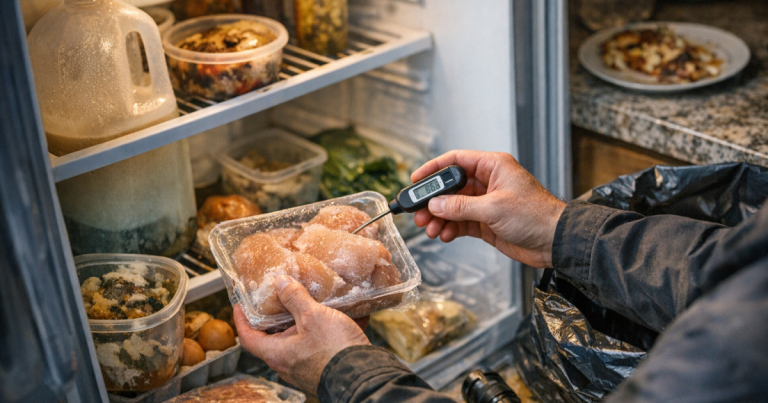
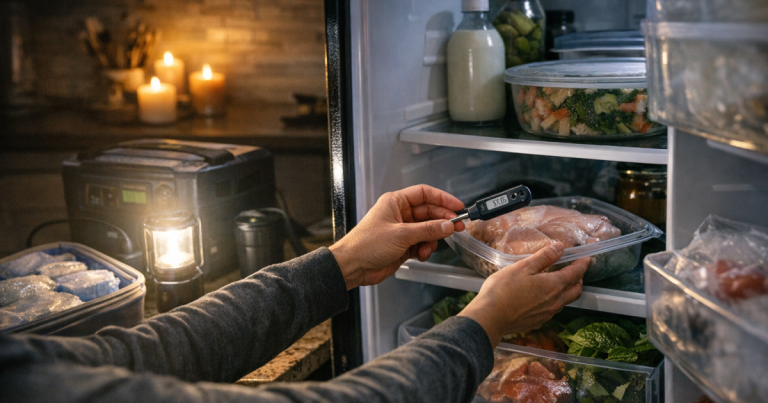
Use a refrigerator thermometer. Safe refrigerator storage is generally 40°F or below, while a freezer should be at 0°F. If perishable food has been above 40°F for more than two hours, do not use a portable refrigerator to “cool it back down” and call it safe.
Step 2: Pick the style that fits your outage plan
Compressor fridge/freezer units
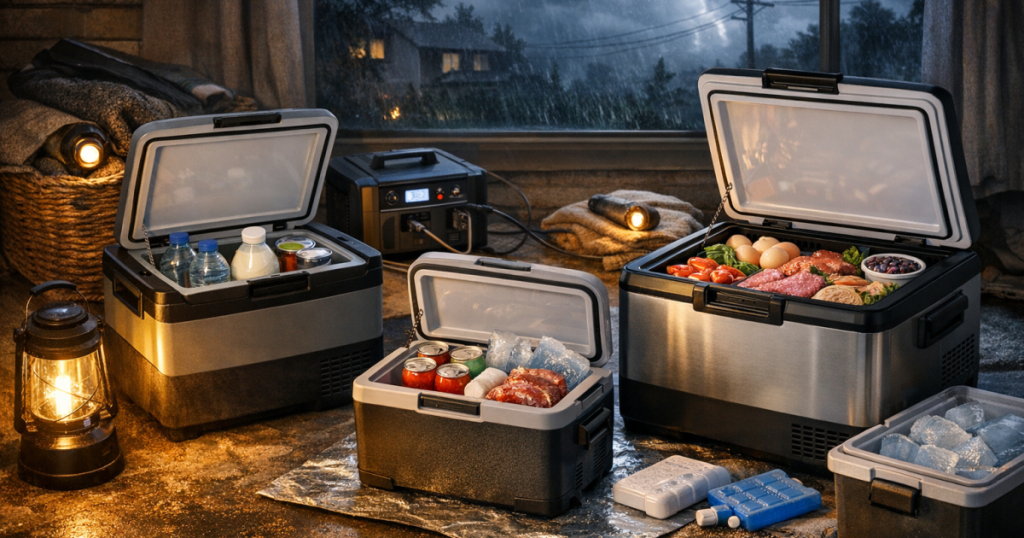
For outage use, compressor-based portable refrigerators are the main category to understand. They are designed to actively cool, usually from vehicle DC power or an AC adapter, and many can operate as either a refrigerator or freezer depending on the setting. This makes them far more useful for multi-hour outages than simple insulated coolers, but they still need power and ventilation.
Coolers with ice
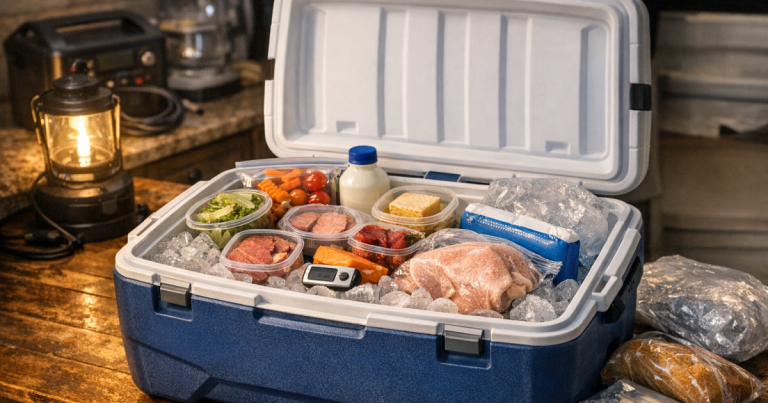
A hard cooler still belongs in the plan. It is quiet, cheap to run, and excellent for drinks or frozen gel packs. Its weakness is control: ice melts, water pools, and temperatures rise unless you manage it closely. Use the cooler for lower-risk items and keep the powered refrigerator for food that needs steadier cold.
Thermoelectric coolers
Thermoelectric coolers can help with short trips, but they are usually not the first choice for serious outage food safety. They tend to cool relative to the surrounding temperature rather than holding refrigerator temperatures as confidently in hot conditions. For summer storm outages, wildfire shutoffs, or humid garage storage, that limitation matters.
Step 3: Match the refrigerator to a believable power source
Portable refrigerators cycle on and off, so the number printed on a label is not the same as constant all-day use. Runtime depends on the set temperature, room temperature, how full the box is, how often you open the lid, and the usable energy in your battery or generator setup.
A simple estimate helps: usable watt-hours divided by average watts gives rough runtime. If a setup has about 600 usable watt-hours and the refrigerator averages 40 watts over time, the math suggests about 15 hours before losses. Real-world runtime can be lower, so leave margin instead of planning to the last percent.
For apartments and quiet overnight use, a portable power station is often the cleanest pairing. Choose the battery around the refrigerator’s measured or manufacturer-stated consumption, then add room for phone charging, lights, and a router if those are part of the same plan. If you are building around household essentials, this guide to choosing a portable power station for essential circuits explains how to think through capacity without buying more battery than you can use well.
A fuel generator can run a portable refrigerator for longer outages, but it changes the safety picture. Generators must run outdoors, away from doors, windows, vents, garages, and enclosed spaces. If you plan to feed home circuits instead of plugging equipment directly into the generator, read how to connect a generator without backfeeding your home before a storm is on the radar.
Step 4: Use the portable refrigerator before the main fridge warms up
The best time to move food is before temperatures drift into the danger zone. If you know an outage may last, load the portable refrigerator while the food is still safely cold. Pre-chill the unit when you have power, add already-cold items, and avoid loading it with room-temperature groceries unless you have plenty of power and time to cool them.
- Keep the unit shaded and indoors when possible, but give vents room to breathe.
- Group similar items together so the lid is open for seconds, not minutes.
- Use small bins or bags so raw meat stays separated from ready-to-eat foods.
- Add frozen water bottles or gel packs if there is space; they help buffer temperature swings.
- Check the thermometer, not just the control panel, especially after moving the unit or changing power sources.
Do not daisy-chain extension cords or bury adapters under blankets, bins, or rugs. The less dramatic the setup looks, the better. Outage gear should be boring in the best possible way.
Which portable refrigerator is best for your household?
For most homes, the best portable refrigerator is the one that holds one to two days of high-priority perishables, fits where it will actually be used, and can run from the power source you already plan to maintain. A premium model is wasted if it is too heavy to move from the closet. A bargain model is not a bargain if its capacity or plug arrangement makes it awkward when the lights are out.
Choose a premium rugged model if storage and durability matter
Vehicle-oriented models such as the Dometic and ARB examples make sense for households that camp, evacuate by car, or keep backup gear staged in a garage. The trade-off is usually cost, weight, and bulk. Measure the storage spot, vehicle cargo area, and the doorway path before assuming it will fit.
Choose a midrange compressor fridge if this is mainly a home backup tool
A midrange unit can be the sweet spot for many households: enough capability for meat, dairy, and prepared food without turning the purchase into a lifestyle statement. Verify the actual interior shape, basket layout, cord options, and warranty terms. The boring details decide whether it is pleasant during a real outage.
Choose a budget model only if you can test it early
Budget portable refrigerators can be useful, but do not let the first test happen during a July thunderstorm. Run it at home, check temperatures with an independent thermometer, learn how it behaves on your battery or vehicle outlet, and label the cords. A low-cost unit that you understand is better than an expensive one you are afraid to touch.
Common questions
Can a portable refrigerator save a full kitchen fridge?
No. It can protect a selected load of important food. Keep the kitchen refrigerator and freezer doors closed as much as possible, then move priority items before they warm beyond safe limits.
Is a portable freezer better than a portable refrigerator?
Only if frozen storage is the job. Freezing takes more energy than holding refrigerator temperatures, so many households get more practical runtime by using the unit as a refrigerator and leaving the main freezer closed.
Should I buy a bigger unit just in case?
Not automatically. Bigger boxes take more space, weigh more when loaded, and can require more power. Size for the food you will truly protect, then keep shelf-stable meals, water, and a cooler as separate parts of the plan.
Practical takeaway
A portable refrigerator is one of the more useful food-safety tools for extended outages, but only when it is treated as part of a system: thermometer, pre-chilled food, realistic power, safe cords, and a clear loading plan. Pick a compressor fridge/freezer sized for essentials, test it before storm season, and write down what goes in first. That small bit of planning can keep a messy outage from becoming a spoiled-food cleanup job.