A backup power setup should feel boring when the lights go out: the fridge stays cold, the router has a plan, and nobody is hunting for a missing cord. The safest way to maintain backup power is to test the whole setup before storm season, after any equipment change, and at least a few times a year.
Safety note: Transfer switch installation, generator inlet wiring, and any connection to household circuits should be carried out by a qualified electrician to comply with local electrical codes, manufacturer instructions, and applicable safety requirements.
Main points
- Test the system as a household routine, not as separate gadgets sitting on shelves.
- Confirm what each backup source will power, how long it may run, and what must stay off.
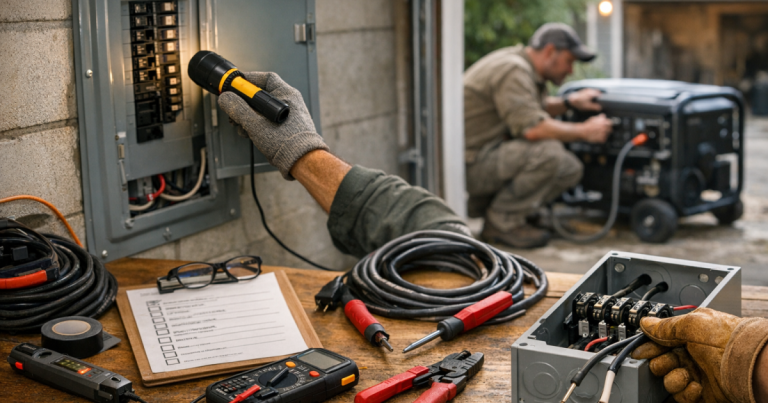
- Inspect cords, plugs, vents, batteries, fuel, and labels before running any load test.
- Use realistic loads: router, fridge, freezer, lights, medical devices, or whichever items are on your essential list.
- Keep a written log so you can spot weak batteries, fuel problems, tripped breakers, and missing accessories before an outage.
Set a testing rhythm you can actually keep
Backup gear fails quietly. Batteries age, fuel degrades, extension cords wander into the garage, and someone plugs the freezer into a different outlet. A simple schedule is better than a perfect plan nobody follows.
For most homes, a practical rhythm is a monthly quick check, a seasonal functional test, and a full drill before the part of the year when outages are most likely in your area. In hurricane, wildfire shutoff, ice storm, or severe thunderstorm regions, that full drill should happen before the season begins, not when warnings are already on the weather radio.
Your quick check can take ten minutes: look for damaged cords, confirm battery charge levels, verify fuel condition, and make sure the flashlight or lantern you plan to use during setup is where it belongs. The seasonal test should run actual household loads long enough to reveal problems.
Start with the essential-load list
Before turning anything on, write down what you expect the system to support. Keep it honest. A blackout plan built around “the whole house” often becomes confusing fast, while a plan built around essentials is easier to test and safer to operate.
Typical priority loads include a refrigerator, freezer, Wi-Fi equipment, phones, a few LED lamps, a sump pump, a garage door opener, or medically necessary equipment. Heating, air conditioning, electric ranges, clothes dryers, and well pumps can require far more careful planning than small electronics.
If you have not mapped loads by room yet, build that list with a room-by-room blackout preparedness checklist. It keeps the test grounded in real life: what you need in the kitchen, what has to work in the bedroom overnight, and what can wait until grid power returns.
Inspect before you energize
Do a visual inspection before every meaningful test. You are looking for the boring little faults that cause stressful failures later.
- Check extension cords for cuts, crushed sections, loose ends, heat marks, and outdoor rating where outdoor use is involved.
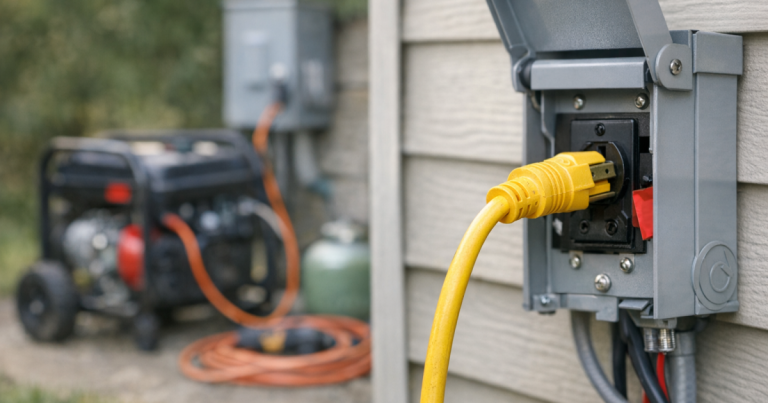
- Confirm generator cords and inlets match the equipment they are meant to serve.
- Make sure power stations and UPS units are clean, dry, and sitting where vents are not blocked.
- Look for swelling, leaks, corrosion, or unusual odor around batteries; stop using suspect equipment and follow the manufacturer’s safety instructions.
- Confirm carbon monoxide alarms are installed and working if any fuel-burning generator is part of your plan.
- Remove stale notes from the last outage and update labels if loads or circuits have changed.
This is also the point to verify that your setup does not rely on backfeeding. A portable generator should never be connected to a home through a dryer outlet, range outlet, or improvised cord. If your plan involves household circuits, review how to connect a generator without backfeeding your home before running a drill.
Test battery backups and UPS units
Uninterruptible power supplies and portable power stations are useful because they are quiet, indoor-friendly, and fast to deploy. They still need testing. A unit showing a full display may not perform well under load if the battery is aging or the planned load is larger than expected.
Start by fully charging the unit according to the manufacturer’s instructions. Then plug in the actual items you plan to run: modem, router, laptop, phone charger, LED lamp, or CPAP if that is part of your household plan. Watch for overload warnings, unexpected shutdowns, hot plugs, or runtimes that are much shorter than your notes from prior tests.
Runtime is always an estimate, not a promise. It changes with the wattage of connected devices, battery age, temperature, inverter losses, and whether the equipment cycles on and off. A refrigerator, for example, does not draw the same amount of power every minute, so a short test can only give you a partial picture.
If keeping internet service online is one of your goals, test the full chain: modem, router, fiber terminal or gateway, and any network switch you rely on. The household Wi-Fi plan should follow the same logic as the power plan, and this guide to keeping Wi-Fi working during a power outage can help you avoid backing up only half the network.
Run generator checks without rushing
A generator test is not just “does it start?” It should confirm safe placement, startup, load handling, shutdown, cooling, and storage. Set the generator outdoors, away from doors, windows, vents, crawl spaces, and attached garages. Never run it indoors, in a garage, on a porch, or in a breezeway.
Before starting, check oil level, fuel condition, air filter condition, and the manufacturer’s maintenance schedule. Use the correct fuel type and do not refuel while the unit is running or hot. Keep children and pets away from the operating area, and make sure cords are routed where they will not sit in standing water or become trip hazards.
Start with no loads connected unless the manual says otherwise. Let the unit stabilize, then add loads in stages. Listen for stumbling, watch for overload indicators, and confirm that the generator is not being asked to start too many motor loads at once. A freezer, refrigerator, sump pump, or furnace blower may have a higher startup demand than its steady running draw.
Practice the transfer or connection sequence
If your system uses a manual transfer switch or interlock, practice the exact sequence you would use during an outage. The point is to remove guesswork while the lights are still on.
Walk through these steps with your written instructions beside you: shut off or isolate the correct circuits, connect the generator cord, start the generator, move only the intended circuits to backup power, and add loads one at a time. Then reverse the process: remove loads, return circuits to utility power when available, shut down the generator, let it cool, and store cords properly.
Do not expand the plan mid-test. If the transfer switch supports six selected circuits, test those circuits and document the limits. Adding “just one more” load during an actual outage is how a tidy plan becomes overloaded.
Do a realistic load test
A useful load test answers three questions: what runs, what struggles, and what has to stay off. Pick a calm day, tell everyone in the home what you are doing, and simulate a short outage.
- Turn on the backup source and connect only the planned essentials.
- Run the test long enough for cycling loads, such as a refrigerator or freezer, to start at least once.
- Record estimated watts if you have a plug-in watt meter or equipment display.
- Note any overload warnings, tripped breakers, flickering lights, hot cords, or nuisance alarms.
- Confirm you can still move safely through the home with your emergency lighting plan.
Do not treat a successful thirty-minute test as proof of a three-day runtime. It proves the connection plan and starting loads are workable. Longer outages add fuel storage, recharging, weather, noise, battery aging, and human fatigue to the equation.
Check fuel, charging, and storage
Fuel and batteries both need a storage plan. For generators, follow the manufacturer’s instructions for fuel type, stabilizer use, oil changes, filter service, and long-term storage. Store fuel in approved containers, away from living spaces and ignition sources, and rotate it on a schedule you will remember.
For portable power stations and UPS units, follow the maker’s storage charge guidance rather than leaving units forgotten in a closet for years. Keep chargers, solar cables, extension cords, and adapters together in a labeled bin. If a battery backup is assigned to medical equipment, routers, or a sump pump, it should not be casually borrowed for camping, tailgating, or the kids’ tablet setup.
Keep a simple maintenance log
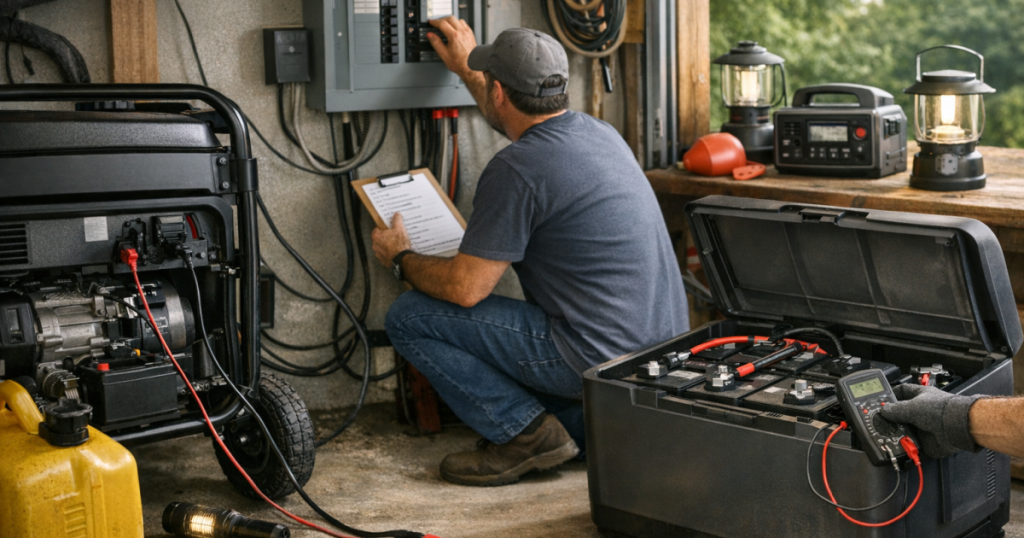
A log turns scattered memories into useful evidence. It does not need to be fancy. A notebook, printed checklist, or shared household document is enough.
- Date of test
- Equipment tested
- Loads connected
- Approximate runtime or fuel used
- Problems found
- Parts replaced or serviced
- Next scheduled check
After two or three rounds, patterns become obvious. Maybe the router UPS is fine for short blips but not a workday outage. Maybe the generator starts easily in warm weather but needs attention before winter. Maybe the “backup” extension cord has been doing yard duty for six months.
Straight answers
How often should I test backup power?
Do a quick visual and charge check monthly, a functional test seasonally, and a full household drill before your highest-risk outage season. Also retest after adding equipment, changing circuits, replacing batteries, or moving major appliances.
Should I drain a battery backup completely during a test?
Usually no. Follow the manufacturer’s instructions. For most household planning, it is more useful to run a controlled load test long enough to confirm operation, estimate runtime, and identify overloads without unnecessarily stressing the battery.
Can I test a generator in the garage with the door open?
No. A portable generator should run outdoors only, away from openings that can let exhaust enter the home. An open garage door does not make indoor or attached-garage operation safe.
Why it matters
The best outage test is calm, slightly boring, and done before anyone needs it. You are not trying to prove your setup is heroic; you are trying to find the weak cord, the tired battery, the confusing label, and the load that does not belong.
Once the test is complete, update your checklist, put every cord and charger back in its assigned place, and set the next reminder. That quiet hour of preparation can turn a stressful blackout into a manageable household routine.