Planning whole-home generator installation costs before you call installers helps you avoid the two classic surprises: a generator that is undersized for your real outage needs, or a quote that leaves out fuel, permits, and service. A permanently installed standby system can be a very comfortable blackout solution, but the ownership cost is bigger than the metal box sitting outside.
Electrical wiring, transfer-switch integration, and natural-gas or propane line work should be handled by qualified electricians and licensed fuel-gas professionals to meet local code, permit, and inspection requirements.
In brief
For many US homes, a professionally installed standby generator project commonly lands in the low five figures, with simpler projects often lower and complex projects higher. A realistic budget includes the generator, automatic transfer switch, electrical labor, fuel work, permits, site preparation, startup, and future maintenance. Annual service is not optional background noise; it is part of owning the system.
- Expect the generator itself to be only one part of the bill, not the whole project.
- Natural gas can be convenient, but the existing gas service may need evaluation or upgrades.
- Propane installations need tank planning, refill access, and fuel level habits.
- Automatic transfer equipment and load management affect what can run during an outage.
- Maintenance should include routine exercise checks, professional service, and battery attention.
Step 1: Decide what “whole-home” means in your house
The phrase whole-home sounds simple, but installers may use it in different ways. One plan may cover nearly every circuit, while another uses load management to pause big appliances so the generator can handle the house without being enormous. Air conditioning, electric heat, well pumps, electric water heaters, ovens, dryers, and EV charging can change the sizing conversation quickly.
Start with the rooms and systems you want usable during a long outage: refrigerator, freezer, heat or cooling, sump pump, well pump, lighting, router, medical equipment, kitchen outlets, garage door opener, and a few everyday receptacles. Then mark the heavy loads that are nice to have but not essential. This keeps the project grounded in comfort and safety instead of the vague promise of “everything.”
If you are still deciding whether a permanent system earns its price over portable backup, the site’s guide to which whole-home generator earns its installation and maintenance cost is a useful next read.
Step 2: Build your whole-home generator installation costs from five buckets
The cleanest way to plan whole-home generator installation costs is to separate the quote into cost buckets. That makes it easier to compare bids without getting lost in one big number.
Generator and transfer equipment
The generator unit and automatic transfer switch are the visible parts of the project. Residential standby generators vary by output, enclosure, fuel type, and controls, so pricing can move widely. As a planning range, homeowners often see several thousand dollars for the generator equipment before installation labor, with larger units costing more. The transfer switch and load-control equipment may be included in a package or itemized separately.
Electrical labor and panel work
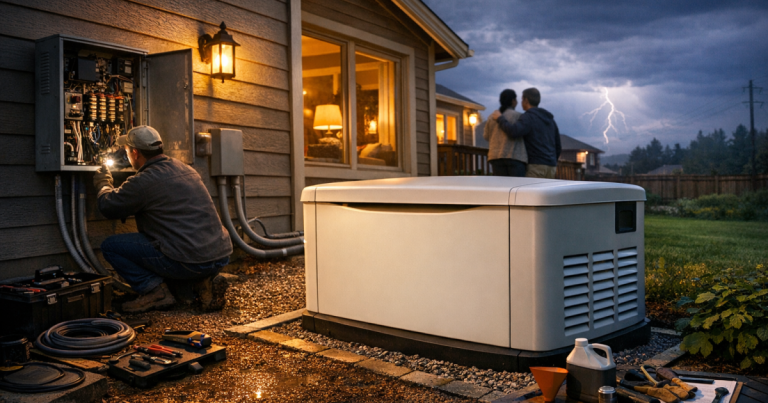
This is where “easy install” and “old house with surprises” part ways. Labor may include mounting transfer equipment, running conduit, connecting selected circuits or service equipment, labeling, testing, and coordinating inspection. If the electrical panel is crowded, outdated, poorly located, or due for related upgrades, the cost can rise. Do not treat this as a corner to cut; the transfer system is what keeps generator power from creating unsafe backfeed.
Fuel connection or storage
Natural-gas standby generators need a properly sized gas supply. An existing line that works for a furnace and water heater is not automatically adequate for a generator. Propane systems need a tank sized for the expected load and outage duration, plus safe placement and delivery access. Fuel work can range from a modest connection to a more involved upgrade with trenching, new piping, regulators, or tank work.
Site preparation and placement
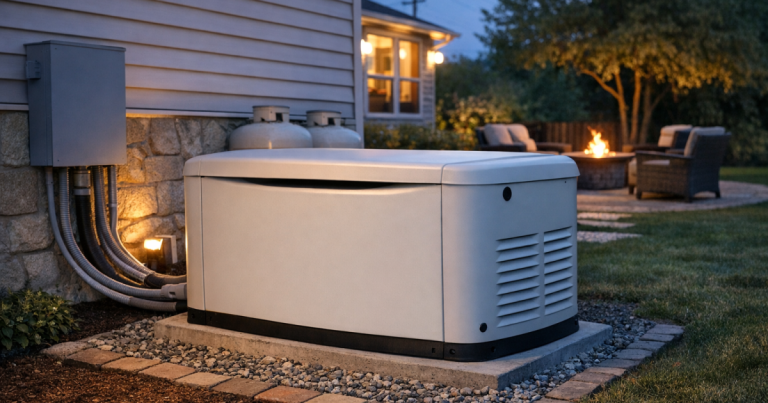
The generator needs a suitable outdoor location with clearance from openings, property lines, vents, and combustible materials as required by the manufacturer and local rules. Site work may include a concrete pad or composite base, leveling, trenching, conduit runs, and landscaping repair. A short, clean run is usually easier on the budget than a difficult location chosen only because it is visually hidden.
Permits, inspections, and startup
Permits and inspections add cost, but they also protect the homeowner from unsafe shortcuts. Many installations include utility coordination, electrical inspection, gas inspection, and manufacturer-style startup checks. Ask what is included in the bid and what could be billed separately.
Step 3: Use realistic planning ranges, not a single magic number
There is no responsible one-price answer for every US home. A modest standby setup with straightforward access can cost far less than a large system with complicated electrical work, gas upgrades, trenching, and load management. For budget planning, many homeowners should think in ranges rather than chasing a fixed national average.
- Generator equipment: often several thousand dollars, depending on size and configuration.
- Transfer switch and load controls: commonly hundreds to a few thousand dollars, depending on the setup.
- Electrical installation labor: often a major share of the project, and highly dependent on panel location and complexity.
- Gas or propane work: can be minor if the site is ready, or significant if new piping, tank work, or trenching is needed.
- Permits, inspection, pad, and startup: smaller than the generator itself, but still worth including from day one.
A simple project might fit into the high four figures, while many complete standby installations sit somewhere around $10,000 to $20,000. Larger homes, difficult sites, upgraded fuel service, or higher-capacity systems can push beyond that. Treat these as planning bands, not quotes. Your installer, utility conditions, local permit fees, and house layout decide the real number.
Step 4: Ask for quotes that reveal the hidden work
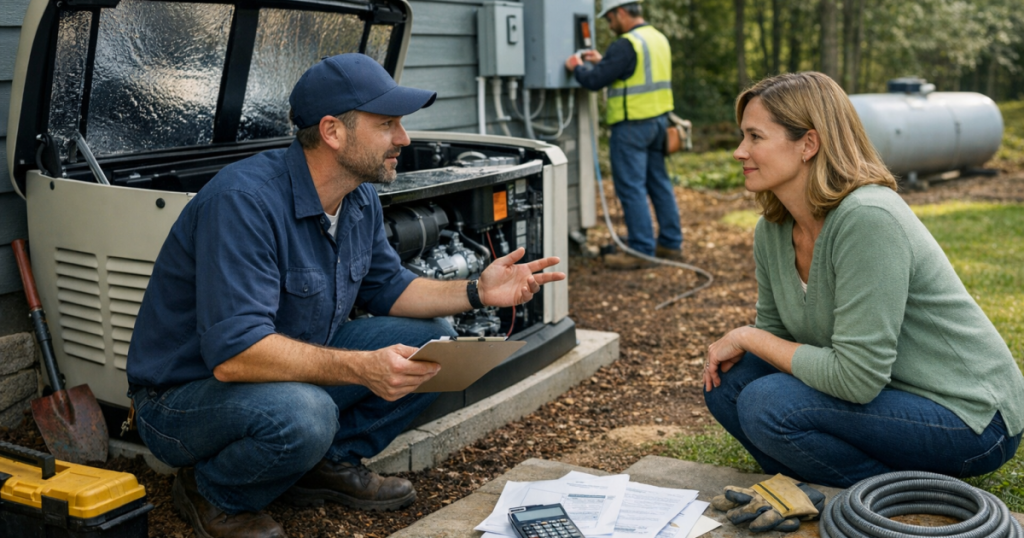
A useful quote should tell you more than the generator size and total price. Ask each installer to specify the transfer equipment, fuel assumptions, permit handling, site work, included startup, warranty registration process, and what happens if inspection requires changes. If two quotes are far apart, the lower one may be missing work rather than offering a miracle. Generators are not famous for miracles; they are famous for needing proper installation.
Ask these questions before you sign:
- Which circuits or loads will be supported, and which loads will be shed or locked out?
- Is the existing electrical panel suitable for the installation?
- Has the natural-gas meter, propane tank, or fuel line capacity been evaluated?
- Are permits and inspections included in the price?
- What site preparation is included?
- What is the first-year maintenance expectation?
- Who handles service calls after installation?
If you are weighing standby equipment against a portable generator and manual transfer setup, review how to connect a generator without backfeeding your home. The safety principles are different from a permanent standby installation, but the backfeed risk is the same mistake to avoid.
Step 5: Plan maintenance before the first storm warning
A standby generator is not a set-it-and-forget-it appliance. It sits outside through heat, rain, snow, dust, insects, and long quiet stretches, then is expected to start on a bad day. Maintenance is what keeps that expectation reasonable.
A practical maintenance budget usually includes professional annual service, oil and filter changes as specified by the manufacturer, air filter checks, spark plug inspection or replacement when due, battery testing, firmware or controller checks when applicable, and inspection of the enclosure, wiring, exhaust area, and fuel system. Many owners also pay for a service plan, which can reduce friction because someone is scheduled to look at the machine before outage season rather than after it refuses to start.
For planning purposes, annual maintenance may run a few hundred dollars, with higher costs if parts, battery replacement, storm damage, pest damage, or neglected service are involved. After a long outage, the system may also need post-run service sooner than the calendar suggests. Runtime hours count.
Step 6: Add fuel and ownership habits to the budget
Natural gas removes the chore of storing fuel on site, but it depends on the gas utility being available and the service being correctly sized. Propane gives you on-site fuel, but the tank level becomes part of your preparedness routine. If your area gets ice storms, hurricanes, wildfire shutoffs, or long rural outages, fuel planning should be part of the installation conversation, not an afterthought.
Keep a simple owner checklist:
- Know how the generator exercises and what a normal exercise cycle sounds like.
- Keep the area around the unit clear of leaves, snow, mulch, and stored items.
- Confirm propane levels before storm season if your system uses a tank.
- Check for alert lights or controller messages after severe weather.
- Schedule service before peak outage season, not during it.
For a broader routine that applies to standby generators, portable generators, UPS units, and batteries, use this guide to test and maintain backup power before an outage.
Things readers ask
Is a whole-home generator cheaper if the house already has natural gas?
It can be, but not always. Existing natural gas service may reduce fuel storage work, yet the meter, regulator, and pipe sizing still need evaluation. If upgrades are needed, the gas portion of the project can still be substantial.
Can maintenance be skipped if the generator runs its weekly exercise cycle?
No. Exercise cycles help reveal some problems, but they do not replace oil service, filters, battery checks, inspection, or post-outage service. A generator can exercise normally and still need routine care.
Should I size the generator for every appliance?
Not automatically. Sizing for every possible load can raise equipment and installation cost. Many households get better value by backing up essential comfort, safety, refrigeration, communications, and selected circuits, then using load management for large appliances.
Main lessons
The cost of a standby generator is a project cost, not just a generator price. Build your budget around equipment, transfer gear, electrical work, fuel work, site preparation, permits, and maintenance. Then decide whether the convenience of automatic backup is worth the ongoing ownership routine. For the right home, it can be an excellent outage solution. For the wrong one, it can become an expensive machine that mostly reminds you it needed service last month.