A standby generator can make a long outage feel almost ordinary: the refrigerator keeps humming, the furnace blower still works, and lights come back without dragging cords through the house. The real question is not just how many watts you can buy. It is whether whole-home generator installation costs make sense for the outages, appliances, fuel access, and maintenance habits in your home.
Professional guidance: Standby generator wiring, transfer-switch integration, and natural gas or propane connections should be carried out by qualified electricians and licensed fuel professionals to meet local codes, utility requirements, and safety standards.
The practical answer for most households
A whole-home standby generator is usually easiest to justify when your household has frequent outages, long restoration times, a well pump, sump pump, medical equipment, work-from-home needs, or heating and cooling requirements that are hard to cover with smaller backup gear. It is less compelling when outages are rare, short, and mostly about keeping phones, a router, lights, and a refrigerator going for a night.
As a broad 2026 budgeting range in the US, many professionally installed residential standby systems land somewhere around $7,000 to $20,000 or more. Smaller essentials-focused installations can sit toward the lower end, while larger homes, central air conditioning, long fuel runs, upgraded gas service, trenching, complex electrical work, or stricter local permitting can push the total higher. Ongoing ownership is not free either: plan for annual service, periodic parts, fuel use during outages, and occasional battery or repair costs.
If your goal is only to keep a few essentials alive, compare the standby route against a layered backup plan before committing. A smaller setup may be enough if you understand the trade-offs between a portable power station, generator, and UPS for blackouts.
Where the installed cost actually goes
For planning purposes, whole-home generator installation costs are best viewed as a system cost, not a generator price. The box outside is only one part of the bill. The supporting work is what makes it safe, automatic, code-compliant, and useful during a real outage.
- The standby generator: Larger output capacity generally costs more, but sizing should be based on your actual loads rather than a guess. Central air, electric heat, electric water heating, well pumps, and large kitchen appliances can change the sizing conversation quickly.
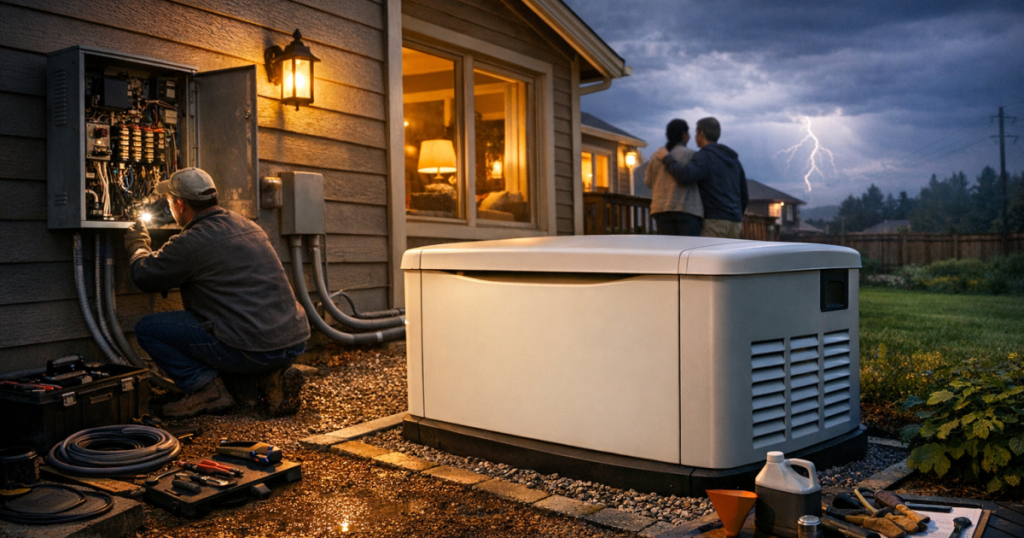
- Automatic transfer equipment: A standby system needs transfer equipment that separates your home from the grid before generator power feeds selected circuits or the whole panel. This is a safety requirement, not an upgrade.
- Electrical labor and permits: Panel work, load calculations, inspections, and utility coordination can be significant. Older electrical panels or unusual service layouts can add time and cost.
- Fuel connection: Natural gas installations may need meter or line evaluation. Propane setups may require tank placement, regulators, and piping. The easier the fuel path, the cleaner the budget.
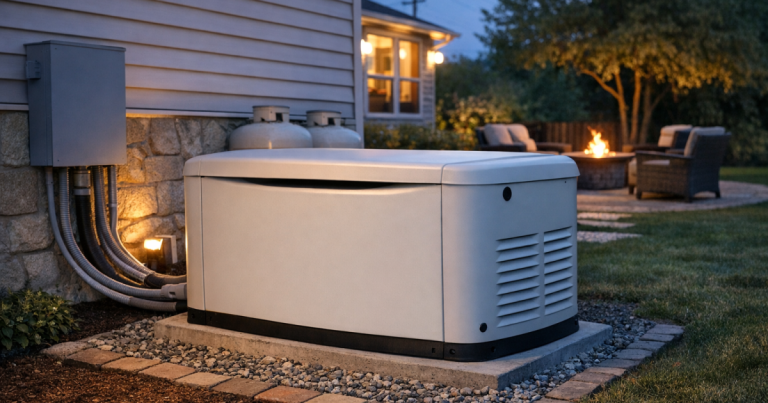
- Site preparation: A stable pad, drainage, clearances from windows and doors, flood exposure, snow buildup, and local noise rules all affect where the generator can sit.
A useful way to frame quotes is by scenario. An essentials-focused standby setup for a refrigerator, furnace blower, sump pump, lights, and outlets will usually be less demanding than a system expected to handle central air conditioning, cooking, laundry, and most daily routines with little interruption. The second setup is more comfortable, but comfort is where costs tend to climb.
Step 1: List what must run, not what would be nice
Start with the loads that protect safety, health, and the house itself. In many homes, that means the refrigerator and freezer, furnace blower or boiler controls, sump pump, well pump, a few lights, internet equipment, phone charging, garage door opener, and specific medical or mobility equipment. After that, add comfort loads such as microwave use, coffee, television, dishwasher, laundry, and air conditioning.
This step is more revealing than it sounds. A home that depends on a sump pump and gas furnace may need a very different standby plan than an all-electric home with heat pumps, electric resistance backup heat, and an induction range. If you have not already mapped the house by room, a room-by-room blackout preparedness checklist can help separate true essentials from conveniences.
Step 2: Choose the level of backup you actually need
There are three common ways homeowners think about standby coverage. The first is an essentials-only setup, where the generator supports selected circuits. This can be a sensible fit when you want heat, refrigeration, a pump, lights, outlets, and communications without trying to live exactly as normal.
The second is a managed-load setup. With the right transfer equipment and load management, the system can prioritize important loads and temporarily shed large ones so the generator is not overloaded. This can make a mid-sized system feel more capable, but it still needs proper design.
The third is a large whole-house setup intended to carry nearly everything at once. This is the most seamless experience when sized correctly, but it is also the easiest place to overspend. If your normal outage routine can tolerate turning off the dryer, delaying oven use, or not running every air-conditioning zone at once, you may not need the biggest installation your home could technically accept.
Any generator that connects to household wiring must be isolated from the utility grid with approved transfer equipment. For a deeper safety primer, read about how to connect a generator without backfeeding your home.
Step 3: Treat fuel as part of the design
Fuel is where a lot of glossy generator promises meet ordinary household reality. Natural gas can be convenient because it does not require storing fuel on site, but the home’s gas service still has to support the generator and other gas appliances. Propane stores energy at home, which can be an advantage in some areas, but tank size, refill access, cold weather, and outage length all matter.
Do not evaluate a standby generator only by its rated output. Ask how it will be fueled during a three-day outage, what happens if roads are blocked, and whether the fuel system can support the generator at the loads you expect to run. The best installation is not just powerful; it is realistic when the storm has already arrived.
Step 4: Budget for maintenance before you sign off
A standby generator is closer to a small engine system than a household appliance you can ignore. Most owners should expect scheduled service at least annually, with the exact interval set by the manufacturer and installer. Common maintenance tasks include oil and filter changes, air filter inspection or replacement, spark plug service where applicable, battery checks, control-panel inspection, exercising the generator, and checking for leaks, corrosion, pests, or blocked airflow.
As a working budget, many homeowners plan around $200 to $600 per year for routine standby generator maintenance, though local labor rates, service plans, generator size, storm use, and repairs can move that number. Heavy runtime after major outages can also trigger extra service because engine hours matter, not just calendar time.
There are simple owner habits that help. Keep leaves, snow, and storage clutter away from the generator. Pay attention to warning lights or error messages. Listen during scheduled exercise cycles for obvious changes. After an outage, note roughly how long it ran and whether any loads caused trouble. These are not substitutes for professional service, but they make problems easier to catch early.
Step 5: Decide whether the comfort premium is justified
The whole-home generator that earns its cost is not always the largest one. It is the system that protects the things your household cannot easily do without, starts automatically when you are asleep or away, has a fuel plan that matches your outage risk, and receives routine maintenance before storm season.
It is usually a strong fit for homes with repeated multi-hour or multi-day outages, basements vulnerable to flooding, private wells, medically important devices, remote-work obligations, or older family members who need a more stable indoor environment. It can also make sense in neighborhoods where outages are predictable every storm season and hotel stays or food loss have become part of the household budget.
It is harder to justify when outages are occasional and brief, when your essential loads are modest, or when the installation would require major gas and electrical upgrades just to preserve normal convenience. In those cases, a portable generator, battery power station, UPS units for internet gear, and a strong food-safety plan may deliver better value.
Cost and upkeep questions that change the answer
Will a standby generator run everything in my house?
Only if it is sized and installed for that job. Many standby systems are designed to run selected essentials or to manage large loads automatically. Electric heat, central air conditioning, well pumps, ovens, dryers, and water heaters can quickly change the required capacity.
Is a bigger generator automatically better?
No. Bigger can mean higher equipment cost, more fuel demand, more installation complexity, and more expensive service. A properly sized system that handles your priority loads is usually smarter than buying capacity you rarely need.
What maintenance should I expect after installation?
Expect routine professional service, periodic replacement of wear items, battery attention, exercise testing, and additional checks after long outage runtimes. The exact schedule should follow the generator manufacturer’s manual and your installer’s setup requirements.
Does a standby generator replace all other outage planning?
No. It reduces disruption, but it does not remove the need for flashlights, surge protection, food-safety habits, carbon monoxide alarms, weather alerts, and a plan for fuel or service interruptions. Good backup power works best as part of a broader household plan.
The decision in plain terms
A whole-home generator is worth the installation and maintenance cost when automatic backup power protects something important enough to justify the full system: health, heat, pumps, refrigeration, work continuity, or a home that regularly loses power for long stretches. It is not the economical answer to every blackout.
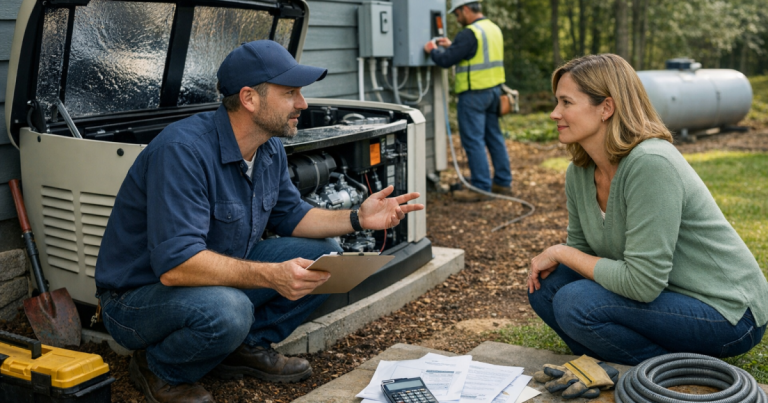
Before choosing a system size, write down your must-run loads, get more than one qualified installation quote, ask what is included in the permit and fuel work, and price the first few years of maintenance. The right standby generator should feel less like an oversized trophy appliance and more like a quiet insurance policy that actually fits the way your household rides out outages.