A small USB solar panel can sound like the tidy answer to outage charging: unfold it, point it at the sun, and keep a phone alive without fuel or wall power. This Nekteck 28W Solar Charger review takes the more practical view: it can be useful daylight support for small USB devices, but it is not a home backup power system.
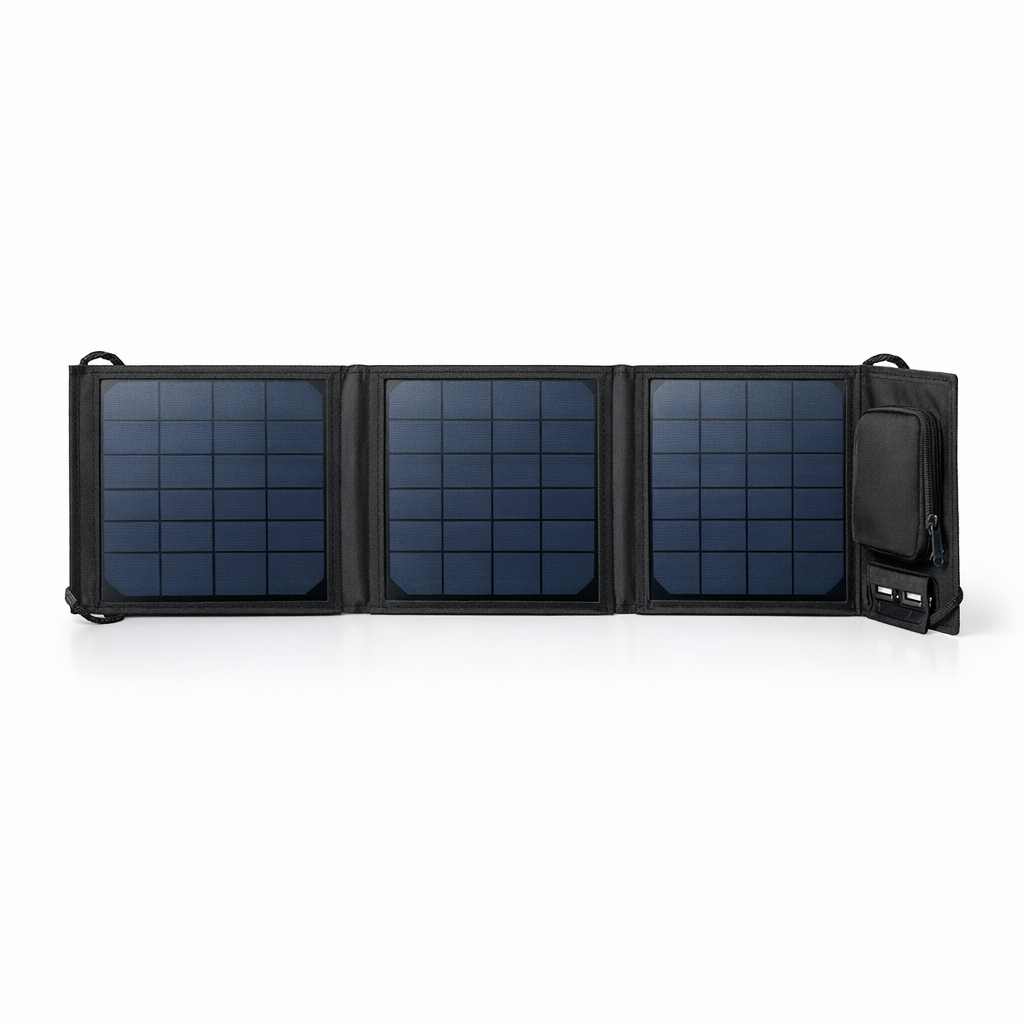
Nekteck 28W Solar Charger
Best treated as a daytime phone-and-power-bank helper, not a serious household blackout power source
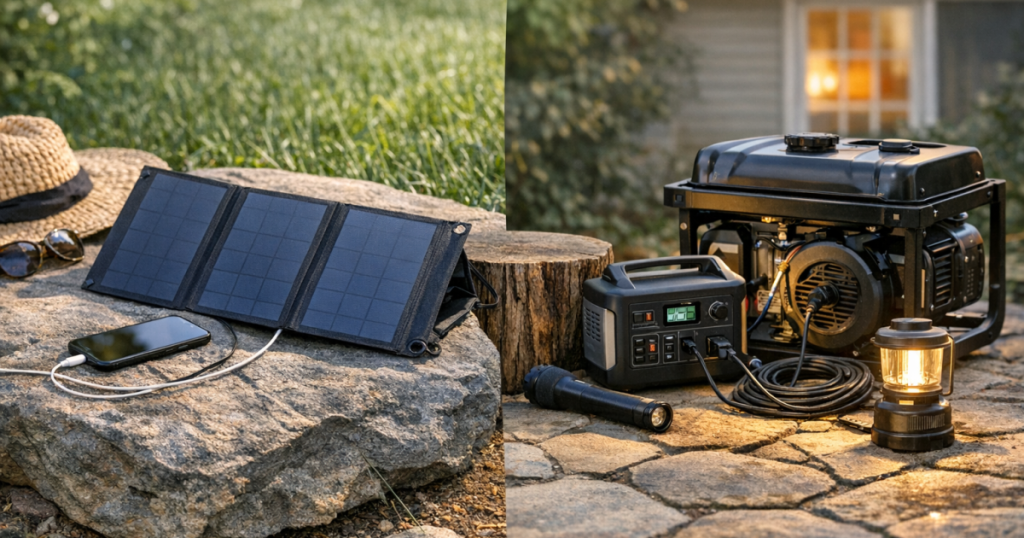
The Nekteck SM-B4112 28W Portable Solar Panel Charger is a foldable USB solar charger. It outputs USB-A power directly to a small electronic device or to a separate USB power bank when sunlight is available. As of 2026, it is best treated as a legacy Nekteck item rather than a current US model, which changes how strongly it can be recommended.
Product Details
- Product type: foldable USB solar charger.
- Primary role: daytime USB charging for small electronics or a separate USB power bank.
- What it is not: a battery, inverter, UPS, generator, or whole-home backup device.
- Required companions: sunlight and a USB cable compatible with the device being charged.
- Useful companion: a separate USB power bank for storing energy for evening or overnight use.
- Output scope: 5V USB small-device charging, not AC household loads.
- Included-cable note: a USB-A to Lightning cable is not included according to the manual text.
- Market status: legacy/discontinued in the US market, not a current Nekteck solar charger for new customers.
What this charger is really for during an outage
The sensible role for the Nekteck 28W Solar Charger is narrow but real: daytime topping-up for a phone, a small USB device, or a USB power bank during good sun. That can help in a short outage where the main jobs are checking alerts, texting family, and keeping a small communication lifeline available.
The key distinction is storage. This panel does not store energy. When the sun fades, clouds move in, or the panel is packed away, the charger itself has nothing to give. That makes a separate power bank more than a nice accessory; it is the practical way to turn daytime sun into usable power after dark.
For household backup planning, this places the Nekteck in the accessory lane. It can support phone resilience, but it does not replace a portable power station, UPS, generator, or transfer-switch setup. If you are still deciding between those bigger categories, our guide to portable power stations, generators, and UPS options for blackouts is the more appropriate starting point.
The daylight workflow is simple, but not effortless
A foldable USB solar charger asks for a different habit than plugging into a wall outlet. You are managing sunlight, shade, cable reach, device temperature, and timing. That can be easy on a clear day when the panel has open sun exposure. It becomes less predictable when weather is gray, when trees shade the yard, or when you are trying to charge from inside a window.
The most important limitation is not the 28W headline; it is the environment. Cloudy weather and indirect sunlight can reduce efficiency and stretch charging time. This review does not assign real-world charging estimates because those depend heavily on sun angle, weather, device behavior, cable condition, and the battery being charged.
There is also a heat trade-off. The manual advises keeping connected devices in the pouch or otherwise out of direct sunlight. That is a practical ownership detail, not a small footnote. Solar panels need sun; phones and external batteries do not enjoy baking in it. During a summer outage, the better setup is panel in the sun, device shaded, cable managed neatly, and charging checked periodically rather than forgotten for hours.
No battery means no nighttime backup
The lack of a built-in battery keeps the Nekteck simple, but it also defines the ceiling of its usefulness. It can generate USB output only while light conditions support charging. For blackout planning, that means it is not a standalone overnight phone solution unless you have charged something else during the day.
A separate USB power bank changes the experience. During daylight, the panel can feed the bank. After sunset, the bank can charge the phone. That two-step workflow is more reliable than leaving an essential phone connected directly to a solar panel and hoping the sun cooperates at the right moment.
This is also where expectations need to stay grounded. The Nekteck is not suitable for refrigerators, routers, AC appliances, or medical-device backup duty. It outputs USB-A small-device power, not household AC power. If the concern is sleep therapy during a power outage, start with a properly sized battery approach rather than a small USB solar panel; our guide to running a CPAP on a portable power station during an outage explains the planning problem in a safer, more realistic way.
Old-stock buying is the biggest catch
The Nekteck SM-B4112 is not a current US Nekteck solar charger. That does not automatically make every unit useless, but it does make the buying decision less clean than with a current model. You are likely looking at old stock, a used unit, or a secondary-market listing rather than a normal new-product purchase.
That changes the risk profile. The legacy manual refers to 12 months of warranty language, but that should not be treated as active coverage for a used or old-stock unit. Seller condition, return terms, cable condition, and whether the panel has been stored well become part of the real purchase. A solar charger is exposed to heat, folding, cables, and outdoor handling, so condition matters more than it would for a simple unused shelf item.
This is the main reason the Nekteck is hard to recommend as a first choice for someone building a fresh blackout kit in 2026. If you already own one, it still has a role. If you are buying from scratch, a currently sold portable solar panel paired with a suitable power bank or portable power station is usually a cleaner, easier-to-support path.
Where it fits in a realistic blackout kit
The Nekteck makes the most sense as a secondary layer. Think of it as a sunny-day helper that reduces pressure on your stored battery power. If your power station is reserved for a fridge, router, or medical priority, a small solar USB panel can help keep phones from competing for that larger battery during daylight.
For renters, apartment dwellers with safe outdoor access, campers, or households that want a no-fuel way to top up phones, that limited role can still be worthwhile. The panel is quiet, does not require gasoline, and does not create the carbon monoxide risks associated with combustion equipment. The trade-off is that it depends entirely on daylight conditions and does not provide power on demand.
The better ownership mindset is repeatability. Store it with the right USB cable, pair it with a known power bank, and decide in advance where it can sit in the sun without leaving connected electronics to overheat. If it only comes out during a stressful outage, the little details become harder than they need to be.
When a different approach makes more sense
Choose a different path if your outage plan includes anything beyond small USB devices. A router, refrigerator, freezer, sump pump, medical device, or laptop-heavy remote-work setup needs a real backup power plan with appropriate capacity, output type, runtime expectations, and safe connection practices.
Even for phone backup, the Nekteck is not the strongest option for every household. If your area frequently loses power during winter storms, smoky wildfire conditions, heavy rain, or multi-day cloudy weather, direct solar USB charging becomes less dependable. A charged power bank kept in a drawer is often more immediately useful for the first night of an outage.
The Nekteck’s appeal is strongest when the household already understands its limits: daylight only, USB only, small devices only. Within that boundary, it can be a useful backup layer. Outside that boundary, it becomes easy to overestimate.
What stands out
The best thing about the Nekteck 28W Solar Charger is its clarity of purpose. It is not pretending to be whole-home backup gear. It is a foldable solar charger for USB devices, and that simplicity can be helpful when used correctly.
The weak point is not complicated either: the product is legacy/discontinued in the US market and has no built-in battery. Those two facts make it less attractive for new buyers and more dependent on a thoughtful setup for existing owners. In blackout planning, predictability counts. A device that needs good sunlight and a separate storage plan should be treated as support gear, not the center of the system.
Verdict
Score: 6.3/10. The Nekteck 28W Solar Charger earns a cautious, niche recommendation. Its useful role is daylight USB charging for phones or a separate power bank, and it is easy to understand as long as expectations stay small. The score is held back by three practical limits: it has no built-in battery, it cannot handle AC household loads, and it is no longer a current US Nekteck model.
If you already have one, keep it in the kit with the right cable and a USB power bank. If you are buying blackout gear from scratch, treat this as a legacy option and put your main budget toward current, supportable backup power for the loads your household actually needs to run.
Nekteck 28W Solar Charger
Best treated as a daytime phone-and-power-bank helper, not a serious household blackout power source
You might also like: ReadyWise WFS 120 Serving Entree Only Grab & Go Bucket Review: A Pantry-First Blackout Food Kit.