This DuroMax XP13000HXT 13,000 Watt Tri Fuel Portable HXT Generator with CO Alert review looks at a high-output tri-fuel portable generator for households that want more than phones, lamps, and a router covered during an outage. My read: it is a serious home-backup option, but only for owners prepared to handle fuel planning, outdoor placement, and safe power connections.
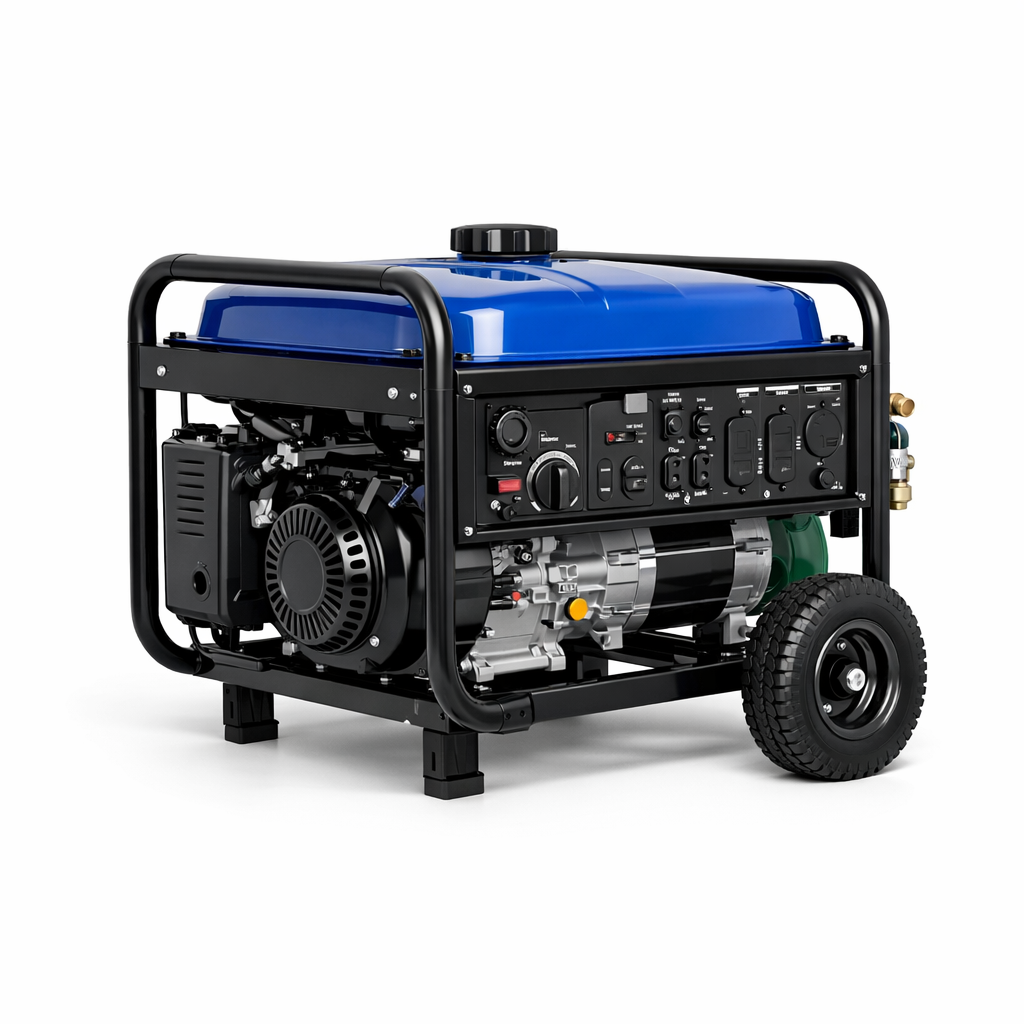
DuroMax XP13000HXT
A strong fit for homes needing high-output outage power with proper outdoor placement and professional connection planning
The reviewed item is the DuroMax 13,000 Watt Tri Fuel Portable HXT Generator w/ CO Alert, a portable engine-driven generator that can produce 120/240V AC power from gasoline, propane, or natural gas. It is not a permanently installed standby generator, and it does not automatically take over when the grid drops.
Panel connections, transfer switches, interlocks, inlet wiring, and natural gas supply work should be handled by qualified electrical or gas professionals to meet local codes, safety standards, and utility requirements.
Product Details
- Product type: tri-fuel portable generator for 120/240V AC backup power.
- Fuel options: gasoline, propane, and natural gas.
- Gasoline output: 13,000 peak watts and 10,500 running watts.
- Propane output: 12,500 peak watts and 10,000 running watts.
- Natural gas output: 11,250 peak watts and 9,000 running watts.
- Runtime on gasoline: 17 hours at 25% load and 8.5 hours at 50% load.
- Runtime on propane: 13 hours at 25% load and 6.5 hours at 50% load.
- Engine: 500cc DuroMax 4-stroke OHV forced-air-cooled engine running at 3600 RPM.
- Power quality: less than 5% THD with 100% copper windings and automatic voltage regulator.
- Receptacles: four 5-20R, one L5-30R, one L14-30R, and one 14-50R, with GFCI outlets listed.
- Starting and safety features: push button, electric, recoil, and remote start, plus CO sensor shutdown and automatic low-oil shutdown.
- Size and weight: 30 inches long x 29 inches wide x 26 inches high; 240 lb dry weight and 246 lb product weight.
- Noise rating: 74 dB.
- Natural gas requirement: 6.0 to 9.0 inches water column fuel pressure and 225,000 BTU at full load.
- Listed sale price: $1,499.
Tri-fuel flexibility is the main reason to look at it
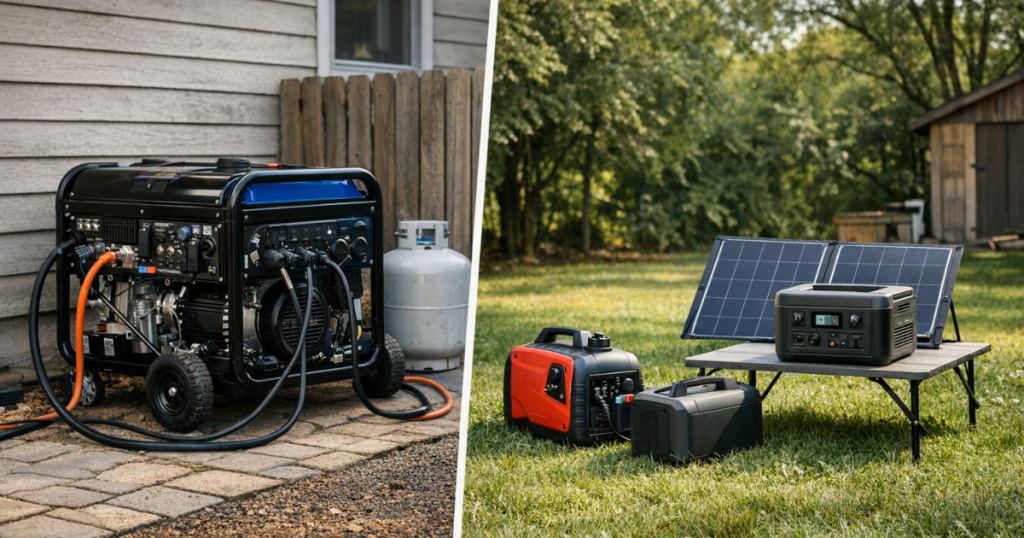
The strongest case for this generator is fuel choice. Gasoline gives the highest listed running output at 10,500 watts. Propane sits close behind at 10,000 running watts. Natural gas lowers the continuous rating to 9,000 running watts, but it can be attractive for homes with a properly sized gas supply because it reduces the need to store and rotate liquid fuel.
That range gives a household more ways to plan around a storm outage. Gasoline can be useful when you need the highest available output. Propane stores differently and avoids stale gasoline issues, though DuroMax suggests a 40 lb minimum propane tank size. Natural gas can simplify long-duration fuel logistics, but only when the home’s gas service can deliver the required pressure and BTU capacity.
The practical takeaway is simple: do not shop this as a 13,000-watt continuous generator. That number is the gasoline peak rating. For real load planning, use the running wattage for the fuel you expect to use. That distinction affects whether you can run a furnace blower, refrigerator, freezer, lights, microwave, sump pump, or selected circuits at the same time.
Output is strong, but the house connection decides how useful it becomes
On paper, this generator has enough output to move beyond extension-cord emergency mode. The L14-30R and 14-50R receptacles make it relevant for home-inlet planning, while the four 5-20R outlets and L5-30R can support direct-connected loads within their limits. The catch is that the useful version of this setup is not improvised through a dryer outlet or backfed panel. That is dangerous and not a shortcut worth taking.
For a homeowner, the smarter path is a proper generator inlet paired with a transfer switch or interlock installed for the circuits you intend to run. If you are deciding between cords, inlets, and panel options, our guide to generator power connections for blackouts explains the difference in plain language.
This is also where expectations need to stay grounded. A high-output portable generator can cover meaningful household needs, but it is still a portable generator. It will not start itself, transfer power automatically, or behave like a permanently installed standby system. Someone has to wheel it out, connect it correctly, start it, manage fuel, and shut it down safely.
Runtime is useful, but load discipline still matters
DuroMax lists 17 hours of gasoline runtime at 25% load and 8.5 hours at 50% load. On propane, the listed figures are 13 hours at 25% load and 6.5 hours at 50% load. Those numbers are useful planning anchors, not promises that every outage night will unfold neatly. Loads cycle, weather changes demand, and households tend to add “just one more thing” once the lights come back on.
The sensible way to use a generator this large is to assign priorities before the outage. A refrigerator, freezer, furnace blower, well pump, sump pump, router, medical device, and a few lights belong in a different tier than a range, dryer, central air system, or multiple high-draw appliances running together. The generator has muscle, but it is not a free pass to ignore watts.
The less glamorous side is fuel handling. Gasoline needs safe storage and rotation. Propane needs appropriately sized tanks and enough reserve. Natural gas needs a properly capable connection. That is the ownership friction: the generator gives you options, but each option has its own chores.
Portability is relative at 240 lb
DuroMax calls this a portable generator, and technically it is. But at 240 lb dry weight and 246 lb product weight, “portable” means movable around a property, not casually carried out of a closet. Plan its storage spot, outdoor operating location, route over pavement or firm ground, and how it will sit far enough from doors, windows, vents, and occupied spaces.
The 74 dB noise rating also deserves attention. This is not a quiet little inverter generator for a balcony, apartment landing, or late-night close-quarters use. It is a large open-frame home-backup generator, and neighbors will know it is working. That does not make it a bad choice; it just means placement and courtesy are part of the plan.
The CO sensor shutdown is a valuable safety feature, as is automatic low-oil shutdown. Still, CO Alert does not make indoor, garage, porch, shed, or enclosed operation safe. Portable generators must be operated outdoors with proper clearance. For a broader safety refresher before building any generator setup, read our home backup power safety basics.
The details that help, and the limits that narrow the audience
The less than 5% THD rating, 100% copper windings, and automatic voltage regulator are meaningful for a home-backup generator because many households now have sensitive electronics mixed in with traditional loads. That does not remove the need for sensible load management, but it makes the generator more credible for a mixed home outage setup than a bare-minimum contractor-style unit.
The starting options are also practical. Push button, electric, recoil, and remote start give more than one way to get the engine running. Recoil start is the fallback; electric and remote start are the convenience plays. During a cold, wet, or stressful outage, convenience has real value. Nobody wants their backup plan to require a wrestling match in the driveway.
The limitations are equally important. DuroMax lists this model as not CARB certified and not 50-state compliant, so it is not the right recommendation for every US household. Free shipping is listed for the 48 contiguous states and excludes Alaska and Hawaii. DuroMax also notes that some images are illustrative and the actual product may vary.
That combination points to a clear audience: homeowners who want substantial portable backup capacity, have a safe outdoor operating location, can store or access suitable fuel, and are willing to set up proper home power connections. Renters, apartment dwellers, California households subject to CARB restrictions, and anyone wanting automatic whole-home backup should be looking elsewhere.
Verdict
Score: 8.7/10. The DuroMax 13,000 Watt Tri Fuel Portable HXT Generator w/ CO Alert earns its recommendation on three strengths: high running-watt output, genuine tri-fuel flexibility, and a receptacle set that makes it practical for serious home-backup planning. The compromises are not small, though. Its 240 lb dry weight, 74 dB noise rating, non-CARB status, and need for professional connection work make it a poor fit for casual or small-space backup.
For the right home, this is a capable outage machine: not automatic, not subtle, and not something to buy without a plan, but strong enough to anchor a resilient generator setup when the fuel, placement, and wiring pieces are handled correctly.
DuroMax XP13000HXT
A strong fit for homes needing high-output outage power with proper outdoor placement and professional connection planning
You might also like: Portable Power Station vs Generator vs UPS for Blackouts.