A good blackout lantern does not need to turn a room into a workshop. It needs to make a hallway safe, a table usable, and a phone a little less desperate. This LuminAID PackLite Max 2-in-1 Power Lantern review asks whether LuminAID’s compact inflatable lantern is the right kind of simple for household outages.
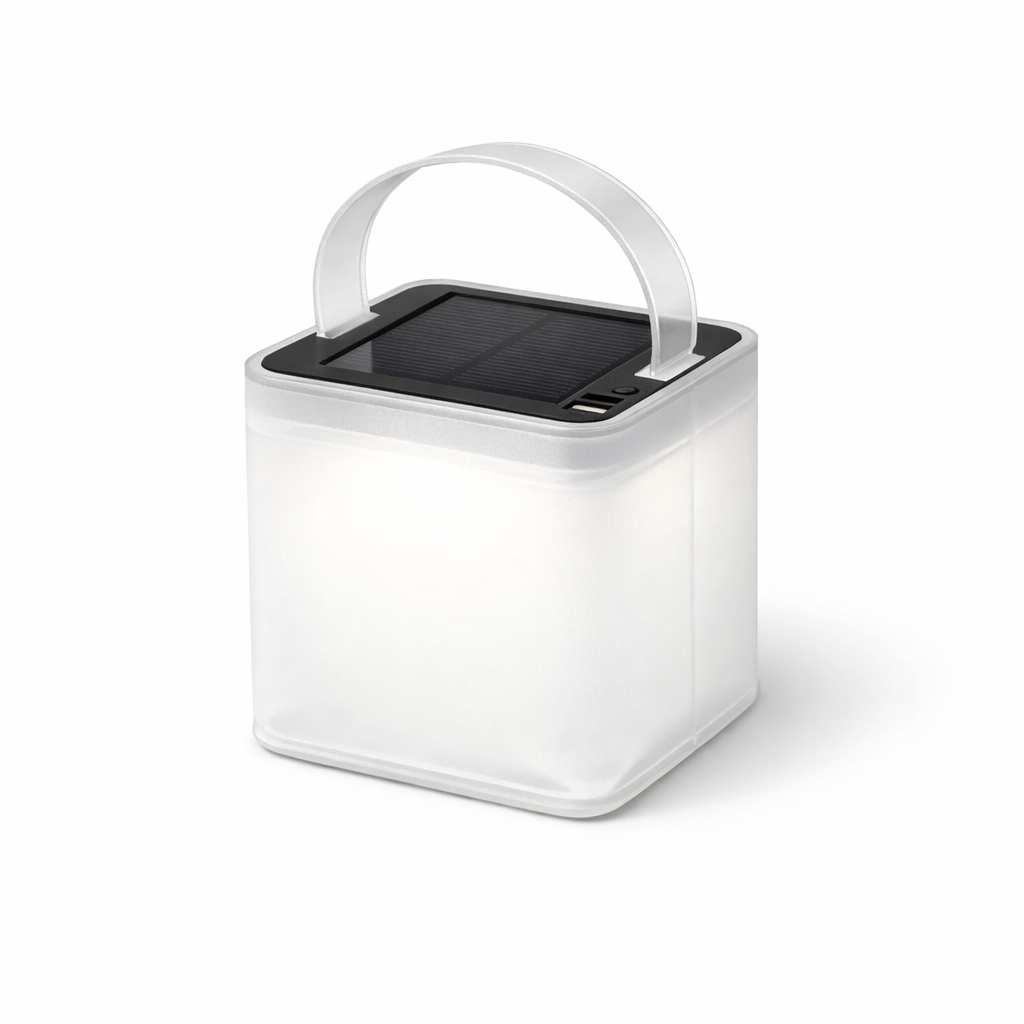
LuminAID PackLite Max 2-in-1 Power Lantern
A smart fit for blackout kits where shared room light and one phone top-up are enough
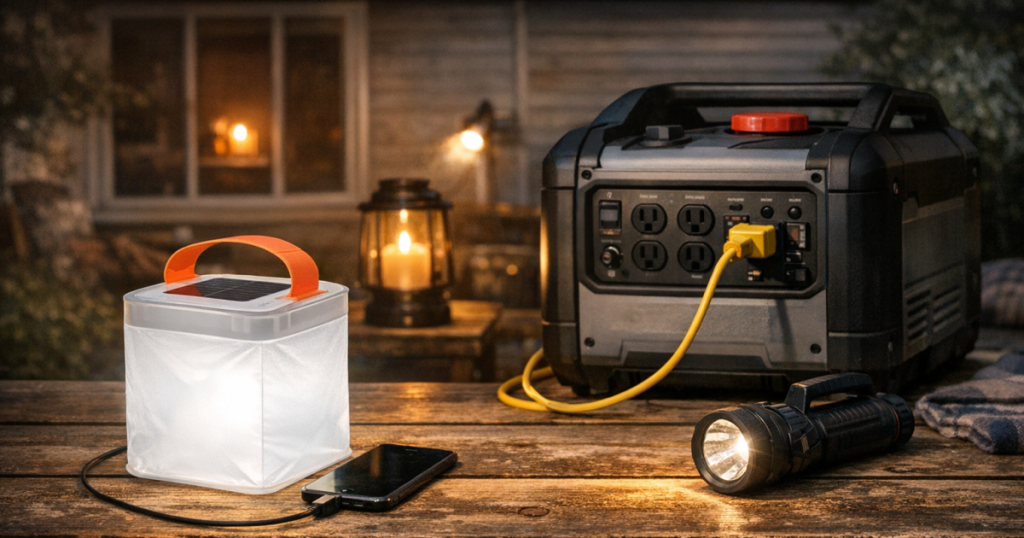
The LuminAID PackLite Max 2-in-1 Power Lantern is a solar rechargeable inflatable LED lantern with an internal rechargeable battery, a built-in solar panel, USB charging input, and a USB-A output for small-device charging. It is not a replacement for a portable power station or generator. It is a room light with a useful emergency charging bonus, and that framing makes the buying decision much clearer.
Product Details
- Product type: Solar rechargeable inflatable lantern with USB phone charger.
- Official direct price: $60.00.
- Light output: White light with 5 levels, listed in technical specifications at 150 lumens and 5900-6500K cool white.
- Runtime: Up to 50 hours, depending on light setting and conditions.
- Battery: 2000 mAh internal rechargeable battery.
- Charging: Solar and USB recharging, with 16-20 hours listed for solar recharge.
- Device output: USB-A charging port; USB-C devices require an adapter or compatible cable.
- Size: 6 x 6 x 1 inches flat and 6 x 6 x 6 inches inflated.
- Warranty: 1-year full warranty for original purchasers with proof of purchase.
Where this lantern fits in a blackout kit
The PackLite Max works best as a household comfort and navigation light: the kind you put on a kitchen table, bathroom counter, bedside shelf, or near a pet feeding area when the power drops after dark. Its inflatable cube shape gives it a different role from a narrow-beam flashlight. Instead of pointing light at one task, it can spread light around a small area so people can move, eat, read instructions, or find supplies without holding something in one hand.
The flat storage size is a real advantage for preparedness storage. At 6 x 6 x 1 inches when flat, it can live in a drawer, car kit, go bag, or apartment emergency bin without demanding the space of a rigid lantern. Inflated, it becomes a 6-inch cube, large enough to stand on its own and easy to spot in a dark room.
For a wider home plan, this is the lantern layer rather than the whole plan. If you are still deciding whether your outage setup should be built around a power station, generator, or UPS, the larger choice is covered in this guide to blackout backup power options. The LuminAID belongs beside those decisions, not in place of them.
Light output: useful, not oversized
LuminAID’s technical specifications list the PackLite Max at 150 lumens with cool white light across 5 brightness levels. There is also a separate marketing reference to 200 lumens on the product page, so the most responsible way to judge it is as a compact emergency lantern rather than a high-output work light.
That distinction helps. A 150-lumen-class lantern can be very practical for low-stress outage tasks: getting children settled, checking a breaker panel from a safe distance, setting up a battery bank on a table, or keeping a room from feeling completely dark. It is not the tool I would choose as the only light for outdoor repairs, detailed garage work, or lighting a large open-plan room.
The 5 light levels matter because blackouts are rarely one single lighting job. You may want a brighter setting while setting up food and supplies, then a lower setting overnight so someone can find the bathroom without waking the whole house. The listed maximum runtime of 50 hours is tied to how the lantern is used; lower settings are the sensible way to stretch it through a long outage.
The phone-charging feature is helpful, with clear limits
The PackLite Max has a 2000 mAh battery and a USB-A output. LuminAID positions it for 1 cell phone charge, 1-2 charges for digital cameras and headlamps, and a partial charge for tablets. That is a helpful emergency buffer, not a deep reserve.
For real blackout planning, treat the charging feature as a way to keep one phone usable for calls, weather updates, texts, or a short check-in. It is not the battery I would count on for a household full of phones, tablets, hotspots, and medical devices. USB-C households also need to pack the right adapter or cable, because the listed output is USB-A.
This is where the PackLite Max earns its place in a layered kit. A phone at 8% battery during a storm feels very different from a phone at 35%. The lantern can help bridge that gap. For longer outages, a separate power bank or larger battery system is the better foundation, with the lantern staying focused on shared light and occasional small-device top-ups.
Solar charging is a backup method, not a magic refill
The built-in solar panel is one of the appealing parts of the PackLite Max, but the listed 16-20 hour solar recharge time deserves plain-English context. That number points toward daytime outdoor charging over time, not a quick recharge through a kitchen window during a storm.
LuminAID notes that solar charging should be done outdoors because windows block sunlight and slow the process. Charging time also changes with location, season, and sky conditions. In a cloudy winter outage, the smart move is to preserve battery by using lower light settings rather than assuming the panel will refill the lantern quickly.
The care limits are also worth building into your storage habits. LuminAID says not to use or store it above 113°F, in hot vehicles, near fire, or on dark hot surfaces for extended charging. For emergency readiness, the company recommends recharging at least every 3-4 months. That is a simple calendar task: top it up when you rotate water, check flashlights, or test your radios.
Household situations where it makes sense
The PackLite Max is strongest for renters, apartment dwellers, families, campers who want gear that doubles as home backup, and anyone building a compact outage bin. It is also a friendly choice for households with pets because soft area light is easier to place near food, water, crates, or litter boxes than a directional flashlight. For pet-specific outage planning, start with a blackout plan for pets at home and then decide where a lantern like this fits.
It is less compelling as your only light if you need very bright output, long-device charging capacity, or a rugged work light for repeated outdoor tasks. The PackLite Max is better judged as a calm-room lantern than as a do-everything power device. That is not a flaw; it is the reason the product makes sense when expectations are set properly.
Setup and ownership notes
There is not much ceremony here, which is a plus for emergency gear. Store it flat, keep the right USB cable with it, and recharge it on a schedule. If your household mostly uses USB-C cables, put a USB-A-to-USB-C cable or adapter in the same pouch so the charging feature is actually usable when the lights are out.
The warranty is straightforward: LuminAID lists a 1-year full warranty for original purchasers with proof of purchase. That gives the product a basic support floor, but the more important ownership habit is readiness. A dead lantern in a drawer is just a very tidy cube.
What to remember before buying
- Buy it for light first: The phone charger is useful, but the 2000 mAh battery defines its limits.
- Plan for USB-A output: USB-C devices need the right adapter or cable packed with the lantern.
- Use lower settings in long outages: The listed 50-hour runtime depends on how bright you run it.
- Do solar charging outdoors: Window charging is slower because glass blocks sunlight.
- Keep it maintained: Recharging every 3-4 months is a small habit that protects its emergency value.
Verdict
Score: 8.4/10. The PackLite Max 2-in-1 Power Lantern is easy to recommend as a compact blackout lantern for people who want shared room light, flat storage, solar backup charging, and one small-device charging reserve. Its strongest dimensions are practical lighting, simple ownership, and kit-friendly portability. The main trade-offs are just as clear: the 2000 mAh battery is modest, USB-C users need an adapter or compatible cable, and solar recharging is slow enough that it should be treated as a backup method rather than the main way to refill it during a serious outage.
LuminAID PackLite Max 2-in-1 Power Lantern
A smart fit for blackout kits where shared room light and one phone top-up are enough
You might also like: How to Run a CPAP on a Portable Power Station During an Outage.