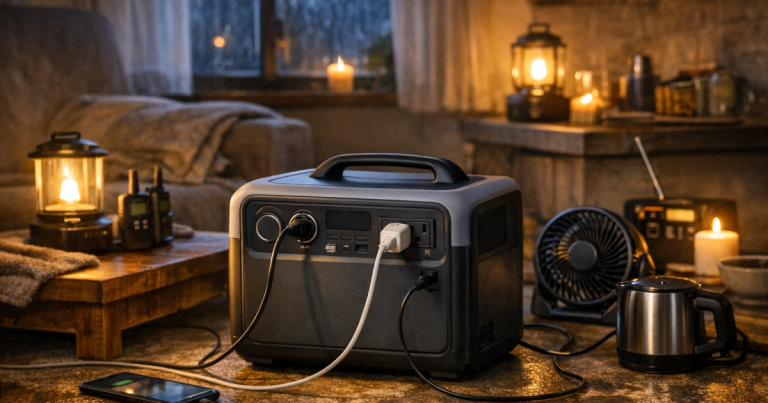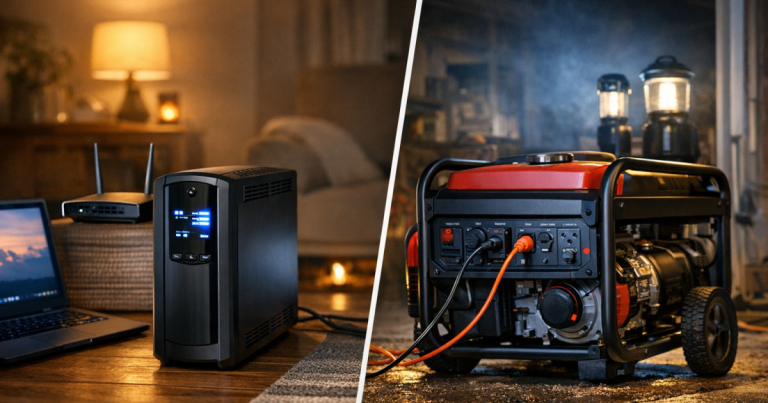
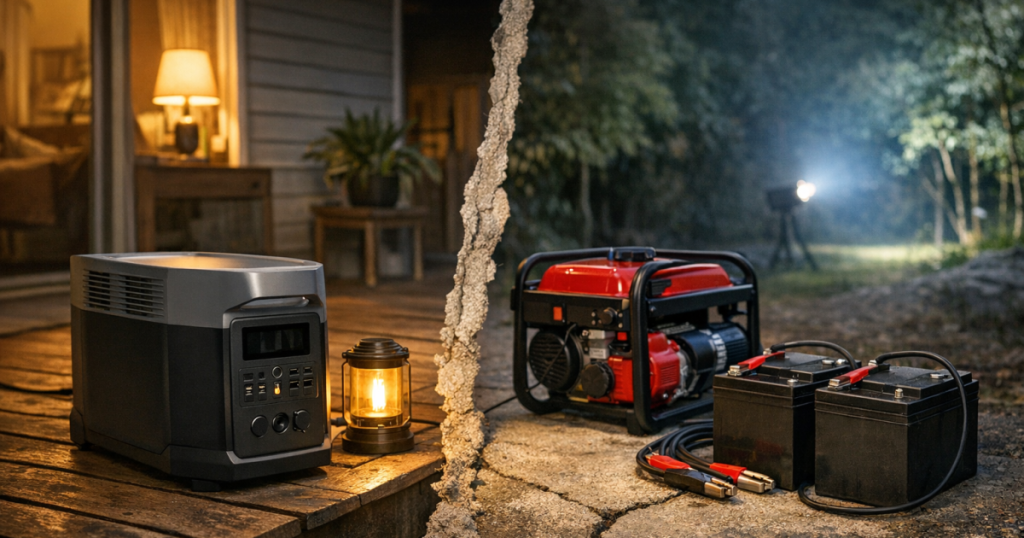
This EcoFlow DELTA 3 Plus Portable Power Station review looks at a battery that makes sense for household essentials, not whole-home backup fantasies. It is a 1024Wh LFP portable power station with AC, USB, DC, solar, car, generator charging, and standby UPS behavior for connected loads.
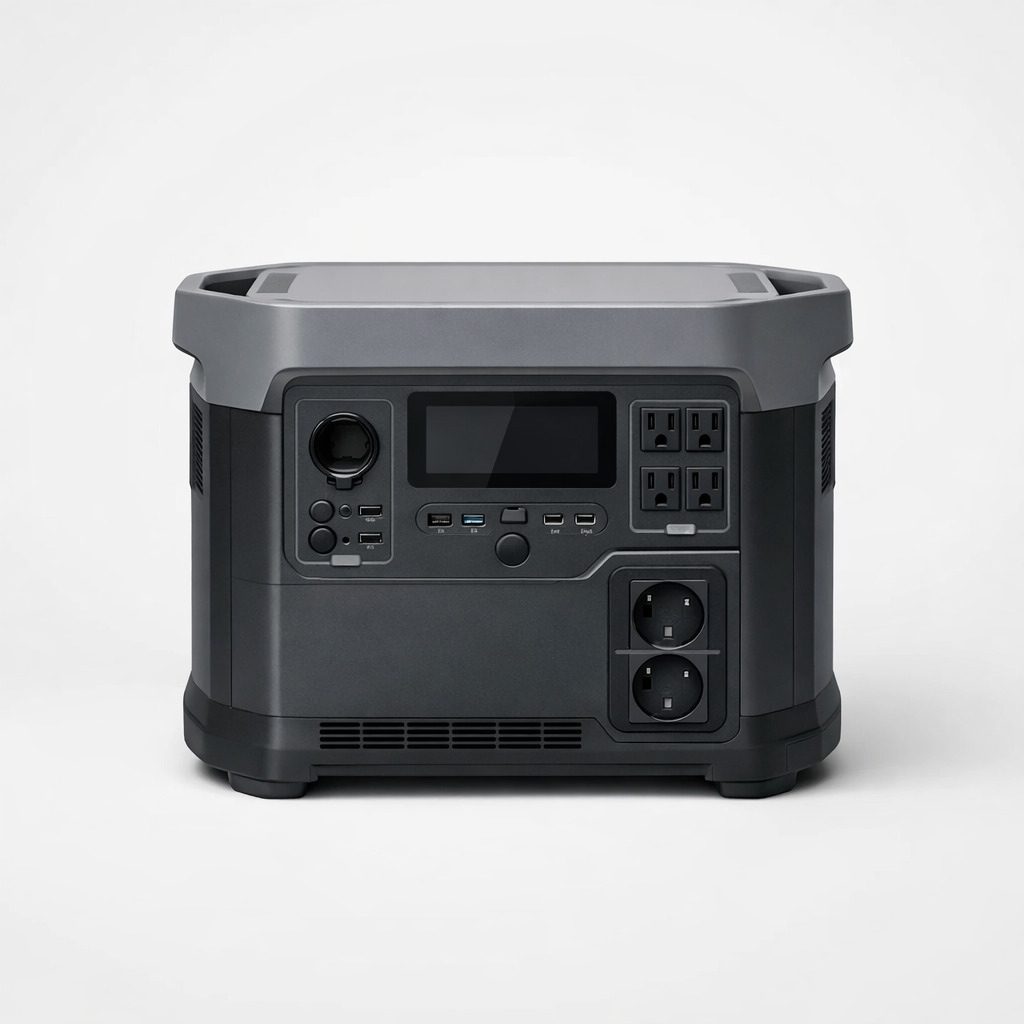
EcoFlow DELTA 3 Plus Portable Power Station
A capable 1kWh blackout battery for essentials, with availability and critical-load limits that deserve attention
The EcoFlow DELTA 3 Plus Portable Power Station is also not a clean current-buying recommendation in the US. EcoFlow’s US store page listed DELTA 3 Plus configurations as sold out, so the practical lens here is ownership, comparison shopping, and deciding whether this class of battery fits your blackout plan.
Generator connections, transfer switches, and any wiring that ties backup power into home circuits should be handled by a qualified electrician in compliance with local electrical codes and safety requirements.
Product Details
- Type: rechargeable LFP portable power station for standalone backup power.
- Rated capacity: 1024Wh.
- AC output: 6 outlets, 1800W total, 3600W surge.
- Output ports: 13 total, including 6 AC outlets, 2 USB-A fast-charge ports, 2 USB-C ports, 1 car power port, and 2 DC5521 ports.
- Battery chemistry: LFP (LiFePO4), rated by EcoFlow at 4000 cycles to 80+% capacity.
- AC charging: 1500W input, with EcoFlow stating 0–100% charging in 56 minutes under its stated conditions.
- Solar input: 2 XT60 DC charge inputs, 11–60V, 500W max per port, 1000W total.
- Car charging: EcoFlow’s page lists 800W and a 1.3-hour full charge; the manual also lists 12V 8A max car input via XT60i.
- Size and weight: about 15.7 x 8.0 x 11.2 inches and about 27.6 lb.
- Warranty: 5 years.
- Included items: the power station, AC charging cable, manuals, and warranty card. The car charging cable is listed separately.
The 1024Wh capacity is useful, not magic
A 1024Wh portable power station sits in a practical middle ground for blackouts. It is large enough to be more than a phone-and-lantern battery, but it is not a substitute for a permanently installed whole-home system. The best use case is essentials: phones, a router, a laptop, lights, small medical-adjacent comfort devices that are not life-sustaining, and short controlled appliance runs within the output limits.
The key ownership decision is load discipline. A few efficient devices can make a 1kWh battery feel generous. A high-draw appliance can make it feel small very quickly. That is not a flaw unique to EcoFlow; it is the arithmetic of watt-hours. For planning, the DELTA 3 Plus belongs in the “keep important things running” category rather than the “pretend the grid never failed” category.
If you are still deciding between a battery, generator, or UPS, the best next step is to compare the roles before comparing brands. Our guide to portable power stations, generators, and UPS units for blackouts explains where each one fits in a home plan.
Output and ports: strong for essentials, with appliance limits
The AC side is the headline: 6 outlets, 1800W total output, and 3600W surge. On paper, that gives the DELTA 3 Plus enough room for many common household essentials, provided the combined load stays within the unit’s limits. The six outlets are helpful because outage setups often become messy fast: modem, router, lamp, laptop charger, fan, and maybe a kitchen appliance all compete for space.
The 13 total output ports add useful flexibility. USB-C and USB-A ports reduce the need to waste AC outlets on small chargers. The car power and DC5521 outputs broaden the setup for DC accessories. For a living room blackout hub, that port mix is one of the product’s cleaner strengths.
EcoFlow’s X-Boost feature needs careful framing. It is disabled by default, is more suitable for heating devices, and does not support devices with voltage protection such as precise instruments. It is also unavailable when the power station is connected to AC power, including charging or bypass mode. In plain English: do not treat X-Boost as a universal appliance unlock button. It is a specific tool for specific loads.
Fast charging is a real convenience, with condition-dependent claims
EcoFlow lists 1500W AC input and a 0–100% charge time of 56 minutes under its stated conditions. That is a meaningful ownership advantage if your area gets rolling outages or you have short windows of grid power between storm disruptions. A battery that refills quickly is easier to keep ready without turning charging into a household project.
The solar input is also substantial for this size class: two XT60 DC charge inputs at 500W max per port, 1000W total. That gives the DELTA 3 Plus a credible path for daytime replenishment when paired with compatible solar panels and good sun. As always, solar output depends heavily on weather, panel angle, shading, and temperature. EcoFlow also notes that displayed test results depend on conditions including temperature, humidity, and equipment calibration.
Car charging has a wrinkle. EcoFlow’s product page lists 800W car charging and a 1.3-hour full charge, while the manual also lists 12V 8A max car input via XT60i. The practical takeaway is simple: the exact car-charging setup and cable matter. The manual says the car charging cable must be purchased separately, so this is not a grab-the-box-and-go feature for every owner.
Standby UPS behavior is helpful, but it is not a dedicated UPS
EcoFlow describes the DELTA 3 Plus as having less than 10 ms UPS transfer. That can be useful for connected loads where a short transfer is acceptable, such as some electronics or networking gear. The right way to read that feature is “standby UPS behavior,” not “dedicated online UPS” and not “surge-protection device.”
There are two settings-related cautions that are easy to miss. First, the manual warns that AC output can automatically turn off after idle time. For refrigerators or other continuous loads, EcoFlow says AC timeout must be set to never in the app and the battery level checked regularly. Second, the manual says bypass mode power instability can cause improper operation or damage to appliances, and that an app setting can disable grid bypass for appliances needing higher-quality output.
For refrigeration, that means this product can be part of a plan, not the entire plan. Use monitoring, understand the load, and do not leave critical food or medication protection to a single unattended setting. For a deeper setup discussion, read our guide on how to power a refrigerator safely during an outage.
Fit, weight, and everyday ownership
At about 27.6 lb, the DELTA 3 Plus is portable in the home-backup sense: movable from closet to kitchen table, garage shelf to living room, or car to campsite. It is not pocketable, and nobody should pretend it is effortless for every user. The compact footprint helps, but the weight is still something to plan around if stairs, apartments, or limited mobility are part of the household picture.
The LFP battery chemistry and EcoFlow’s 4000-cycle rating to 80+% capacity support the case for long-term preparedness use. A power station that sits ready, cycles occasionally during outages, and gets topped up before storm season benefits from a chemistry known for durability. The 5-year warranty also strengthens the ownership case, although it does not erase the current availability issue.
EcoFlow’s manual states the product is not intended for life-sustaining medical equipment and may interfere with implants or personal medical equipment. That is a hard boundary. If a device is medically critical, the backup plan should be built around medical guidance, redundancy, and equipment intended for that purpose, not a general-purpose portable power station alone.
Where the DELTA 3 Plus makes sense
The DELTA 3 Plus is most convincing for households that want a quiet indoor battery for essentials, with enough output to handle a serious small-load setup and enough charging flexibility to recover between outages. It is a strong fit for renters, suburban homes that do not want generator noise for every outage, remote workers who need router-and-laptop continuity, and families building a layered kit around lights, communications, and food-safety tools.
It is less convincing as a primary answer for multi-day whole-home backup, hardwired circuits, critical medical devices, or unattended refrigeration without a wider plan. It is also not the simplest recommendation while US purchase availability is not established. If you already own one, it is worth understanding its settings and limits. If you are comparing options, treat it as a benchmark for a fast-charging 1kWh LFP battery rather than a guaranteed item on the shelf.
Verdict
Score: 8.3/10. The EcoFlow DELTA 3 Plus earns a strong but qualified score because its 1024Wh capacity, 1800W AC output, LFP battery chemistry, and fast AC charging line up well with real blackout essentials. The main deductions come from the sold-out US store status, the need to manage AC timeout and bypass behavior carefully, and the clear medical and critical-load boundaries. It is a capable blackout battery for practical households, not a whole-home solution wearing a smaller jacket.
EcoFlow DELTA 3 Plus Portable Power Station
A capable 1kWh blackout battery for essentials, with availability and critical-load limits that deserve attention
You might also like: How to Run a CPAP on a Portable Power Station During an Outage.