A generator in this size class is a compromise machine by design: big enough to run useful outage loads, small enough to move and store without building a whole plan around it. This Champion Power Equipment 201531 4500W Dual Fuel Inverter review focuses on whether that compromise works for ordinary home blackout planning. My read: it is a strong fit for essential 120V loads when fuel flexibility and inverter output are more useful than whole-home coverage.
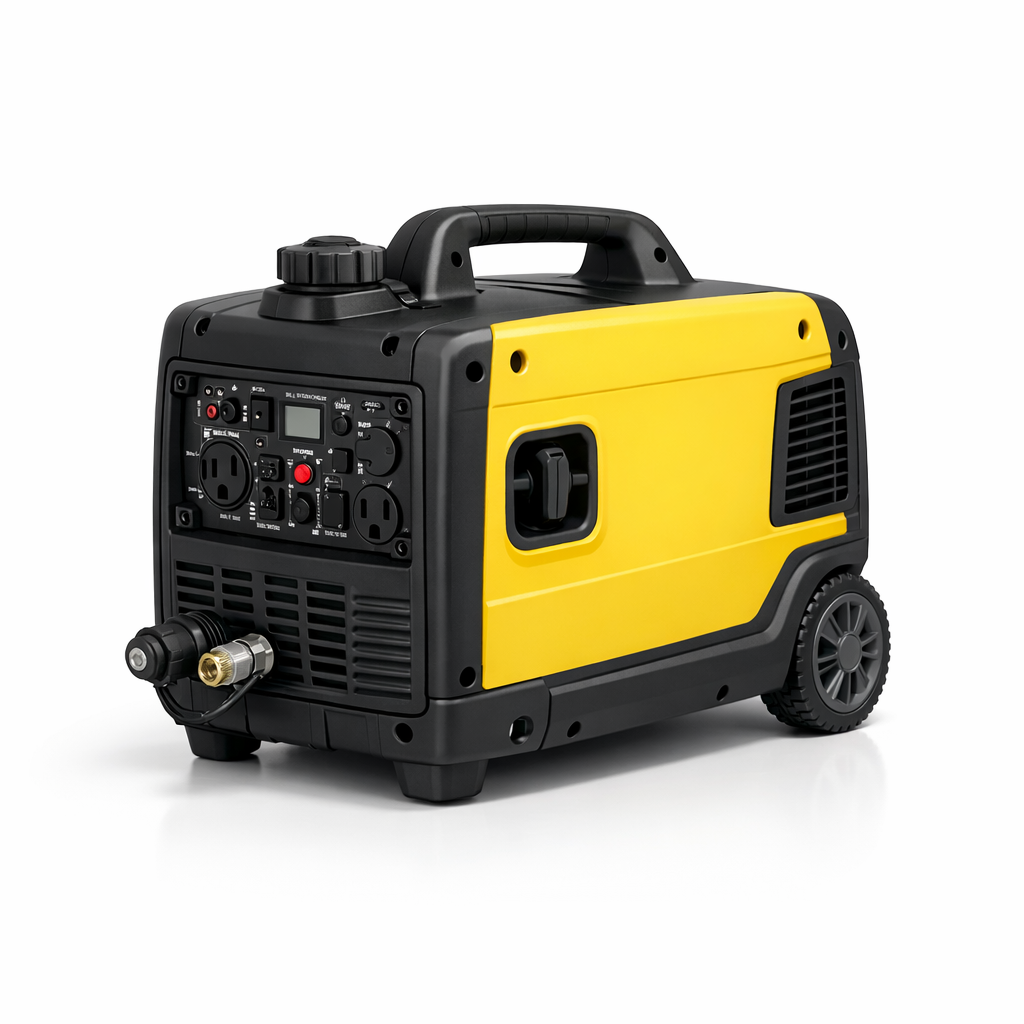
Champion Power Equipment 201531 4500W Dual Fuel Inverter
Best for essential 120V loads when fuel flexibility, inverter output, and RV-ready outlets matter more than whole-home power
The Champion Power Equipment 201531 4500W Dual Fuel Inverter is a dual-fuel portable inverter generator for outdoor backup, RV use, and recreational loads. Champion identifies it as Model #201531, with gasoline or propane operation, CO Shield, ParaLINK capability, and 120V output. It is not a standby generator, and it is not meant to power every circuit in a house.
Home inlet wiring, transfer-switch installation, and any connection to household circuits should be carried out by a qualified electrician in compliance with local codes and electrical safety requirements.
Product Details
- Type: dual-fuel portable inverter generator.
- Gasoline output: 4500 starting watts and 3250 running watts.
- Propane output: 4500 starting watts and 2925 running watts.
- Rated runtime at 25% load: up to 10 hours on gasoline, or up to 25 hours on a 20-lb propane tank.
- Engine and fuel: 149cc Champion 4-stroke engine, gasoline or propane, with 1.54-gallon gasoline capacity.
- Electrical output: 120V, 60Hz; 27.1 running amps on gasoline and 24.4 running amps on propane.
- Receptacles: one 120V 20A duplex 5-20R, one 120V 27.1A TT-30R RV outlet, one 12V 8A automotive outlet, and parallel outlets.
- Power quality: less than 3% THD.
- Noise rating: 64 dBA from 23 feet.
- Size and weight: 17.9 in L x 11.7 in W x 19.7 in H; 51.8 lb.
- Warranty and support: 3-year limited warranty and free lifetime technical support.
The useful power is for essentials, not everything
The headline number is 4500 starting watts, but the running-watt numbers are the ones to plan around. On gasoline, the Champion provides 3250 running watts. On propane, it provides 2925 running watts. That propane drop is normal for dual-fuel generators, but it changes the load plan.
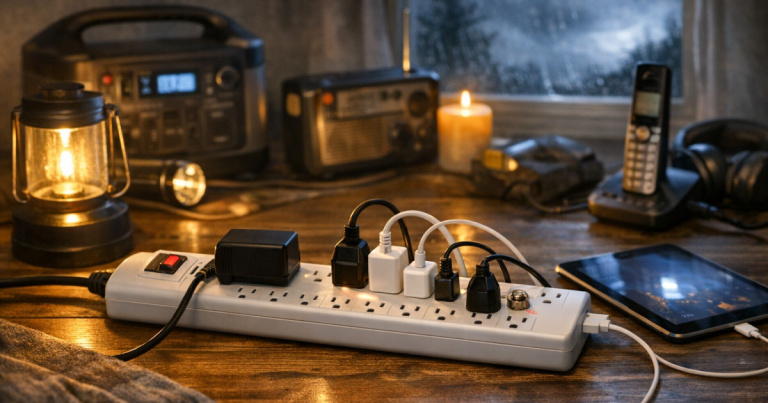
For outage use, that puts this generator in the “selected essentials” lane. It can make sense for a refrigerator, a few lights, a router, device charging, a fan, or other modest 120V loads, provided the combined starting and running wattage stays within the generator’s limits. It is not a sensible match for central HVAC, electric ranges, large well-pump setups, or anything that needs native 240V from a single unit.
The inverter output is another important part of the fit. Champion lists the clean power rating at less than 3% THD. That supports a more electronics-friendly role than a rougher conventional jobsite generator, while still leaving the usual blackout rule in place: add up real loads before plugging in half the house because optimism is not a wattage calculation.
Dual fuel gives you more ways to keep running
The best reason to look at this Champion is fuel flexibility. Gasoline is familiar and energy-dense, while propane stores differently and can be convenient for households that already keep 20-lb tanks for grilling or outdoor equipment. Champion rates runtime at 25% load as up to 10 hours on gasoline and up to 25 hours on a 20-lb propane tank.
That runtime figure is useful, but it is not a promise for every outage setup. A 25% load is a light load compared with running near the generator’s rated output. If you are cycling a refrigerator, charging devices, and running a few low-draw items, the rating gives a reasonable planning reference. If you are asking the generator to do heavier work for long stretches, runtime will be shorter.
Propane’s lower running output is the trade-off. The unit is rated at 2925 running watts on propane, compared with 3250 on gasoline. That does not make propane a poor choice; it simply means propane planning should be a little more conservative. If the load list is already close to the edge, gasoline gives you more rated running capacity.
Outlets are practical, with clear boundaries
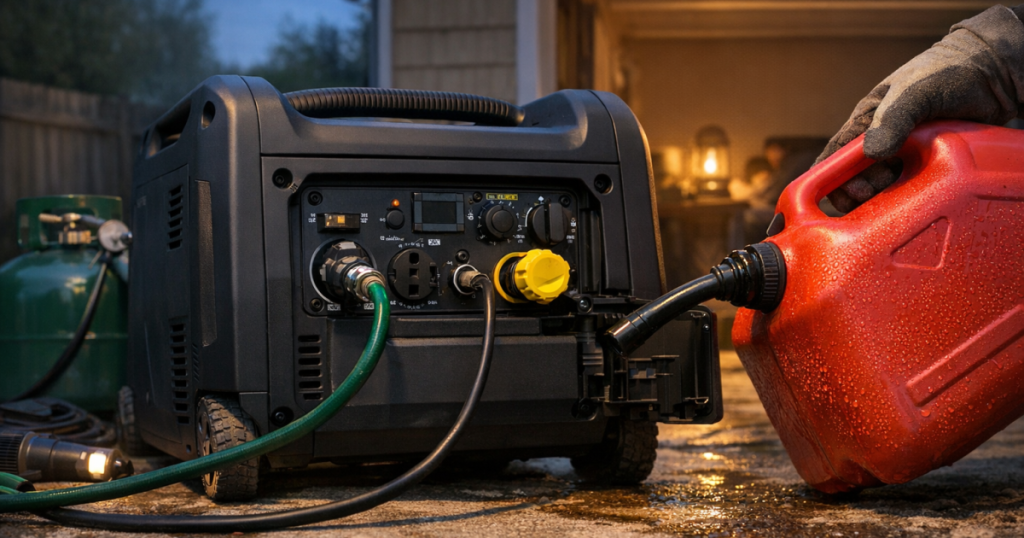
The receptacle mix is well aligned with portable use. The 120V 20A duplex outlet covers common household cords and loads. The TT-30R RV outlet is useful for RV owners and for certain 120V generator setups. The 12V automotive outlet adds another low-voltage option, and the parallel outlets support Champion’s ParaLINK capability when paired with an optional Champion parallel kit sold separately.
The boundary is just as important: this is a 120V-only generator. There is no native 240V output from the unit itself. That makes it a poor fit for transfer arrangements or appliances that require 240V. It also means any home connection plan needs the right hardware and professional installation. Plugging a generator into a wall outlet or breaker panel is dangerous backfeeding, and Champion’s manual warns against it.
If you are deciding between extension cords, an inlet, or a transfer switch, start with the load plan and the connection method rather than the generator alone. Our guide to generator power connections for blackouts explains how cords, inlets, and transfer switches differ in real home use.
Portability is manageable, not effortless
At 51.8 lb, this Champion is portable in the honest sense: it can be carried, but it is not a rolling suitcase. The dimensions are compact for storage, and the built-in carrying handle helps. No wheels are listed, so moving it repeatedly across a yard, up steps, or around a garage will take more effort than a wheeled model.
Starting is another ownership detail to notice. The listed limitations point to recoil start only, with no onboard battery or electric start listed. For many people, that is acceptable. For anyone with limited strength, shoulder problems, or a strong preference for push-button convenience, it is a reason to consider a different generator style before an outage turns “minor inconvenience” into a cold-handed tugging contest.
Like many portable generators, it also requires pre-use preparation. It ships without oil in the engine and must be serviced with fuel and oil before operation. That is not unusual, but it means this should not sit unopened in a garage until the first storm warning. The practical move is to read the manual, add the correct oil, understand the controls, and store the fuel setup safely before the lights go out.
Safety and weather planning are part of the purchase
This generator must be used outdoors, away from openings, with safe cord routing and carbon monoxide awareness. CO Shield is a useful listed technology, but it is not a substitute for safe placement or working carbon monoxide alarms. The manual also warns not to expose the generator to rain or use it in damp locations, so a real outage plan needs weather-appropriate placement that still keeps exhaust far from the home.
That combination can be awkward during storms, which is exactly when many people want backup power. The answer is not to move the generator indoors, into a garage, onto a porch, or near a window. The answer is to plan the outdoor operating spot, cord path, and shelter approach before the outage. For broader placement, refueling, and carbon monoxide practices, read our home backup power safety basics for outages.
Where this Champion makes the most sense
This is a good candidate for homeowners, renters with appropriate outdoor operating space, and RV owners who want flexible 120V power without stepping into a much larger generator. It fits households that are comfortable choosing a short list of priority loads: refrigeration, communications, lighting, charging, fans, and a few small appliances used one at a time.
It is less compelling for buyers who want electric start, wheeled transport, 240V capability, or a central-panel setup that supports larger household loads. A larger generator, a standby system, or a professionally planned transfer setup will make more sense for central air conditioning, high-demand well pumps, electric cooking equipment, or broad circuit coverage.
The parallel capability is useful to have, but it should not be treated as free extra power. Parallel operation requires an optional Champion parallel kit sold separately, and it only makes sense if the paired-generator setup fits your storage, fuel, noise, and connection plan. For many homes, a carefully sized single-generator setup is simpler.
Verdict
Score: 8.3/10. The Champion earns its recommendation through three things: meaningful dual-fuel flexibility, credible essential-load output, and inverter power rated at less than 3% THD. The trade-offs are also real: 120V-only output, lower running watts on propane, recoil start, no listed wheels, and weather-placement constraints that require a deliberate safety plan.
For households that want portable backup for selected essentials rather than whole-home coverage, this is a sensible and capable option. If your outage plan starts with “keep the fridge cold, the phones charged, the router alive, and a few lights on,” the fit is strong. If your plan starts with central HVAC and 240V loads, choose a different class of backup power.
Champion Power Equipment 201531 4500W Dual Fuel Inverter
Best for essential 120V loads when fuel flexibility, inverter output, and RV-ready outlets matter more than whole-home power
You might also like: Portable Power Station vs Generator vs UPS for Blackouts.