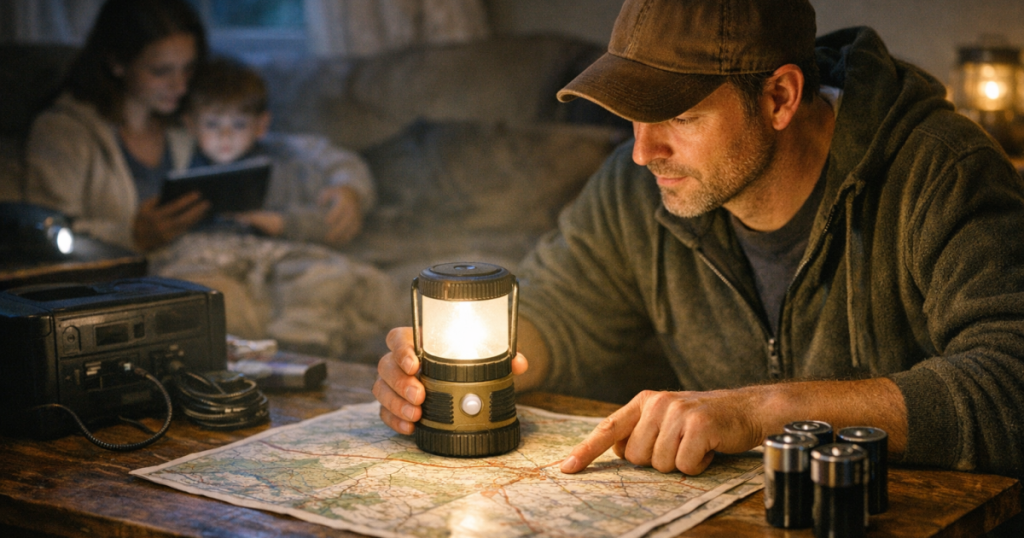
A good blackout lantern earns its spot before the outage starts: it should sit ready on a shelf, light a room without fuss, and not depend on a wall outlet. This Streamlight 44931 Siege Compact Lantern review looks at a sturdy alkaline LED hand lantern for households that want simple area lighting when the grid is down.
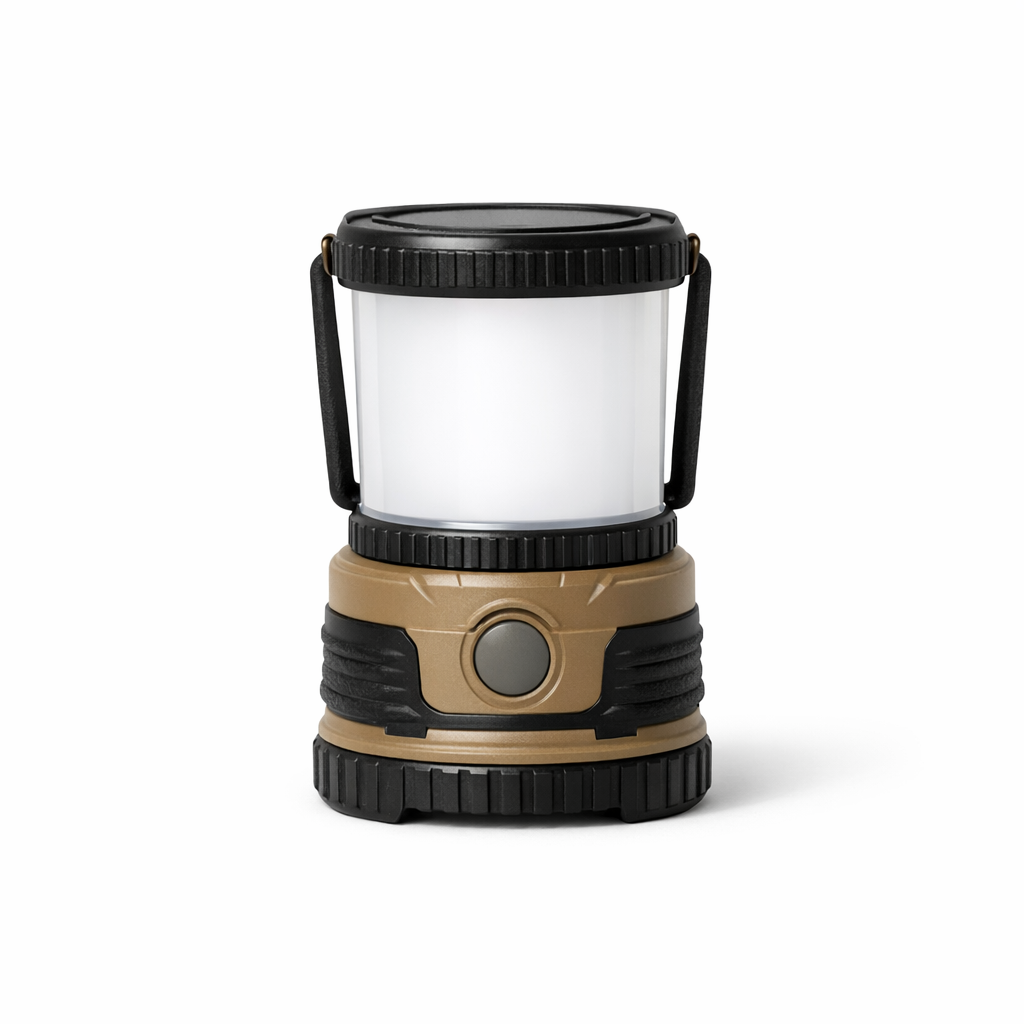
Streamlight 44931 Siege Compact Lantern
A rugged alkaline lantern for households that prioritize dependable room lighting over rechargeable convenience
The official item is Streamlight’s Siege lantern in the Coyote version, a portable cordless LED lantern powered by three user-supplied D-cell alkaline batteries. My read is straightforward: it is a very sensible outage light if you value rugged simplicity and are willing to keep spare D cells in your kit.
Product Details
- Reviewed item: Streamlight The Siege Lantern 44931 Coyote
- Product type: alkaline battery-powered LED hand lantern
- Battery requirement: three D-cell alkaline batteries, sold separately
- White output and runtime: high 540 lumens for 30 hours, medium 275 lumens for 70 hours, low 55 lumens for 295 hours
- Red output and runtime: red high 10 lumens for 235 hours, red SOS 10 lumens for 430 hours
- Size and weight: 7.25 inches tall and 1 lb 15 oz with batteries
- Water and impact rating: IPX7 waterproof to about 3.3 feet of submersion; floats; impact resistance tested to about 6.6 feet
- Light spread: removable polycarbonate glare-reducing cover with soft, even 360-degree light distribution
- Placement: stands upright, hangs upright or inverted from spring-loaded D-rings, and has a handle hook for rope, cables, and pipes
- Warranty: limited lifetime warranty, with exclusions for batteries, bulbs, abuse, and normal wear; electronics and switches are covered for 2 years with proof of purchase
Why the light modes fit real outage use
The Siege is built around a practical lighting pattern rather than a narrow flashlight beam. Streamlight lists 540 lumens on high, 275 lumens on medium, and 55 lumens on low, with the glare-reducing cover providing 360-degree distribution. For a living room, kitchen table, bathroom counter, or hallway, that kind of area light is usually more useful than a handheld beam pointed at one task.
The runtime spread is the important part. High output is the setting for moments when you need stronger room light: sorting a breaker panel area with a separate safe light nearby, cleaning up a spill, packing a bag, or checking on kids and pets. Medium and low are the settings that make more sense once everyone is settled and you are trying to stretch batteries through the night.
The red modes add another layer. Red high is listed at 10 lumens for 235 hours, while red SOS is listed at 10 lumens for 430 hours. Red light is not a substitute for the white high mode when you need to light a room, but it is useful for preserving night vision, marking a stair landing, or keeping a low glow in a bedroom without turning the house into a lighthouse at 2 a.m.
The D-cell battery choice is the main trade-off
This lantern is not rechargeable, and no USB power-bank function is listed for this item. That is either its quiet strength or its reason to look elsewhere. With alkaline D cells, the lantern can sit in an outage bin and does not need to be topped up from a wall charger every few months. The flip side is that each lantern needs three D-cell batteries, and those batteries add both weight and ongoing storage planning.
For a prepared household, that means buying the batteries with the lantern, storing extras where they stay dry, and treating them as part of the kit rather than an afterthought. A battery-powered lantern without batteries is just a nicely shaped reminder that planning was almost finished.
If your outage setup already centers on rechargeable gear, a portable power station, or solar charging, compare the battery logistics honestly. A rechargeable lantern may fit better when you want one charging routine for lights, phones, and small electronics. If you are still deciding how lighting fits alongside battery banks, UPS units, and generators, our guide to portable power stations, generators, and UPS options for blackouts is a useful next step.
Placement is where the design earns trust
A blackout lantern needs more than output. It needs to stay where you put it. The Siege can stand upright on its rubber molded base, which helps on slippery or uneven surfaces. It can also hang upright or inverted from spring-loaded D-rings, and the handle includes a hook for rope, cables, and pipes.
That flexibility is useful in ordinary home situations: hanging it from a basement pipe while you check storage shelves, setting it on a kitchen counter while the refrigerator stays closed, or suspending it inside a tent or covered outdoor work area. Inverted hanging can make the 360-degree light more useful because the lantern does not have to sit on the same surface you are trying to use.
The 1 lb 15 oz weight with batteries is not featherlight, but it is still manageable as a portable household lantern. The D cells contribute to that weight, and they are also part of why the lantern feels more like a durable utility light than a tiny bedside gadget.
Water protection is strong, but do not overread it
Streamlight lists IPX7 water protection, meaning waterproof performance to about 3.3 feet of submersion, and the lantern floats when used with the globe cover installed. It is also impact resistance tested to about 6.6 feet. For storm outages, leaky garages, wet decks, and basement checks, those are reassuring design choices.
The limit is just as important: IPX7 is a water rating, not a dust-ingress rating. I would treat this as a rugged wet-weather-capable lantern for outage chores, not as permission to neglect storage or expose it carelessly to every workshop or outdoor condition. Keep it clean, keep the battery compartment dry when changing batteries, and store it where you can grab it without digging through clutter.
Where it fits in a household blackout kit
The Siege makes the most sense as a room-scale lantern for the spaces people actually use during an outage: kitchen, bathroom, bedroom, living room, basement, or garage. One compact lantern can make one area safer and more comfortable, but it should not be treated as whole-home emergency lighting. For multi-room coverage, more than one lantern or a mix of lanterns, headlamps, and small flashlights is usually the more reliable plan.
That is also where the buying decision becomes less about one product and more about repeatable habits. Put the lantern in a known location. Store batteries beside it, not in a mystery drawer. Add a small flashlight for walking outside or checking tight spaces. If pets are part of your household, place lights where leashes, carriers, medication, and food are easy to find without opening every cabinet in the dark.
For broader kit planning, lighting pairs naturally with food, water, phone charging, medication routines, and refrigerator decisions. The site’s home blackout preparedness planning guide can help you place a lantern like this inside a practical room-by-room outage plan.
The compromises to accept before buying
- Buy it for simplicity, not charging features. The Siege is an alkaline lantern. It is not the Streamlight model to choose if USB charging or power-bank use is the priority.
- Plan for battery inventory. Three D cells per lantern is easy to understand, but you need enough on hand before storm season or wildfire shutoff season.
- Use red mode for low-light needs. The red and SOS modes are useful emergency features, but the white modes are the reason to buy it for normal room lighting.
- Do not expect one lantern to cover every space. It is compact and portable, so the better plan is to move it intentionally or buy multiple lights for different rooms.
- Factor in warranty exclusions. The warranty support is a plus, but batteries, bulbs, abuse, and normal wear are excluded, and electronics and switches have a 2-year coverage period with proof of purchase.
Verdict
Score: 8.6/10. The Streamlight Siege earns a strong recommendation as a blackout lantern because its core strengths line up with real household needs: useful white-light output, very long lower-output runtimes, red emergency modes, flexible hanging options, and rugged water and impact protection. The score is held back mainly by the D-cell battery requirement and the lack of rechargeable or USB device-charging features. Choose it if you want a dependable standalone lantern for outage bins, garages, basements, camping gear, or storm-season storage. Choose a rechargeable model instead if your priority is reducing disposable battery logistics across the whole household.
Streamlight 44931 Siege Compact Lantern
A rugged alkaline lantern for households that prioritize dependable room lighting over rechargeable convenience
You might also like: How to Run a CPAP on a Portable Power Station During an Outage.