A compact gasoline inverter generator can be useful during a blackout when the goal is selected essentials, not pretending the whole house is still on grid power. This Champion 2000-Watt Stackable Portable Inverter Generator review looks at the legacy Champion 73536i 2000 Starting Watts / 1700 Running Watts Portable Inverter Generator, a 120V portable inverter generator built around a modest output envelope.
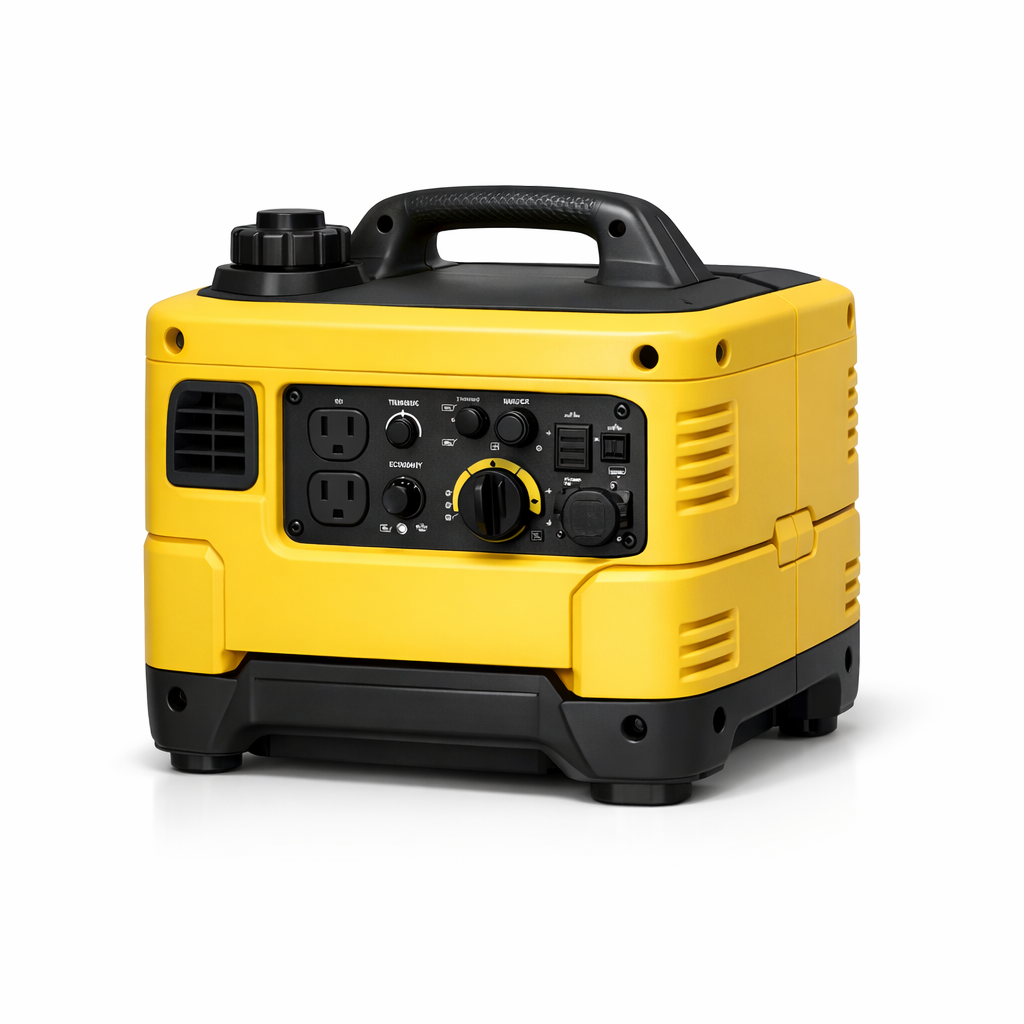
Champion Power Equipment Champion 2000-Watt Stackable Portable Inverter Generator
A sensible legacy inverter generator for small essentials when outdoor operation and used-unit risk are acceptable
The important context is that Champion Power Equipment’s 73536i is a discontinued US model, so this is not a current new-customer recommendation. It is most relevant if you already own one, inherit one with a house or garage, or are weighing a used unit. The practical read is simple: it can be a useful small-load outage tool, but its 1700W running limit, gasoline-only setup, outdoor-use requirements, and legacy status keep it firmly in the essentials-only lane.
Generator connections to household wiring, including inlets, interlocks, and transfer switches, should be carried out by a qualified electrician in compliance with local codes and electrical safety requirements. For a plain-English overview of safe connection choices, see our guide to generator cords, inlets, and transfer switches.
Product Details
- Model: Champion Power Equipment 73536i.
- Type: gasoline portable inverter generator.
- Output: 2000 starting watts and 1700 running watts.
- AC power: 120V single-phase, 60 Hz.
- Receptacles: 120V AC 20A duplex NEMA 5-20R plus a 12V DC 8A battery-charging outlet.
- Fuel: regular unleaded gasoline, minimum 87 octane, less than 10% ethanol by volume.
- Fuel capacity: 1.0 gal.
- Engine: 80cc 4-stroke OHV with recoil start.
- Oil capacity: 0.4 qt.
- Net weight: 48.5 lb.
- Dimensions: 19.3 in L x 13.2 in W x 16.3 in H.
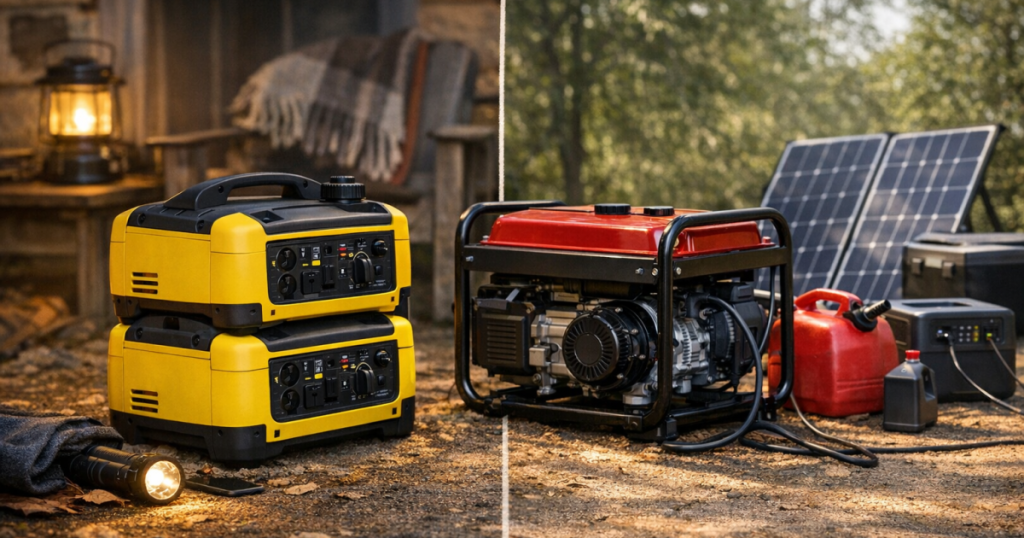
- Parallel operation: two matching 73536i generators can be stacked and run in parallel with the optional Champion 73500i kit, with kit load not exceeding 3400W.
The 1700W running limit sets the whole review
The 73536i’s headline figure is 2000 starting watts, but the more useful planning number is 1700 running watts. Running watts are the power available once connected loads are operating steadily. Starting watts are short bursts needed by some motor-driven appliances when they start up.
For blackout planning, that means this Champion is best treated as a small essentials generator. Think in terms of one or two priority jobs at a time: a refrigerator after a load check, a few lights, phone chargers, a modem/router, or similar low-watt household needs. It is not the right tool for central air conditioning, electric ranges, electric dryers, hardwired whole-home loads, or a casual “plug everything in and see” approach.
Motor loads need extra care. A refrigerator, freezer, sump pump, or similar appliance can require more power to start than to keep running. When planning loads, add the largest starting load separately rather than simply adding nameplate running numbers. If keeping cold food safe is your main concern, our guide on how to power a refrigerator safely during an outage walks through the load and food-safety side in more detail.
Useful outlets, but a narrow connection plan
The receptacle layout is straightforward: a 120V AC 20A duplex NEMA 5-20R for standard plug-in loads, plus a 12V DC 8A battery-charging outlet. For a small blackout setup, that points toward direct connection of selected appliances and devices with properly rated cords, not a large house-panel strategy unless the electrical system has a code-compliant transfer method.
This is where expectations need to stay grounded. The 73536i can supply 120V AC power directly to connected loads, but it should never be backfed into a wall outlet. Backfeeding can endanger utility workers, damage equipment, and create fire and shock hazards. If a home connection is part of the plan, isolation from utility power is not optional; it is the point of the transfer equipment.
The small output also rewards a staged routine. During an outage, one sensible pattern is to run the refrigerator for a period, then switch to communications and lighting, then return to the refrigerator as needed. Exact timing depends on the appliance, indoor temperature, fuel management, and food-safety conditions, so this is a workflow decision rather than a guaranteed runtime promise.
Gasoline ownership is simple, not maintenance-free
The 73536i uses regular unleaded gasoline with a minimum 87 octane rating and less than 10% ethanol by volume. Its 1.0 gal fuel tank and 0.4 qt oil capacity make it a small-engine tool that needs the same kind of care many homeowners associate with lawn equipment: clean fuel, correct oil level, sensible storage, and attention before storm season rather than after the power has already failed.
At 48.5 lb, it is portable in the practical sense, but not something everyone will want to carry far or move repeatedly in bad weather. The dimensions are compact enough for garage or shed storage, yet the operating location still has to be planned. Champion’s manual states not to operate inside buildings, garages, basements, crawlspaces, sheds, RV compartments, or other enclosed spaces. It also says not to operate or store the generator in rain, snow, or wet weather.
That combination creates a real household planning question: where can the generator sit outdoors with carbon-monoxide precautions, weather protection that does not enclose it, and cord routing that does not create trip hazards or overloaded extensions? If the answer is not obvious, the generator may be less convenient in practice than its small size suggests.
The stackable parallel idea helps, with conditions
The “stackable” part of this generator’s identity is not just a storage gimmick. Two matching 73536i units can be stacked and operated in parallel with the optional Champion 73500i kit, and the kit load must not exceed 3400W. That can make sense for an owner who already has one unit and later finds a second matching unit in good condition.
Still, parallel operation is a specific setup, not a magic upgrade. It requires another 73536i plus the optional kit, and it keeps the owner in a gasoline-generator routine with two engines to fuel, maintain, place safely outdoors, and protect from wet weather. It can expand the useful load window, but it does not turn this legacy pair into a carefree whole-home backup system.
For many households starting from scratch in 2026, a current inverter generator, a larger properly connected portable generator, or a portable power station may be a cleaner buying path depending on noise tolerance, fuel storage, apartment rules, and the specific loads involved. Champion’s current US 2000W gasoline inverter successor class includes the 100705 2000W Inverter, listed with 2000 starting watts, 1600 running watts, and ParaLINK compatibility, so new buyers have more current options to compare.
The used-unit decision is the real buying decision
Because the 73536i is discontinued in the US market, the buying question is less “Should I buy this new?” and more “Is this particular used or already-owned unit worth relying on?” That shifts attention from catalogue appeal to condition.
A sensible used-unit inspection should focus on whether it starts safely, how it runs under a reasonable load, the condition of the oil, evidence of stale fuel problems, carburetor and fuel-system cleanliness, missing parts, damage, and whether maintenance records exist. Warranty transfer is another limitation: Champion’s warranty for this model applies to the original purchaser and is not transferable. For a legacy generator, that makes the seller’s care and the unit’s actual condition more important than brand familiarity alone.
My editorial preference is to treat the 73536i as a keep-and-maintain generator rather than a hunt-one-down generator. If you already own a working example, it can still earn a place in a blackout plan for small essentials. If you are buying today, a current model with current support, parts access, and a clearer purchase path is usually the more repeatable choice.
Where it fits in a real blackout plan
The 73536i makes the most sense for households that are comfortable managing gasoline, can operate outdoors with proper carbon-monoxide separation, and only need a few loads at a time. A renter with no safe outdoor operating spot should not force it. A homeowner hoping to run large hardwired systems should size up and plan the connection properly. A household with a medical device need should not rely on this review as a recommendation for life-support or medical use.
Used well, the Champion can support a calm, rotation-based outage routine: keep food cold, charge phones, power a router if service is still available, and run basic lighting. Used outside its limits, it becomes frustrating at best and unsafe at worst. That is the line this review keeps coming back to: modest power can be helpful, but only when the setup is deliberate.
Verdict
Score: 6.9/10. The Champion 73536i earns a limited but respectable place as a legacy small-essentials inverter generator. The score is driven mostly by its usable 1700W running output for selected loads, straightforward 120V receptacle setup, and useful parallel option, balanced against its discontinued status, gasoline-only operation, outdoor dry-weather constraints, and used-unit risk. It is worth maintaining if you already have a good one; it is harder to recommend as a target purchase when current alternatives are available.
Champion Power Equipment Champion 2000-Watt Stackable Portable Inverter Generator
A sensible legacy inverter generator for small essentials when outdoor operation and used-unit risk are acceptable
You might also like: Portable Power Station vs Generator vs UPS for Blackouts.