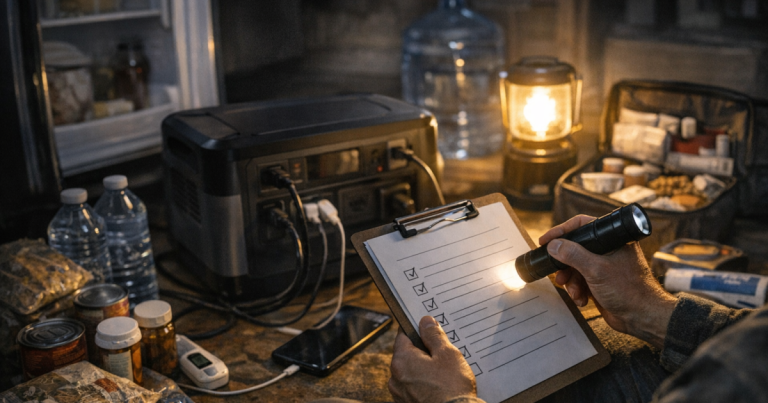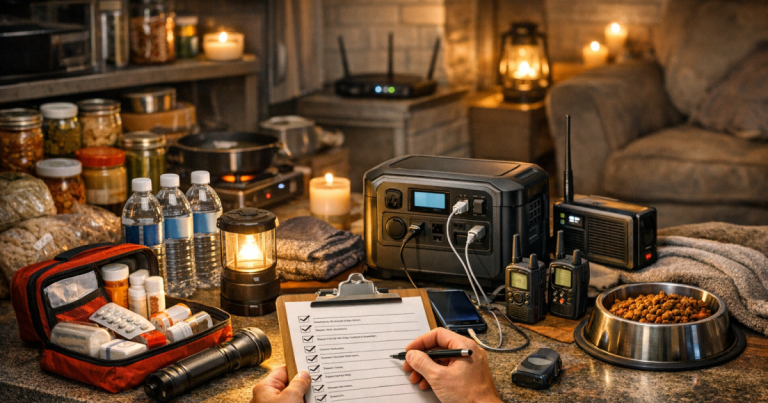
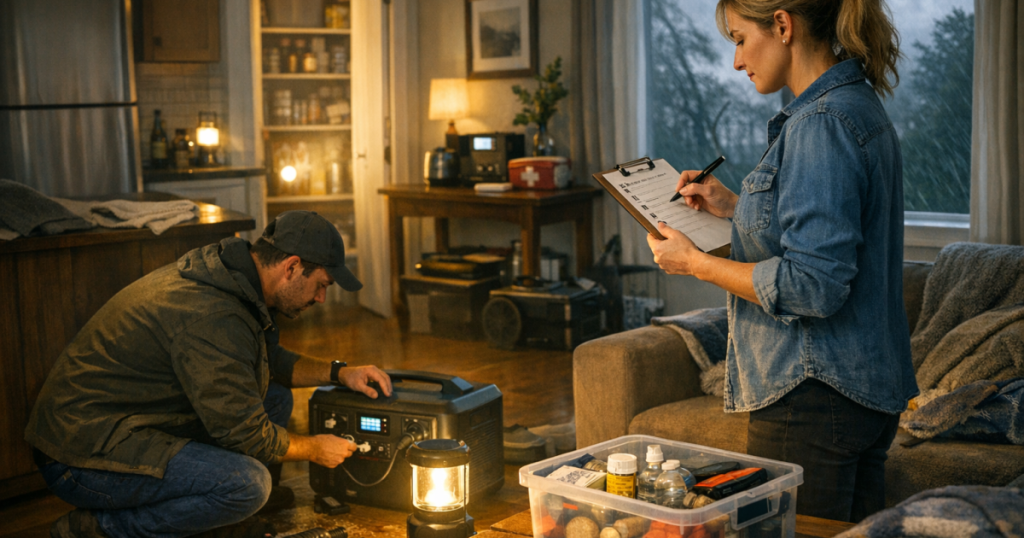
A pre-storm walkthrough turns vague outage worries into a short list of jobs you can actually finish. Think of it as a home blackout preparedness checklist you can complete before the forecast turns into downed limbs, closed roads, or a late-night scramble for batteries.
The goal is not to make your house perfect. It is to confirm what matters most: safe lighting, charged communication, protected food, medical needs, working backup power, and a clear plan for the first night without grid power.
Generator connections, transfer switches, interlocks, whole-home standby systems, and any wiring tied to your electrical panel should be handled by a qualified electrician in compliance with local code, manufacturer instructions, and applicable safety requirements.
In brief
A good pre-storm blackout walkthrough checks each area of the home in the order it will affect comfort and safety: people first, then food, communication, backup power, water, heat or cooling, and exit paths. It should end with a written outage plan that everyone in the household can follow without guessing.
- Confirm who needs power, medication access, mobility help, or temperature control.
- Charge phones, power banks, flashlights, radios, laptops, and backup batteries.
- Decide which outlets, rooms, and devices get priority if power is limited.
- Check fridge, freezer, cooler, and thermometer readiness before food warms up.
- Stage extension cords, lanterns, fuel, batteries, and charging cables where they are easy to reach.
- Review safe generator or battery placement before rain, darkness, or wind makes it harder.
- Write down the first three actions your household takes when the power fails.
If you want a broader household plan beyond the pre-storm walk, keep a separate 72-hour power outage checklist for food, water, sanitation, pet care, and overnight comfort.
Start at the people, not the panel
Begin with the household members who will be affected fastest by a blackout. That includes anyone using refrigerated medication, powered medical equipment, mobility devices, electric recliners, stair lifts, baby monitors, CPAP machines, or temperature-sensitive care routines.
Write these needs on paper, not just in a phone note. A fridge magnet, clipboard, or taped pantry sheet works well because anyone can find it. Include the person, the device or need, where the backup supply is stored, and what to do first if the outage starts while someone is asleep or away from home.
- List medication storage needs and the location of coolers or gel packs.
- Confirm backup plans for oxygen, CPAP, or other essential devices.
- Make sure caregivers, neighbors, or nearby relatives know the plan if they are part of it.
- Set aside manual alternatives where possible, such as non-electric can openers and battery lanterns.
Walk the kitchen before the storm arrives
The kitchen is where small delays get expensive. Open the fridge and freezer briefly, check that doors seal cleanly, and decide what you would move first if the outage stretches past a few hours. Do not wait until the food is already warming to hunt for a cooler.
Stage one cooler for the most perishable items and another for drinks or less critical food if you have space. Keep appliance thermometers visible, group frozen items together, and avoid unnecessary door openings once the power is out. If you already have ice packs, move them to the freezer early so they start cold.
- Set fridge and freezer thermometers where they can be read quickly.
- Move ice packs, frozen water bottles, or sealed containers of water into the freezer if space allows.
- Plan the first meal around foods that are already open or most perishable.
- Keep a clean cooler accessible, not buried in the garage behind seasonal storage.
- Write “do not open” on a sticky note for the fridge and freezer if children or guests are in the house.
For the food side of the plan, use a dedicated cooler method rather than guessing under pressure. The step-by-step approach in how to pack a cooler when the fridge loses power is a useful next move before the weather turns.
Check lights room by room
Flashlights are helpful, but lanterns make a blackout easier to live with. During the walkthrough, stand in each room you expect to use after dark and ask: “Can someone walk through here safely with both hands free?” Hallways, stairs, bathrooms, nurseries, and the route to the breaker panel deserve extra attention.
Place lights where people naturally reach, not where the storage closet happens to be. A lantern on a hall table beats a premium flashlight hidden in a junk drawer. Add fresh batteries or recharge devices now, then keep one light near every sleeping area.
- Put a light source at the main entry, kitchen, bathroom, and bedroom hallway.
- Check stair treads, loose rugs, and tripping hazards before visibility drops.
- Keep headlamps available for hands-free tasks like checking the panel or moving cooler items.
- Avoid using candles as your main light source, especially around children, pets, curtains, or clutter.
Decide what gets backup power first
Most households do not need to power everything at once. The walkthrough should rank loads by importance: medical needs, phones, router or modem if internet is still available, fridge or freezer support, a few lights, and comfort items such as a fan. Large heating appliances, space heaters, electric ranges, and central air conditioning usually demand far more power than small backup systems can provide.
Make a short “power priority” list and tape it near the backup battery, UPS, or generator supplies. Include the item, where it plugs in, and whether it can wait. This prevents the classic outage mistake: draining limited backup power on low-value devices while the real essentials sit unplugged.
- Label the charging cables for phones, tablets, medical devices, and radios.
- Pre-charge portable power stations, power banks, and UPS units.
- Test the outlet path before the storm, including safe cord routing that does not cross wet areas or doorways.
- Keep surge protectors and power strips visible, but do not overload them or daisy-chain them.
- Confirm which devices must never be connected to an undersized backup source.
If your backup equipment has been sitting unused, do a quick function check before the forecast gets serious. Our guide to testing and maintaining backup power before an outage explains what to verify without turning it into a complicated project.
Inspect generator and battery safety zones
If your plan uses a generator, walk the actual path you would take to set it up. Check that the outdoor location is dry, stable, well ventilated, and away from doors, windows, vents, and attached garages. Generators must not be run indoors, in a garage, on a porch, or in any enclosed or partly enclosed area because carbon monoxide can build up quickly.
Confirm that fuel is stored safely, containers are labeled, and refueling will happen only after the generator is off and cooled according to the manual. If you use a portable power station instead, pick an indoor location that stays dry, has airflow around the unit, and keeps cords away from walkways.
- Place carbon monoxide alarms on each level of the home and near sleeping areas according to the alarm instructions.
- Keep generator cords rated for the load and outdoor conditions.
- Do not backfeed a home through a wall outlet.
- Keep batteries and power stations off wet floors and away from heaters or direct rain exposure.
- Review shutoff steps with the adult who is most likely to be home during the storm.
Confirm communication before the network gets busy
Phones are useful only if they are charged, contact lists are current, and people know what to do when calls fail. Charge phones, battery packs, and laptops early. Then write down important numbers for family, utilities, medical contacts, insurance, building management, and neighbors.
Decide how your household will communicate if cell service is weak. Text messages often get through more reliably than voice calls during heavy network congestion. A battery-powered or hand-crank weather radio gives you storm updates even if home internet is down.
- Save utility outage reporting pages or phone numbers before the storm.
- Download important documents or maps if you may lose internet service.
- Set one out-of-area contact for family check-ins if local lines are jammed.
- Charge work laptops only after higher-priority safety and medical needs are covered.
Walk the exterior while it is still safe
Do the outside check before wind, rain, ice, or smoke conditions make it unsafe. You are not trying to fix every property issue. You are looking for obvious problems that could block access, damage equipment, or make an outage harder to manage.
- Bring lightweight patio furniture, grills, umbrellas, and trash bins into a sheltered area.
- Clear the path to your generator location, garage, gate, and main entry.
- Check that sump pump discharge areas, drains, and downspouts are not obviously blocked.
- Move extension cords, chargers, and power equipment away from places that could flood.
- Park vehicles where falling branches and flooded low spots are less likely to be a problem.
If you live in an apartment or condo, include shared spaces in your thinking. Note stairwell lighting, garage access, elevator dependence, package-room access, and whether building doors rely on powered locks. For renters, a written mini-plan matters because you may not control the larger building systems.
Set up the first-night kit
A first-night kit is the small collection you want within arm’s reach once the outage starts. It is not the same as long-term emergency storage. It should be easy to carry, easy to find, and built around the first 12 hours: light, information, basic food, water, warmth or cooling, and safe movement.
- Two or more lights, including one hands-free option.
- Charged power bank and labeled charging cables.
- Weather radio and spare batteries if it uses replaceable batteries.
- Basic first-aid supplies and prescription information.
- Non-electric can opener and simple shelf-stable food.
- Drinking water, with one gallon per person per day as a common planning baseline.
- Blankets, warm layers, or battery fans depending on the season.
- Pet food, leash, carrier, litter, or medication if animals are part of the household.
Run the final 30-minute reset
When the storm is close, switch from planning to setup. Put devices on chargers, turn fridge and freezer settings back to normal if you changed them for pre-cooling, fill water bottles, and move the first-night kit to the main living area. Then reduce small loads you do not need, such as decorative lights or nonessential electronics.
Give everyone one clear role. One adult handles backup power. One person checks pets. Someone else gathers phones, shoes, glasses, medication, and warm layers. The more ordinary the routine feels, the less chaotic the outage will be.
- Charge every phone and backup battery to full.
- Move flashlights, shoes, and glasses beside beds.
- Fill water bottles and a clean pitcher.
- Lower fridge and freezer door openings to the minimum.
- Send one check-in text before service becomes unreliable.
- Keep car keys, wallet, medication, and important papers in one known place.
Questions people ask
How long should a pre-storm walkthrough take?
A focused walkthrough can take 30 to 60 minutes once your supplies are mostly in place. The first time may take longer because you are finding gaps. After that, it becomes a fast house sweep: charge, stage, label, confirm, and stop tinkering.
Should I test backup power during the walkthrough?
Yes, but keep the test simple and safe. Confirm that batteries turn on, displays or indicators work, cables are present, and the equipment can power the intended low-risk devices. Leave panel connections, transfer equipment, and generator integration to qualified electrical work.
What if I do not own a generator or power station?
You can still do a strong readiness walk. Prioritize lighting, phone charging from small power banks, food protection, water, medication planning, and a neighbor or family check-in plan. A no-generator household can be much safer and calmer than a better-equipped home with no routine.
What stands out
The best pre-storm walkthrough is ordinary on purpose. It turns backup planning into visible, repeatable actions: lights where people walk, food plans before the fridge warms, medical needs written down, batteries charged, and unsafe power shortcuts ruled out before stress takes over.
Do the walk before the first flicker, and your household starts the outage with a map instead of a guessing game. That is the quiet win: fewer surprises, safer decisions, and a home that is ready to ride out the first night with much less scrambling.