A good blackout setup is not only about keeping a fridge cold or a phone charged. It is also about knowing what is happening while the power is out. This WR400 Deluxe NOAA Weather Alert Radio review focuses on Midland’s tabletop alert radio as a steady home information hub for storms, grid failures, and overnight alerts.
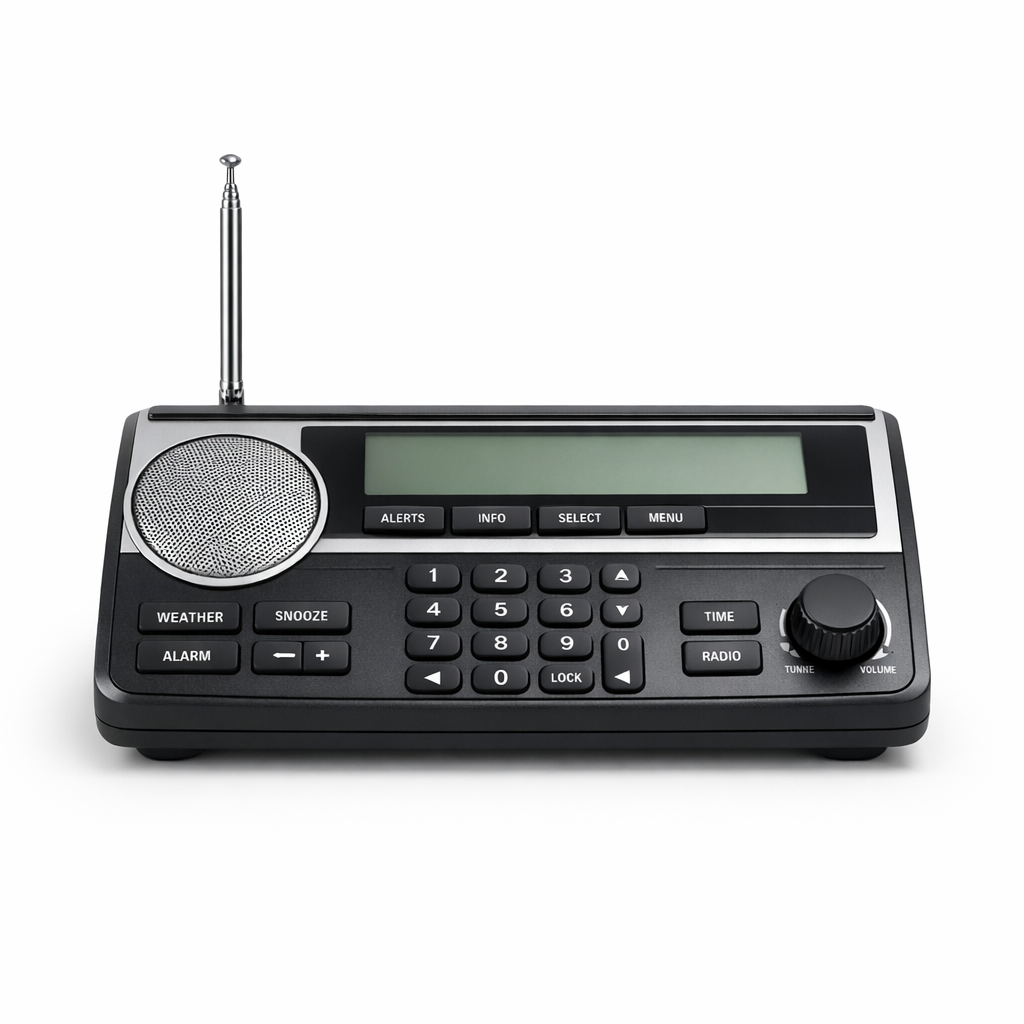
Midland WR400 Deluxe NOAA Weather Alert Radio
A strong stationary alert radio for households that want focused NOAA warnings without relying on internet or phone service
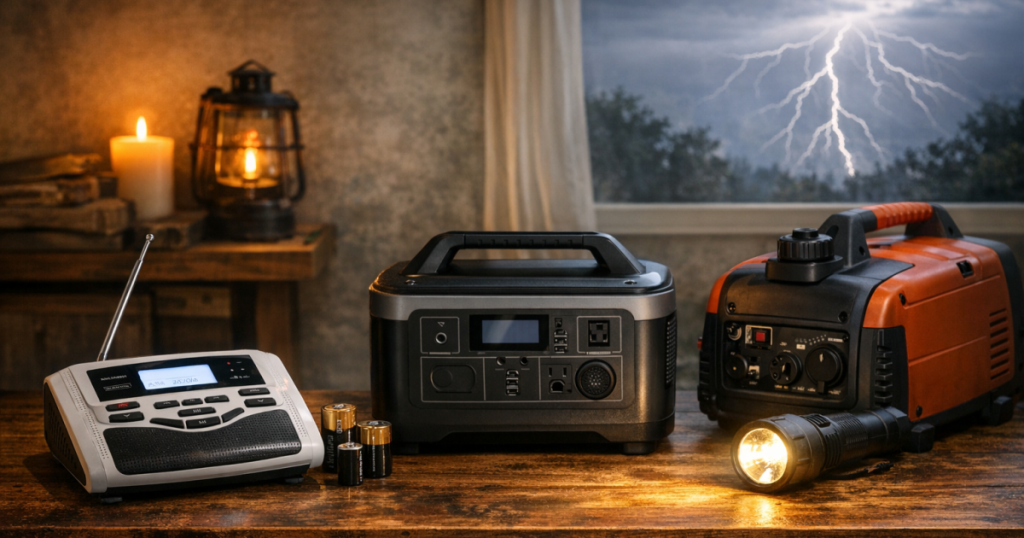
Midland’s WR400 Deluxe NOAA Weather Alert Radio is a home or office NOAA weather and emergency alert radio with AM/FM radio, alarm clock functions, SAME county programming, AC power, and AA battery backup. It is not a hand-crank radio or a portable power bank. Its job is more specific: sit in one place, listen for alerts, and wake up the household when something important comes through.
Product Details
- Product type: tabletop NOAA weather alert radio for home or office use.
- Official US price: $109.99.
- Certification: Public Alert Certified.
- Power: 120V AC adapter for normal use, plus 4 AA alkaline batteries for backup operation.
- Battery note: the 4 AA batteries are required for backup use and are not included.
- Location programming: SAME programming for up to 25 counties or provinces.
- Alert modes: Voice, Display, Tone, and Siren.
- Supported alerts: 80+ emergency alerts.
- Radio coverage: NOAA Weather Band 162.400-162.550 MHz, AM 520-1710 kHz, and FM 87.5-108.1 MHz.
- USB output: 5V, 1A, and only while the radio is connected to wall power.
- Operating temperature: 32°F to 122°F.
- Box contents: WR400 Emergency Alert Weather Radio, AC power adapter, and owner’s manual.
- US limited warranty: three years for weather radio receivers when purchased by the original consumer from Midland or an authorized reseller.
The role it plays in a blackout kit
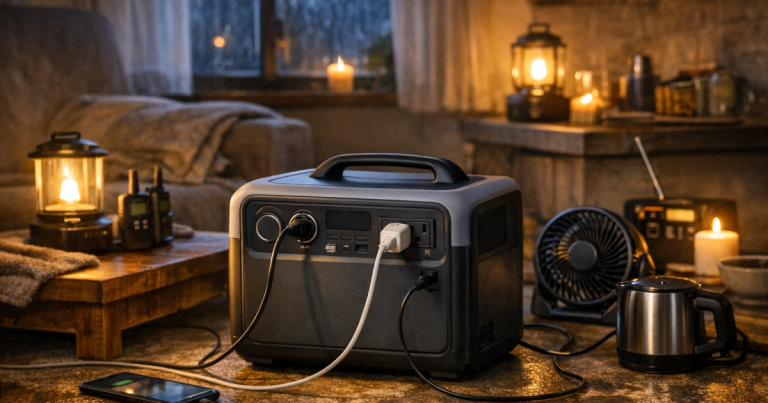
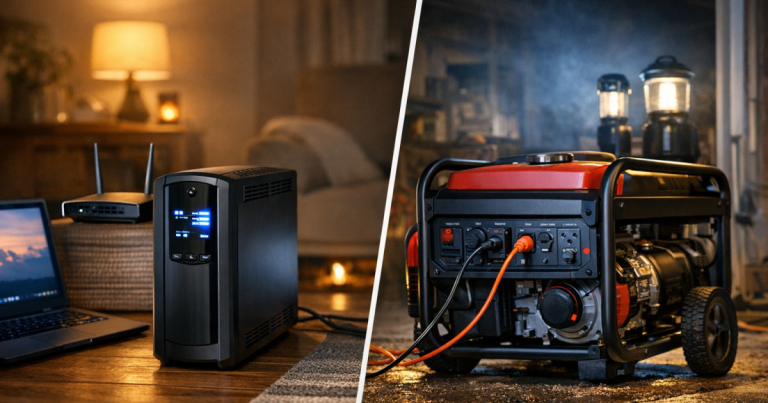
The strongest case for the Midland weather radio is that it fills a different gap than a lantern, UPS, generator, or portable power station. Backup power keeps equipment running; an alert radio helps you understand what is coming next. That distinction is easy to overlook until cellular service is overloaded, the internet is down, or everyone in the house is asleep when a warning is issued.
For a household blackout plan, the WR400 makes the most sense as a fixed alert station: a kitchen counter, bedroom dresser, home office shelf, or another place where it can stay plugged in and ready. Because it normally runs from a 120V AC adapter and switches to AA battery backup for outage operation, it fits households that want a set-and-monitor device rather than another gadget to recharge.
It pairs naturally with broader planning rather than replacing it. If you are building the rest of the household plan around lighting, food safety, device charging, and overnight routines, use it alongside a more complete home blackout preparedness plan so the alert radio is part of a working setup, not a lone box on a shelf.
SAME programming is the feature that earns its keep
The WR400 can be programmed for up to 25 counties or provinces using SAME location programming. For a US household, that is the feature that separates this from simply leaving a general weather broadcast running. It lets the radio focus alerts around selected locations instead of treating every broadcast in range as equally relevant.
That flexibility is useful for families with more than one location to think about: home, a nearby county where a parent lives, a second property, or a commute corridor. The practical value is not in collecting 25 locations just because the radio allows it. It is in narrowing the noise so important alerts stand out.
There is still a setup burden. NOAA alert usefulness depends on local NOAA Weather Radio reception, the selected channel, antenna placement, and correct SAME programming. That is not a flaw so much as the reality of alert radios: the device can only be as helpful as the signal it receives and the locations you choose. A calm setup session before storm season is far better than trying to program counties by flashlight.
Alerts are flexible enough for real households
The WR400 supports Voice, Display, Tone, and Siren alert types, along with more than 80 emergency alerts. That combination is useful because homes do not all need alerts in the same way. A loud siren may be the right choice for overnight tornado or severe weather warnings, while a display or tone can be less disruptive during daytime use.
The optional external alert path is also worth noting. The radio supports accessories such as a strobe light or bed shaker through an external alert jack, but those accessories are not included. For households where sound alone is not the right answer, that compatibility can be meaningful. It should not be treated as an out-of-box accessibility kit, though; the radio itself is only part of that setup.
Because it is Public Alert Certified, the WR400 is positioned as a serious alert receiver rather than a novelty radio. That does not guarantee perfect reception in every home, but it does support the editorial view that this is a legitimate alert hub for household preparedness.
Power behavior: sensible, but not a power bank
For blackout use, the power arrangement is straightforward. The radio runs from a 120V AC adapter during normal operation and uses 4 AA alkaline batteries for backup. Those batteries are not included, so they should be bought and installed as part of the setup rather than treated as an afterthought.
The limitation to understand is the USB port. The WR400 has a 5V, 1A USB charging output, but it only works when the radio is connected to wall power. That makes it useful as a light-duty charging convenience during normal AC-powered use, not as a meaningful outage phone-charging source. If you want reliable device charging after the lights go out, a UPS or portable power station belongs elsewhere in the plan.
That is where expectations matter. This Midland radio is not trying to compete with a rechargeable lantern, crank radio, or battery generator. It is a tabletop alert device with battery backup, and it is at its best when you let it do that job cleanly.
AM/FM radio adds everyday usefulness
The WR400 includes AM and FM radio coverage in addition to NOAA Weather Band reception. In a blackout, that gives it a second role: listening to local broadcasts for updates, closures, road information, and general news when home internet is unavailable.
That does not make it a complete communications kit. It is still a receiver, not a two-way radio, and it depends on radio signals in your area. But as a household information source, the AM/FM inclusion helps justify keeping it plugged in somewhere visible instead of storing it with gear you only touch twice a year.
Where the WR400 fits best
The WR400 is best suited to homeowners and renters who want a dedicated indoor alert station for severe weather and emergency notifications. It is especially sensible for bedrooms, home offices, and common areas where a siren or tone can get attention quickly.
It is less convincing as the only radio in a long outage kit if you specifically want hand-crank charging, solar charging, or USB charging from an internal battery. Campers, car kits, and off-grid users may prefer a different style of emergency radio. For a fixed home alert role, though, the WR400’s AC-first design is not a weakness; it is the reason it can sit ready without becoming another thing to remember to charge.
The operating temperature range of 32°F to 122°F also reinforces the home-and-office role. This is a tabletop indoor preparedness device, not rugged gear for freezing storage sheds or hot vehicle dashboards.
Value at $109.99
At an official US price of $109.99, the WR400 sits in the “buy it because you want the alert features” category, not the “grab the cheapest radio you can find” category. The value case is strongest if you will actually use SAME programming, alert mode choices, AM/FM listening, and the AA backup arrangement.
The extra ownership cost is small but real: you need 4 AA alkaline batteries for backup operation, and optional alert accessories are separate. The three-year US limited warranty for qualifying original-consumer purchases from Midland or an authorized reseller helps the value picture, but the warranty does not turn it into a rugged outdoor radio or solve reception limitations.
If your blackout plan includes larger power equipment, remember that alert radios and backup power systems solve different problems. For generator, inlet, cord, transfer switch, and indoor power-safety boundaries, keep this review separate from the larger home backup power safety basics you use for appliances and circuits.
Verdict
Score: 8.5/10.
The WR400 is a very good fit for households that want a fixed NOAA alert hub with SAME location programming, multiple alert styles, AM/FM listening, and practical AA battery backup. The strongest reasons to consider it are its alert configuration, Public Alert Certified positioning, and ability to cover up to 25 programmed locations.
The compromises are equally clear. It depends on local NOAA reception and correct setup, it needs 4 AA batteries that are not included, and its USB charging is only available on wall power at 5V, 1A. Choose it as a steady home alert radio, not as a hand-crank emergency radio or blackout phone charger.
For a kitchen, bedroom, or home office alert station, the Midland WR400 is easy to recommend within that role. It is the kind of preparedness gear that is quietly valuable because the best time to hear a warning is before the rest of the house realizes anything has changed.
Midland WR400 Deluxe NOAA Weather Alert Radio
A strong stationary alert radio for households that want focused NOAA warnings without relying on internet or phone service
You might also like: Portable Power Station vs Generator vs UPS for Blackouts.