Blackout food planning gets easier when the meals are already portioned, shelf-stable and simple to prepare. This Classic Meal Assortment Bucket review looks at Mountain House’s Classic Meal Assortment Bucket, a freeze-dried emergency meal bucket built around pouches of familiar breakfasts and dinners.
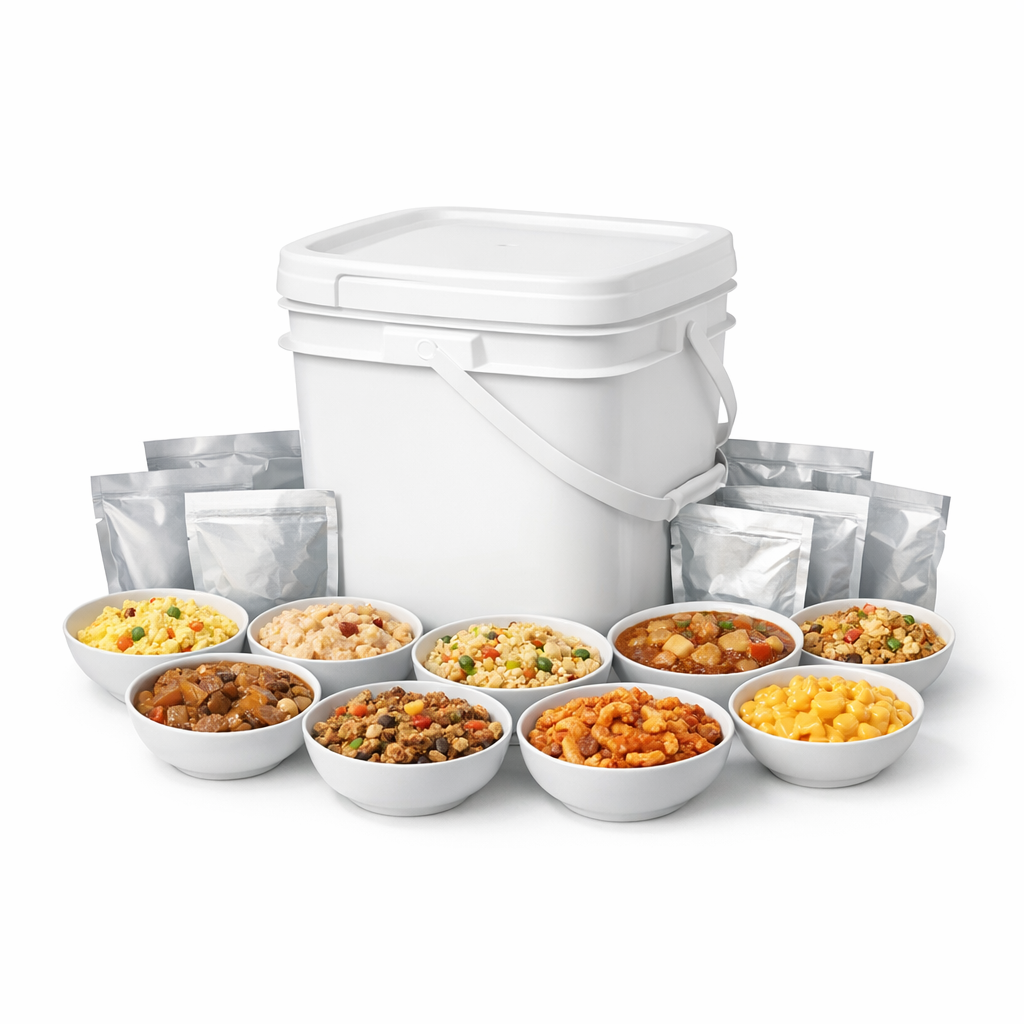
Mountain House Classic Meal Assortment Bucket
A strong fit for households wanting compact emergency meals, provided they store water and tolerate the allergens
The important distinction is that this is food, not a complete outage feeding system. Potable water is required for every pouch, and hot water is preferred for the fastest prep. If your plan already includes stored water and a safe way to heat it, this bucket can be a convenient pantry layer. If it does not, the bucket solves only part of the problem.
Product Details
- Product: Mountain House Classic Meal Assortment Bucket.
- Type: Freeze-dried emergency meal bucket.
- Pouches and servings: 12 total pouches and 24 total servings.
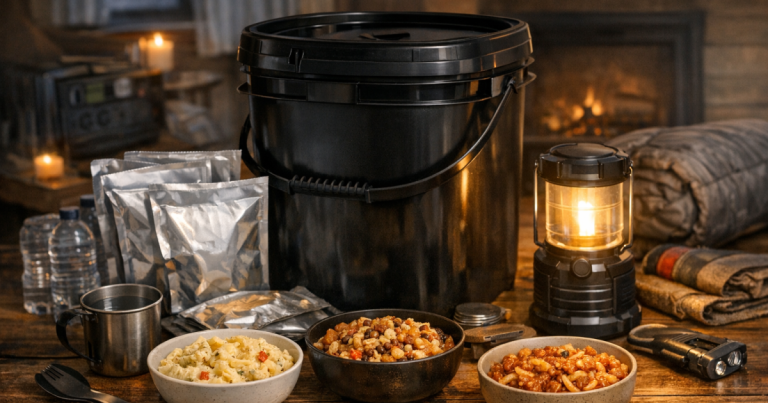
- Included meals: 3 Beef Stew, 3 Beef Stroganoff with Noodles, 2 Granola with Milk & Blueberries, 2 Spaghetti with Beef Marinara and 2 Chicken Fried Rice pouches.
- Water needed: 18 cups total to prepare all meals in the bucket.
- Prep time: Ready to eat in less than 10 minutes when prepared as directed with preferably hot water; room-temperature water doubles the wait time.
- Shelf life: 30-year guaranteed shelf life and Taste Guarantee from date of manufacture for meals in buckets.
- Bucket size and weight: 5.52 lb, with dimensions of 12 x 10 x 12.31 in.
- Declared allergens across the assortment: Wheat, milk, egg, soy, sesame and tree nut coconut appear in the included meal allergen statements.
- Storage guidance: Store under dry, sanitary conditions, keep unopened, avoid prolonged exposure above 75°F and protect packaging from punctures or dents.
- Food return policy: No returns on food items unless damaged, defective or affected by a receiving discrepancy, with claims required within 30 days of delivery.
The appeal is convenience, not self-sufficiency
The strongest case for the Mountain House Classic Meal Assortment Bucket is its low-friction storage. It is compact enough for a pantry shelf, closet or utility room, and the 5.52 lb listed weight makes it easier to move than many bulk food reserves. For apartment renters, storm-season households and anyone trying to keep a tidy emergency shelf, the bucket format has a real practical advantage.
Its 30-year guaranteed shelf life is also a major reason people buy freeze-dried food instead of trying to rotate every emergency meal through the regular grocery routine. That long shelf life does not remove storage responsibility, though. Mountain House says to keep meals unopened, store them under dry and sanitary conditions and avoid prolonged exposure above 75°F. In practical terms, this belongs in a stable indoor storage spot, not a hot garage corner that bakes through summer.
Because the pouches are the usable units inside the bucket, the setup also lets a household open only what it needs for a meal. Once dry contents are opened, Mountain House recommends using them within one week for best results and taste, so this is not a bulk-bin situation where everything becomes exposed at once.
Serving counts need real-world interpretation
The bucket lists 24 total servings, but the better way to think about it for blackout planning is as 12 meal pouches with different calorie profiles. Mountain House lists 420 calories per Beef Stew pouch, 560 for Beef Stroganoff, 500 for Granola with Milk & Blueberries, 500 for Spaghetti with Beef Marinara and 600 for Chicken Fried Rice.
That means the serving count should not be read as 24 full days of adult emergency food. A serving can help stretch a pantry, support a hot meal, or cover part of a day, but most adults will need more total food across a multi-day outage. This bucket makes more sense as a ready-meal reserve alongside shelf-stable staples, snacks, canned goods and water than as the whole food plan by itself.
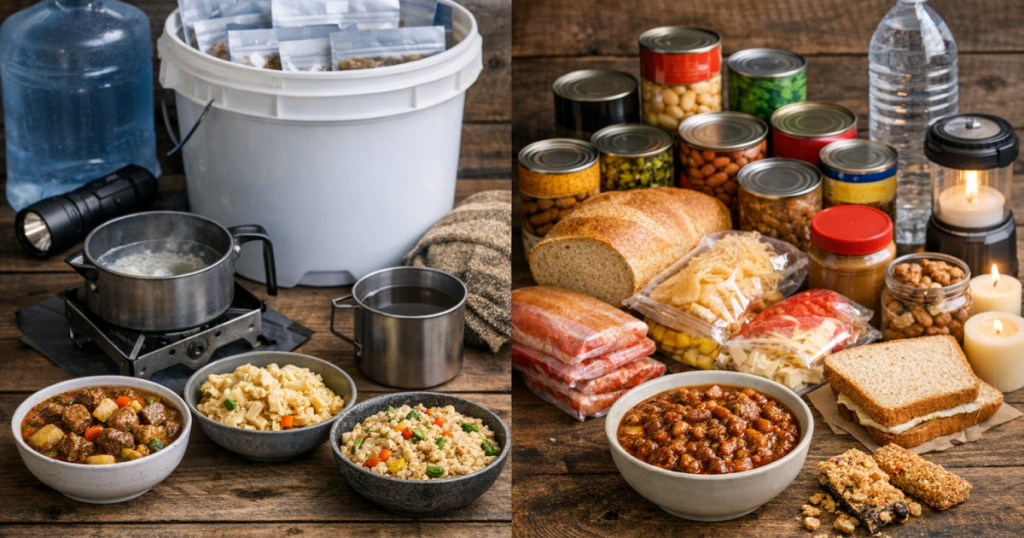
For households building a broader outage pantry, it pairs best with foods that fill the gaps: lower-sodium items, shelf-stable protein, breakfast options, fruit cups, crackers, nut butters where allergies allow, and familiar kid-friendly foods. If you are still building the overall plan, a wider home blackout preparedness plan helps place emergency meals alongside lighting, charging, refrigeration and communication needs.
Water is the deciding companion item
The most important supporting requirement is water. Mountain House states that preparing all meals in the bucket takes 18 cups of water total. That is not an intimidating amount for the entire bucket, but it must be potable water, and it has to be available during the outage.
Hot water is preferred because it supports the stated under-10-minute prep time. Room-temperature water can be used according to the product page, but the wait time doubles. In a short outage, that may be a minor inconvenience. During a cold-weather outage, after a long storm cleanup, or with hungry kids waiting at the table, hot food and faster prep can feel like more than a luxury.
This is where the bucket is refreshingly honest as a planning item: it is easy, but it is not magic. You need stored drinking water, a safe water source, or another dependable way to supply potable water. You also need a safe way to heat water if you want the quickest and most appealing preparation experience.
Meal variety is useful, with allergy and sodium trade-offs
The included mix is familiar and practical: three beef stew pouches, three beef stroganoff pouches, two granola pouches, two spaghetti pouches and two chicken fried rice pouches. That gives the bucket a better meal rhythm than a single-entree case, since it includes breakfast-style granola as well as savory meals.
The compromise is dietary flexibility. Across the assortment, the declared allergens include wheat, milk, egg, soy, sesame and tree nut coconut. This is not a simple choice for households managing allergies, dairy avoidance, gluten avoidance, or vegetarian eating as a bucket-level purchase. Some individual meals may suit specific diets better than others, but the assortment itself is not allergy-simple.
Sodium is the other notable trade-off. Mountain House lists 1,180mg sodium for Spaghetti, 1,540mg for Beef Stroganoff, 1,560mg for Chicken Fried Rice, 120mg for Granola and 1,540mg for Beef Stew per pouch/container. That is common territory for many shelf-stable emergency meals, but it changes how you should use the bucket. For a one-meal backup, it is straightforward. For several days, many households will want to balance it with lower-sodium foods and plenty of drinking water.
How it compares to a pantry-first food bucket
The Mountain House bucket is more compact and meal-focused than large serving-count buckets that lean heavily on bulk portions. Its 12 pouches and 24 servings are easy to understand, and the meal names are familiar enough that most households can picture when they would use them.
A larger entree-only kit can make sense when the goal is maximum shelf-stable meal volume, but it may not be as simple to fit into a realistic daily menu. For a useful contrast, our ReadyWise WFS 120 Serving Entree Only Grab & Go Bucket review shows how a higher serving count creates a different set of planning questions around variety, portions and pantry fit.
At the official US listing price of $134.49, the Classic Meal Assortment Bucket is best judged on convenience, long storage life and recognizable meal variety rather than cost per label serving alone. The buyer who gets the most from it is not trying to live from one bucket; they are adding a low-maintenance meal layer to a smarter blackout pantry.
What stands out
- Best strength: Long shelf life, compact storage and simple pouch-based meals make it easy to keep on hand without constant rotation.
- Main limitation: It depends on potable water, and hot water is preferred for the stated prep speed.
- Biggest planning caution: The 24 servings should not be treated as 24 full days of adult food.
- Dietary caution: The assortment includes several major allergens and multiple high-sodium savory pouches.
- Best fit: Households that want familiar emergency meals as one part of a broader water, pantry and power plan.
Verdict
Score: 8.3/10. The Mountain House Classic Meal Assortment Bucket earns a strong place as a compact blackout meal reserve because it combines long storage life, familiar pouch meals and straightforward preparation. The score is held back by the realities that shape actual outage use: it needs 18 cups of potable water for the full bucket, hot water is preferred for the quickest prep, and the assortment is not ideal for allergy-sensitive or low-sodium households.
For a homeowner or renter who already stores water and wants a tidy, recognizable emergency food option, this is an easy bucket to justify. For anyone expecting one purchase to cover full multi-day nutrition, water and dietary needs, it should be treated as a helpful layer rather than the whole plan.
Mountain House Classic Meal Assortment Bucket
A strong fit for households wanting compact emergency meals, provided they store water and tolerate the allergens
You might also like: Portable Power Station vs Generator vs UPS for Blackouts.