A blackout is stressful in any home, but it becomes more serious when a CPAP machine, oxygen concentrator, powered mobility device, feeding pump, or refrigerated medication depends on electricity. Planning for blackouts with home medical equipment is less about buying one big battery and more about building layers: device information, backup power, safe charging, communication, and a clear fallback plan.
The goal is simple: know what must keep running, how long it needs power, who to call, and when to leave for a safer location.
Medical device settings, oxygen use, medication temperature requirements, and outage fallback decisions should be confirmed with the prescribing clinician, pharmacist, or equipment provider. Generator connections, transfer switches, dedicated circuits, and any home wiring changes should be handled by a qualified electrician in compliance with local electrical codes and safety requirements.
In brief
- List every medical device, charger, battery, medication, and supply that could be affected by an outage.
- Record the power label information, battery runtime estimates, and manufacturer instructions for each device.
- Build backup in layers: internal device batteries, a UPS or portable power station where appropriate, and a safe generator setup if your home plan requires one.
- Keep emergency contacts printed, charged phones available, and a plan for relocating before a device battery gets critically low.
- Practice the plan during normal conditions so the first test is not at 2 a.m. during a storm.
Step 1: Make a medical power inventory
Start with a written list, not a mental note. During an outage, stress and low light make it easy to forget a charger, adapter, humidifier, backup battery, or medication cooler.
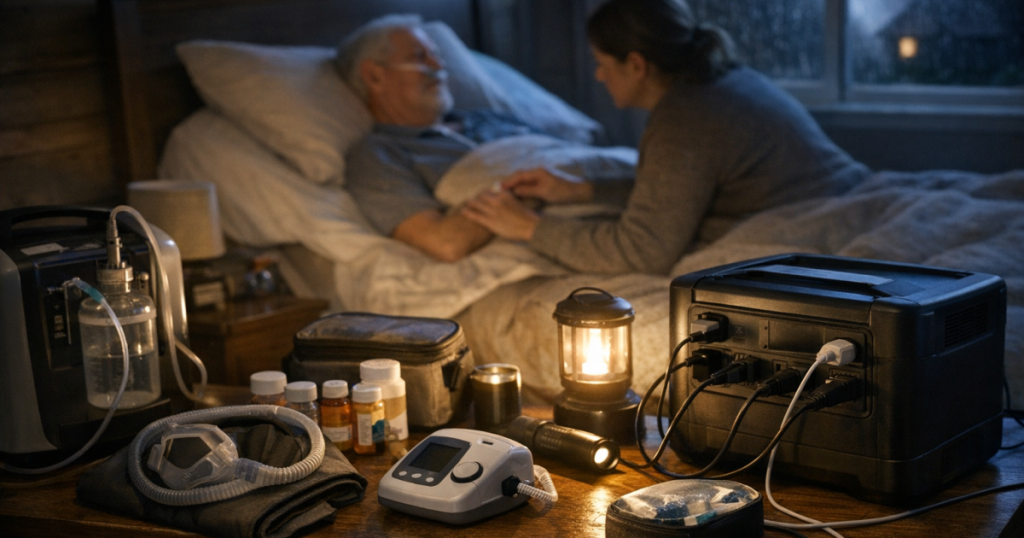
Walk room by room and write down anything that supports health, mobility, breathing, sleep, nutrition, communication, or medication safety. Common examples include CPAP and BiPAP machines, oxygen concentrators, nebulizers, suction machines, feeding pumps, hospital beds, lift chairs, powered wheelchairs, stair lifts, refrigerated insulin or biologics, and internet or phone equipment used for telehealth or caregiver contact.
For each item, record:
- The exact device name and model number.
- The power input listed on the label or power brick.
- Whether it has an internal battery and how long that battery is expected to last under your actual settings.
- Whether it can run from DC power, AC wall power, or only its original charger.
- Any alarms, settings, filters, tubing, distilled water, or accessories it needs.
- The provider, pharmacy, or supplier phone number.
If you already keep an outage binder or household checklist, add this page to it. If not, this is a good time to build a broader room-by-room blackout plan so medical needs are not isolated from lighting, heat, cooling, food, and communication.
Step 2: Separate critical loads from comfort loads
Not every plug has the same priority. A television, coffee maker, and microwave may be useful, but they should not compete with a medical device, medication refrigerator, or phone needed to reach a caregiver.
Put each item into one of three groups:
- Must run continuously: equipment that cannot safely be interrupted without a clinician-approved alternative.
- Must run on a schedule: devices that can be powered at set times, such as certain chargers or pumps, depending on the care plan.
- Must be protected but not powered constantly: items such as refrigerated medication, which may be managed with a refrigerator, cooler, thermometer, and pharmacy guidance.
This step helps prevent oversizing one backup system or, worse, plugging too many items into a small battery or generator. It also gives you a clear order of operations: breathing support, medication protection, communication, mobility, lighting, then comfort.
Step 3: Get real runtime numbers before you rely on backup power
Runtime estimates are not guarantees. A device may use more power with heat, humidification, higher pressure settings, startup surges, older batteries, or continuous use. The label on a device tells you what to verify, but your actual setup determines how long a backup source may last.
For each device, check the manufacturer manual or ask the equipment provider:
- Can this device safely run from a portable power station, UPS, or generator?
- Does it require a pure sine wave AC output?
- Can humidification or nonessential accessories be turned off during an outage to reduce power draw?
- Is there a manufacturer-approved DC adapter or external battery?
- What alarms or error codes should you expect if power switches over?
- What is the safe process for restarting after power returns?
Once you have the manufacturer’s guidance, test under normal conditions. Fully charge the backup source, run the medical device the way it would be used during an outage, and time the result while someone is awake and monitoring it. Write down the result with the date, settings, and any accessories used.
Step 4: Build backup in layers
A strong medical outage plan usually uses more than one power source. That way, one dead battery, one empty fuel can, or one failed outlet does not become the whole plan.
Short interruptions: internal batteries and UPS units
Some medical devices have internal batteries or optional external batteries. These are often the first line of defense because they are designed around the device. A UPS can also help some electronics ride through brief outages, but it should only be used with medical equipment if the device manufacturer or equipment provider confirms compatibility. Many consumer UPS units are intended for computers and networking gear, not life-support equipment.
Longer interruptions: portable power stations
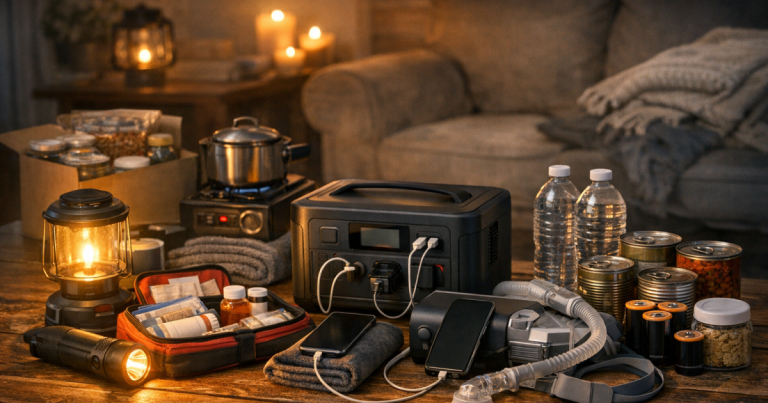
Portable power stations can be useful for certain home medical setups because they store electricity without indoor fuel, fumes, or engine noise. They still have limits: capacity, output rating, recharge time, outlet type, and compatibility with the device all matter. For a plain-English overview of how these batteries behave during outages, see how portable power stations work during home outages.
Extended outages: generators used safely
A portable generator can support longer outages, but it introduces serious safety requirements. Generators must run outdoors, far from doors, windows, garages, crawl spaces, and vents; many safety agencies recommend at least 20 feet of separation where practical. Use working carbon monoxide alarms, keep extension cords rated for the load and outdoor use, and never backfeed a home through a wall outlet.
If a generator will power selected home circuits, use a properly installed transfer switch or approved interlock setup. This is not a shortcut project. It protects utility workers, prevents dangerous backfeeding, and helps keep essential loads separated from high-demand appliances.
Step 5: Plan for oxygen, heat, cold, and medication storage
Power is only one part of the problem. Medical equipment often depends on the room staying safe enough for the person using it.
If someone uses oxygen, follow the supplier’s fire safety instructions closely. Keep oxygen equipment away from flames, smoking materials, candles, gas stoves, and running generators. Do not use candles as outage lighting in a home where oxygen is in use.
For temperature-sensitive medication, ask the pharmacist what temperature range is required, how long the medication can safely be outside that range, and what signs mean it should not be used. Keep a refrigerator thermometer and a small cooler available, but do not assume that ice, freezing packs, or room-temperature storage are appropriate for every medication. Some products can be damaged by freezing as well as heat.
For heat-sensitive or cold-sensitive people, set relocation triggers ahead of time. For example, if the home drops below or rises above a temperature your clinician considers unsafe, the plan may shift from staying home to going to a family member’s house, a cooling center, a warming center, or a medical facility.
Step 6: Make communication part of the medical plan
During a major outage, cell towers, internet service, and cordless home phones may fail or become unreliable. Do not let your only copy of important numbers live inside one phone.
Print and post a one-page contact sheet with:
- Primary doctor or clinic.
- Durable medical equipment supplier.
- Pharmacy.
- Power company outage line and medical needs program, if available.
- Local non-emergency number.
- Nearby family, neighbors, or caregivers with keys or access instructions.
- Transportation options if evacuation or relocation is needed.
Many US electric utilities offer medical needs, life-support, or critical care customer notifications. These programs do not guarantee power restoration first, but they can improve communication and help the utility understand your household risk. Register before storm season and renew the paperwork as required.
It also helps to assign roles. One person checks battery status, one contacts the caregiver, one manages medication temperature, and one watches local alerts. For a more complete structure, use a household blackout communication plan alongside the medical equipment checklist.
Step 7: Write clear go/no-go triggers
The safest plan is not always “stay home as long as possible.” Some homes can ride through a short outage comfortably, while others need an earlier move because the person depends on continuous powered equipment, elevator access, climate control, or refrigerated medication.
Write down triggers that tell everyone when to change course. Useful examples include:
- The main device battery reaches a specific remaining runtime.
- The backup power station reaches a specific charge level.
- The home temperature leaves the safe range set by the care team.
- Medication storage temperature is outside the pharmacist-approved range.
- The generator cannot be operated safely due to flooding, wildfire smoke, theft risk, or placement limitations.
- Caregiver contact has failed for a set amount of time.
These triggers reduce arguments and delay. The decision has already been made during calm conditions; the outage simply tells you which branch of the plan to follow.
Step 8: Practice before storm season
A short drill can reveal problems that a checklist misses. Choose a normal day, tell everyone it is a practice run, and simulate a power outage for the medical setup only. Do not create unsafe conditions; the point is to test plugs, labels, lighting, roles, and timing.
During the drill, confirm that backup devices are charged, cables are where they belong, alarms are understood, extension cords reach without creating trip hazards, and the person using the equipment can communicate discomfort or concerns. If a caregiver will help during a real outage, include them in the practice.
Afterward, update the written plan. Replace missing labels, move supplies closer to the device, add a flashlight to the room, and correct any phone numbers. A plan that gets revised after a real test is far more useful than a neat checklist that has never been touched.
Helpful questions
Should I tell my power company about medical equipment at home?
Yes. Ask your utility about its medical needs or life-support notification program. It usually will not guarantee priority restoration, but it can improve outage communication and planning.
Can I run a CPAP machine from a portable power station?
Sometimes, but verify compatibility with the CPAP manufacturer or equipment provider. Pressure settings, humidifier use, outlet type, and power station capacity all affect runtime.
Is a generator safe for medical backup power?
It can be part of a safe plan when used outdoors with proper cords, carbon monoxide alarms, and professionally installed transfer equipment where home circuits are involved. It should never run indoors or in a garage.
How much backup runtime should I plan for?
Plan for the longest outage that is realistic in your area, then add a margin. For many households, that means covering overnight use first, then building toward 24 hours or longer with charging and relocation options.
What should renters do if they cannot use a generator?
Focus on approved device batteries, portable power stations where compatible, medication temperature planning, communication, and an early relocation plan. Ask the landlord about building outage procedures and elevator access if mobility is a concern.
Key takeaways
A medical blackout plan should be specific enough that someone else could follow it when you are tired, stressed, or away from home. List the devices, confirm the power requirements, test backup runtime, keep contacts printed, and decide in advance when staying home is no longer the safest option.
Most households do not need a perfect whole-home system to become much safer. They need a clear priority list, compatible backup power, safe charging habits, and a practiced fallback plan that protects the person first and the equipment second.