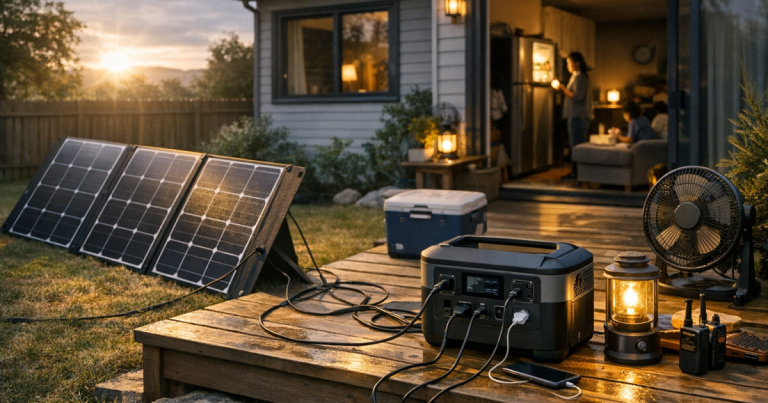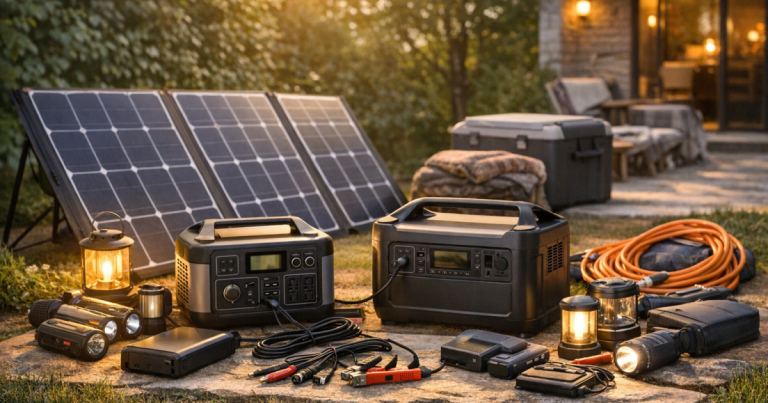
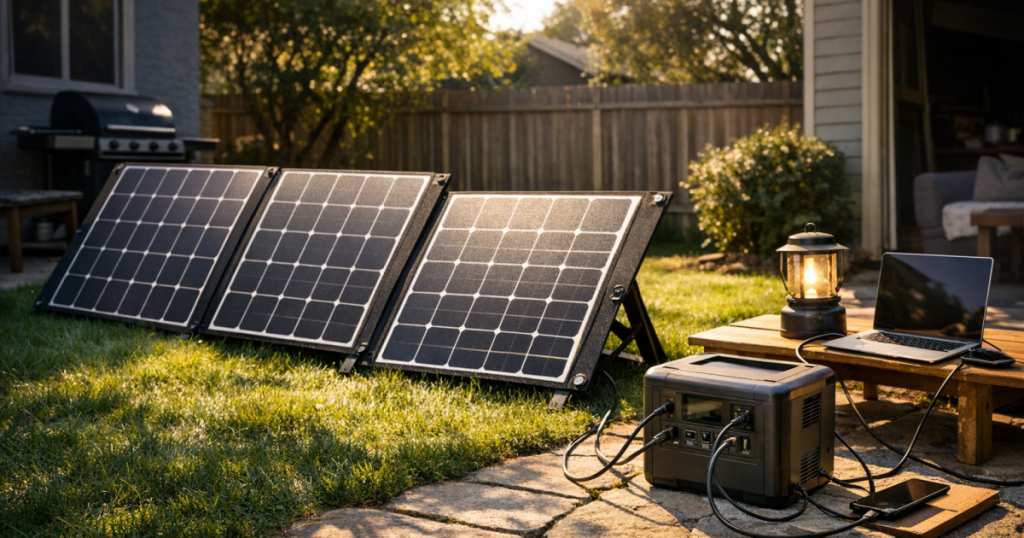
When the power is out, the sunniest spot in the yard is not always the best spot for your panels. Portable solar panel placement is about three things at once: clean sunlight, safe cable routing, and keeping the power station protected from weather and heat. A few minutes of careful setup can mean more usable charging during the bright part of the day.
During an outage, the winning setup is usually the one you can deploy safely, aim well enough, and check without babysitting it all afternoon.
Professional guidance: Permanent wiring, rooftop mounting, and any connection between solar equipment and a home electrical system should be carried out by a qualified electrician in compliance with local codes, manufacturer instructions, and applicable safety requirements.
The short version
Place portable solar panels outdoors in direct sun, facing the strongest light, with no shade crossing the panel surface. Keep the power station or battery in shade, off wet ground, and protected from rain. Run only compatible charging cables, avoid pinch points at doors and windows, and move or tilt the panels during the day as the sun shifts.
- Direct sunlight beats “bright enough” every time. Window glass, tree shade, porch roofs, and patio umbrellas all reduce charging.
- Keep the panel outside and the battery protected. Most households do better with the panel in the yard, driveway, or balcony and the power station under cover nearby.
- Shorter, safer cable runs are easier to manage. Long cords across walkways become trip hazards when people are carrying flashlights, coolers, and phones.
- Expect to adjust the panels. A morning setup that works at 9 a.m. may be shaded or poorly aimed by early afternoon.
If you are still building the system, start with the broader setup decisions in how to set up solar charging for home outages, then use the placement steps below on outage day.
Step 1: Pick a safe charging zone before you chase the sun
Start with safety, then optimize for output. A portable panel can be moved, but a cracked panel, soaked battery, or tripped family member creates a bigger problem than a slower charge.
Look for a flat, open area that stays out of normal foot traffic. A driveway edge, patio, deck, open lawn, or sunny balcony can work if the panel will not block an exit or walkway. Avoid placing panels where a car may move, where kids or pets are likely to run, or where someone might step backward into the frame while carrying supplies.
Do not place a power station, battery, or charging controller where rain, roof runoff, sprinkler water, or pooling water can reach it. A panel may be designed for outdoor use, but the rest of the charging setup may not have the same weather tolerance. When in doubt, keep the storage device under a covered porch, inside a dry garage with the door open for cable routing, or just inside a window where it stays cool and dry.
Step 2: Face the panels toward the strongest sun
In most of the continental US, a south-facing direction gives the longest useful charging window over the day. That is the starting point, not a law of nature. During a blackout, the best direction is the one giving the panel the cleanest direct sun right now.
For a simple field check, stand near the panel and look at where the shadows fall. If the panel is pointed at the sun, objects behind it should cast shadows roughly away from the panel face. If the panel looks bright from your position but the sun is hitting it from the side, rotate it until the face is more square to the sunlight.
A tilt angle close to the sun’s height helps. In summer, panels usually sit at a lower angle because the sun rides higher. In winter, a steeper angle can catch lower sunlight better. You do not need surveyor precision during an outage. If your panel has adjustable legs, set it so the surface faces the sun directly and check the power station display to see whether output improves.
Step 3: Treat shade like the main enemy
Portable panels are easy to underestimate because a spot can look bright while still charging poorly. A thin branch shadow, deck railing shadow, chimney shadow, or overhead utility line can cut into production. Some panels handle partial shade better than others, but blackout planning should not depend on best-case behavior.
Walk the area before you set up. Check for trees to the east in the morning, rooflines to the south around midday, and fences or neighboring buildings to the west in the afternoon. If the outage may last all day, choose a spot with the fewest moving shadows between late morning and midafternoon.
Avoid charging through windows unless you have no better option. Glass can reduce solar input, and the panel may also be at the wrong angle behind the window. A sunny window can help a small solar lantern or trickle-charging gadget, but it is rarely the best plan for recharging a household power station.
A simple portable solar panel placement routine
Use a repeatable routine so nobody has to guess when the lights are already out. The goal is to harvest the easy sunlight first, then make small corrections instead of constantly fiddling with the gear.
Morning setup
Put the panels where they will catch direct morning sun without blocking doors, stairs, or driveways. Aim them toward the sun and connect them according to the manufacturer’s instructions. Check that every connector is fully seated and that the cable is not under a door, chair leg, tire, or sharp frame edge.
Midday check
Late morning through early afternoon is usually the most productive charging window. Re-aim the panel if the sun has moved across the sky. If your power station shows solar input, use that display as feedback: adjust the angle, wait a moment for the reading to settle, then stop when the number is no longer improving much.
Afternoon adjustment
As shadows lengthen, move the panels before the shade reaches them. This is where a portable setup earns its keep. A 30-second move from a shaded patio to the open driveway may add more useful charging than a half-hour of wishing the tree would cooperate.
Evening shutdown
Panels do not charge at night, so bring them in or secure them once sunlight is gone. Coil cables loosely, wipe off dirt or moisture if needed, and store the setup where you can redeploy it quickly the next morning. Outage gear has a talent for hiding under blankets when you need it most.
Keep the battery shaded, dry, and close enough
The panel wants sun. The battery usually does not. Heat can make charging less efficient and may cause some equipment to reduce charging speed or stop charging to protect itself. Rain and standing water create obvious electrical and equipment risks.
A good blackout layout separates those jobs. Put the solar panel in sun, then place the power station in a shaded, dry spot within the cable’s safe reach. Under a covered porch, inside a garage doorway, or just inside a window can work, provided the cable is not pinched and the device stays ventilated.
Do not improvise with random extension cords or adapters. Use cables and connectors intended for the panel and power station. If you need a longer solar cable, verify compatibility with the equipment manufacturer’s guidance rather than guessing by connector shape alone.
If your main goal is to keep internet, phones, laptops, and small devices running, it also helps to size the battery around those actual loads rather than the panel alone. The guide to which size portable power station keeps internet and devices running walks through that side of the plan.
Placement checks for yards, driveways, balconies, and apartments
Yards and patios
Grass is fine if the ground is dry and stable, but avoid low spots where water collects. If the panel frame sinks into soft soil, place it on a stable surface or reposition it. Keep lawn tools, hoses, and loose outdoor furniture away from the cable path.
Driveways
Driveways often have excellent sun exposure, but they need a no-car rule during charging. Place the panel along the side rather than behind a vehicle. If neighbors, delivery drivers, or family members may pass through, make the panel visible and keep cables tight to the edge instead of stretched across the middle.
Balconies
Balcony solar can work, but it is more constrained. Do not hang panels over a railing, block fire exits, or create a falling-object risk. Set the panel fully inside your balcony footprint, use the sunniest safe area, and follow building rules. Wind can be stronger at upper floors, so a freestanding panel that seems stable on the ground may be too risky on a balcony without a secure, manufacturer-approved setup.
Indoors near windows
Indoor placement is a fallback, not the main plan. If weather or building rules prevent outdoor placement, use the sunniest window and angle the panel toward the glass. Expect lower charging and plan loads accordingly.
Weather and wind rules
Portable solar panels are light enough to move for a reason. That also means wind can move them for you, usually at the least convenient moment. If gusts are rising, lay the panel flatter, use manufacturer-approved supports, or bring it in. Do not weigh panels down in a way that bends the frame, stresses hinges, or covers cells.
Bring panels inside during thunderstorms. Solar charging is not worth leaving gear outside in lightning, hail, flying debris, or heavy rain. After the weather passes, inspect the panel, cable, connectors, and power station before reconnecting.
Smoke, ash, dust, pollen, and storm grime can reduce sunlight reaching the cells. If the surface is dirty, wipe it gently with a soft cloth as directed by the manufacturer. Do not use harsh cleaners or scrape grit across the panel face.
How to know the setup is working
The easiest confirmation is the input reading on your power station or charge controller. Do not expect a panel to produce its labeled maximum all day. Real output changes with sun angle, clouds, temperature, cable setup, and panel orientation. What you want is a steady, plausible input during strong sun and a noticeable improvement when you aim the panel better.
- If output is very low, check shade first.
- If output drops suddenly, look for a shadow, loose connector, passing cloud, or device charging limit.
- If the battery gets hot, move it to shade and improve airflow.
- If rain is coming, disconnect and protect the equipment before the storm reaches you.
- If charging is working but slow, reduce loads and save stored power for the evening.
It is much easier to fix these problems before storm season than during a long outage. Add panel setup to your regular backup-power routine using how to test and maintain backup power before an outage.
Questions people ask
Should portable solar panels face south during a blackout?
South-facing placement is a solid starting point for most US homes, but direct sun is the real goal. If a west-facing driveway has full sun while the south side is shaded by trees, use the driveway and re-aim the panels as the sun moves.
Can I leave portable solar panels outside all day?
You can leave them deployed during safe weather if they are stable, visible, and not blocking access. Bring them in during storms, strong winds, heavy rain, or after sunset. Also think about theft risk if the panels are visible from the street.
How far can the panel be from the power station?
Keep it as close as practical while still reaching direct sun and keeping the battery protected. Longer cable runs can add clutter and may reduce performance depending on the equipment. Use only compatible cables and follow the manufacturer’s limits.
Is it safe to charge indoors?
The power station can often sit indoors or under cover while the panel stays outside, but the panel itself needs sunlight. Avoid pinched cables, wet connectors, blocked ventilation, and any setup that creates a trip hazard or blocks an exit.
Main lessons
Good blackout solar charging is less about perfect equipment placement and more about disciplined habits: put the panel in direct sun, keep the battery protected, avoid shade, manage cables, and adjust the angle a few times during the day. A portable panel gives you flexibility, but only if you treat placement as part of the outage routine.
Set up once on a normal sunny day before you need it. You will learn where shadows move, which door or window works for cable routing, and whether your chosen spot is actually convenient. That quiet test run is the difference between a calm outage setup and a driveway full of guessing.