Portable Power Stations
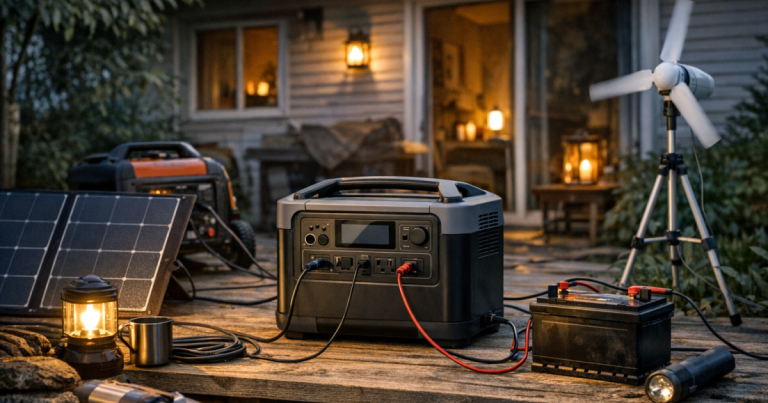
How to Recharge a Portable Power Station During a Long Outage
Long outages are easier to manage when your battery has a refill plan, not just a full charge on day one.
Read article →
Make sense of home blackout backup planning with clear guides, honest reviews and practical comparisons. Whether you are weighing up a purchase or exploring the subject, Outage Essentials helps you focus on the details that matter.
Browse articles
Long outages are easier to manage when your battery has a refill plan, not just a full charge on day one.
Read article →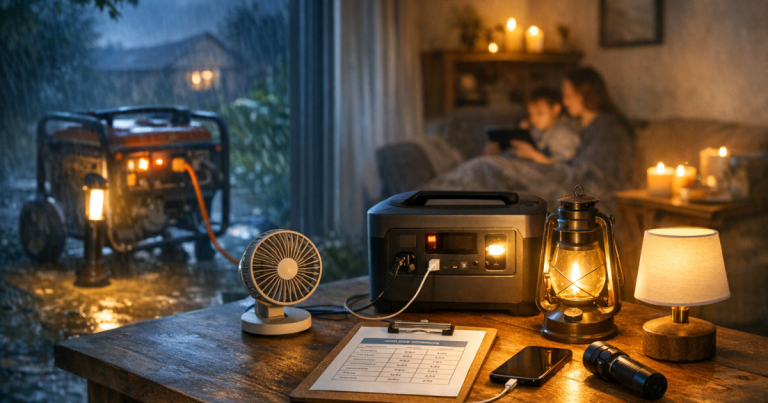
Keep essentials running without overspending or overloading your setup by matching watts, runtime, and priorities to real blackout scenarios.
Read article →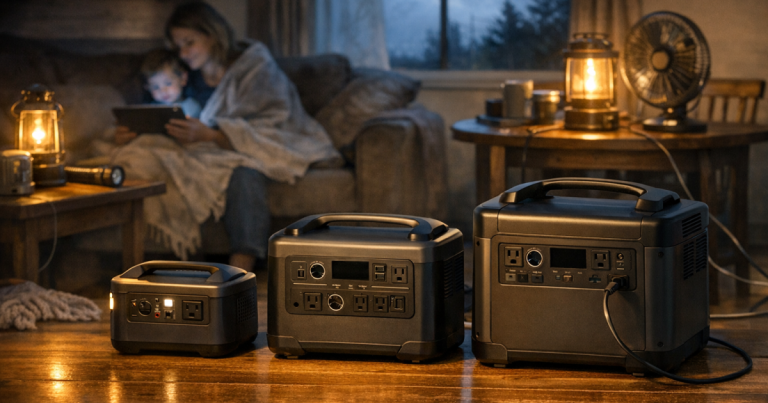
Avoid buying too little battery or hauling more than you need. Size your backup around real outage priorities and realistic runtime.
Read article →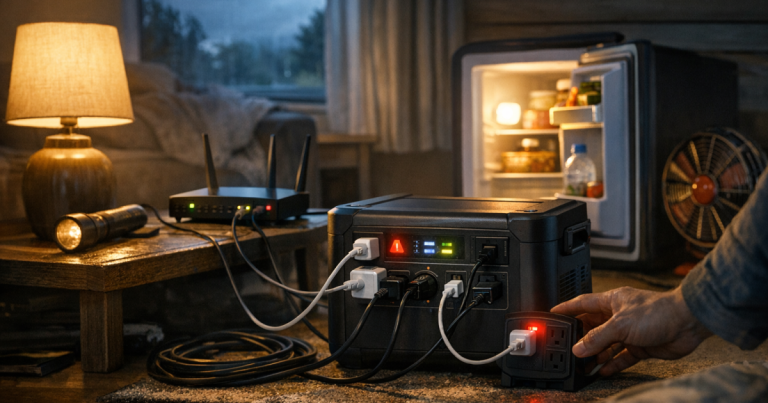
Keep the lights, router, and fridge plan realistic by matching each load to the station’s output, surge limit, and runtime.
Read article →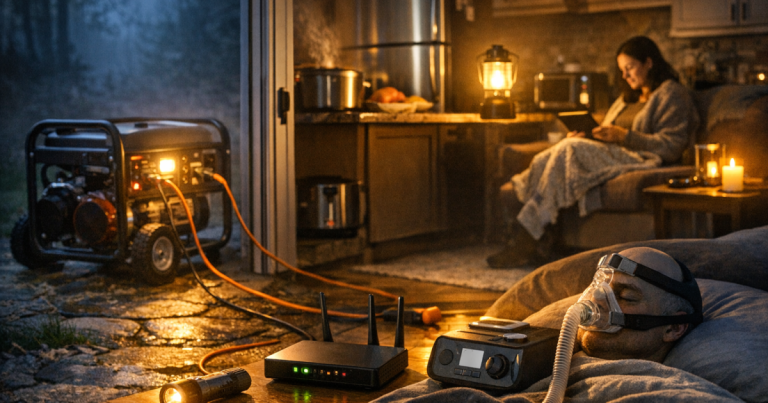
Know what your setup can actually run before the lights go out, from fridge surges to overnight router and medical-device needs.
Read article →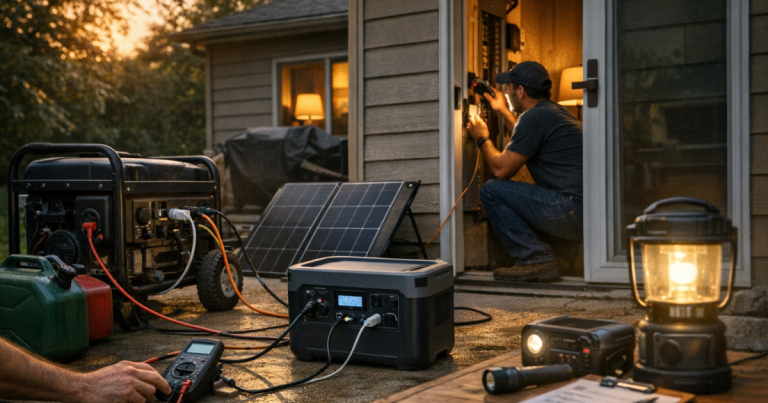
Find weak spots in cords, batteries, fuel, and power priorities before the lights go out and the house is already stressed.
Read article →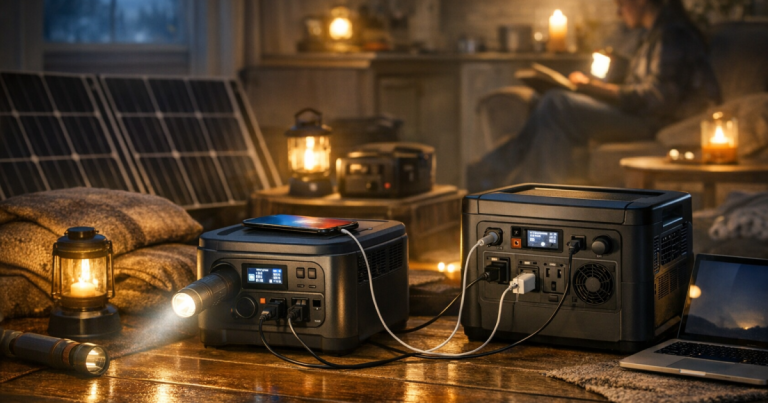
Keep the right essentials running without overspending on battery capacity you will not use during a real outage.
Read article →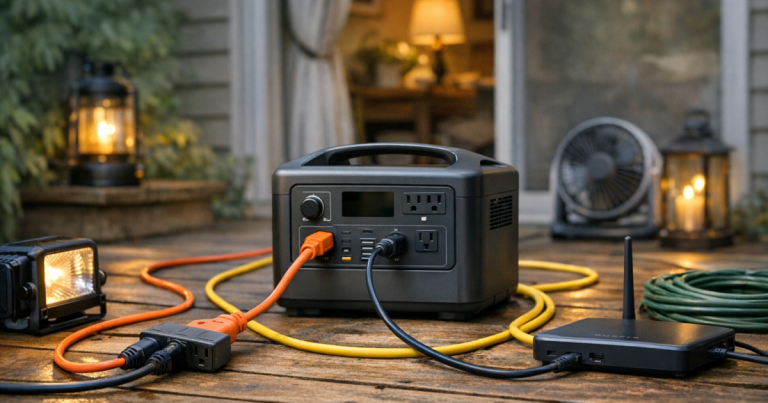
Keep lights, routers, and small essentials running without warm cords, tripped outlets, or unsafe daisy chains.
Read article →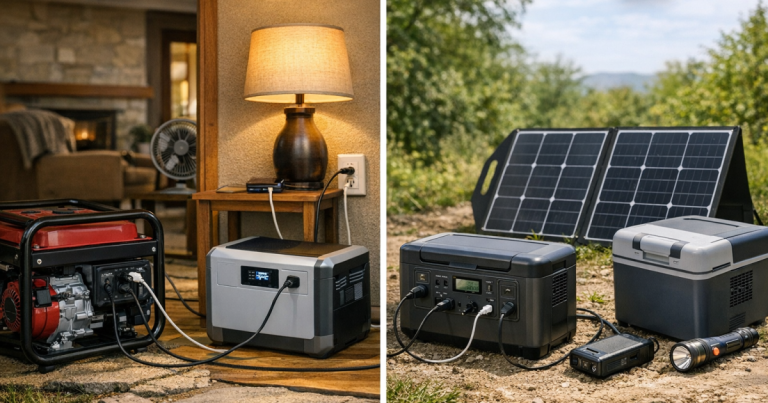
Know which outage devices need wall-style power, battery power, or an inverter before the lights go out.
Read article →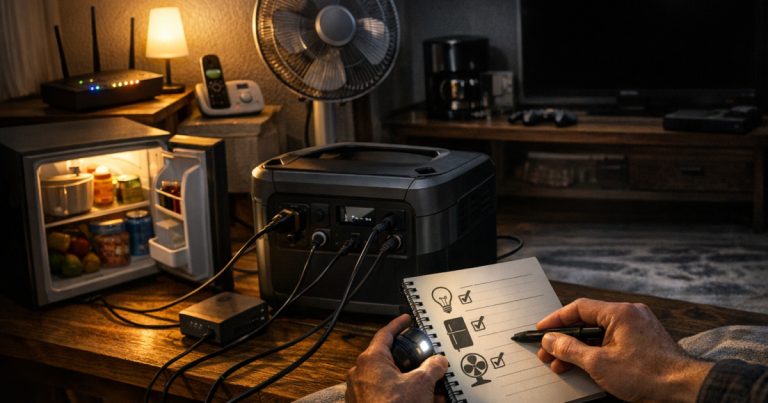
A clear pecking order keeps essential loads running longer and helps you avoid wasting backup power on the wrong things.
Read article →