The Westinghouse WGen7500 Portable Generator review starts with a practical reality: this is a strong, conventional gasoline generator, but not a modern do-everything answer for every home. Its 7,500 running watts and 9,500 peak watts put it in serious backup territory for essentials, while its legacy status and safety limitations keep it from being an easy current-buy recommendation.
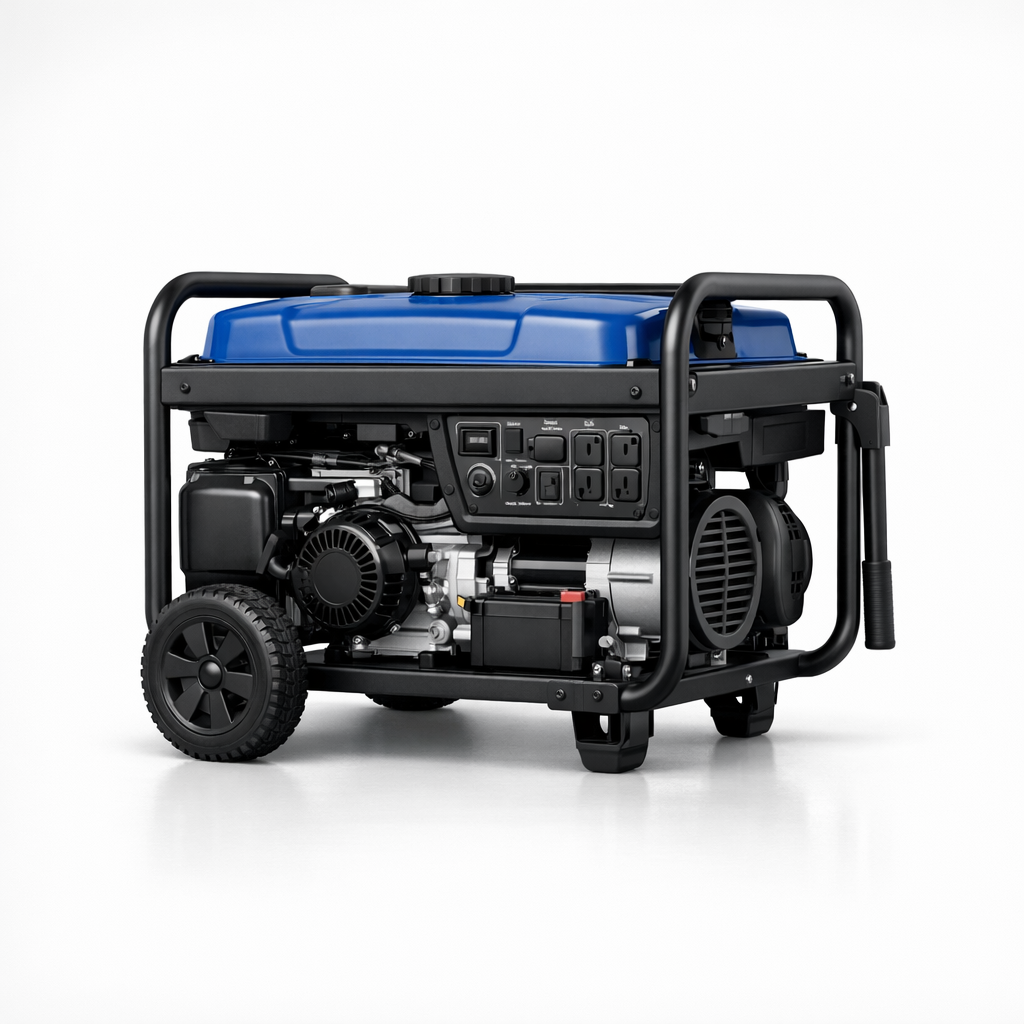
Westinghouse WGen7500 Portable Generator
Best for prepared homeowners evaluating an older high-output gasoline generator for selected circuit backup, not whole-home convenience
Westinghouse WGen7500 Portable Generator is best treated as a previous-generation model for existing owners, used-market shoppers, or households comparing older open-frame generators against newer options. It is gasoline-only, runs outdoors, needs 10W30 engine oil, and requires outdoor-rated cords or approved transfer equipment for safe home-circuit use.
Electrical inlet, transfer switch, interlock, and home-panel connection work should be carried out by a qualified electrician to meet local electrical codes, utility requirements, and safety standards.
Product Details
- Type: gasoline portable generator for home backup or portable AC power.
- Output: 7,500 running watts and 9,500 peak watts.
- AC power: 120/240V AC at 60 Hz.
- Fuel and runtime: 6.6 gallon gasoline tank; up to 11 hours at 25% load.
- Engine: 420cc 4-stroke OHV Westinghouse engine with cast iron sleeve.
- Starting: electric start, remote start, and recoil backup.
- Outlets: two duplex 120V GFCI 5-20R outlets, one 120/240V L14-30R twist-lock receptacle, and ST Switch outlet.
- Home connection readiness: Transfer Switch Ready and ST Switch Ready.
- Size and weight: 27.2 x 26.1 x 26 inches; 196 lb dry weight.
- Noise: as low as 72 dBA operating volume.
- Power quality: total harmonic distortion listed at ≤23% THD.
- Safety and compliance: automatic low-oil shutdown, overload protection, automatic voltage regulation, bonded neutral grounding, GFCI outlets, no CO sensor, and not CARB compliant.
- Warranty: 3-year limited residential warranty, 1-year limited commercial warranty, and lifetime technical support stated for the product.
The power level is the main attraction
The WGen7500’s strongest argument is simple: 7,500 running watts gives a household more room than a small inverter generator or entry-level power station. For outage planning, that can support a more realistic essentials list: refrigerator, freezer, some lights, device charging, a sump pump or furnace blower where compatible, and other carefully managed loads.
The 9,500 peak-watt rating is useful for motor startup loads, but it should not be read as permission to run everything at once. A generator this size still needs load discipline. The smarter plan is to list the circuits or appliances you truly need, account for startup surges, and avoid stacking high-draw devices casually. Electric water heaters, central air conditioning, electric ranges, and large dryers can overwhelm many portable-generator plans fast.
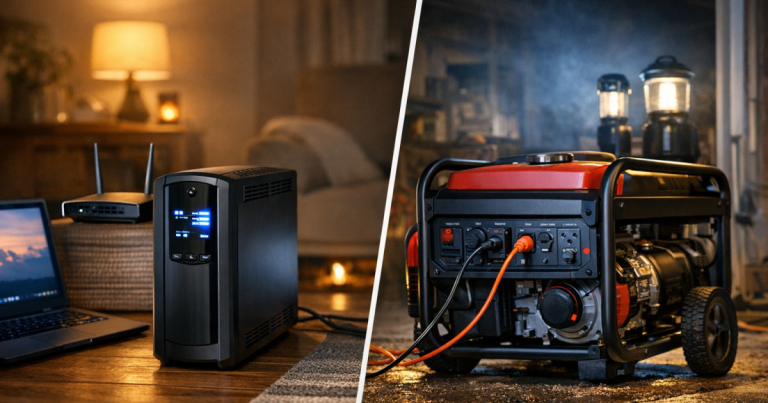
For a plain-English overview of how this type of setup compares with batteries and UPS units, the site’s guide to portable power station vs generator vs UPS for blackouts is a useful next step before committing to any one backup path.
Runtime looks useful, but the 25% load condition is doing work
Westinghouse lists up to 11 hours of runtime from the 6.6 gallon gasoline tank at 25% load. That is a helpful figure for overnight planning, but it is not a whole-house promise. As loads rise, runtime drops. That is normal generator behavior, not a flaw, but it changes how you plan fuel.
In a real blackout, the WGen7500 makes the most sense when you rotate loads instead of trying to mimic normal grid power. Keep the refrigerator cold, run the well pump or sump pump as needed, charge devices, then shut down or reduce load when the job is done. That approach stretches fuel and reduces noise exposure for the household and neighbors.
Gasoline storage is also part of ownership. This generator does not solve the fuel problem for you. It needs fresh gasoline, safe storage, and careful refueling after shutdown and cooldown. That is the unglamorous side of open-frame generator ownership: the watts are useful, but the chore list comes with them.
Connection options are good, but the setup has to be deliberate
The outlet mix is one of the better parts of the WGen7500 package. The two duplex 120V GFCI 5-20R outlets are suited to cord-connected loads, while the 120/240V L14-30R twist-lock receptacle is the more relevant outlet for a properly planned home backup connection. The ST Switch outlet adds another supported connection path within the Westinghouse ecosystem.
Because it is Transfer Switch Ready, the WGen7500 fits the classic portable-generator home backup layout: generator outside, heavy-duty cord to an inlet, and selected circuits controlled through a transfer switch or interlock. That is the clean route. Backfeeding through a dryer outlet or improvised cord is dangerous and not a backup plan; it is a bad idea with a handle.
Before pairing any portable generator with household circuits, read through generator power connections for blackouts. The difference between extension cords, inlet boxes, transfer switches, and interlocks is not just terminology. It determines what you can power safely.
The biggest compromises: safety features, power quality, and portability
The WGen7500 has useful protective features: automatic low-oil shutdown, overload protection, automatic voltage regulation, GFCI outlets, and bonded neutral grounding. Those are meaningful. The missing item is also meaningful: this exact model does not list a CO sensor.
That changes the ownership standard. The generator must be run outdoors, away from enclosed or partially enclosed areas, with exhaust kept away from windows, doors, vents, garages, crawl spaces, and living areas. A CO sensor on a generator is not a license for careless placement, but its absence makes disciplined placement even more important.
Power quality is another limit. With total harmonic distortion listed at ≤23% THD, this is not an inverter-grade generator. It is aimed at conventional AC backup loads, not at being the gentlest source for sensitive electronics. If your outage plan centers on laptops, network gear, medical electronics, or delicate equipment, a UPS or inverter-based backup path may be a better fit for those loads.
Portability also needs plain language. At 196 lb dry weight and roughly 27 inches long, wide, and high, this is movable in the portable-generator sense, not “grab it with one hand during a storm” portable. Storage location, driveway slope, steps, and who will move it during an outage all belong in the buying decision.
Where this older model still makes sense
The exact WGen7500 is not the model to frame as a fresh new-customer favorite. Westinghouse’s own purchasing paths for this version have been listed out of stock, while newer nearby variants exist separately. That puts this review in a different lane: owner guidance, used-generator evaluation, and comparison against newer WGen7500-family models.
It makes the most sense for a homeowner who already has one, understands gasoline maintenance, has a safe outdoor operating location, and wants to support selected home circuits during short-term outages. It is a poor fit for California-regulated contexts where CARB compliance is required, for apartment use, for indoor or garage operation, and for households that want quiet, clean, low-maintenance backup for electronics.
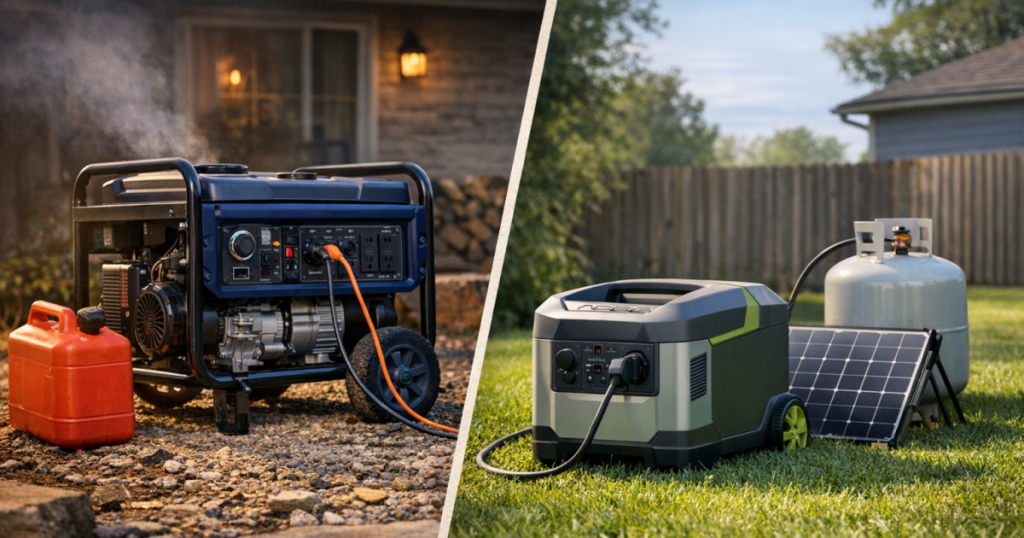
If shopping from scratch, newer portable generators with CO safety systems, dual-fuel flexibility, or lower-THD inverter designs deserve attention. That does not make the WGen7500 useless. It simply means its strengths are old-school strengths: solid output, familiar generator hardware, and practical circuit-backup potential when installed and operated correctly.
Verdict
Score: 7.3/10. The WGen7500 earns a cautious, practical recommendation for the right situation: it has strong rated output, useful 120/240V connection options, and a respectable 6.6 gallon runtime claim at 25% load. Those positives are held back by legacy availability, gasoline-only operation, 196 lb dry weight, no listed CO sensor, non-CARB status, and ≤23% THD that keeps it out of clean-power territory.
For existing owners and used-market shoppers, it is worth considering as a capable essentials-backup generator with real responsibilities attached. For a brand-new outage plan, it should be compared against newer, safer, and more flexible generator designs before it gets a spot in the garage.
Westinghouse WGen7500 Portable Generator
Best for prepared homeowners evaluating an older high-output gasoline generator for selected circuit backup, not whole-home convenience
You might also like: How to Run a CPAP on a Portable Power Station During an Outage.