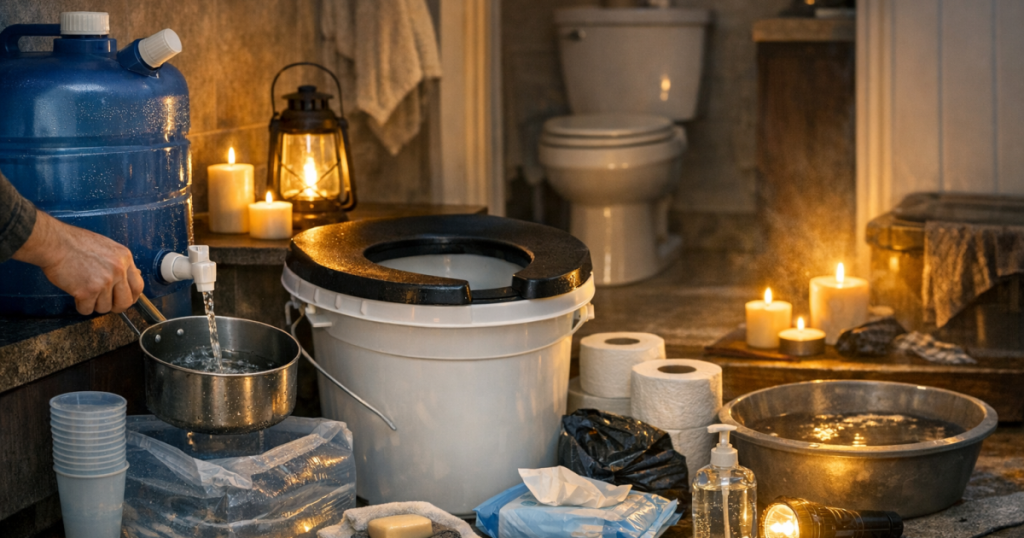
Blackouts do not just turn off lights; they can interrupt well pumps, hot water, sewage pumps, and the small routines that keep a home comfortable. A simple blackout hygiene plan helps you decide ahead of time how much water to store, how toilets will work, and how everyone will wash hands when the taps are unreliable.
The goal is not to recreate normal life perfectly. It is to keep drinking water safe, prevent bathroom problems, reduce illness risk, and make the next 12 hours, 24 hours, or three days feel manageable.
Professional guidance: Plumbing changes, well-pump electrical connections, sewage pump wiring, and generator transfer connections should be handled by qualified plumbers or electricians to meet local code, utility rules, and safety requirements.
At a glance
- Store at least 1 gallon of drinking and basic-use water per person per day, then add extra for pets, hygiene, medical needs, formula, or hot weather.
- Keep separate water for flushing, cleaning, and handwashing so you do not waste drinking water.
- Know whether your home uses city water, a private well, a septic system, a sewage ejector pump, or a high-rise pressure system.
- Plan a toilet backup before you need it: gravity flushing, a lined toilet, a lidded bucket, or approved disposable toilet bags.
- Set up a handwashing station early, not after the bathroom is already dark and messy.
- Stop flushing if drains back up, water rises unexpectedly, or local officials warn of sewer problems.
Step 1: Separate water into three jobs
During an outage, water has different jobs. Treating all stored water the same leads to waste. A better plan divides it into drinking water, hygiene water, and utility water.
Drinking and cooking water
Plan on at least 1 gallon per person per day for drinking and basic needs. That is a minimum planning number, not a comfort number. A family of four should have at least 12 gallons for a three-day outage, before adding pets, infant formula, coffee, medications, or higher water needs in hot weather.
Use sealed bottled water or food-grade containers intended for water storage. Label containers with the fill date and keep them away from gasoline, pesticides, paint, and strong odors. If you refill your own containers, clean them first and follow current public health guidance for storage and rotation.
Hygiene water
This is water for handwashing, sponge baths, brushing teeth, rinsing cloths, and quick cleanup. It does not have to be stored in the same containers as drinking water, but it should still be clean enough for skin contact. A few extra gallons can make a big difference when someone is caring for children, an older adult, or a person with medical equipment.
Utility water
Utility water is for toilet flushing, floor cleanup, or rinsing outdoor items. This can come from a bathtub, buckets filled before a storm, rain barrels where legal and appropriate, or melted ice from coolers. Do not treat utility water as safe to drink unless it has been properly treated and local conditions allow it.
For a broader power, food, and communication setup that fits around this water plan, see the home blackout preparedness guide.
Step 2: Know what happens to your taps when power fails
Not every home loses water the same way. Before storm season, identify how your water normally reaches the fixtures.
- City water in a single-family home: You may still have cold water if municipal pressure remains available. Hot water depends on your water heater type and safety conditions.
- Private well: The well pump usually needs electricity. Without backup power, taps may slow or stop once pressure in the tank is used.
- Apartments and high-rises: Upper floors may depend on booster pumps. Water pressure can change quickly during extended outages.
- Homes with sewage ejector or grinder pumps: Toilets and drains may not work normally if the pump has no power. Continued use can cause backups.
- Septic systems: The tank does not need power to exist, but pumps, alarms, and drainfield conditions may limit use.
If you rely on a generator for a well pump, sump pump, or sewage pump, the setup needs to be planned safely. Generators should never run indoors, in a garage, on a porch, or near open windows, and household connections must be made through appropriate equipment. Review the portable generator safety basics before using backup power around water systems.
Step 3: Build a toilet plan before the bathroom becomes a problem
Toilets are where many blackout plans fall apart. The right approach depends on whether clean water is available, whether drains are working, and whether your home uses pumps.
If drains are working and you have flush water
Many standard toilets can be flushed by pouring water into the bowl quickly enough to trigger a gravity flush. This often takes around 1 to 2 gallons, depending on the toilet, but do not count on the exact amount until you test it under normal conditions. Keep a bucket near the bathroom and mark it for flushing only.
Use this method sparingly. During a short outage, you may choose to flush only after bowel movements to conserve water. Keep the lid closed between uses, and keep a small flashlight or lantern in the bathroom so no one fumbles with buckets in the dark.
If drains are questionable or pumps are off
Do not keep flushing into a system that may not be moving waste away from the house. Warning signs include gurgling drains, water backing up into tubs or showers, sewage odor, toilets that refill oddly, or a sewage pump alarm. In that situation, switch to a no-flush backup toilet plan until the system is safe to use.
No-flush toilet options
A basic no-flush setup can be simple and effective:
- Line the toilet bowl with a heavy-duty trash bag, with the seat holding the bag in place.
- Add an absorbent layer such as disposable absorbent pads, approved toilet gel, or other sanitation material intended for waste control.
- Use a separate lidded bucket if the toilet itself is not a good location.
- Keep toilet paper, disposable gloves, hand sanitizer, and extra bags within reach.
- Double-bag waste, seal it, and store it away from living areas, children, pets, and food.
Follow local rules for disposal after the outage. Do not dump human waste outdoors, into storm drains, into creeks, or into yard areas. If local officials provide emergency sanitation instructions, follow those over general household habits.
Step 4: Set up handwashing that does not depend on the sink
Hand hygiene is the highest-value comfort and safety habit during a blackout. If the sink works, use it. If it does not, create a small station near the bathroom or kitchen.
- A clean water container with a spigot or pourable cap
- Liquid soap
- Paper towels or a dedicated clean hand towel changed often
- A catch basin for gray water
- Hand sanitizer for times when washing is not practical
- A small trash bag for wipes, gloves, and paper products
Use soap and water after using the bathroom, handling trash, changing diapers, caring for someone sick, preparing food, or touching floodwater or sewage. Hand sanitizer helps when water is limited, but it does not remove all dirt, chemicals, or contaminants. When hands are visibly dirty, prioritize soap and water.
Step 5: Keep daily hygiene simple and realistic
A blackout hygiene routine should be easy enough that everyone in the home will actually follow it. Skip anything that requires lots of water, bright lighting, or complicated cleanup.
For adults and older children
- Use sponge baths instead of showers.
- Focus on face, underarms, groin, feet, and any skin folds.
- Change socks and underwear daily if possible.
- Keep a separate bag for dirty laundry so damp clothing does not spread odor.
- Use unscented wipes for backup, but do not flush them even if the package claims they are flushable.
For infants, periods, and caregiving
Households with diapers, menstrual products, wound care, mobility needs, or incontinence supplies need more water, trash capacity, and privacy than a bare-minimum plan allows. Store extra disposable bags, gloves, wipes, barrier cream, and a lidded trash container. If someone depends on powered medical equipment or a CPAP, water and hygiene planning should sit alongside the power plan rather than being treated as a separate chore.
Nighttime matters too. Put bathroom lighting, safe walking paths, and handwashing supplies in place before bed. The safe overnight blackout routine is a useful next step if your household includes children, older adults, pets, or anyone who may wake up disoriented in the dark.
Step 6: Protect food areas from bathroom problems
Keep bathroom waste and kitchen work completely separate. Store toilet bags, used wipes, gloves, and cleaning trash away from food storage, cooking areas, coolers, pet bowls, and drinking water containers.
Use one small cleaning kit for bathroom messes and another for food surfaces. Do not use the same sponge, rag, or basin for both. If sewage backs up, avoid contact, keep children and pets away, and treat cleanup as a contamination issue rather than an ordinary spill.
If local officials issue a boil water advisory, use bottled water or properly treated water for drinking, brushing teeth, preparing food, washing dishes, and mixing infant formula. Boiling guidance can vary by elevation and local conditions, so follow instructions from your local water utility or health department.
Step 7: Match the plan to the outage length
A short outage mostly requires convenience. A longer outage requires conservation and sanitation discipline.
For a 12-hour outage
- Keep drinking water available and avoid opening stored emergency water unless needed.
- Use normal toilets if water and drains are working.
- Set up one handwashing station before evening.
- Delay showers, laundry, and dishwasher use until power is stable.
For a 24-hour outage
- Begin tracking how much drinking water remains.
- Switch to limited toilet flushing if water is stored in buckets.
- Use sponge baths and wipes instead of showers.
- Move bathroom trash to a lidded container before odors become a problem.
For a three-day outage
- Ration water by category: drinking, hygiene, toilet, and cleanup.
- Use no-flush toilet methods if drains or pumps are uncertain.
- Plan daily trash containment and handwashing refills.
- Check on neighbors or relatives who may have well pumps, medical needs, or limited mobility.
Step 8: Reset safely when power returns
When the lights come back on, do not immediately assume every system is normal. Run taps briefly if local guidance says it is safe, check for unusual odors or discoloration, and listen for pump alarms. If you have a well, follow any recommended testing or disinfection steps after flooding, contamination concerns, or extended equipment problems.
Dispose of bagged waste according to local instructions. Clean toilet seats, bathroom floors, buckets, basins, and high-touch surfaces. Refill water containers, replace used gloves and bags, restock wipes and soap, and write down what you ran out of first. That note is often more useful than a perfect checklist made before the outage.
Common questions
How much water should I store for toilet flushing?
Keep drinking water separate first. For flushing, store several extra gallons in buckets or a tub if a storm is likely. A gravity flush may use around 1 to 2 gallons, but test your toilet before relying on that number.
Can I use bathtub water for drinking?
Do not treat bathtub water as drinking water unless it has been stored in a clean, food-safe liner or properly treated according to public health guidance. It is better reserved for flushing and cleanup.
Should I flush during a sewer backup or sewage pump outage?
No. If waste is not moving away from the home, continued flushing can make the problem worse. Switch to a lined toilet or bucket system until drains and pumps are safe to use.
Are wipes okay to flush during a blackout?
No. Put wipes in the trash, even if they are labeled flushable. During an outage, plumbing may already be under stress, and wipes can contribute to clogs or backups.
What if I live in an apartment?
Store water in containers you can lift, ask building management how water pressure and toilets behave during outages, and keep a small no-flush toilet kit. Upper floors may lose pressure sooner than lower floors.
What stands out
The best water and bathroom plan is calm, ordinary, and ready before the outage starts. Store enough water, know how your plumbing behaves without power, keep handwashing easy, and have a no-flush option before drains become questionable. A blackout hygiene plan is not about panic; it is about keeping the household clean, safe, and much less stressed while the power is out.