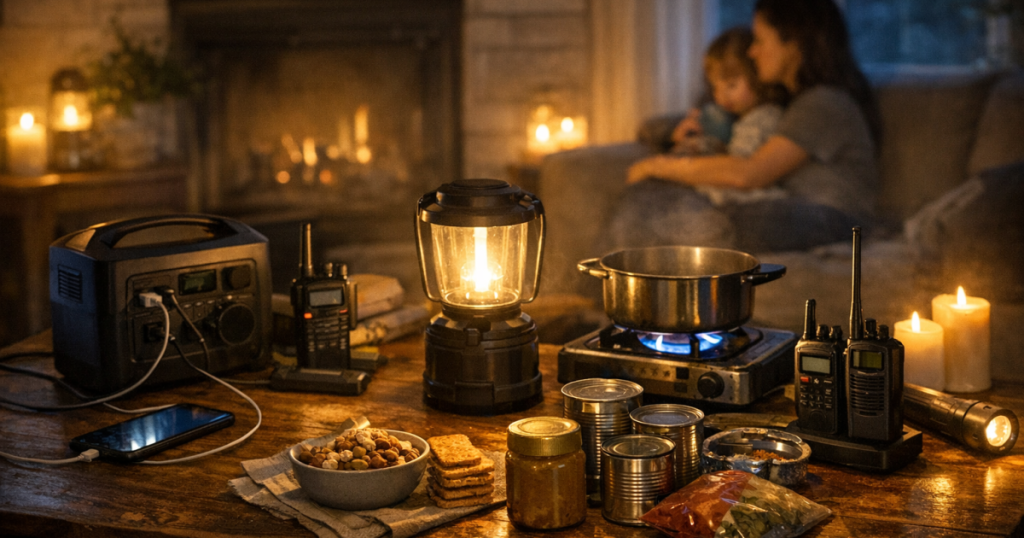
When the lights go out, the goal is not to run your normal house as if nothing happened. The goal is to keep people safe, preserve food, maintain basic communication, and make the night manageable. A good home blackout preparedness plan gives every device and decision a job before the storm, grid failure, or wildfire shutoff arrives.
Safety note: Transfer switch installation, interlock work, and any connection between a generator and household wiring should be carried out by a qualified electrician in compliance with local electrical codes, utility requirements, and manufacturer instructions.
At a glance
A reliable blackout plan has four parts: safe power, safe rooms, safe food decisions, and a way to receive and send information. Start with the people in your home, then list the devices that keep them safe and comfortable. Phones, medical devices, lights, the refrigerator, internet gear, and heating or cooling needs do not all have the same priority.
- Decide what must run in the first hour, overnight, and through a second day.
- Use battery power indoors and generators outdoors only.
- Keep refrigerator and freezer doors closed until you have a reason to open them.
- Charge phones, power banks, radios, and lanterns before high-risk weather.
- Write the plan down so it still works when Wi-Fi, apps, or memory fail.
For a broader room-by-room starting point, use this home outage planning checklist alongside the steps below.
Build the power plan around essentials, not wish lists
The easiest way to overspend on backup power is to begin with the question, “How do I power the house?” A better question is, “What needs power to keep this household safe for the next 12 to 24 hours?” That keeps the plan realistic, safer, and easier to test.
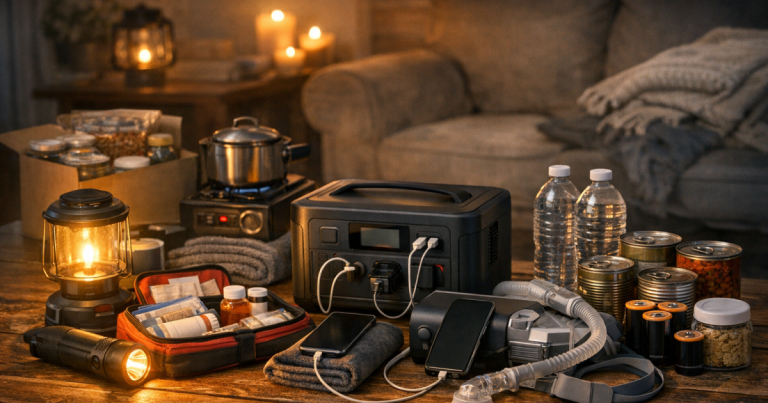
Make three short lists. The first is life and safety: CPAP equipment, medication refrigeration, phones, lights, and any mobility or monitoring devices. The second is comfort and continuity: router, laptop, fan, rechargeable lights, and refrigerator cycling. The third is optional: TV, extra appliances, coffee maker, gaming systems, and anything that can wait.
Watts are the speed at which a device uses power. Watt-hours are the fuel tank of a battery system. A small LED lamp may sip power, while a microwave or space heater can drain a battery quickly or overload a small system. Motors, pumps, and compressors can also need extra startup power. Before buying or relying on any backup setup, check the nameplate on the device, the manual for startup requirements, and the rated output of the battery, UPS, or generator.
If you are trying to decide what size system is enough without turning the project into a whole-home backup dream, work through how to size backup power without overspending. The goal is not the biggest number on the box; it is enough usable capacity for your actual blackout routine.
Use the right power source in the right place
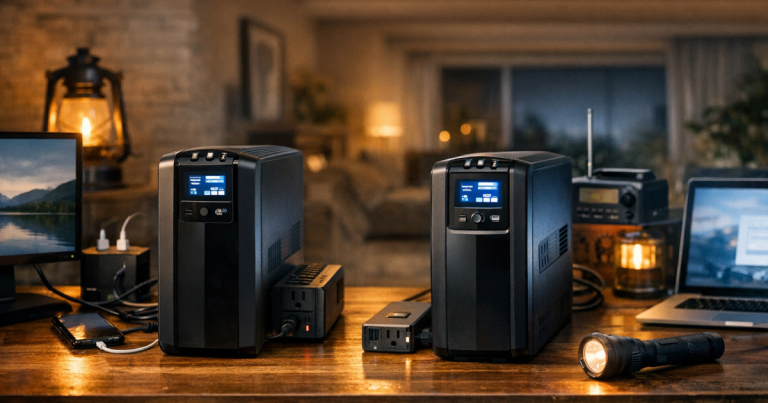
Different backup tools solve different problems. A UPS is useful for keeping a router, modem, desktop computer, or network gear from dropping instantly during a short outage. A portable power station can run small electronics, lights, some medical devices, and selected appliances if the load is within its limits. A generator can support higher loads and longer outages, but it adds fuel storage, noise, maintenance, and serious carbon monoxide risk.
A small inverter generator such as the Honda EU2200i is a familiar example of the kind of equipment many households look at for essential backup loads, but the model name alone does not tell you whether it fits your home. Verify output, fuel type, runtime expectations, cord requirements, maintenance steps, and whether your intended appliances are within the generator’s limits.
Never run a generator indoors, in a garage, on a porch, near open windows, or in any semi-enclosed space. Carbon monoxide can build up quickly and can move into living areas even when the generator is technically “outside.” Place generators well away from openings, follow the manufacturer’s distance guidance, use outdoor-rated cords sized for the load, and let the unit cool before refueling. For the full safety framework, keep this portable generator safety guide with your outage notes.
Make one safe room before trying to save every room
A blackout plan gets easier when you pick a primary room for the evening. Choose a room that is easy to light, has space for people to sit or sleep, and stays reasonably comfortable. In summer, that might be the lowest, shaded part of the home with battery fans. In winter, it may be an interior room where doors can be closed to reduce drafts. Do not use outdoor grills, camp stoves, generators, or unvented combustion heaters indoors for warmth or cooking.
Keep a small container in or near that room with rechargeable lanterns, headlamps, spare batteries if your devices use them, charging cables, a power bank, a printed contact list, medications for the night, and basic first aid supplies. The point is to avoid wandering through a dark house looking for one cable or one flashlight.
For overnight comfort, think in layers. Use low-level area lighting instead of bright lights in every room. Charge phones in shifts. Turn off unnecessary battery outputs when nobody is using them. If a device is medically important, give it priority over entertainment and keep its cables labeled.
Protect food with fewer openings and faster decisions
Food safety during a blackout is mostly about time, temperature, and restraint. The refrigerator and freezer are insulated boxes, but every door opening lets cold air escape. Before storm season, place appliance thermometers in the refrigerator and freezer so you are not guessing later.
As a general USDA rule, food in a refrigerator can stay at a safe temperature for about 4 hours if the door stays closed. A full freezer may hold temperature for about 48 hours, and a half-full freezer for about 24 hours, if it remains closed. These are estimates, not guarantees. Room temperature, appliance condition, how full the compartments are, and how often doors are opened all matter.
Set a household rule before the outage: one person manages the refrigerator. That person decides when to open it, what comes out, and when questionable food is discarded. Keep a cooler ready for items you plan to use first, but do not move food around repeatedly just to check on it.
- Eat perishable refrigerator food first if it is still cold and safe.
- Save pantry meals and shelf-stable foods for longer outages.
- Keep a manual can opener with the food kit.
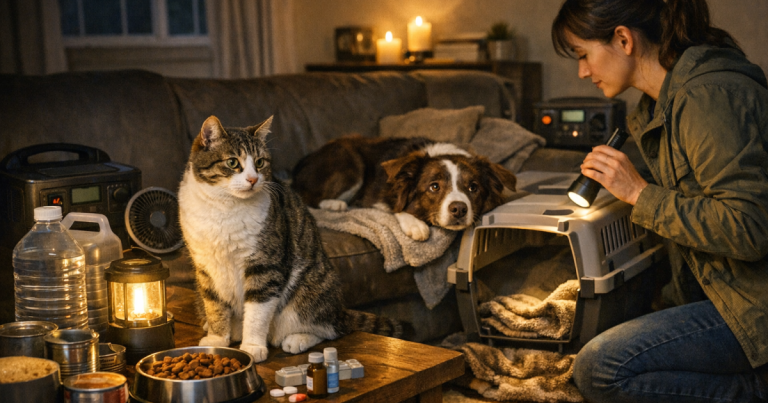
- Store drinking water for people, pets, formula needs, and medication use.
- When in doubt about spoiled food, throw it out rather than trying to rescue it.
Freeze-dried meals, canned soups, nut butters, crackers, shelf-stable milk, tuna packets, instant oatmeal, and electrolyte drinks can all reduce pressure on the refrigerator. Pick foods your household will actually eat, not just foods that look prepared on a shelf.
Keep communication simple and redundant
During a storm outage or wildfire shutoff, your phone may be your flashlight, map, news source, contact list, and family coordination tool. That is too much responsibility for one battery. Charge phones before expected weather, but also charge power banks, laptops, tablets, and any portable radios you rely on.
A NOAA weather radio adds a useful backup when cell service is overloaded or home internet is down. A model such as the Midland WR400 Deluxe NOAA Weather Alert Radio is the type of alert radio many households consider, but verify coverage, alert settings, power options, and setup steps for your area before depending on it.
Write down the contact numbers you would normally look up on a phone: family, neighbors, utility outage line, local emergency management, pharmacy, doctor, landlord, insurance company, and school or workplace contacts. Keep the paper copy in the same place as your chargers and radio.
Text messages often get through when voice calls struggle, so agree on short check-in messages before an outage. For example: “Safe at home,” “Need pickup,” “Power out but okay,” or “Going to backup location.” If your household includes kids, older adults, or anyone who may be away from home, choose one out-of-area contact who can relay updates.
Run a short blackout drill before you need it
A plan that has never been tested is still partly a guess. You do not need to shut off your main breaker for a full weekend. A one-hour evening drill can reveal most weak spots without turning preparation into a big production.
- Turn off nonessential lights and pretend the grid is down.
- Find your lanterns, cables, radio, and first aid supplies without using Wi-Fi search.
- Plug in the devices you expect to run and check for missing adapters.
- Confirm everyone knows where flashlights, shoes, and medications are kept.
- Practice the refrigerator rule: decide what would be opened and what would stay closed.
After the drill, fix the small annoyances immediately. Label charging cables. Move the power bank where people can find it. Replace weak flashlights. Print the contact list. Add pet food, spare glasses, baby supplies, or mobility items if your household needs them.
Different homes need different versions of the plan
Renters and apartment residents usually lean more heavily on batteries, UPS units, power banks, safe indoor lighting, shelf-stable food, and building communication. Generators are usually not practical or allowed in apartment settings, and they are never safe on balconies or near neighboring windows.
Suburban homeowners may combine a portable power station for indoor nighttime use with a properly placed generator for daytime refrigerator cycling or selected circuits through approved equipment. Rural households may need a longer fuel, water, well pump, septic, heating, and road-access plan. In every case, the plan should match the home you actually live in, not a generic emergency checklist.
Medical needs deserve extra attention. If someone uses a CPAP machine, refrigerated medication, oxygen equipment, powered mobility equipment, or home monitoring devices, contact the equipment provider or clinician for device-specific backup guidance. Register for utility medical baseline or priority notification programs where available, but do not rely on priority status as your only plan.
Questions people ask
How much backup power does a typical home need for a blackout?
There is no single number. A phone-and-light plan may need only small batteries, while a refrigerator, router, CPAP machine, and fans require more careful sizing. List your essential devices, check their wattage, and estimate runtime before choosing a backup setup.
Can I plug a generator into a wall outlet?
No. Backfeeding through a wall outlet is dangerous and can put utility workers, neighbors, and your home at risk. Use properly rated cords directly to appliances or have a qualified electrician install approved transfer equipment.
What should I do first when the power goes out?
Check that everyone is safe, turn off heat-producing appliances that may have been running, use flashlights instead of candles, report the outage if needed, and keep refrigerator and freezer doors closed while you assess how long the outage may last.
Is a portable power station safer than a generator?
For indoor use, yes, a battery power station avoids generator exhaust and fuel handling. It still has load limits, charging limits, and runtime limits, so it should be matched to specific devices rather than treated as unlimited backup power.
How often should I update my blackout plan?
Review it at least before storm season and whenever your household changes. New medication, a baby, a pet, remote work needs, or a different refrigerator can all change what “essential” means.
Final thoughts
A strong blackout plan is not dramatic. It is a set of calm decisions made early: what gets power, where people gather, how food is protected, and how the household communicates. Start with one evening of essentials, then build toward longer outages as budget, space, and risk allow.
The best test is simple: if the power failed tonight, could everyone find light, charge a phone, stay warm or cool enough, protect food, and avoid unsafe generator mistakes? If the answer is mostly yes, you are already ahead. If not, the next improvement is probably small, practical, and worth doing before the next outage.