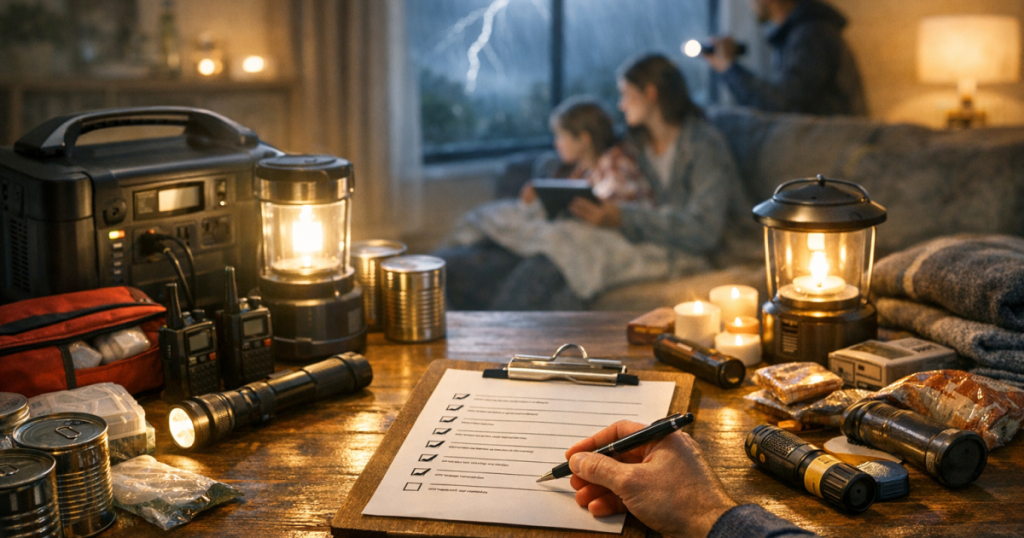
When a storm warning turns into flickering lights, the best plan is the one your household can follow without digging through drawers. A home outage planning checklist keeps the basics in order: people, communication, light, food, water, temperature, and safe backup power.
Generator transfer switches, interlock kits, and any connection to household wiring should be installed by a qualified electrician to comply with local electrical codes and safety requirements.
The short version
A solid outage plan is not a bunker project. It is a simple household routine that answers five questions before the power fails: how will everyone communicate, what must stay powered, what can be safely turned off, where are the supplies, and who checks on whom?
- Choose a family contact method before cell networks get crowded.
- Keep lighting in several rooms, not just one flashlight in a drawer.
- Decide which loads matter most: refrigerator, freezer, medical equipment, Wi-Fi, phones, lights, heat-related devices, or work gear.
- Store food, water, medications, batteries, and pet supplies where they are easy to reach in the dark.
- Use generators only outdoors, far from doors, windows, vents, garages, and enclosed spaces.
- Review the plan every season, especially before hurricane, wildfire, ice storm, or severe thunderstorm risk increases in your area.
Start with people, not equipment
The first part of any outage plan is knowing who needs help and what cannot be interrupted for long. A household with a baby, an older adult, refrigerated medication, a CPAP machine, or remote work obligations has different priorities than a household that only needs lights and phone charging for a few hours.
Write down the names, phone numbers, and key needs for everyone in the home. Include nearby relatives, neighbors, school contacts, work contacts, doctors, pharmacies, utility outage reporting numbers, and your local emergency management office. Keep a paper copy because a dead phone should not lock you out of your own plan.
Set one out-of-area contact who can receive updates if local calls are unreliable. Text messages often go through when voice calls struggle, but do not count on any one method. A printed plan on the refrigerator, in a hallway cabinet, or near your emergency bin can prevent confusion when the house is dark and everyone is tired.
For a deeper communication setup, including what to write down and how to divide responsibilities, see this guide to creating a household communication plan for blackouts.
Build your blackout supply zone
Pick one main place for outage supplies and keep it boringly consistent. A hallway closet, utility shelf, mudroom cabinet, or sturdy bin works better than scattering gear across the garage, kitchen, and bedrooms. Everyone old enough to help should know where it is.
Lighting
- Keep one easy-to-use flashlight or lantern for each main area: kitchen, bedrooms, bathrooms, stairways, and entry points.
- Use headlamps for hands-free tasks like checking a breaker panel, moving coolers, or helping children.
- Avoid relying on candles as your main light source because open flames add risk during an already disrupted situation.
- Recharge battery lanterns on a schedule, such as the first weekend of each month.
Water and food
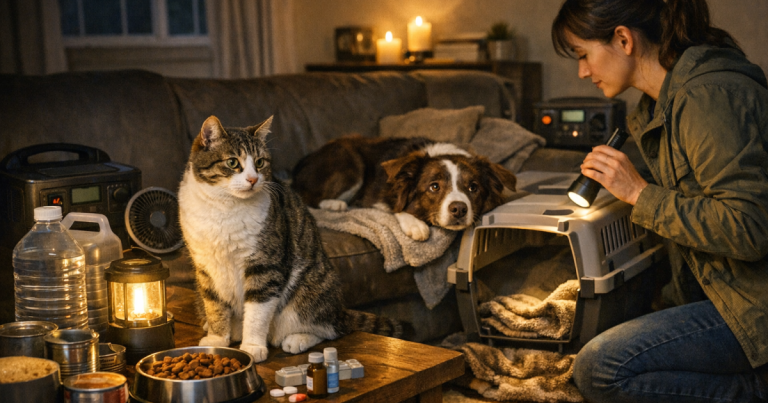
- Store drinking water for each person and pet, and rotate it on a schedule you will actually remember.
- Keep no-cook or low-cook food that your household already eats.
- Have a manual can opener if any shelf-stable food requires one.
- Put a thermometer in the refrigerator and freezer so you can make safer food decisions after a long outage.
- Plan cooler space for high-priority refrigerated items, especially medications or baby supplies.
Health, comfort, and daily routines
- Keep at least several days of critical medications on hand when possible.
- Store spare glasses, basic first aid supplies, hygiene items, diapers, pet food, and comfort items for children.
- Know how your home stays warm or cool without grid power. Some heating and cooling systems need electricity even if they use gas or another fuel.
- Have weather-appropriate blankets, battery fans, or cooling towels depending on your region and season.
Decide what actually needs power
Backup power planning gets easier when you stop trying to power everything. Most households need a priority list, not a whole-home promise. Start with the loads that protect health, food, communication, and basic comfort.
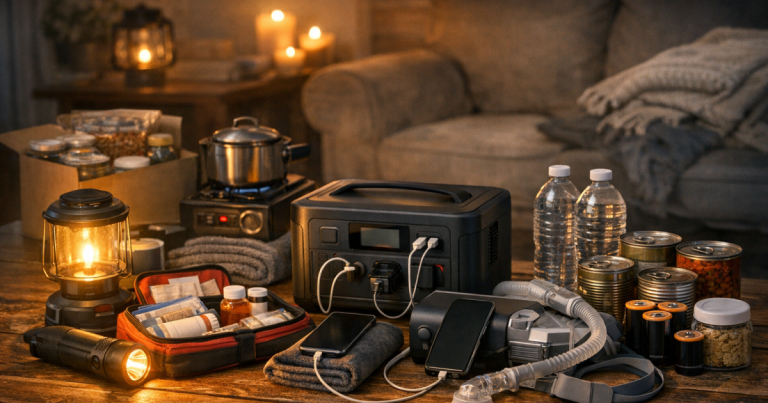
- Must run: medical devices, phone charging, essential lights, refrigerator or freezer if the outage lasts long enough.
- Helpful: Wi-Fi router and modem, laptop, battery fan, rechargeable radio, small kitchen devices used briefly.
- Usually optional: entertainment screens, laundry, dishwasher, large electric heating appliances, and anything with a heavy startup load unless your system is designed for it.
Write down the wattage of critical devices from their labels or manuals. Some appliances, especially refrigerators, freezers, sump pumps, and window air conditioners, may use more power when starting than when running. Runtime also changes based on battery capacity, fuel supply, temperature, appliance cycling, and how many items are connected at once.
If you are unsure how to think about watts, starting loads, and realistic backup capacity, use this explainer on what size generator you need for a blackout as a planning reference before you buy or connect anything.
Match the plan to your home type
A renter in a third-floor apartment, a condo owner with balcony restrictions, and a homeowner with a detached garage do not have the same safe choices. The right outage plan respects your lease, building rules, storage space, noise limits, and ventilation constraints.
- Apartment or condo: prioritize portable batteries, UPS units for networking gear, rechargeable lighting, power banks, and a clear communication plan. Fuel-burning generators are generally not suitable for indoor, balcony, or enclosed use.
- Suburban house: consider a layered setup with small batteries for quiet indoor essentials and an outdoor generator only if you can place it safely away from openings.
- Rural home: plan for longer restoration times, well pump needs, fuel access, driveway clearing, and communication gaps.
- Wildfire shutoff area: focus on early charging, clean indoor air strategies, refrigerator decisions, and backup communication before the shutoff begins.
For a broader look at how housing type changes the plan, the guide to backup power options for renters, condos, and houses lays out the practical differences without assuming every home can use the same setup.
Make a refrigerator and freezer decision before the outage
Food safety is one of the most common stress points during a blackout. Decide in advance when you will keep doors closed, when you will move items to a cooler, and when you will power the refrigerator or freezer if you have safe backup power available.
- Group items before storm season so the refrigerator is not packed randomly.
- Freeze water bottles or gel packs ahead of forecasted storms to help keep cold storage stable.
- Keep appliance thermometers visible and easy to read.
- Know which foods your household should use first if the outage is short.
- Do not taste questionable food to decide whether it is safe.
Opening the refrigerator repeatedly can shorten the useful cold window. Assign one person to manage food access if the outage is likely to last more than a few hours. A written list on the fridge door can help everyone avoid browsing with the door open.
Prepare for internet, phones, and alerts
During a grid failure, information is part of comfort. You need weather alerts, utility updates, school or workplace messages, and a way to check on family. Charge phones before expected storms and keep a small charging kit where everyone can find it.
- Keep short charging cables for each phone type in the outage bin.
- Use airplane mode or low-power mode when service is weak to reduce battery drain.
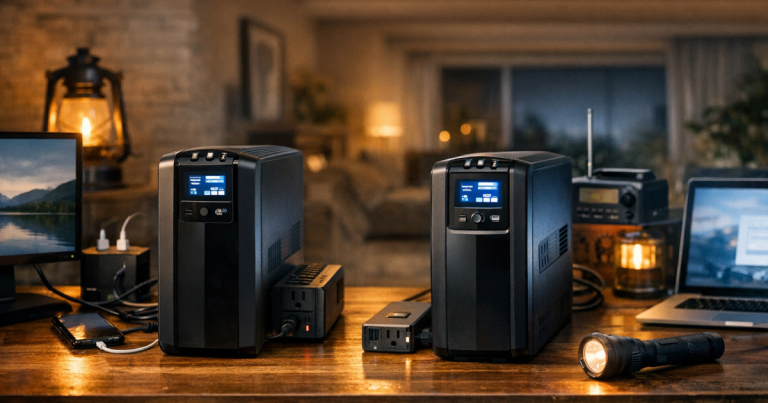
- Consider a dedicated battery or UPS for the modem and router if staying online is important for work, school, or updates.
- Keep a NOAA weather radio or battery radio available so you are not dependent only on cell service.
- Write down local radio stations that carry emergency information.
Do not wait until the lights go out to test whether your modem, router, and internet service continue working on backup power. Some neighborhoods lose upstream equipment during an outage even if your home network is powered, so have a backup information source.
Use generators and fuel with a clear routine
Generators can be very useful during longer outages, but they require disciplined setup. Run fuel-burning generators outdoors only, with plenty of distance from the home and neighboring openings. Never run one in a garage, basement, shed, porch, crawl space, or near open windows. Carbon monoxide can build up quickly and without warning.
- Install and maintain carbon monoxide alarms on each level of the home and near sleeping areas.
- Use outdoor-rated cords sized for the load and inspect them before storm season.
- Keep cords away from standing water, pinch points, and trip hazards.
- Let the generator cool before refueling.
- Store fuel in approved containers, away from living spaces, ignition sources, and direct household traffic.
- Follow the generator manual for maintenance, oil checks, grounding guidance, and load limits.
If your plan includes connecting a generator to selected home circuits, use a properly installed transfer switch or interlock setup. Backfeeding through a dryer outlet or other improvised connection is dangerous and can put utility workers, neighbors, and your own home at risk.
Assign jobs before the weather turns
A checklist works best when each task has an owner. You do not need a formal command center. You need a calm division of labor that fits your household.
- One person checks weather alerts and utility updates.
- One person charges phones, power banks, lanterns, and radios.
- One person handles food and refrigerator decisions.
- One person gathers pets, medications, and comfort items.
- One person checks on nearby neighbors who may need help.
- Everyone knows where shoes, flashlights, keys, and important documents are located.
For children, keep tasks simple: bring the flashlight from the bedroom, stay away from cords, keep the refrigerator closed, or help collect pet supplies. Clear jobs reduce anxiety because everyone knows what to do next.
Seasonal maintenance that keeps the plan useful
An outage plan that is never checked quietly becomes a box of dead batteries and expired food. Add a short review to your seasonal home routine.
- Test flashlights, lanterns, radios, and power banks.
- Charge portable batteries and confirm cables still match your devices.
- Replace expired food, medication, and first aid items.
- Check generator oil, cords, fuel condition, and startup instructions if you own one.
- Review school, work, neighbor, and medical contact details.
- Walk through the plan after moving furniture, adding appliances, changing internet equipment, or bringing a new family member or pet into the home.
Do a five-minute dark-room drill once in a while. Turn off the lights, ask someone to find the outage bin, and see what slows them down. The goal is not perfection. It is finding small problems while the power is still on.
FAQ
How much backup power does a typical home need for an outage?
There is no single number because it depends on what you plan to run. A phone-and-lighting plan may need only small batteries, while a refrigerator, freezer, medical device, or well pump requires more careful wattage and runtime planning.
Should I plan for 12 hours, 24 hours, or several days?
Start with 24 hours for basic comfort, then expand if your area has hurricanes, ice storms, wildfire shutoffs, rural service delays, or frequent multi-day outages. Longer plans need more water, food, charging capacity, and fuel discipline.
Can I use a portable generator during a storm?
Only if it can be operated outdoors in a safe, dry, well-ventilated location according to the manual. Do not run a generator indoors, in a garage, on a covered porch, or where exhaust can enter the home.
What should renters prioritize first?
Renters should focus on communication, lighting, phone charging, medication needs, food safety, and building-safe backup power such as portable batteries or UPS units. Fuel-burning equipment is usually a poor fit for apartments and shared buildings.
How often should I update my plan?
Review it at least twice a year and before major storm seasons in your region. Update it whenever you change appliances, medical needs, internet equipment, family routines, or fuel storage.
What to remember
The best home outage planning checklist is the one your household can actually follow when the lights fail. Keep it visible, realistic, and tied to your home: who needs help, what needs power, where supplies are stored, how food stays safe, and what routines keep everyone calm. A little work before storm season can turn a stressful blackout into a managed inconvenience.