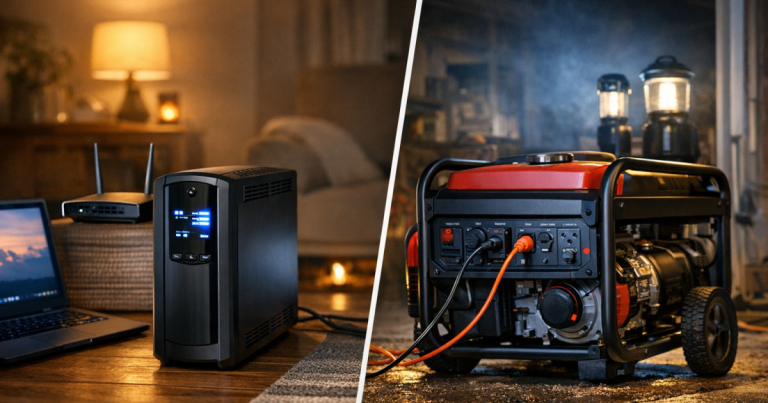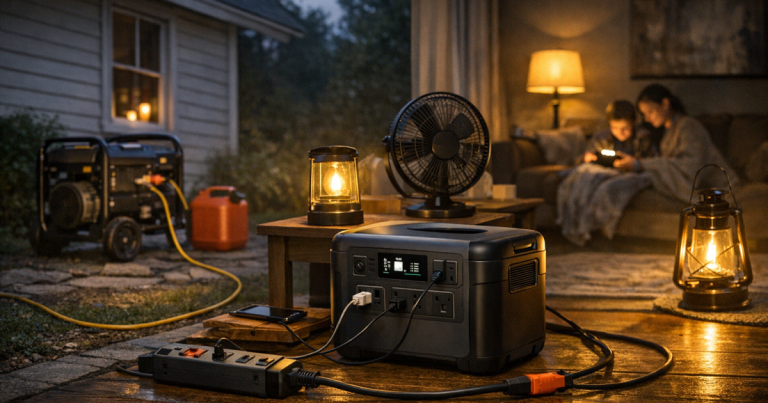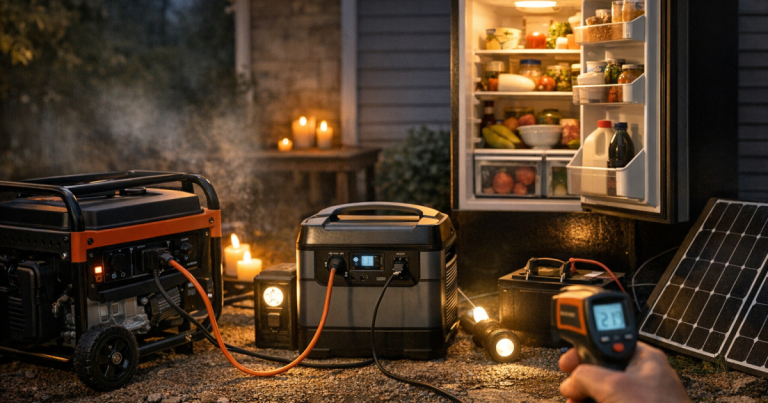
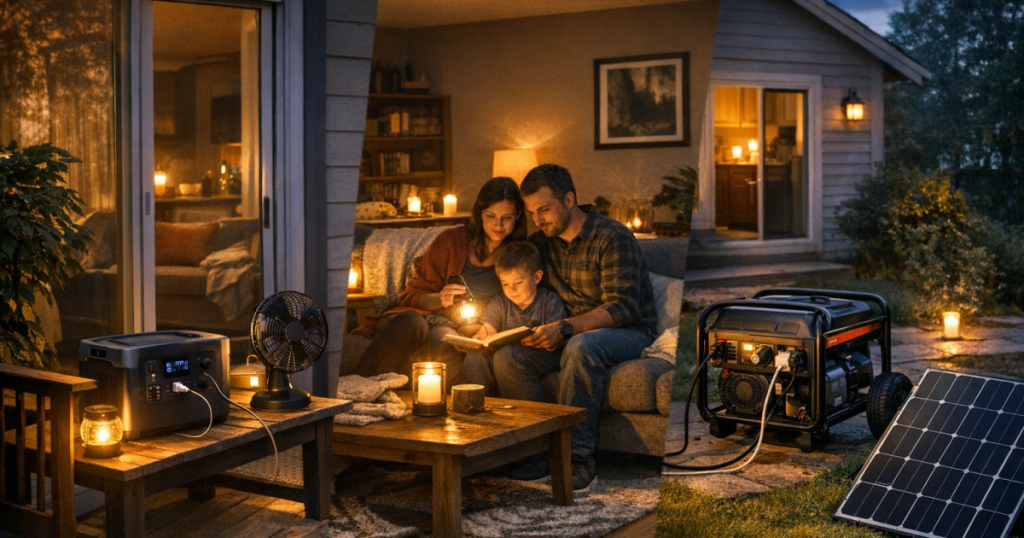
A blackout feels different depending on where you live. A renter in a third-floor apartment needs quiet indoor power for phones, lights, and maybe a router. A condo owner has building rules, shared walls, and limited outdoor space. A house may have room for a generator, fuel storage, and a transfer switch. For backup power for renters, condos, and houses, the real goal is not powering everything; it is keeping the right things running safely for the length of outage you are most likely to face.
Panel connections, transfer switches, interlocks, and any wiring that connects a generator or battery system to household circuits should be carried out by a qualified electrician to meet the National Electrical Code, local code requirements, and utility safety rules.
At a glance
- Renters: usually do best with portable power stations, UPS units, USB battery banks, rechargeable lanterns, and a clear charging plan.
- Condos and townhomes: often need a battery-first setup, plus careful attention to HOA rules, balcony restrictions, parking layouts, and shared ventilation.
- Single-family houses: have the most flexibility, including inverter generators, larger portable generators, essential-circuit backup, and solar recharging.
- Medical, refrigeration, internet, and communication needs should be planned before comfort loads like TVs, fans, and small kitchen appliances.
- Fuel-powered generators must run outdoors only, far from doors, windows, vents, garages, and enclosed spaces.
Start with the outage you are planning for
The right system depends less on the building type and more on the job. A four-hour utility repair, a 12-hour storm outage, and a three-day grid failure call for different decisions.
For a short outage, a simple setup may cover phones, lights, a router, a laptop, and a small fan. For a full day, you may need to rotate power between a refrigerator, freezer, internet gear, and essential devices. For a multi-day outage, recharging becomes the main challenge, whether that means solar panels, a vehicle charger, a safe generator setup, or access to another powered location.
It helps to write down your must-run list in plain language:
- Phones and communication
- Internet router and modem, if service remains available
- Refrigerator or freezer
- Medical devices and medication storage
- Basic lighting
- Fans, blankets, or other temperature-management tools
- Work laptop or school device
Then look at the label or manual for each item and note its watts. Watts are the rate of power use. Watt-hours describe stored energy. A 500-watt load can drain a battery much faster than a 50-watt load, even if both plug into the same outlet style.
Renters: quiet, indoor-safe, and landlord-friendly
Most apartment renters should assume fuel-powered generators are off the table. They cannot be used indoors, in hallways, in garages, on balconies, or near windows. Even a small inverter generator can create carbon monoxide danger and noise problems in dense housing.
That does not mean renters are stuck. A practical renter setup usually combines several smaller pieces:
- A UPS for internet gear: A desktop-style unit such as the APC Back-UPS Pro 1500VA can help bridge short outages for a router, modem, or computer setup, depending on the load. Verify outlet layout, watt rating, battery condition, and runtime estimates before relying on it.
- A portable power station: This can run phones, lights, laptops, fans, and some small appliances within its wattage limit. Check continuous watts, surge capacity, battery capacity, recharge time, and whether it can safely handle your device.
- USB battery banks: These are useful for phones, headlamps, radios, and tablets. Keep them charged before storm season.
- Rechargeable lighting: Lanterns and headlamps are safer and easier to manage than candles during a long outage.
If internet access is critical for remote work, school, or staying in touch with family, a small UPS or power station can be part of a larger plan. The details matter: some routers and modems use modest power, while full network cabinets and desktop computers use much more. For a deeper setup path, see how to set up backup power for Wi-Fi during outages.
Condos and townhomes: rules matter as much as wattage
Condo owners often have more control than renters, but less freedom than detached-home owners. The association may restrict fuel storage, generator noise, balcony use, exterior modifications, cords in common areas, and anything that affects shared walls or ventilation.
A battery-first approach is usually the simplest starting point. A portable power station can sit indoors, run quietly, and avoid exhaust. It can support communication, lights, laptops, and short refrigerator runs if its rating and capacity match the load. Runtime for a refrigerator is never guaranteed from capacity alone because fridges cycle on and off, starting watts can be higher than running watts, and room temperature matters.
Condos with garages, patios, or driveways still need caution. A generator may be physically possible but not allowed by HOA rules or safe given nearby windows and neighboring units. Never run a generator inside an attached garage, even with the door open. Exhaust can collect and move into living spaces.
If your condo has an accessible electrical panel and you want selected circuits powered during outages, that becomes an electrical planning project rather than a cord-and-plug setup. Confirm ownership rules, association approvals, permit requirements, and utility guidance before making changes.
Houses: more options, more responsibility
Single-family houses offer the widest range of backup power options because there is usually more outdoor space, better control over fuel storage, and more flexibility for electrical work. The trade-off is that the choices can get expensive or unsafe if they are not scoped carefully.
A modest house plan might use a portable power station for indoor essentials and an inverter generator outdoors for periodic refrigerator, freezer, and battery recharging. A compact inverter generator such as the Honda EU2200i is one recognizable example in this category, but any generator should be evaluated by rated output, fuel type, noise expectations, maintenance needs, outlet configuration, and safe placement distance.
Larger portable generators can support more loads, but they also bring louder operation, higher fuel use, heavier cords, and more serious connection questions. Running extension cords through doors and windows may be workable for a few plug-in items, but it is not a clean way to power built-in systems. For furnaces, well pumps, hardwired sump pumps, and selected household circuits, a transfer switch or approved interlock is the safer planning path when installed correctly.
Many homeowners discover that essential-circuit backup is more realistic than whole-home backup. Keeping the refrigerator, freezer, sump pump, a few lights, the router, and key outlets running can be far more practical than trying to power central air conditioning, electric ranges, clothes dryers, and every room as if the grid were still on. The planning differences are covered more fully in whole-home vs essential-circuit backup power basics.
Battery power, generator power, and solar charging
Batteries and generators solve different problems. Batteries are quiet, indoor-safe, and easy to use at night. Generators provide ongoing power as long as they are safely operated and refueled, but they require outdoor space, maintenance, fuel planning, and carbon monoxide discipline.
Portable power stations
A portable power station is often the most renter-friendly and condo-friendly choice. It can be stored inside, charged from a wall outlet before bad weather, and used without exhaust. It is well suited for phones, laptops, lights, routers, fans, and carefully matched appliance loads.
The limitation is stored energy. A battery that feels large for phones may be modest for a refrigerator or medical device. Look at watt-hours, continuous output, surge output, recharge time, battery chemistry, warranty terms, and the manufacturer’s guidance for your intended use.
UPS units
A UPS is designed to keep electronics running through brief interruptions and give equipment time to shut down properly. It can be excellent for routers, modems, network gear, and desktop computers, but it is not a substitute for a large power station or generator during a long outage.
Generators
Generators are strongest when you need repeatable power for longer outages. Inverter generators are often quieter and cleaner-sine-wave oriented than many conventional portable generators, but every model has different output, fuel use, noise, and maintenance requirements. Check the manual, calculate loads, use outdoor-rated cords, and install carbon monoxide alarms in the home.
Solar recharging
Solar panels can help stretch a battery setup, especially during multi-day outages, but solar is weather-dependent. Shade, clouds, season, panel angle, and charge-controller limits all affect results. Solar charging is best treated as a replenishment tool, not a guarantee that every appliance will keep running indefinitely. If you are deciding how battery systems and solar language differ, read portable power stations vs solar generators for home backup.
Match the setup to the building
For renters, the safest baseline is indoor battery power plus a plan for charging devices before storms. Avoid anything that creates exhaust, fumes, open flame, or cords across shared areas.
For condos, start with the same indoor-safe battery plan, then add building-specific checks. Ask how outages affect elevators, garage doors, common-area lighting, water pressure, and internet service. A good private backup setup cannot fix every shared-building issue, so communication with property management matters.
For houses, divide your plan into plug-in loads and circuit loads. Plug-in loads can often be handled with batteries, UPS units, or properly rated extension cords from an outdoor generator. Circuit loads need approved electrical equipment and professional installation.
Across all home types, avoid three common mistakes: buying capacity before listing loads, assuming advertised runtime applies to your exact devices, and waiting until the lights go out to test the setup.
Medical, food, and communication needs come first
Backup power planning should start with the consequences of losing power. A warm bedroom is uncomfortable. A dead phone can be isolating. A failed medical device or spoiled medication can become urgent.
If someone in the household uses a CPAP machine, oxygen equipment, mobility device charger, powered lift, refrigerated medication, or other essential device, create a dedicated plan around that item. Check the device label, talk with the equipment provider about power requirements, and plan for more runtime than the minimum estimate. For that specific situation, use how to plan backup power for home medical devices as a next step.
Food safety is another practical priority. A refrigerator does not need constant power every minute of an outage, but it does need a realistic plan. Keep doors closed, use appliance thermometers, and avoid opening the freezer repeatedly. If you plan to run a refrigerator from a power station or generator, test the setup in normal conditions and confirm that starting watts do not overload the unit.
Helpful questions
What is the safest option for an apartment?
Indoor battery-based power is usually the safest apartment approach: USB battery banks, rechargeable lights, a UPS for network gear, and a portable power station sized for essential devices. Fuel-powered generators should not be used on balconies, indoors, in garages, or in shared corridors.
Can a condo owner use a portable generator?
Sometimes, but only if the building layout, HOA rules, local restrictions, and safe outdoor placement all allow it. Shared ventilation, nearby windows, parking areas, and noise rules can make generator use impractical even when the owner has some outdoor space.
How much power does a house really need during an outage?
Most homes do not need whole-home power to stay safe and functional. A focused plan for refrigeration, lights, communication, sump pump, medical needs, and a few outlets is usually more manageable than trying to run every appliance.
Should I buy a battery or a generator first?
Start with the outage length and your housing limits. Renters and many condo owners usually benefit from batteries first. Detached homes with safe outdoor operating space may combine batteries for nighttime essentials with a generator for longer outages and recharging.
Can solar panels make a renter energy independent during a blackout?
Small solar panels can help recharge a battery, but they are limited by sun, window access, panel placement, and battery input limits. Treat solar as a useful extender, not a complete replacement for a charged battery plan.
What to remember
Good blackout planning is not about building the biggest system. It is about matching the power source to the home you actually live in, the rules you must follow, and the devices that matter most. Renters usually need quiet indoor power. Condo owners need battery practicality plus building-rule awareness. Homeowners can add generators and circuit-level backup, but only with safe outdoor operation and proper electrical work.
Once the essentials are covered, test the setup on a normal day. Charge the batteries, plug in the router, run the fridge for a controlled trial if your equipment is rated for it, label cords, and write down what worked. A small, tested plan beats an oversized system nobody has practiced using when the grid goes down.