When a blackout affects breathing equipment, refrigerated medication, mobility gear, or caregiver communication, the goal is not to power the whole house. The safer approach is to plan backup power for medical devices around the exact equipment, the expected outage length, and a simple order of priorities.
Electrical work for transfer switches, hardwired circuits, or generator connections that may serve medical equipment should be carried out by a qualified electrician to comply with the National Electrical Code, manufacturer instructions, and local requirements. Backup plans for prescribed life-support or respiratory equipment should be reviewed with the prescribing clinician or durable medical equipment provider so the plan matches the device instructions and the user’s medical needs.
What to know first
- Start with the device instructions, not a guess based on similar equipment.
- List every device that must run, how long it must run, and whether it can be paused safely.
- Use layered backup: device battery, small electronics backup, portable power station, and generator only where appropriate.
- Test the setup before storm season or planned utility shutoffs, not during the outage.
- Keep a written plan that another adult, neighbor, or caregiver can follow.
Step 1: List every medical need that depends on electricity
Make a household list before choosing any power source. Include the device name, model, power supply label, hours of use per day, and whether the device is continuous, overnight-only, or occasional. The goal of backup power for medical devices is to preserve the essentials with the least confusion during a stressful outage.
Common home items to include are CPAP or BiPAP machines, oxygen concentrators, nebulizers, suction machines, feeding pumps, powered recliners or adjustable beds, lift equipment, refrigerated medication, battery chargers for mobility devices, and phones used to reach caregivers. Also list non-medical support items that protect the plan, such as a router, cell phone, lamp, thermometer, and weather radio.
Separate devices into three groups: cannot stop, can pause briefly, and comfort or convenience. A prescribed oxygen device or ventilator is not in the same category as a laptop, television, or extra room lighting. If you need help ranking household loads, the same practical method used to decide which appliances get backup power first also works well for medical planning.
Step 2: Find the real power requirement
Do not size backup power from memory. Look at the device power adapter, the user manual, or the manufacturer’s support information. You may see watts directly, or you may see volts and amps. As a rough electrical calculation, watts equal volts multiplied by amps, but medical-device planning should still be checked against the manufacturer’s instructions.
Some devices draw more power at startup or when an accessory is used. A CPAP with heated humidification, for example, may use more energy than the same machine with comfort features turned down. An oxygen concentrator may have a higher continuous draw than many people expect. A refrigerator for medication cycles on and off rather than drawing one fixed amount all day. These details matter because runtime estimates are only as good as the load estimate behind them.
For non-critical testing, a plug-in meter such as the P3 Kill A Watt Electricity Usage Monitor can help you observe how much power a household item uses over time. Do not interrupt prescribed therapy, bypass medical instructions, or rely on a casual test as proof that a setup is medically adequate.
Step 3: Convert the need into runtime
Runtime planning is easiest when you think in watt-hours. If a device uses 60 watts and must run for 8 hours, that is 480 watt-hours before losses. Real-world runtime is usually lower than the label capacity of a battery because inverters, power supplies, heat, age, and reserve margins all reduce usable energy.
Build in a margin instead of running a battery down to zero. For example, if a nighttime device appears to need 500 watt-hours, a small battery with exactly 500 watt-hours on the box is too tight for a dependable plan. You want enough room for conversion losses, a longer-than-normal night, and communication devices.
If you are using a portable power station, understand the difference between watts and watt-hours. Watts describe how much power the unit can deliver at one time. Watt-hours describe stored energy. A unit can have enough stored energy but still be unsuitable if it cannot safely support the device’s running or startup demand. For a deeper plain-English sizing walk-through, use the portable power station capacity guide as a next step.
Step 4: Build a layered power plan
The most reliable household plan usually has layers rather than one large answer. First, use any manufacturer-approved internal battery or external battery option for the device. These are often the cleanest choice because they are designed around the equipment’s power requirements. Verify runtime, charging time, storage instructions, and whether the device can operate while charging.
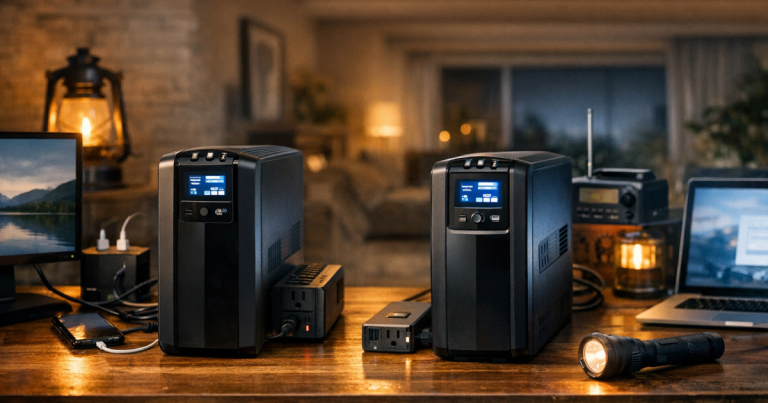
Second, consider short-duration backup for electronics that help the medical plan work. A UPS such as the APC Back-UPS Pro 1500VA can be useful for brief outages affecting a router, modem, or desktop equipment, but do not assume any UPS is suitable for a medical device. Check output type, load limits, runtime, alarms, and the device manufacturer’s guidance.
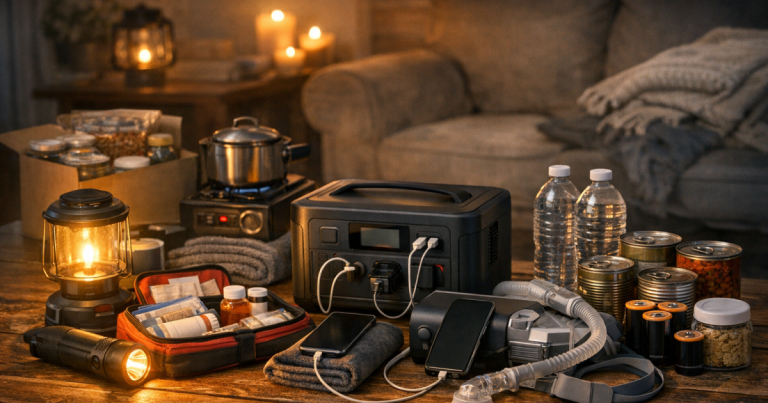
Third, use a portable power station for longer runtime where the device instructions allow it. This can be a good fit for renters, bedrooms, quiet overnight use, and households that want indoor battery backup without fuel. Confirm that the unit supports the required outlet type, continuous wattage, startup demand, and recharge method.
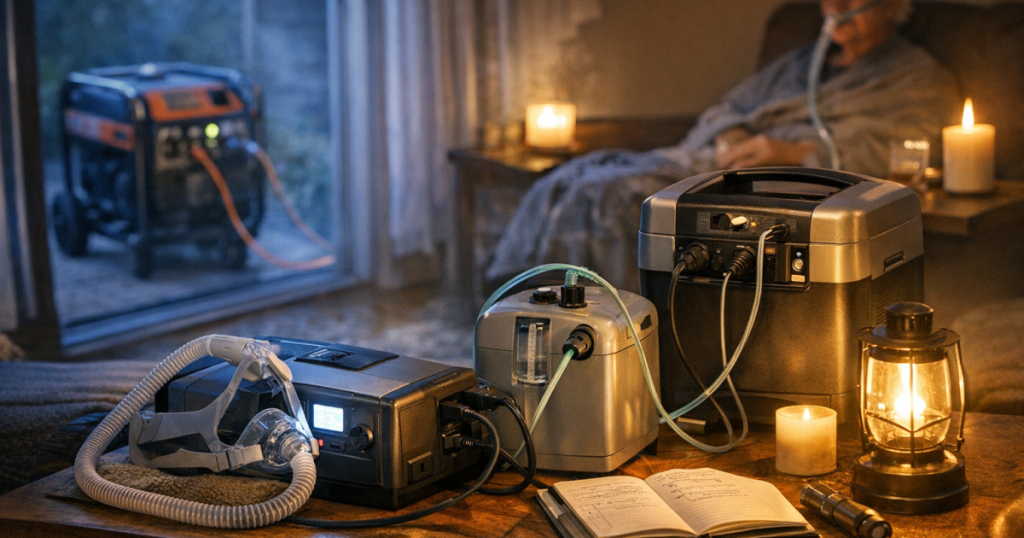
Fourth, consider a portable generator for multi-day outages or higher household loads. Generators must run outdoors, far from doors, windows, vents, garages, and enclosed spaces. Use working carbon monoxide alarms, store fuel safely, and never backfeed a home through a dryer outlet or other unsafe connection.
Step 5: Plan recharging before the first battery is empty
A one-night battery plan can fail on the second day if there is no recharge method. Decide how each battery will be recharged during a 12-hour, 24-hour, and 3-day outage. That may mean charging from a generator during safe daytime hours, using a vehicle only with proper ventilation and fuel planning, or pairing a compatible solar panel with a portable power station.
Solar can help, but it is not a guaranteed medical-power source by itself. Weather, shade, panel placement, season, and charging limits all affect the result. Treat solar as a way to stretch stored energy, not as the only layer for a continuous medical need. For longer outages, the safest plan is usually a mix of stored energy, a recharge schedule, and a backup location if power cannot be restored in time.
If you expect outages lasting more than a day, map out your charging sequence in advance. The household approach in recharging a portable power station during a multi-day outage is especially useful when medical devices, phones, and refrigeration all compete for limited energy.
Step 6: Handle refrigerated medication carefully
Medication storage deserves its own line in the plan. Write down the required storage range from the prescription label, pharmacy instructions, or manufacturer information. Use a refrigerator thermometer so you know the actual temperature, not just whether the appliance has power.
During an outage, keep the refrigerator closed as much as possible. If medication must stay within a narrow range, ask the pharmacist or prescribing clinician how long it can safely be outside the ideal range and what to do if the temperature is uncertain. Do not rely on guesswork for insulin, biologics, or other temperature-sensitive medication.
A small, clearly labeled cooler can be useful as a transfer container if you need to relocate medication, but ice placement matters. Some medications should not freeze. Keep written instructions with the medication so a caregiver can help without searching for details during an outage.
Step 7: Test the plan on an ordinary day
Run a calm, supervised test when everyone is healthy and the weather is normal. Charge the batteries fully, plug in the approved devices, and record how long the setup actually runs under normal use. Stop the test before the battery is exhausted so you preserve a reserve and avoid unnecessary risk.
During the test, listen for alarms, check whether the power station fan is disruptive overnight, confirm that cords do not create trip hazards, and make sure the display is easy to read in low light. If the setup includes a generator, practice the outdoor placement, cord routing, refueling timing, and shutdown steps without connecting essential medical loads for the first run.
Place a laminated or printed checklist near the equipment. Include device priorities, plug order, battery locations, charging schedule, clinician or DME contact numbers, utility outage number, pharmacy number, and a nearby backup location such as a family member’s home, hotel, cooling center, or medical facility if applicable.
Step 8: Add communication and utility planning
Power is only one part of the medical outage plan. Keep phones charged, maintain a paper contact list, and make sure another adult knows where the equipment and instructions are stored. If cell service is unreliable during storms or wildfire shutoffs, decide how you will receive alerts and contact help.
Many US utilities offer medical needs, life-support, or critical care account notifications. These programs may provide advance notice or account flagging, but they do not guarantee uninterrupted power or faster restoration. Treat them as one support layer, not the whole plan.
Local emergency management offices, fire departments, senior services, and healthcare providers may also have guidance for residents who depend on powered medical equipment. Registering for appropriate alerts and knowing where to go before the outage begins can matter as much as another battery.
Safety checks before you rely on the setup
- Keep generators outside and well away from openings; never run one in a garage, porch, basement, shed, or attached carport.
- Use heavy-duty cords rated for the load and environment, and keep them out of standing water.
- Do not overload a power strip or battery inverter with multiple high-draw devices.
- Label the outlets or cords used for medical loads so no one unplugs them by mistake.
- Keep flashlights or lanterns near the equipment so nighttime changes do not happen in the dark.
- Store fuel according to local rules and never refuel a hot generator.
- Review the plan after any device change, prescription change, move, or major household electrical update.
Helpful questions
Can I plug a CPAP into any portable power station?
Not automatically. Check the CPAP manufacturer’s guidance, the power station’s continuous output, outlet type, waveform, runtime estimate, and whether humidification changes the power draw.
Is a generator safer than a battery for medical devices?
Each has a role. Batteries are quiet and indoor-safe when used correctly, while generators can recharge batteries and support longer outages but require outdoor operation, fuel, and strict carbon monoxide precautions.
How much runtime should I plan for?
Start with the longest outage you reasonably expect, then add a reserve. Many households plan at least overnight coverage for critical devices and a recharge plan for 24 hours or more.
Should I tell my utility company about a medical device?
Yes, ask about medical alert or critical care account programs. These programs can help with notifications, but they should not replace your own backup power and evacuation plan.
What if my equipment cannot safely run on consumer backup power?
Work with the prescribing clinician, durable medical equipment provider, and local emergency resources to identify approved backup options and a location you can use if home power is not dependable.
Why it matters
A good medical outage plan is specific, written down, and tested before it is needed. Start with the device instructions, size power around real use, keep a recharge path ready, and make sure another person can follow the plan. You do not need to turn your home into a power plant; you need a dependable path for the devices and routines that protect health during a blackout.