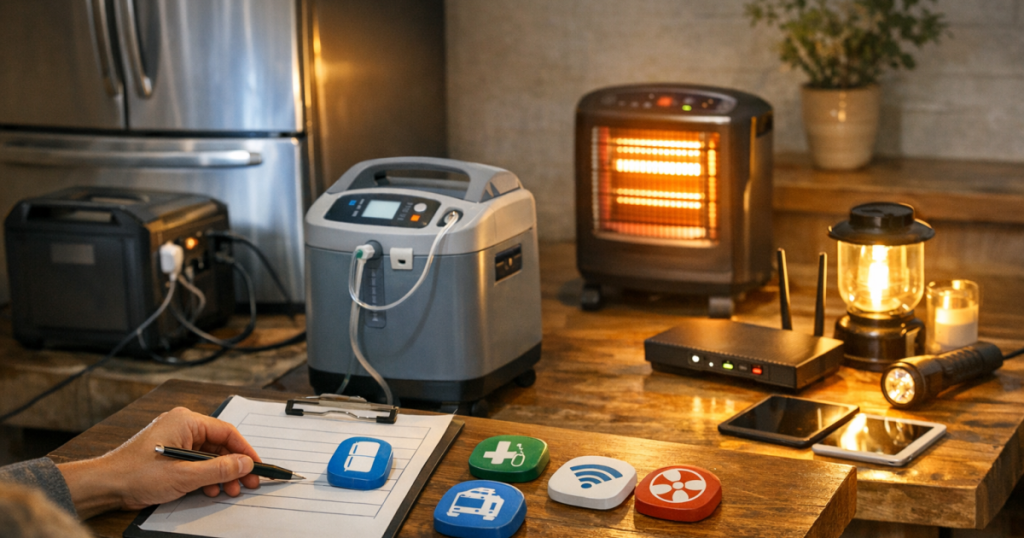
When the power fails, the hard part is not naming every appliance you own. Setting backup power priorities before the lights go out keeps your plan realistic, safer, and easier to follow under stress.
The goal is simple: keep people safe, protect food and medicine, stay reachable, and avoid wasting limited battery capacity or generator fuel on things that can wait.
Generator connections, transfer switches, interlock kits, and hardwired appliance circuits should be handled by a qualified electrician to comply with local electrical codes, manufacturer instructions, and safety requirements.
Start with the appliances that protect people
Put health and safety needs at the top of the list. That may include medical equipment, mobility equipment chargers, a refrigerator used for temperature-sensitive medication, basic lighting, and a phone or weather radio. For some households, it may also include a well pump, sump pump, oxygen concentrator, or a way to keep one room at a safe temperature.
Do not treat every appliance as equal. A microwave, television, dishwasher, clothes dryer, and spare-room lamp may all be useful in normal life, but they rarely deserve the first share of limited outage power. The more honest you are about the difference between necessary and convenient, the longer your backup system can support the things that matter.
If you want a deeper worksheet-style approach, use this guide to decide which devices matter in a blackout before you size batteries, cords, fuel, or generator circuits.
A simple priority order for most homes
Every household is different, but this order works well as a starting point:
- Life safety and medical needs: Medical devices, medication cooling, essential mobility equipment, and safe lighting for moving around at night.
- Heat, cooling, or water needs: A furnace blower, boiler controls, sump pump, well pump, or a safe room cooling plan, depending on your home and climate.
- Food protection: Refrigerator and freezer support, usually run in cycles rather than powered every minute.
- Communication: Phones, a router or modem if service is still available, weather alerts, and one reliable way to receive local updates.
- Work or school essentials: Laptop, monitor if truly needed, hotspot, router, and task lighting for a limited work window.
- Comfort and morale: Fans, small kitchen appliances, entertainment, and extra lights after the essentials are covered.
This order is not a moral judgment about comfort. A fan, a way to make coffee, or a tablet for kids can make a long outage easier. They simply come after the items that prevent harm, food loss, or isolation.
Separate hardwired appliances from plug-in loads
Some appliances can plug directly into a portable power station or an appropriately rated extension cord from an outdoor generator setup. Others are hardwired into your home and need a safer, code-compliant connection method.
Plug-in loads may include phones, lamps, routers, laptops, some refrigerators, and small medical-device power supplies. Hardwired or circuit-connected loads may include many furnaces, well pumps, sump pumps, boilers, central air equipment, and some built-in kitchen appliances.
This distinction matters because it affects your plan before you even think about watts. A battery with enough capacity is still not useful for a hardwired furnace unless the connection is designed for that purpose. A generator with enough output is still unsafe if it is backfed through a dryer outlet or used indoors. Generators must run outside, away from doors, windows, vents, and attached garages, with carbon monoxide alarms in the home.
Estimate watts, then think in runtime
Once you have a priority list, write down what each item uses. Appliance labels, manuals, and manufacturer information may list running watts, amps, volts, or a range. Some motor-driven appliances also have a short startup surge that is higher than their running load.
For a plain-English refresher on these terms, review home backup power basics for watts, runtime, fuel, and safety. The key idea is that backup power is not just about whether something turns on. It is about how long you can run it, how often it needs to cycle, and what else must run at the same time.
For example, a refrigerator does not usually need continuous backup power if the doors stay closed and temperatures are monitored. A router and modem may draw far less power, but they run continuously if you need internet. A furnace blower may be essential in cold weather but may also need a proper circuit connection and enough surge capacity. These differences are why a ranked list beats guessing during an outage.
Build your appliance list in three groups
A useful blackout plan does not need to be fancy. Make three groups on paper or in a note on your phone.
Group 1: Must run
These are the loads you plan to power first. Keep this list short. It may include one medical device, the fridge or medication cooler, a few lights, phone charging, and heat-related equipment if your home depends on it.
Group 2: Run in shifts
These items do not need constant power. A refrigerator, freezer, laptop, rechargeable lanterns, and battery packs can often be rotated. This keeps your power source from being overloaded and stretches runtime.
Group 3: Leave off unless conditions improve
These are nice-to-have appliances: entertainment gear, large cooking appliances, laundry equipment, extra monitors, decorative lighting, and anything that drains power without solving a real outage problem. They can come back when grid power returns or when you know you have excess fuel or battery capacity.
Match the priority list to the power source you actually have
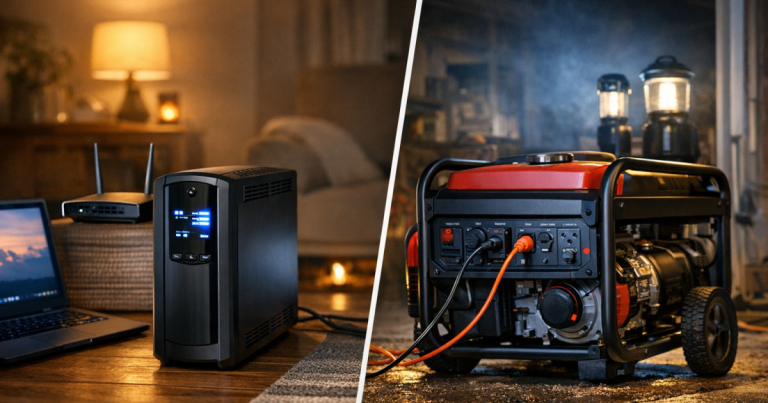
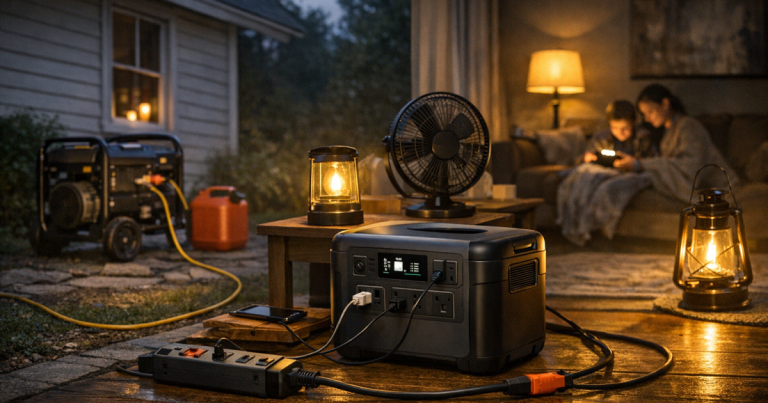
A small power bank is a phone plan, not a refrigerator plan. A portable power station may handle electronics, lights, and some small appliances, but its capacity and output limits still matter. A portable generator can support heavier loads, but it brings fuel storage, noise, outdoor placement, maintenance, cords, and connection safety into the plan.
If you are using a battery system, compare your appliance list against capacity in watt-hours and output in watts. A device that draws modest power can still drain a small battery if it runs all night. A device with a high startup surge may not start even if its running watts look manageable. This portable power station capacity guide for home outages explains how to connect those numbers to real household use.
If you are using a generator, your first decision is often which circuits or appliances deserve safe connection. Do not plan around every large appliance starting at once. Prioritize the furnace or heat controls in winter, sump pump during heavy rain, refrigerator and freezer, communication gear, and a few lights. Leave electric ranges, central air conditioning, dryers, and water heaters off the list unless your system has been designed and sized for them.
Use real outage scenarios, not perfect-day assumptions
Your appliance order should change by season and household need. In a summer heat wave, one room fan, medical cooling, and phone charging may outrank cooking. In a winter storm, safe heat may move above almost everything else. During wildfire shutoffs, communication, air-quality updates, lighting, and refrigeration can become the center of the plan.
Remote workers need a separate layer. A laptop, router, modem, phone hotspot, and one light may be enough to protect a workday if internet service is still available. A large desktop setup with multiple monitors may be unrealistic on a small battery unless you have tested it. Decide what a minimum work setup looks like before the outage, not during a meeting.
Families with infants, older adults, or medical needs should write those needs plainly at the top of the list. If one appliance supports health, safe temperature, communication, or medication, it outranks convenience appliances every time.
Test the plan before you need it
A priority list is only useful if the setup works in real life. Pick a calm afternoon and do a short test without creating unsafe conditions.
- Confirm which appliances are plug-in and which are hardwired.
- Read the label or manual for each priority appliance and note the power requirements.
- Charge batteries, lanterns, phones, and power stations before storm season.
- Check that cords are rated for the load and suitable for the location where they will be used.
- Label the power station ports, extension cords, or transfer-switch circuits so other adults can follow the plan.
- Run a short practice session with the refrigerator, router, lights, or other plug-in essentials you intend to support.
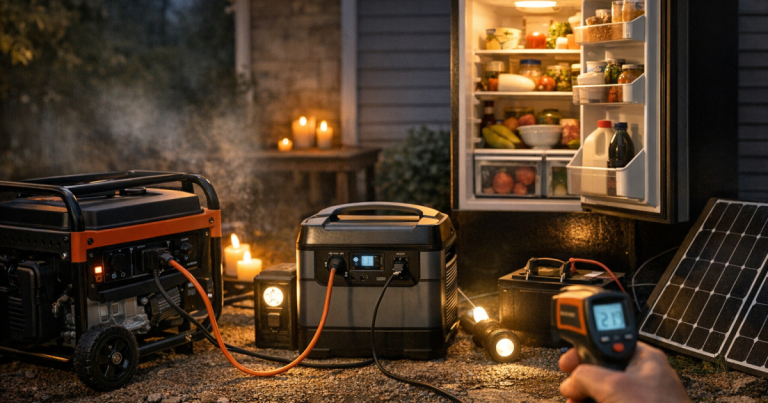
- Keep a thermometer in the refrigerator and freezer so food decisions are based on temperature, not guesswork.
Testing often reveals small problems: a cord is too short, a plug is blocked by a cabinet, a router and modem are in different rooms, or a battery was never fully charged. Those are easy problems on a normal day and frustrating ones during a storm.
Helpful questions
Should the refrigerator always be first?
Not always. A medical device, heating equipment in freezing weather, or a sump pump during flooding may outrank the refrigerator. For many homes, the fridge is near the top, but it is not automatically number one.
Can I power a furnace with a battery or generator?
Sometimes, but many furnaces are hardwired and need a proper transfer method or dedicated setup. The furnace’s power requirements, controls, startup load, and connection method all need to be verified before an outage.
What appliances should usually be left off backup power?
Electric dryers, electric ranges, central air conditioners, space heaters, and large water heaters often draw too much power for a basic backup plan. They require larger systems and careful installation planning.
Is it better to run everything at once or rotate loads?
Rotating loads is usually smarter. Run the fridge or freezer as needed, charge devices in batches, and keep continuous power for only the essentials that truly need it.
How often should I update my list?
Review it at the start of storm season, before winter, and whenever your household changes. New medical needs, remote work requirements, pets, babies, or a new appliance can change your backup power priorities.
In brief
Choose backup appliances by consequence, not habit. Start with people, then temperature, food, communication, work essentials, and comfort. Keep the first list short, understand watts and runtime, and test your setup before bad weather arrives.
A good outage plan is not about running your whole home exactly as usual. It is about keeping the right parts of life working long enough for the grid to come back safely.