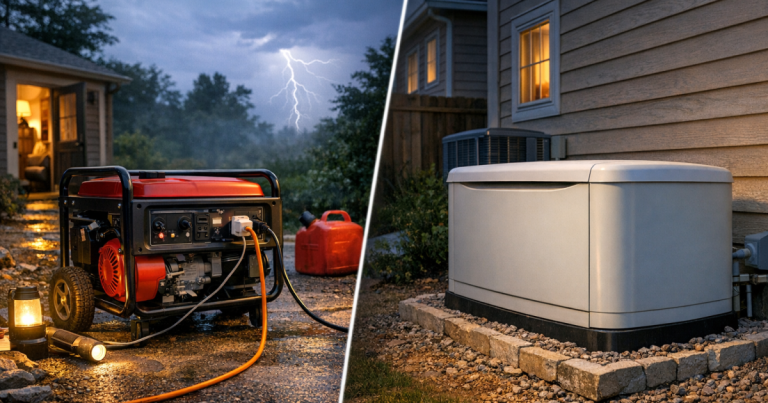
A blackout turns generator sizing from a spec-sheet exercise into a household comfort question. The right answer to what size generator you need starts with the loads that matter most: food, heat or cooling, medical devices, sump pumps, internet, lighting, and safe ways to connect them.
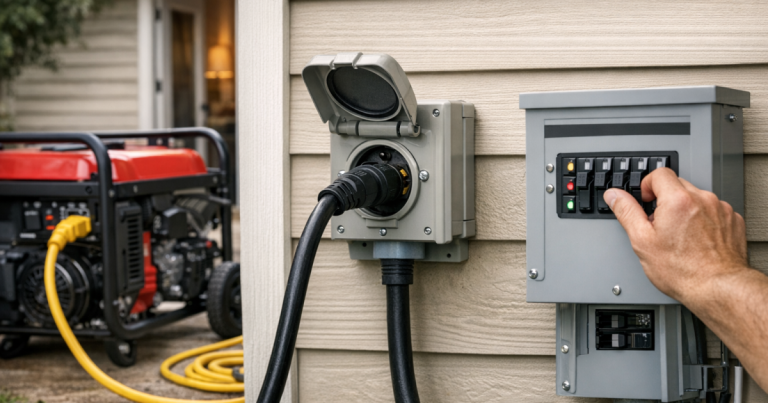
Electrical panel connections, transfer switches, interlock kits, and any hardwired generator inlet should be installed by a qualified electrician in compliance with local electrical codes, utility rules, and applicable safety standards.
In brief
Most households do not need to power everything during a blackout. They need enough capacity for essential loads, enough starting surge for motors and compressors, and a connection plan that does not create a carbon monoxide, fire, or backfeed hazard.
- For phones, lights, router, and a few small devices: a small backup setup may be enough, and many renters are better served by batteries instead of gasoline equipment.
- For a refrigerator, freezer, lights, and basic device charging: many homes start looking at the lower portable-generator range, but appliance surge watts matter.
- For a sump pump, furnace blower, well pump, or several household circuits: sizing should be based on actual labels, motor starting loads, and the connection method.
- For central air conditioning, electric ranges, electric dryers, or whole-home comfort: the power requirement rises quickly and usually needs a professionally planned setup.
If you live in an apartment, condo, dense townhouse, or any place without safe outdoor placement and fuel storage, a generator may not be the right tool. The safer first step is to review backup power options for renters, condos, and houses so the setup matches the building, not just the wattage.
The two numbers that matter: running watts and starting watts
Generator labels usually focus on two ratings. Running watts are what the generator can supply continuously. Starting watts, sometimes called surge watts, are the short burst available when motors, compressors, or pumps start up.
This distinction is why a refrigerator that seems modest on paper can still trip a small generator when the compressor kicks on. The same issue can show up with freezers, sump pumps, furnace blowers, window air conditioners, well pumps, and some power tools. A generator can look large enough based on running loads but still struggle if several motor-driven appliances start at the same time.
The safest planning method is to read the appliance label or manual, write down the running watts or amps, and check whether the manufacturer lists a starting watt requirement. If the label gives amps instead of watts, multiply volts by amps to estimate watts. In a typical 120-volt household circuit, a device drawing 5 amps is roughly 600 watts. That is an estimate for planning, not a substitute for the manufacturer’s specifications.
Start with the blackout you are actually preparing for
A generator for a six-hour thunderstorm outage is not the same decision as a generator for a three-day winter outage. Before adding wattages, decide what your household is trying to preserve.
Food-safe essentials
This setup focuses on the refrigerator, a standalone freezer if you have one, a few LED lights, phone charging, and maybe a router. It is a practical target for many suburban households because it protects food and keeps communication going without trying to recreate normal grid power.
Comfort and safety essentials
This adds loads such as a furnace blower, sump pump, garage freezer, medical equipment, a modem and router, laptops, and selected lighting. The generator may need more capacity, but the bigger change is planning: which circuits matter, which loads can be rotated, and which appliances should never run together.
High-demand household backup
Once you add well pumps, larger air conditioning loads, electric water heating, kitchen appliances, or multiple rooms of normal living, the generator size rises fast. At this level, a manual transfer switch, interlock, load management, and professional electrical planning become more important than the generator number alone.
A simple sizing worksheet
Use this process before shopping, borrowing, or running a generator in an outage. It keeps the decision grounded in your actual home rather than a vague “whole house” promise.
- List essential loads only. Include the refrigerator, freezer, sump pump, furnace blower, medical equipment, router, phone chargers, lights, and any appliance that affects safety or major property damage.
- Write down running watts. Use labels, manuals, or manufacturer information. Avoid guessing based only on appliance size.
- Identify starting loads. Mark anything with a compressor or motor. Refrigerators, freezers, pumps, and blowers can need extra surge power at startup.
- Add the running watts that may operate at the same time. Do not include appliances you plan to rotate manually unless you are disciplined about actually doing so.
- Add the largest starting surge on top. A practical planning approach is to assume the biggest motor may start while other essentials are already running.
- Leave a margin. Running a generator at its limit is noisy, inefficient, and less forgiving. A planning cushion helps with startup surges and real-world variation.
- Match the connection method. Extension cords, transfer switches, and inlet boxes each have limits. The generator size is only useful if the power can be delivered safely.
For example, a refrigerator, a few lights, phone charging, and a router may be a modest running load, but the refrigerator’s compressor surge still matters. Add a freezer, sump pump, and furnace blower, and you may be managing several motor loads that should not all start together. Add central air or a well pump, and the sizing conversation changes again.
Common blackout generator size ranges
The ranges below are planning categories, not promises. Appliance wattage varies, older equipment may draw more power, and startup loads can change the real answer.
Under about 2,500 running watts
This range can support very selective backup: small electronics, lamps, device charging, and possibly one major appliance if its startup demand is within the generator’s capability. It is not a casual “run the kitchen” size. It works best when the household is comfortable rotating loads and checking labels carefully.
About 3,000 to 5,000 running watts
This is a common range for essential-outage living. Depending on the actual loads, it may handle a refrigerator, freezer, some lighting, internet equipment, phone charging, and one or two larger essentials such as a sump pump or furnace blower. It still requires discipline. You may need to avoid starting the microwave, coffee maker, space heater, and pump at the same time.
About 6,000 to 10,000 running watts
This range can support more circuits and fewer compromises, especially in houses with pumps, heating equipment, or several essential rooms. It also brings more fuel use, more noise, heavier equipment, and stronger reasons to use a proper transfer setup rather than a web of extension cords.
Above 10,000 running watts
Large portable and standby-class setups can cover more of the house, but they are not automatically “whole home” solutions. Central air conditioning, electric heat, electric water heaters, and large kitchen appliances can consume major capacity. Load management and professional installation matter more at this point than a bigger wattage number on the carton.
Loads that often surprise people
Generator sizing mistakes usually come from a few predictable appliances. A microwave, coffee maker, toaster oven, hair dryer, or portable space heater can use a large amount of power for a short time. That does not mean you can never use them, but they should be treated as scheduled loads rather than background loads.
Heating and cooling deserve extra care. A gas furnace still needs electricity for the blower and controls. A window air conditioner may be manageable on some setups, while central air usually requires a much larger plan and may need special starting equipment. Electric resistance heat is usually a poor match for small portable generators because it draws so much continuous power.
Water is another hidden load. A sump pump can be a priority during storms, but it has a motor surge. A well pump can be essential in rural homes, but the voltage, horsepower, depth, and starting requirements need to be checked carefully before assuming a portable unit can run it.
Noise, fuel, and runtime are part of sizing
A larger generator is not automatically better. Bigger units often burn more fuel, take more effort to move, and make neighborhood placement harder. During a long outage, a moderately sized unit that runs your essentials efficiently may be more useful than a large unit that empties fuel cans quickly.
Inverter generators can be a good fit for households that care about quieter operation and efficient output for variable loads, though they still require outdoor operation and safe refueling. For a deeper explanation of power, fuel, and safety trade-offs, see our guide to inverter generators for home backup.
Runtime claims also need context. A manufacturer’s runtime figure is usually tied to a specific load level and fuel tank. Your result will vary with appliance cycling, outside temperature, elevation, fuel type if the generator supports more than one, and how aggressively you manage loads.
Connection choices can change the right answer
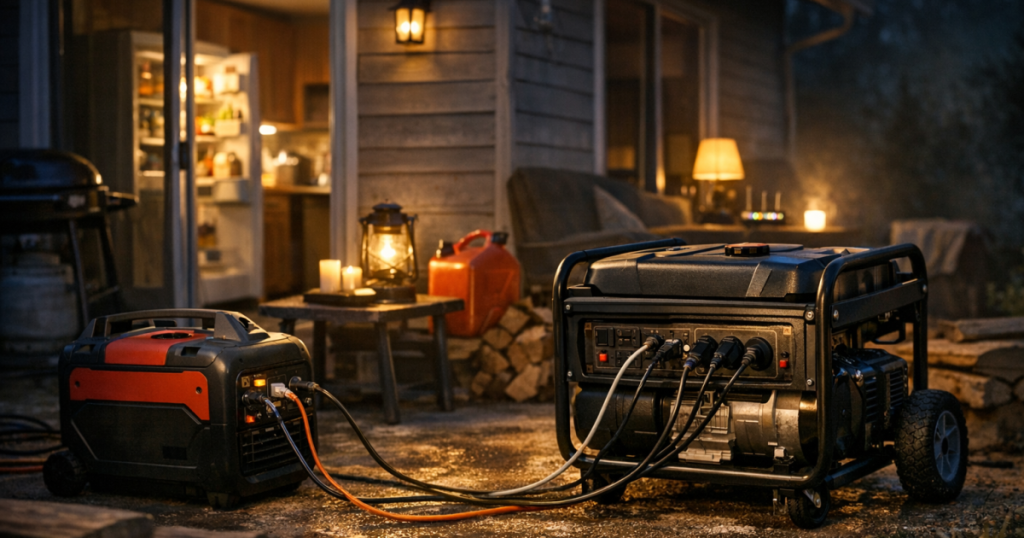
There are two common ways homeowners use a portable generator during an outage: heavy-duty extension cords to individual appliances, or a professionally installed transfer switch or interlock that powers selected circuits through the home’s panel. Never connect a generator to a home by backfeeding through a dryer outlet or other improvised connection.
Extension cords can work for simple essentials if they are outdoor-rated, properly sized for the load, and routed safely. They become less practical when you need to run a furnace blower, well pump, hardwired sump pump, or several circuits around the house.
A transfer switch or interlock setup lets you choose designated circuits and reduces cord clutter, but it must match the generator output, inlet, cord, breaker setup, and local code requirements. A kit such as the Reliance Controls 306CRK Pro/Tran 2 30A 6-Circuit Transfer Switch Kit is the type of equipment a qualified electrician may discuss for selected-circuit backup, but compatibility must be verified for your panel and generator.
Generator cords matter too. A cord like the Southwire 65172840 20-Foot 30A Generator Cord is an example of a purpose-built generator cord, but plug configuration, amperage, length, and outdoor rating all need to match your actual setup.
Fuel storage can limit your real backup time
A correctly sized generator is only useful as long as you can fuel it safely. Gasoline, propane, diesel, and natural gas each change the planning. Gasoline is common but needs safe storage and rotation. Propane stores well but the tank size and cold-weather performance matter. Natural gas can reduce refueling work where available, but it depends on a compatible generator and proper connection.
Plan fuel in hours, not just gallons. Write down how long your generator runs at a realistic load, then decide how many hours you need between safe refueling opportunities. For storage rules, rotation habits, and placement concerns, read how to store generator fuel safely between outages.
Always run portable generators outdoors, away from windows, doors, vents, garages, porches, and attached structures. Follow the owner’s manual and local guidance for placement; many safety agencies recommend keeping combustion equipment at least 20 feet from the home when possible. Let the unit cool before refueling, and keep working carbon monoxide alarms in sleeping areas and main living spaces.
A practical way to decide
If you want a realistic number, start with three columns: must run, nice to run, and never during generator use. Put the refrigerator, freezer, medical devices, sump pump, heat-related equipment, basic lights, and communications in the first column. Put convenience appliances in the second. Put electric dryers, electric ovens, large space heaters, and other high-draw comfort loads in the third unless you are planning a much larger system.
Then build two totals. First, add the running watts for the must-run column. Second, add the largest starting load that could come on while those items are operating. That combined figure gives you a more honest target than adding every appliance in the house.
If the number feels higher than expected, do not assume you need the next giant generator. Look for loads you can rotate. A freezer does not need to run every minute. A microwave can be used briefly while other loads are turned off. A router and phones may be better handled by a battery backup so the generator can rest overnight.
Things readers ask
Can a small generator run a refrigerator?
Sometimes, but only if the refrigerator’s running and starting watts fit within the generator’s ratings. Check the appliance label or manual, and avoid starting other motor loads at the same time.
How do I know what size generator is enough for my house?
List only the circuits or appliances you truly need, add their running watts, then account for the largest starting surge. If hardwired circuits are involved, have the connection plan reviewed and installed by a qualified electrician.
Is it better to buy a bigger generator than I need?
Not always. Oversizing can mean more fuel use, more noise, more weight, and harder storage. A right-sized generator with a clear load plan is usually easier to live with during a real outage.
Can I run central air on a portable generator?
Some large setups can support certain air-conditioning systems, but many portable generators are not suited to central air without careful load calculations, compatible connection equipment, and professional electrical planning.
Should I use a generator or a battery power station overnight?
Many households use a generator during the day for heavier loads and a battery power station or UPS overnight for phones, lights, routers, or medical devices. That reduces noise, fuel use, and nighttime refueling.
Why it matters
The right generator size is not the biggest number you can afford. It is the amount of power that keeps your household safe, fed, connected, and reasonably comfortable without creating new risks. Start with essential loads, respect starting watts, plan the connection method, and be honest about fuel. That approach gives you a generator setup you can actually manage when the lights go out.