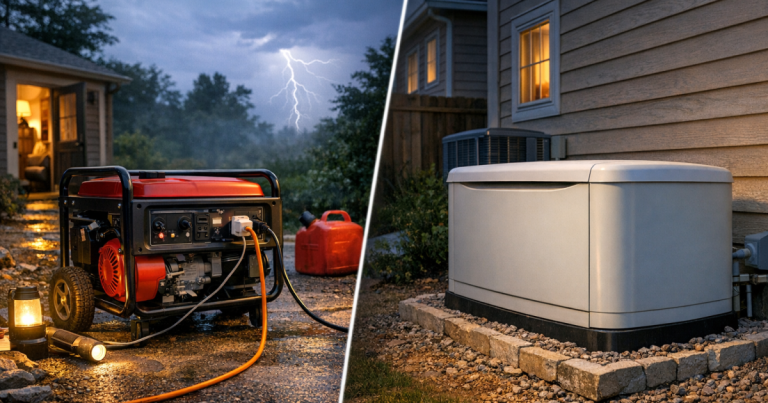
A generator is only useful during an outage if the fuel is ready, safe, and easy to manage. Good generator fuel storage is less about stockpiling and more about keeping the right amount, in the right container, in a place that will not create a fire, fume, or spill problem.
The goal is simple: store enough fuel for your realistic outage plan, rotate it before it gets stale, and keep it away from living areas, ignition sources, and confused last-minute handling.
Fuel storage, permanent tanks, gas line connections, and generator transfer equipment involve fire, carbon monoxide, and electrical safety risks; tank installation, gas plumbing, and system connections should be handled by qualified professionals in compliance with local codes, manufacturer instructions, and applicable safety standards.
The short version
- Store fuel outside living spaces, away from heat, sparks, pilot lights, and direct sun.
- Use approved containers that match the fuel type, and label each one clearly with the fuel and fill date.
- Keep gasoline amounts modest and rotate it on a schedule so your outage supply does not become stale.
- Never run, refuel, or store a portable generator indoors, in a garage, or near open windows.
- Check local fire codes, HOA rules, insurance requirements, and manufacturer guidance before increasing stored fuel amounts.
Start with the fuel your generator actually uses
Before deciding where to keep fuel, confirm what your generator is designed to run on. Portable units may use gasoline, propane, diesel, or more than one fuel type. Larger home backup setups may use propane or natural gas. Each fuel has different storage needs, and treating them the same can create avoidable problems.
Gasoline is common and easy to find, but it can degrade over time and gives off flammable vapors. Propane does not go stale in the same way gasoline does, but the cylinder, valve, hose, regulator, and storage location still matter. Diesel can be stable when handled properly, but it needs protection from water contamination and poor storage conditions. Natural gas is usually not stored by the homeowner at all; it depends on a utility connection and properly installed equipment.
A simple generator fuel storage routine should begin with your generator manual, because fuel requirements, approved fuel types, and maintenance steps vary by model. If you are still planning the backup setup itself, it helps to understand the fuel trade-offs covered in inverter generators for home backup before you build a storage plan around the wrong assumptions.
Step 1: Estimate how much fuel you truly need
Storing fuel safely starts with not storing more than you can reasonably manage. A family trying to keep a refrigerator cold, charge phones, run a few lights, and power a Wi-Fi router does not need the same fuel plan as a household supporting a well pump, sump pump, freezer, and medical equipment.
Instead of guessing, list your essential loads and outage scenarios. For example:
- Short outage: Phones, router, a few LED lights, and occasional refrigerator cycling.
- Overnight outage: Refrigerator, freezer, internet, small electronics, and limited comfort devices.
- Multi-day outage: Food preservation, communications, medical equipment if applicable, and a planned fuel rotation strategy.
Generator fuel use varies with load, temperature, elevation, maintenance condition, and fuel type. Treat any runtime chart as an estimate, not a promise. If a manual says the generator can run a certain number of hours at partial load, your real use may differ once the refrigerator compressor, furnace blower, battery chargers, and other loads cycle on and off.
For many households, the safest plan is a practical reserve for the first day or two, plus a clear refueling strategy if the outage continues. That might mean knowing which stations nearby have backup power, keeping a vehicle above half a tank during storm season, or pairing a generator with batteries so the generator does not have to run continuously.
Step 2: Use approved containers and label everything
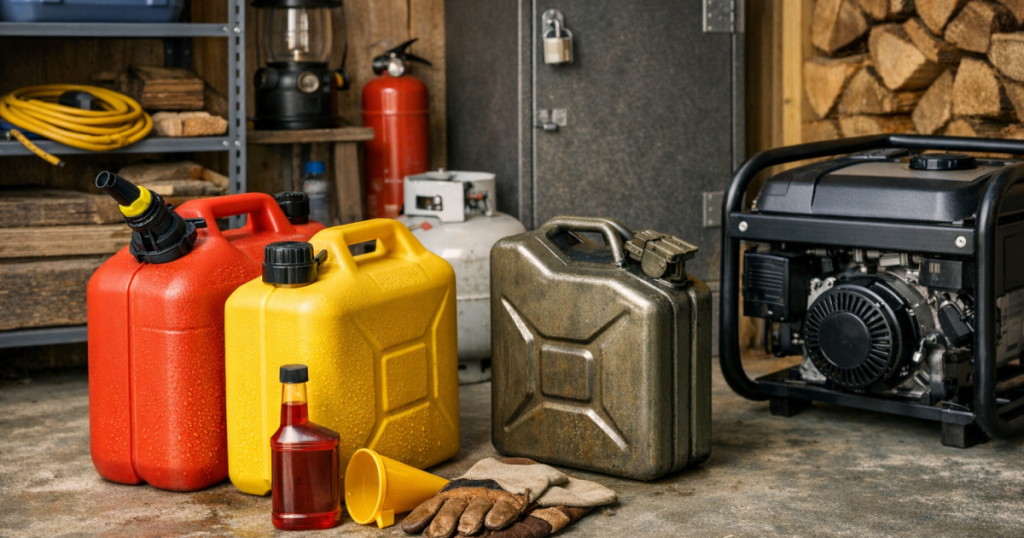
Fuel belongs in containers designed for that fuel, not in old jugs, drink containers, open buckets, or mystery cans in the corner of the shed. Use approved gasoline cans for gasoline, proper diesel containers for diesel, and certified propane cylinders for propane. The container should close securely, be in good condition, and be easy to lift and pour without splashing.
Label each container with:
- The fuel type
- The fill date
- Whether fuel stabilizer was added, if applicable
- The generator or equipment it is intended for
This matters more than it seems. During a blackout, you may be tired, the garage may be dark, and someone else in the household may be helping. Clear labels reduce the chance of putting the wrong fuel in the wrong machine or using old fuel first by mistake.
Color coding can help, but do not rely on color alone. Containers fade, labels peel, and families inherit fuel cans from previous projects. Written labels are still the simplest backup.
Step 3: Choose a safe storage location
Fuel should be stored outside living areas and away from anything that can ignite vapors. That means no fuel cans in basements, utility rooms, laundry areas, attached closets, or near water heaters, furnaces, space heaters, electrical panels, outlets, battery chargers, or tools that spark.
A detached shed or well-ventilated outdoor storage cabinet is often more appropriate than an attached garage, but the right answer depends on your home layout, local rules, weather exposure, and the amount of fuel involved. Keep fuel off the floor if flooding is possible, protected from direct sun, and secured so children, pets, and visitors cannot access it.
For gasoline and diesel, look for a cool, dry, ventilated location. For propane cylinders, store them upright, outside, and in a ventilated area where leaked gas cannot collect. Do not store propane cylinders in basements, crawl spaces, or enclosed interior spaces.
Also think about outage access. A safe storage spot that becomes buried behind bikes, lawn equipment, or snow shovels will slow you down when you need it. Keep the path clear enough that you can reach fuel in the dark without dragging containers across extension cords or puddles.
Step 4: Rotate gasoline before it becomes a problem
Gasoline changes over time, especially with heat, air exposure, and ethanol blends. Old gasoline can make a generator harder to start, run poorly, or require service. A fuel stabilizer can help when used according to the product label, but it is not a magic reset button for fuel that is already old or contaminated.
A simple rotation system works better than memory. Mark the fill date and set a reminder to use older gasoline in approved equipment or a vehicle before it sits too long. Then refill the container with fresh fuel and relabel it. If you use stabilizer, add it when the fuel is fresh, not months later as an afterthought.
Do not pour stale or questionable gasoline into storm drains, soil, household plumbing, or trash. Your local waste authority or hazardous waste program can tell you how to dispose of old fuel safely.
Step 5: Keep propane cylinders inspected and upright
Propane is popular for outage planning because it avoids some of gasoline’s shelf-life problems. The fuel itself is stable, but the cylinder and connections still need attention. Check for rust, dents, damaged collars, valve issues, missing caps, or an expired requalification date before relying on a cylinder for emergency use.
Store cylinders upright and protected from impact. Do not leave them where they can be hit by vehicles, knocked over by yard equipment, or heated by direct sources. If you smell gas, hear hissing, or suspect a leak, move away from the area, avoid ignition sources, and follow your propane supplier’s emergency instructions.
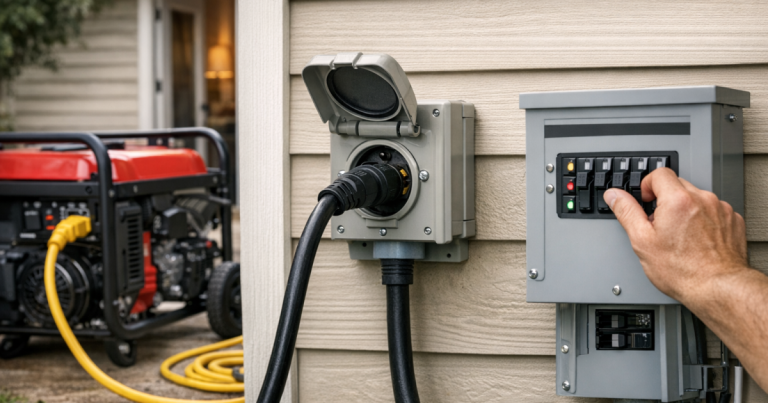
For whole-home or essential-circuit setups that use larger propane tanks, do not treat the tank as a DIY fuel can. Tank placement, regulators, piping, and generator connections are part of a regulated system. If your planning includes feeding selected circuits from a portable generator, read how a portable generator connects through a transfer switch so you understand where fuel planning and electrical safety meet.
Step 6: Separate fuel storage from generator operation
Fuel storage and generator operation should be planned together, but physically separated. The fuel stash should not sit next to a running generator, hot muffler, or extension cord bundle. Refueling should happen only after the generator is turned off and allowed to cool according to the manufacturer’s instructions.
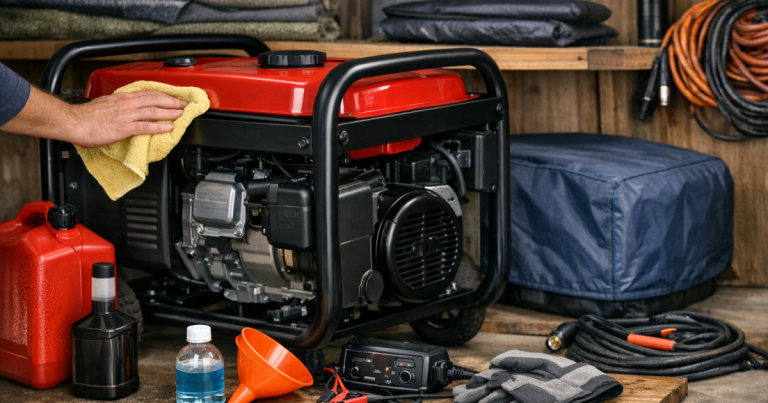
Never top off a hot generator because you are trying to avoid a shutdown. Spilled fuel can ignite on hot surfaces, and blackout stress is exactly when rushed habits become dangerous. Build short generator breaks into your outage routine. Use that downtime to check oil, inspect cords, rotate loads, and refuel calmly.
Portable generators should operate outdoors, far from windows, doors, vents, crawl space openings, and garages. Carbon monoxide can move in ways that are not obvious, especially with wind shifts. A fuel plan is not complete unless your household also has working carbon monoxide alarms and a clear generator placement plan.
Step 7: Match storage rules to your home type
Single-family homes
Homeowners may have more storage options, such as detached sheds, outdoor cabinets, or space for propane cylinders. The trade-off is that larger amounts can create larger risks. Check local fire code limits before increasing how many gallons you keep on hand.
Townhomes and duplexes
Shared walls, attached garages, limited outdoor space, and HOA rules can make fuel storage more complicated. Keep fuel away from shared mechanical areas and never assume that a small patio or balcony is acceptable for fuel storage.
Apartments and condos
Many apartments and condos do not allow fuel storage or generator operation at all. In that setting, battery backup, UPS units, shared building plans, and evacuation charging options may be more realistic than keeping liquid fuel. If your building rules prohibit fuel, do not try to work around them.
Rural homes
Rural outages can last longer, and refueling access may be limited. That can justify a more deliberate fuel plan, but it also makes maintenance, spill control, tank inspection, and code compliance more important. Consider how winter access, wildfire risk, flood exposure, and driveway clearance affect your storage location.
Step 8: Build a small fuel safety kit
You do not need a complicated setup, but a few supporting items can make fuel handling safer and cleaner:
- Heavy work gloves for moving containers
- A flashlight or headlamp kept near the fuel area
- Absorbent pads or spill cleanup material rated for petroleum products
- A funnel or spout that fits your generator and container securely
- A permanent marker and weather-resistant labels
- A fire extinguisher suitable for flammable liquid fires, stored where it is accessible but not directly beside the fuel
Do not store oily rags, cardboard, solvents, paint, or lawn chemicals right beside generator fuel. One messy shelf can combine several hazards in a small space.
Step 9: Review the plan before storm season
A fuel plan should be checked before you need it. Once or twice a year, walk through the storage area and ask:
- Are all containers clearly labeled and closed?
- Is any gasoline past your planned rotation date?
- Are propane cylinders upright, accessible, and in good condition?
- Is the storage area dry, ventilated, and free of clutter?
- Can the generator be moved to its outdoor operating location safely?
- Do all adults in the household know where fuel is stored and what not to do?
This is also a good time to compare your fuel plan with your actual backup power goals. If you have added a freezer, medical device, sump pump, or work-from-home equipment, your previous plan may no longer match your needs. For broader planning, essential-circuit backup planning can help you decide which loads deserve generator fuel and which can be handled another way.
Helpful questions
How much gasoline can I legally store at home?
Limits vary by local fire code, housing type, container type, and storage location. Check your city or county fire department guidance before storing larger amounts, especially in attached garages, townhomes, apartments, or wildfire-prone areas.
Should I drain the generator tank between outages?
Follow your generator manual. Some manufacturers recommend running the carburetor dry or using treated fuel before storage, while others give model-specific steps. The main goal is to prevent old gasoline from sitting in the fuel system for months.
Is propane safer than gasoline for long-term storage?
Propane avoids gasoline’s stale-fuel problem, but it still requires safe cylinder storage, leak awareness, upright positioning, and proper regulators and hoses. It is not maintenance-free, just different.
Can I keep fuel in my garage?
An attached garage can expose fuel to ignition sources, fumes, heat, and living-space air movement. Some households may be allowed to store small amounts there in approved containers, but local rules and the garage layout matter. Never store fuel near appliances, pilot lights, or electrical equipment.
What should I do with old or questionable fuel?
Do not dump it or mix it casually into equipment. Contact your local hazardous waste program, waste authority, or fire department for disposal instructions in your area.
Key takeaways
Safe fuel storage is a quiet part of outage planning, but it determines whether your generator is ready when the power fails. Keep the amount realistic, use approved containers, label every fill date, store fuel away from living areas and ignition sources, and rotate gasoline before it creates starting problems.
The best generator fuel storage plan is one your household can actually follow during a stressful evening outage: clear labels, safe access, fresh fuel, and no rushed refueling around a hot engine. Set it up once, review it before severe weather, and your generator will be a more reliable part of your home blackout plan.