Power usually fails at the least convenient hour: dinner half-finished, kids getting ready for bed, phones partly charged, and the weather still moving through. A safe overnight blackout routine turns that messy first hour into a calm sequence of checks, so your household can sleep without relying on candles, guesswork, or unsafe generator habits.
Generator transfer switch installation, inlet wiring, and any connection to household circuits should be carried out by a qualified electrician to meet local electrical codes, manufacturer instructions, and applicable safety requirements.
The short version
For a night outage, your goal is not to power the whole house. It is to keep people safe, maintain essential communication, protect medical needs, avoid food-safety mistakes, and create a sleeping setup that works until morning.
- Use battery lanterns or rechargeable lights instead of candles.
- Turn off or unplug nonessential electronics to prevent nuisance loads and possible surge issues when power returns.
- Keep refrigerators and freezers closed unless you have a clear reason to open them.
- Run generators outdoors only, far from doors, windows, vents, garages, and covered spaces.
- Prioritize medical devices, phones, weather alerts, and one reliable light per occupied room.
- Put everyone in a safe sleeping area based on indoor temperature, storm risk, and household needs.
If your wider plan still feels loose, use a full home outage planning checklist before storm season so the overnight steps are already decided.
Start with a two-minute safety sweep
Before anyone settles in, walk through the home with a flashlight or headlamp. Look for obvious hazards: tripped paths, wet floors near doors, a stove burner left on, a garage door that did not fully close, or extension cords stretched across walkways.
Check carbon monoxide alarms and smoke alarms if they are battery-powered or have battery backup. Do not ignore a chirp during an outage; it may mean the alarm needs attention. If a carbon monoxide alarm sounds, move everyone outside to fresh air and call emergency services.
Skip candles as your main lighting plan. They add fire risk at the exact time people are tired, distracted, and moving through a dark house. Battery lanterns, headlamps, and small rechargeable lights are easier to place safely and can be turned down for sleep.
Set your overnight blackout routine before everyone gets tired
The best time to organize the house is early, while adults are still alert and children or older relatives are not yet anxious. Assign simple roles: one person handles lighting, one checks phones and power banks, one confirms medications or medical devices, and one checks doors, pets, and sleeping areas.
Choose a central light zone
Pick one main room as the nighttime base. A kitchen table, living room, or hallway near bedrooms usually works better than spreading people across the house. Put one bright lantern in that area and dimmer lights near bathrooms and stairs.
Keep lights low once the house is settled. A lantern running at maximum brightness may be useful for setup, but overnight you usually need enough light to move safely, not enough to light the whole room.
Decide what stays powered
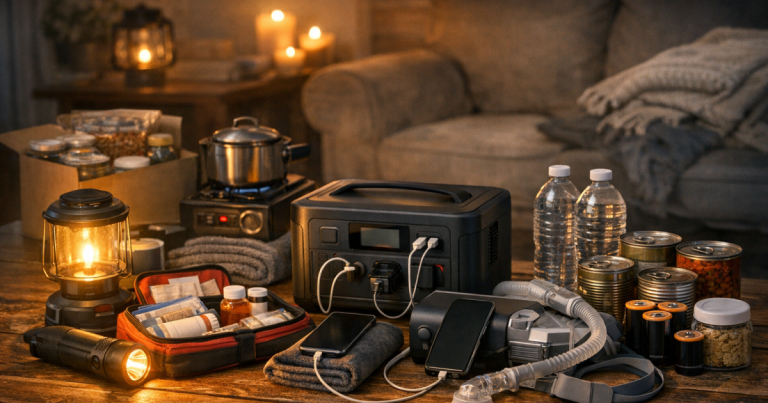
Make a short priority list before plugging anything in. For most households, overnight power should go first to phones, a weather radio, medical equipment, a modem/router if internet service is still available, and one or two lights. Laptops, game systems, countertop appliances, and extra chargers can wait.
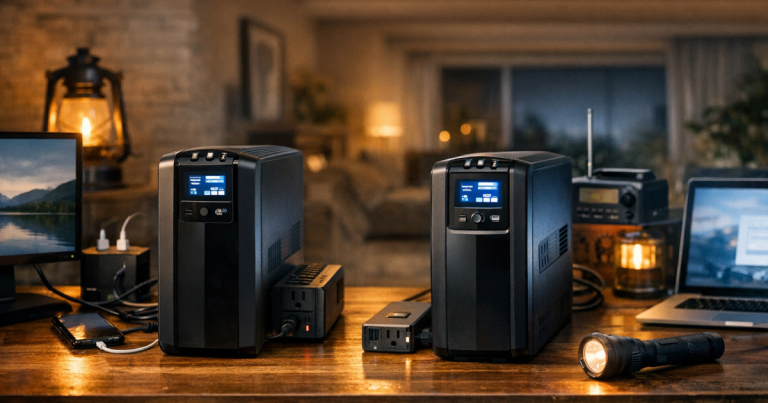
If you use a portable power station, check its display and turn off AC outlets you are not using if the unit allows it. If you use a UPS for networking gear, keep the load small. Every extra device shortens runtime.
Handle medical needs first
Medical equipment should never be an afterthought at bedtime. If someone uses a CPAP machine, oxygen-related equipment, refrigerated medication, mobility devices, or powered monitoring equipment, decide how it will be supported before the outage becomes stressful.
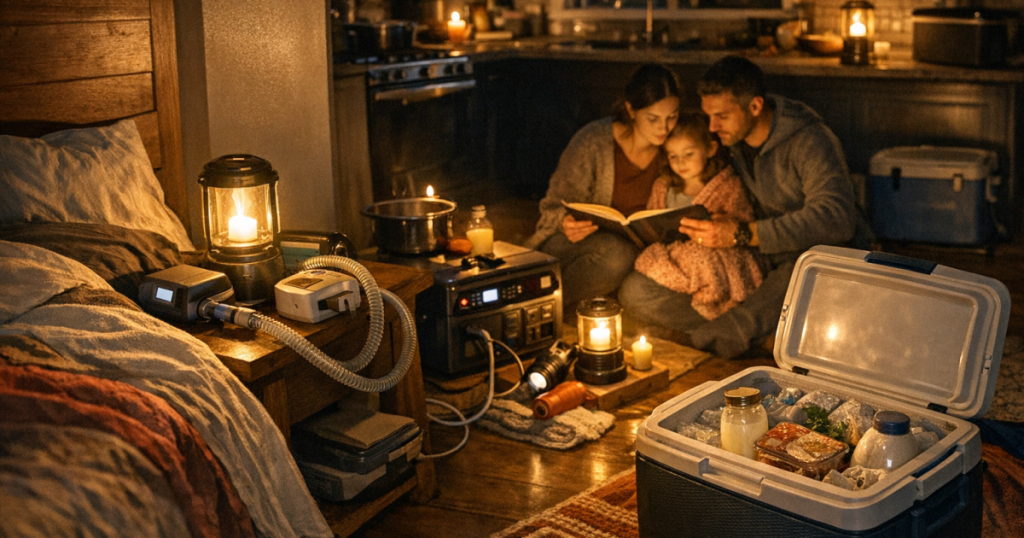
For CPAP users, confirm the machine’s power requirements, whether humidification is being used, and what backup source is approved by the device manufacturer. Humidifiers and heated hoses can draw more power than the blower alone, so runtime estimates need to be treated as estimates, not promises. For a more focused setup process, see how to keep a CPAP running on a portable power station.
Keep medications together in one known location. If any medication has strict temperature requirements, use the instructions from the pharmacy or manufacturer rather than guessing. A small cooler and thermometer can help, but the correct storage range matters.
Keep the house comfortable enough to sleep
Overnight comfort is about reducing risk and helping people rest, not making the home feel normal. In cold weather, close off unused rooms, use blankets and sleeping bags, and gather in interior rooms if they stay warmer. Never use a gas oven, charcoal grill, camp stove, or propane heater indoors unless the heater is specifically rated for indoor use and used exactly as directed with ventilation and alarms in place.
In hot weather, move to the lowest, coolest safe part of the home. Use battery fans only where they make a real difference, such as for an older adult, a child, or someone with heat sensitivity. Hydration, light clothing, and avoiding unnecessary movement can matter as much as a fan during a short night outage.
If indoor temperature becomes unsafe, the routine should shift from staying put to leaving safely. Know ahead of time where you could go: a relative’s home, a local cooling or warming center, or another safe location outside the outage area.
Use generators only with a clear nighttime rule
A portable generator can be helpful, but it should not become a half-awake midnight project. If you use one, set the rules before bedtime: where it runs, who is allowed to refuel it, which circuits or cords are used, and when it gets shut down.
Generators must run outdoors and away from openings where exhaust can enter the home. Never run one in a garage, basement, attached porch, breezeway, shed, or near an open window. Refuel only when the generator is off and cooled according to the manufacturer’s instructions.
If your home uses a manual transfer switch, make sure the adults who may operate it understand the sequence before an outage. Review how to use a transfer switch during a blackout before you need it in the dark.
Protect food without opening the fridge all night
Food safety during an overnight outage is mostly about patience and temperature awareness. Keep refrigerator and freezer doors closed. Do not keep checking “just to see,” because each opening lets cold air out.
If the outage started before bed, write down the approximate time. In the morning, use appliance thermometers and food-safety guidance from the USDA or your local health department to decide what is safe. Do not rely on smell alone. Some unsafe food can look and smell normal.
If you expect a longer outage, move the most important freezer items together so they stay colder longer, but avoid doing a big reorganization in the middle of the night. That is a morning task unless there is an immediate reason.
Make communication boring and reliable
Before bed, send one short update to your household contact: power is out, everyone is safe, phones are being conserved, and you will check in again in the morning or if conditions change. This prevents repeat calls and saves battery.
Put phones in low-power mode. Turn off nonessential notifications. Keep one phone near the sleeping area for alerts and emergency calls, but avoid having every device screen on all night. If cell service is weak, repeated searching can drain a battery quickly.
A weather radio is useful when storms, wildfire shutoffs, or regional grid issues are possible. Keep it where an adult can hear alerts, but not so loud that every routine message wakes the whole house.
A simple bedtime checklist
- Confirm everyone knows where the main lantern and flashlights are.
- Place a small light near bathrooms, stairs, and any route used by children or older adults.
- Charge only priority devices from battery backup.
- Check that doors and windows are secure.
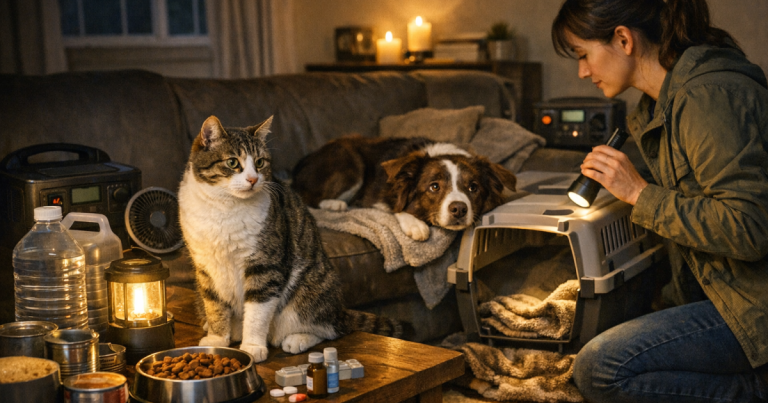
- Keep pets in a known area so they do not trip someone in the dark.
- Turn off or unplug appliances that were running when the power failed, such as space heaters, irons, or cooking equipment.
- Leave one easy-to-notice light switch turned on so you know when grid power returns.
- Set a morning plan: check outage updates, food temperatures, fuel or battery status, and household needs.
Things readers ask
Should I leave lights on so I know when power comes back?
Leave one low-risk light switch on, preferably in a hallway or common area. Turn off or unplug unnecessary appliances and heat-producing devices so they do not restart unexpectedly.
Is it safe to sleep while a generator is running?
Only if the generator is outdoors, correctly placed away from openings, connected safely, and monitored according to the manufacturer’s instructions. Many households choose to shut it down overnight and run battery-powered essentials while sleeping.
What should renters do differently?
Renters should avoid building wiring changes, focus on battery lights, power banks, portable power stations where allowed, and a clear communication plan. Follow lease rules and building safety guidance for any shared spaces.
How much backup power do I need for one night?
It depends on the loads. Phones and LED lights need far less energy than medical devices, routers, fans, or refrigeration. Add up the devices you truly need and test the setup before storm season.
When should we leave instead of staying overnight?
Leave if indoor temperatures become unsafe, medical equipment cannot be supported, flood or fire risk increases, carbon monoxide alarms sound, or local officials advise evacuation.
Main points
A safe night outage plan is simple, repeatable, and calm. Light the paths, power only essentials, protect medical needs first, keep the refrigerator closed, and avoid any shortcut that brings combustion, exhaust, or improvised wiring into the home.
The more decisions you make before bedtime, the easier the night becomes. A routine does not remove the inconvenience of a blackout, but it gives everyone a safer way to rest until morning.