A utility notice gives you something most outages do not: time. Good power shutoff preparation turns that warning into a calm checklist, so your household has light, water, safe food, charged devices, and a plan for anyone who depends on powered equipment.
Planned shutoffs can happen for wildfire risk, grid maintenance, storm prevention, or local emergency work. The goal is not to make your home feel normal in every way; it is to keep the essentials covered until power returns.
Electrical panel connections, transfer switch installation, generator inlet wiring, and any permanent standby system work should be carried out by a qualified electrician in compliance with local codes, utility rules, and safety standards.
The short version
- Confirm the shutoff window, affected address, and restoration updates from your utility.
- Charge phones, power banks, UPS units, portable power stations, rechargeable lanterns, and medical-device batteries before the outage starts.
- Lower fridge and freezer openings, add ice packs if needed, and use appliance thermometers to make food-safety decisions.
- Store drinking water and plan toilet flushing, handwashing, and hygiene before pressure or pumps become a problem.
- Keep generators outdoors only, away from doors, windows, garages, crawl spaces, and vents.
- Decide ahead of time which loads matter most: medical equipment, refrigeration, internet, lighting, phones, fans, or heat-related needs.
Start with the notice, not the gear
The first step is to read the utility notice carefully. Check the date, expected start time, estimated restoration time, and whether the shutoff is certain or conditional. Some utilities announce a possible public safety power shutoff, then narrow the timing as weather, wind, or equipment conditions change.
Save the outage map or alert page on your phone, but do not rely on internet access during the outage. Write down the utility outage line, local emergency information number, and any account details you may need. If your household includes older adults, small children, remote workers, or people using powered medical equipment, share the timing with them early so everyone knows what to expect.
For a broader household checklist, use the home blackout preparedness guide as a companion plan. A planned shutoff is simply the version where you get a head start.
Build your timeline around the first 24 hours
A planned power shutoff is easiest to manage when you break it into time blocks instead of trying to solve everything at once.
The day before
- Charge phones, laptops, tablets, headlamps, lanterns, power banks, UPS units, and portable power stations.
- Freeze extra water bottles to create ice mass for the freezer or cooler.
- Run laundry and the dishwasher if you depend on them daily.
- Refill prescriptions, confirm medical-device backup options, and prepare a paper list of medications.
- Top off vehicle fuel or charge an EV if public charging may also be affected.
- Move flashlights, batteries, first-aid supplies, and pet items where you can find them in the dark.
The morning of the shutoff
- Set phones to low-power mode and download key information you may need offline.
- Turn fridge and freezer settings colder before the power goes out, then avoid opening doors.
- Unplug sensitive electronics that are not on surge protection.
- Fill clean containers with water if your home depends on an electric well pump or booster pump.
- Place extension cords, generator cords, or power stations where they are easy to access, but do not run cords through wet areas or pinch them under doors.
When the power goes off
- Switch to battery lighting instead of candles whenever possible.
- Use one shared charging station so devices and cables do not scatter around the house.
- Open the refrigerator only when necessary and make decisions quickly.
- Keep a written note of generator runtime, fuel use, fridge-door openings, and any medical-device battery changes.
Protect food before you think about cooking
Food safety is one of the biggest advantages of a planned shutoff because you can prepare the fridge and freezer ahead of time. A refrigerator generally keeps food cold for about 4 hours if the door stays closed. A full freezer may hold safe temperatures for about 48 hours, while a half-full freezer is closer to about 24 hours. Those are estimates, not guarantees, so an appliance thermometer is the simple tool that makes the final call.
Group fridge items by meal so you can grab what you need quickly. Put high-risk foods such as meat, dairy, seafood, and leftovers in the coldest area. If the shutoff may be long, move some food to a cooler with ice, especially items you expect to use soon.
Plan low-cook or no-cook meals first. Sandwiches, shelf-stable pantry meals, canned foods, nut butter, crackers, fruit, and ready-to-eat emergency meals can reduce the need for stovetop cooking, dishwashing, and fridge opening. If you use a gas stove, confirm whether electronic ignition or ventilation affects safe use, and never use an oven or grill to heat indoor space.
Water, toilets, and hygiene deserve their own plan
City water often continues during a power outage, but that is not a promise for every neighborhood or every event. Homes with wells, electric pressure pumps, septic pumps, high-rise booster systems, or electrically controlled water treatment equipment need a more deliberate plan.
Store at least enough drinking water for people and pets, then add water for handwashing, toothbrushing, toilet flushing, and basic cleanup. One gallon per person per day is a common starting point for drinking and minimal sanitation, but hot weather, medical needs, pets, and formula preparation can raise that amount quickly.
If toilets may not refill automatically, fill a bathtub or large containers with non-drinking water before the shutoff. Keep hand sanitizer, wet wipes, trash bags, disposable gloves, and paper towels where they are easy to reach. For more detail, the guide to planning water, toilets, and hygiene during a blackout covers the less glamorous jobs that matter a lot after the first few hours.
Decide what really needs power
Backup power works best when it has a job. Instead of asking whether you can run the whole house, list the loads that matter during this specific shutoff.
- Critical: medical equipment, medication refrigeration, mobility equipment charging, sump pump needs, and emergency communication.
- Important: refrigerator or freezer, router and modem, phones, a few lights, fans, laptops, and small kitchen appliances.
- Nice to have: entertainment devices, extra monitors, laundry, dishwasher, large cooking appliances, and full-room comfort loads.
Look at the wattage labels or manuals for the items you plan to run. Refrigerators, pumps, and some tools can have startup surges that are higher than their running watts. A battery or generator that seems large on paper can still overload if too many devices start at once.
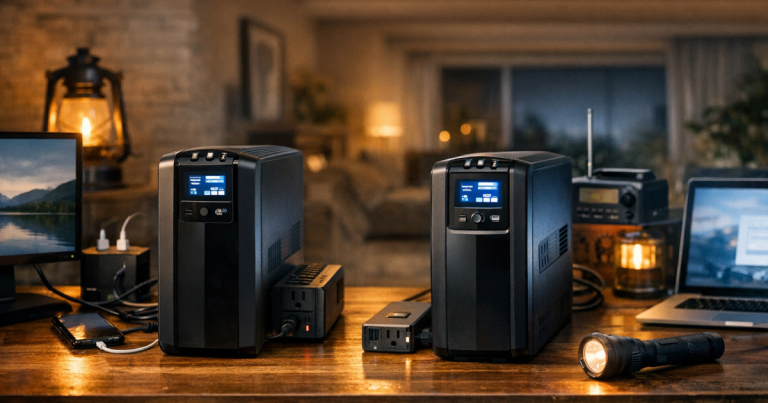
For short shutoffs, a UPS can keep a router, modem, or desktop setup alive through brief interruptions, while a portable power station can support phones, lights, laptops, and some small appliances depending on capacity and load. For longer shutoffs, a portable generator or standby generator may make more sense, but only with safe placement, fuel planning, and proper connection methods. The guide on layering UPS, power station, and generator backup explains how these pieces can work together without asking one device to do every job.
Generator safety is not optional
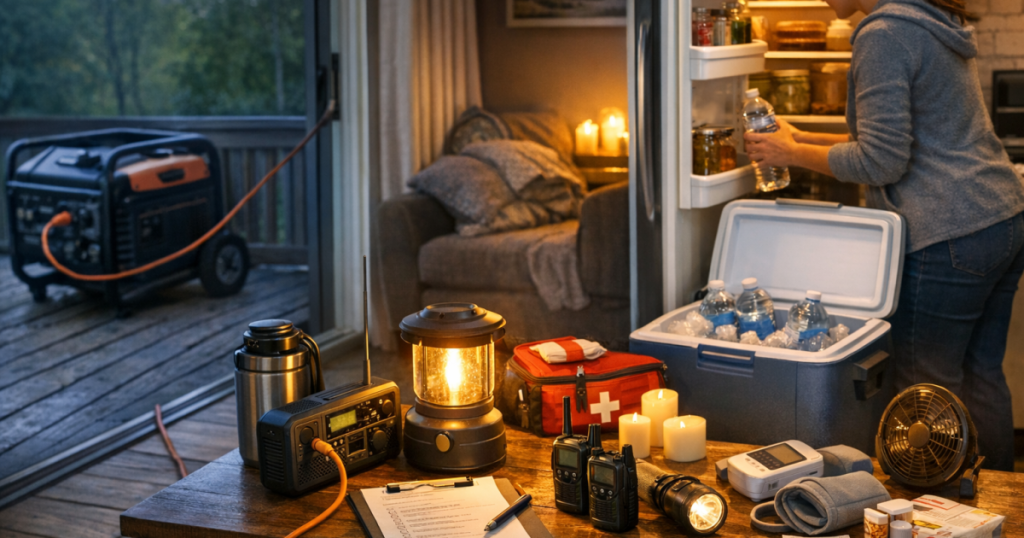
If you use a portable generator, operate it outdoors only. Do not run it in a garage, carport, porch, basement, shed, breezeway, or near open windows. Carbon monoxide can move into living areas even when a generator seems far enough away, so follow the manufacturer’s placement instructions and keep working CO alarms on every level of the home.
Use outdoor-rated extension cords in good condition and sized for the load. Keep cords out of standing water and avoid creating trip hazards. Do not backfeed a home through a dryer outlet or improvised cord. If you want a generator to power hardwired circuits, that setup belongs on a properly installed transfer switch or interlock system.
Fuel planning matters too. Store gasoline or propane safely, away from living areas and ignition sources, and follow local storage rules. Let a generator cool before refueling. During a scheduled shutoff, it is tempting to stretch runtime by running everything at once, but rotating loads is usually quieter, safer, and more fuel-conscious.
Keep communication simple
Assume cell service and home internet may be less reliable than usual, especially during wildfire-related or storm-related shutoffs. Before the outage starts, send a short message to household members with the shutoff window, meeting place, and check-in plan. If family members are at school, work, or caregiving locations, decide whether they should stay put or come home before the outage starts.
Download offline maps if roads, smoke, flooding, or local closures could affect travel. Keep a battery-powered or hand-crank weather radio available if the shutoff is connected to severe weather or fire risk. Do not count on social media as your only information source; utility alerts, county emergency management, local radio, and official text notifications are more dependable.
Make the house comfortable enough, not perfect
Comfort planning is about reducing stress. In hot weather, pre-cool the home if you can, close blinds on sunny windows, and set up battery fans in the rooms where people will spend time. In cold weather, dress in layers, close off unused rooms, and avoid unsafe heat sources. Never use a grill, camp stove, generator, or outdoor heater indoors.
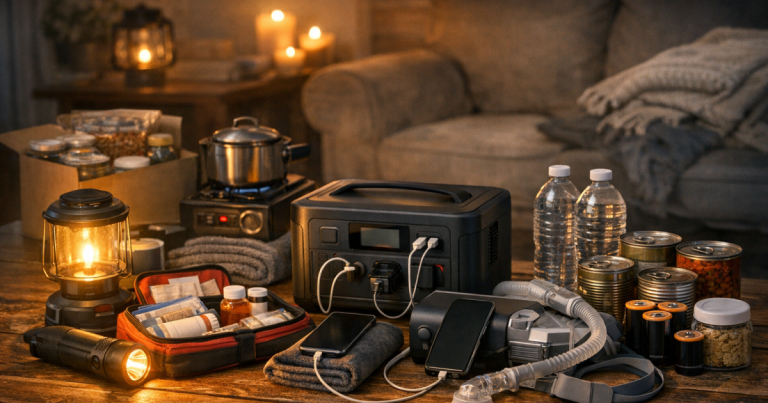
Plan one room as the outage base. Put lanterns, chargers, blankets, water, snacks, medications, pet supplies, and a trash bag there. This keeps people from wandering around in the dark and makes the evening feel more organized. For kids, include a few low-battery activities such as cards, books, puzzles, or downloaded shows saved before the shutoff.
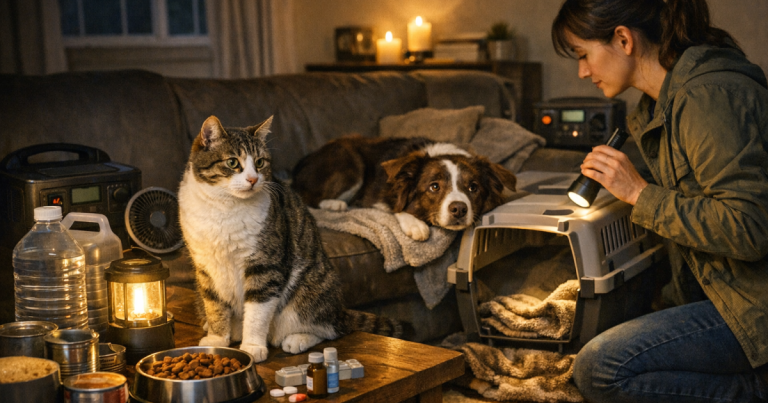
Pets need planning too. Keep carriers accessible, maintain water bowls, check temperature-sensitive animals, and know which local shelters or hotels accept pets if the shutoff overlaps with dangerous heat, cold, smoke, or evacuation warnings.
When power comes back
Restoration can be uneven. Lights may return before internet, water systems, elevators, traffic signals, or neighborhood services are fully normal. Give large appliances a few minutes before turning everything on. Reconnect sensitive electronics gradually.
Check fridge and freezer thermometers before eating perishable food. If food has been above safe temperatures for too long, do not taste-test it. Discard questionable items and write down what you lost in case your insurance policy or local assistance program asks for a record.
Recharge every battery, refill used water, restock shelf-stable meals, and note what did not work. The best time to improve your setup is right after the event, while the small frustrations are still fresh: the cord that was too short, the lantern that was missing, the freezer you opened too often, or the router battery that did not last as long as expected.
Things readers ask
How much notice do utilities usually give before a planned shutoff?
It varies by utility and situation. Some maintenance outages come with several days of notice, while weather-driven public safety shutoffs can change quickly as forecasts shift.
Should I unplug everything before the power goes out?
You do not need to unplug every device, but it is smart to unplug sensitive electronics that are not protected and turn off large loads so they do not all restart at once.
Can I run a generator on an apartment balcony?
No. Portable generators produce carbon monoxide and are not safe for balconies, hallways, garages, or enclosed shared spaces. Renters should focus on battery lighting, power banks, UPS units, and portable power stations that are safe for indoor use.
How do I know whether my food is still safe?
Use an appliance thermometer. A closed fridge is usually only reliable for a few hours, and freezer estimates depend on fullness and door openings. When temperature history is uncertain, treat high-risk perishables cautiously.
What if someone in my home uses powered medical equipment?
Contact the utility’s medical baseline or critical-care notification program if available, and speak with the equipment provider about battery backup, runtime, and evacuation thresholds before the shutoff date.
Final thoughts
A planned power shutoff is inconvenient, but it is also one of the most manageable blackout scenarios because you can act before the lights go out. Focus on the basics first: people, medical needs, water, food, communication, safe lighting, and realistic backup power.
After one or two events, your checklist will become very personal to your home. That is the real value of power shutoff preparation: less guessing, fewer unsafe shortcuts, and a calmer household when the utility notice arrives.