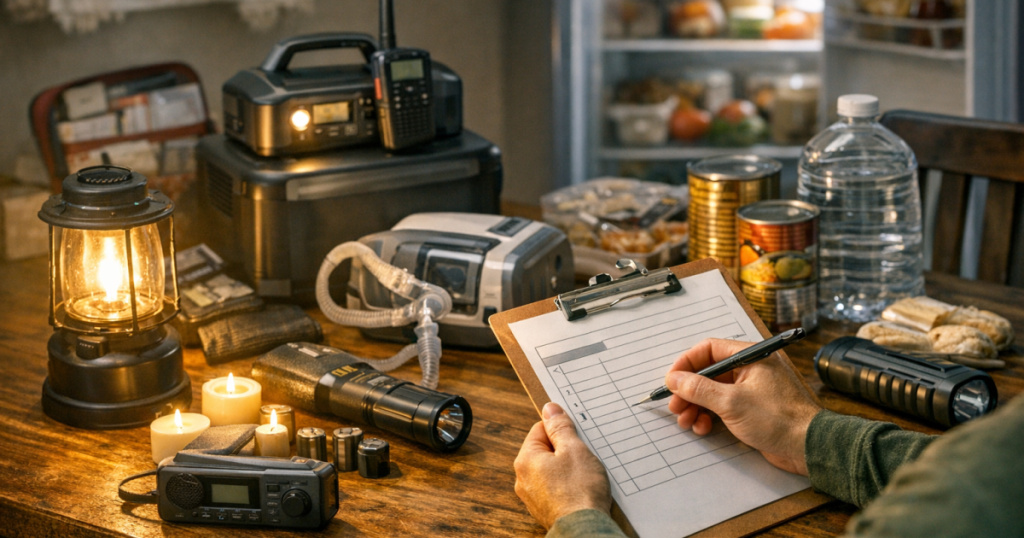
A home blackout risk assessment is a simple way to find the weak spots in your household plan before an outage turns stressful. Instead of guessing what you might need, you look at your people, your home, your power needs, and the outages most likely to affect you.
The goal is not to build a perfect bunker. It is to make calm, realistic decisions about what must keep working, what can wait, and what needs a safer backup plan.
Electrical panel work, transfer switch installation, generator inlet wiring, and any permanent system connection should be carried out by a qualified electrician to meet local electrical codes, manufacturer instructions, and applicable safety requirements.
In brief
- Start with people: medical devices, mobility needs, children, pets, older adults, remote workers, and anyone who needs reliable communication.
- List the loads that matter most: refrigerator, freezer, sump pump, heating or cooling support, internet, phones, lighting, and critical medical equipment.
- Match risks to likely outage length: a two-hour neighborhood outage creates different problems than a three-day storm outage or wildfire shutoff.
- Check your backup power honestly: watts, runtime, fuel, safe placement, extension cord limits, and whether circuits are connected correctly.
- Turn the assessment into actions: fix the highest-risk gaps first, then test the plan with a short drill.
Start with the outages your home is most likely to face
A useful assessment begins with local reality. In the US, outage causes vary widely: summer thunderstorms, hurricanes, ice storms, high winds, wildfire-related shutoffs, heat-related grid stress, equipment failures, and planned utility work can all create different timing and comfort problems.
Write down the most likely outage scenarios for your home:
- A short outage under four hours during normal weather.
- An overnight outage when everyone is asleep and devices are partly charged.
- A 12- to 24-hour outage during heat, cold, rain, or snow.
- A multi-day outage after a major storm, wildfire shutoff, or regional grid problem.
- A planned power shutoff with advance warning from your utility.
This step keeps your planning grounded. A city apartment without a safe outdoor generator location has different risks than a rural home with a well pump. A household with refrigerated medication has different priorities than one mainly worried about keeping phones and lights running.
If your area is subject to planned utility outages, it helps to prepare differently than you would for a sudden storm failure. The checklist in how to prepare for a planned power shutoff is a useful next step once you know that scenario applies to you.
Map the people, pets, and routines that depend on power
The most important part of a home blackout risk assessment is not the gear list. It is the people list. Power matters because it supports comfort, health, communication, food, work, and safety.
Make a simple household profile. Include:
- Medical devices that need power, such as CPAP machines, oxygen concentrators, mobility equipment chargers, or refrigerated medication storage.
- People who are more vulnerable to heat or cold, including infants, older adults, and anyone with health conditions affected by temperature.
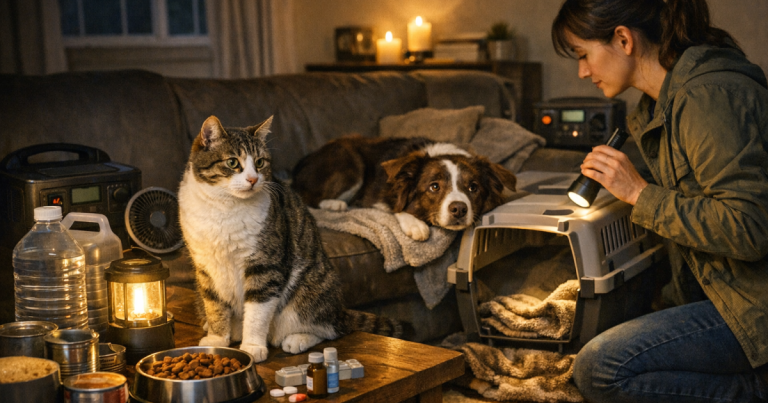
- Pets that need heated habitats, aeration, refrigeration for food, or stable indoor temperatures.
- Remote work or school needs, including internet, laptops, monitors, and phone charging.
- Security and access needs, such as garage doors, powered locks, gates, cameras, or alarm systems.
- Communication needs, including cell phones, weather alerts, radios, and backup charging.
For each person or pet, ask: what becomes a problem after two hours, after overnight, and after a full day? This turns vague concern into a practical priority list.
Separate essential loads from comfort loads
Most households cannot run everything during a blackout, and that is normal. The safer approach is to separate loads into three groups: critical, important, and optional.
Critical loads
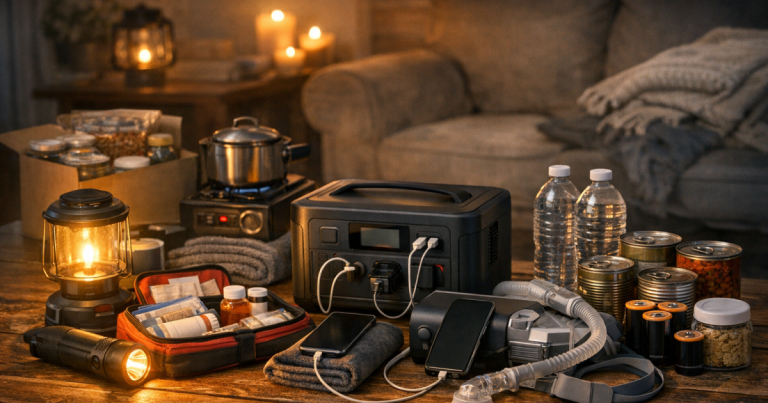
These are the things that protect health, safety, or property. Examples include medical equipment, refrigerator or medication cooling, sump pump, well pump if you rely on one, basic lighting, phones, and weather alerts.
Important loads
These improve comfort and stability but may not need constant power. Examples include internet routers, laptops, a small fan, a microwave for brief use, or limited heating and cooling support depending on your system.
Optional loads
These are convenient but should not drive the plan unless you have a larger, properly installed system. Examples include entertainment devices, laundry, electric ovens, large space heaters, central air conditioning, and multiple high-wattage appliances at the same time.
Write down the starting and running wattage where available from labels, manuals, or manufacturer information. Motors, compressors, pumps, and heating appliances can draw more power than expected, especially when starting. When in doubt, leave extra margin instead of loading a battery or generator to its limit.
Check the weak points in your home itself
A blackout risk assessment should also look at how your home behaves without power. Some risks show up only after the lights go out.
- Food storage: How long can your refrigerator and freezer stay closed? Do you have appliance thermometers so you are not guessing?
- Water: If you use a well pump, what happens when the pump has no power? If you have municipal water, do you still need stored drinking water for a longer outage?
- Basement flooding: Does your sump pump need backup power, a battery backup, or another water-control plan?
- Temperature: Which room stays warmest in winter or coolest in summer? Can you safely consolidate the household into one room?
- Lighting: Can everyone move around at night without candles? Battery lanterns and headlamps are safer and easier to manage.
- Cooking: Do you have a safe outdoor cooking option, or shelf-stable food that does not require cooking?
- Doors and access: Can you manually open the garage door? Do powered locks or gates have backup access?
Do not overlook small failure points. A fully charged power station is less helpful if the only extension cord you own is not rated for the load, or if your router is plugged into a hard-to-reach outlet behind furniture.
Review your backup power without wishful thinking
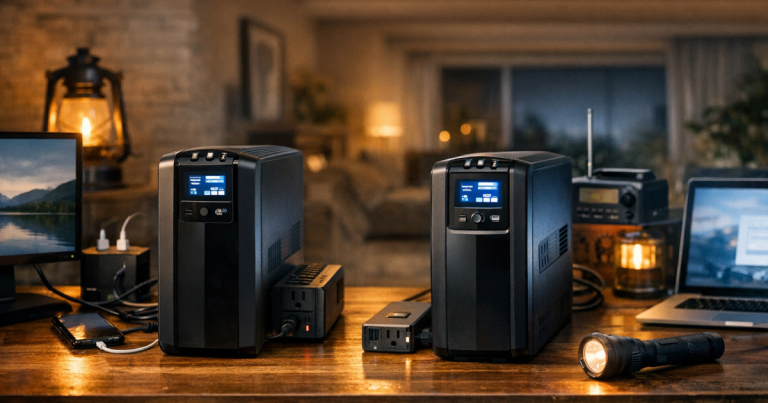
Backup power can be a battery, UPS, portable power station, inverter generator, larger portable generator, or standby system. Each can be useful, but each has limits.
For any backup source, write down:
- What it is intended to run.
- How long it can realistically support those loads.
- How it is recharged or refueled.
- Where it can be used safely.
- Who in the household knows how to start, stop, connect, or shut it down.
- What must never be connected to it.
Battery systems are clean and quiet indoors, but runtime depends on the load and available battery capacity. Generators can support heavier loads and longer outages if fuel is available, but they must be operated outdoors, away from windows, doors, vents, and attached spaces. Never run a generator indoors, in a garage, on a porch, or near air intakes.
If your plan includes a generator, review the differences between portable, standby, dual-fuel, and other setups in home backup generator types, features, and safety basics. It helps separate realistic essentials backup from expensive or unsafe whole-home assumptions.
Score each risk so the plan does not get overwhelming
You do not need a complicated spreadsheet. A simple 1-to-5 score works well. Rate each risk by likelihood and impact, then multiply the two numbers.
- Likelihood 1: Rare for your home or area.
- Likelihood 3: Possible during normal storm season or utility work.
- Likelihood 5: Expected at least occasionally where you live.
- Impact 1: Annoying but manageable.
- Impact 3: Disruptive or uncomfortable.
- Impact 5: Health, safety, property, or major household function is at stake.
For example, losing Wi-Fi for a few hours might score 3 for likelihood and 2 for impact. A powerless sump pump during heavy rain might score 4 for likelihood and 5 for impact. That second risk deserves attention before you spend time optimizing small convenience items.
Build your priority list
Once you have scores, sort the risks into three action levels.
Fix first
These are high-impact risks that can affect health, safety, property, or the ability to communicate. Examples include medical device power, safe generator setup, sump pump backup, refrigerated medication, and reliable weather alerts.
Improve next
These are important but less urgent. Examples include longer internet runtime, better lighting coverage, charging stations, freezer monitoring, and a clearer fuel or battery recharge routine.
Nice to have
These make outages more comfortable but should not crowd out essentials. Examples include powering entertainment devices, extra appliance coverage, or expanding backup power after the core plan works.
This is where a home blackout risk assessment becomes useful instead of theoretical. It tells you what to do first, what can wait, and what is not worth worrying about yet.
Test the plan before a real outage
A plan that only exists on paper will miss practical details. Run a short blackout drill on a normal evening. Turn off nonessential lights, avoid using grid-powered conveniences for an hour or two, and practice the exact steps you expect to use during an outage.
During the drill, check whether flashlights are easy to find, whether battery packs are charged, whether everyone knows where the emergency radio is, and whether your backup power setup reaches the devices it is meant to support. If you have a generator, do not improvise connections during the drill. Use only safe, code-compliant connections and manufacturer-approved procedures.
For a simple, low-stress walkthrough, use how to run a home blackout drill after you finish the assessment. The drill will quickly reveal missing cords, unclear roles, unrealistic runtime assumptions, and communication gaps.
Common questions
How often should I update my blackout risk assessment?
Review it at least twice a year, ideally before summer storm season and before winter weather. Update it sooner if someone in the household gets new medical equipment, you move, add a freezer, install a sump pump, or change backup power equipment.
What is the biggest mistake people make?
The biggest mistake is planning around total wattage instead of real priorities. A smaller, well-planned setup that protects medication, food, communication, and lighting is often more useful than a larger setup with unclear limits.
Should renters do this differently?
Yes. Renters should focus on indoor-safe options such as battery lighting, phone charging, a UPS for networking gear, portable power stations within lease rules, food safety tools, and communication plans. Generators are usually not practical unless there is a safe outdoor location and building rules allow it.
How do I handle medical devices in the assessment?
List each device, its power source, battery runtime if applicable, and who to call if backup power fails. Confirm requirements with the device provider or healthcare team, and do not rely on untested adapters or rough wattage guesses for critical equipment.
Do I need a whole-home backup system?
Not always. Many households can reduce risk by backing up essential circuits or selected devices. Whole-home systems can be convenient, but they need proper sizing, installation, maintenance, and fuel planning.
Main lessons
A blackout assessment is not about predicting every possible failure. It is about making the next outage less chaotic. When you know which people, appliances, rooms, and routines are most vulnerable, you can spend effort where it actually improves safety and comfort.
Start with the risks that could affect health, property, food, water, communication, and safe movement around the home. Then check your backup power honestly, fix the highest-impact gaps, and run a short drill. That combination gives your household a calmer, more realistic plan before the next outage begins.