When the lights go out for more than a few hours, a generator can keep the essentials running: refrigeration, a few lights, a router, medical devices, sump pump, or heat system controls. The goal is not to recreate normal life at full power. It is to make calm, deliberate choices before the outage, and backup generator safety is the part that keeps a helpful tool from becoming a household hazard.
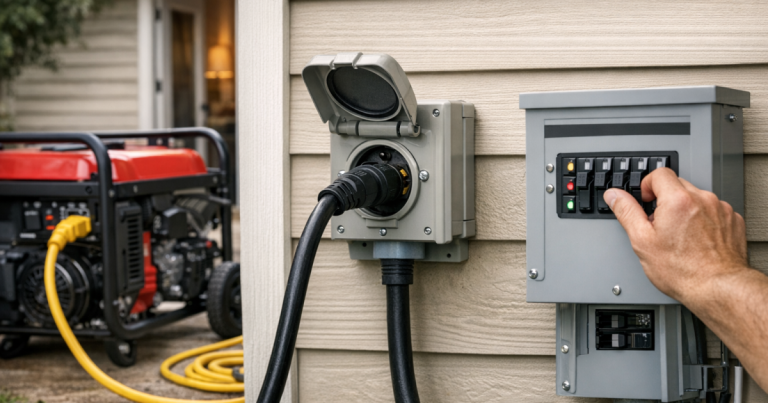
Transfer switches, interlocks, inlet boxes, and any connection to a home’s electrical panel should be installed by a qualified electrician to comply with local electrical codes, manufacturer instructions, and applicable safety standards.
Main points
- Portable generators are flexible, but they must run outdoors and need safe cords, fuel handling, and load management.
- Inverter generators are usually chosen for smaller essential loads, lower noise, and cleaner power for sensitive electronics, but capacity still matters.
- Standby generators are fixed systems that can power selected circuits or larger parts of a home, but installation, permits, fuel supply, and maintenance are part of the decision.
- No generator should be connected to a wall outlet, dryer outlet, or home panel without approved transfer equipment.
- The safest outage plan starts with a short list of essentials, not with the biggest wattage number on the box.
The main generator types homeowners consider
Portable open-frame generators
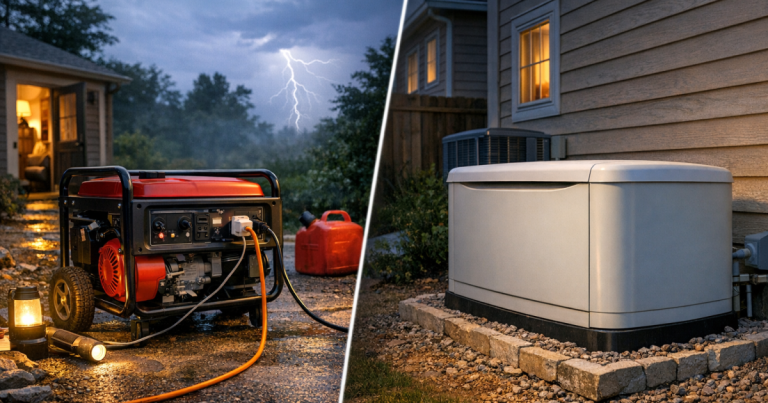
Traditional portable generators are the workhorses many people picture first. They sit outside, run on gasoline or sometimes propane, and provide power through built-in outlets or a properly installed inlet and transfer setup. They can be useful for refrigerators, freezers, sump pumps, lights, and a few small appliances, depending on size and load.
The trade-off is that they are hands-on. Someone has to place the generator safely outdoors, start it, monitor fuel, manage extension cords or transfer circuits, and shut it down correctly. They are not appropriate for indoor use, garages, sheds, crawl spaces, screened porches, or balconies.
Inverter generators
Inverter generators are a type of portable generator that typically appeals to households trying to run essentials more quietly and efficiently. They are often used for refrigerators, routers, laptops, lights, CPAP machines, and small kitchen loads, but the exact fit depends on the generator’s rated output and the starting watts of each appliance.
They are still combustion engines. That means the same carbon monoxide, refueling, weather, and cord safety rules apply. Smaller inverter models can be a good match for carefully managed loads, while larger inverter generators may support more circuits when paired with the right transfer equipment.
Dual-fuel and tri-fuel portable generators
Dual-fuel generators usually run on gasoline or propane. Tri-fuel models may add natural gas capability when set up correctly. The appeal is flexibility: gasoline is widely available, propane stores well in approved containers, and natural gas can be convenient where the service remains available during an outage.
The details matter. Output can vary by fuel, fuel connections must match the manufacturer’s instructions, and natural gas setups are not a casual hose-and-hope project. For larger portable units, think in terms of what circuits you need and how the generator will be connected safely, not just the largest wattage rating on the label.
Standby generators
Standby generators are permanently installed outside the home and tied into selected electrical circuits through automatic or manual transfer equipment. They are commonly fueled by natural gas or propane and can start automatically when utility power fails, depending on the system design.
They are the most seamless option for many homeowners, but they are also the most involved. Site placement, fuel supply, permits, electrical work, maintenance schedules, and noise rules can all affect whether a standby system makes sense. For a broader look at household fit, see portable vs standby backup power.
Start with loads, not the generator label
Generator planning gets easier when you separate running watts from starting watts. Running watts are what a device uses once operating. Starting watts are the brief surge some motors need when they kick on. Refrigerators, freezers, sump pumps, well pumps, furnace blowers, and window air conditioners can have starting surges that are much higher than their steady draw.
A simple outage load list might include:
- Refrigerator or freezer
- Internet modem and Wi-Fi router
- Phone charging and a few LED lights
- One medical or comfort device, such as a CPAP machine or fan
- Sump pump, well pump, or heating system controls where applicable
- Occasional microwave, coffee maker, or small cooking appliance use
Trying to run everything at once is where people get into trouble. A generator can be overloaded even if each individual item seems reasonable. For many homes, the more realistic plan is to run essentials in shifts: cool the refrigerator, charge devices, run the sump pump as needed, then turn off high-draw items before starting another load. The same principle is covered in more detail in how to rotate generator loads without overloading backup power.
Features that matter during a real outage
Feature lists can be noisy, so focus on what changes the experience when the power is actually out.
- Rated and surge output: Check both running and starting watt ratings, and compare them with your real load list.
- 120-volt and 240-volt capability: Some appliances and transfer setups require 240 volts. Verify before assuming a generator can run a well pump, central air component, or large appliance.
- Outlets and transfer compatibility: The outlet type must match your safe connection plan. A generator inlet, cord, and transfer device all need compatible ratings.
- Carbon monoxide shutoff: Many modern portable generators include CO shutoff sensors. Treat this as an extra layer of protection, not permission to run the generator too close to the home.
- Fuel type and runtime: Runtime depends on load, fuel tank size, fuel type, weather, and engine condition. Use manufacturer estimates as planning clues, not guarantees.
- Noise level: Noise matters in dense neighborhoods, overnight outages, and planned shutoffs. Local rules or HOA rules may also apply.
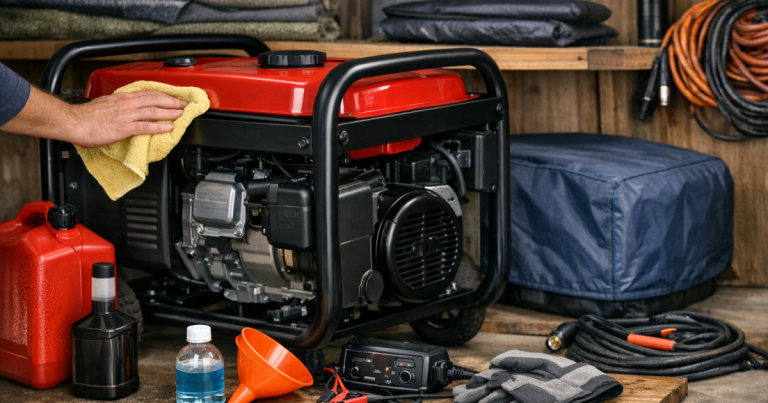
- Maintenance access: Oil changes, air filters, spark plugs, battery upkeep on electric-start models, and exercise runs are easier when they are planned before storm season.
Safety basics that are not optional
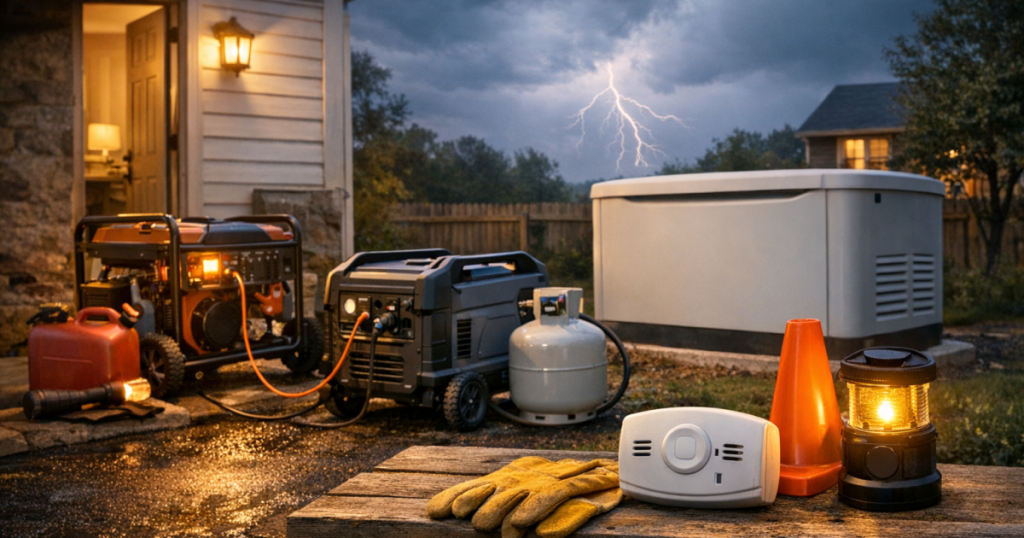
Carbon monoxide is the first concern with any fuel-burning generator. Run portable generators outdoors only, at least 20 feet from doors, windows, vents, and attached spaces, with exhaust pointed away from the home. Keep working carbon monoxide alarms on every level of the house and near sleeping areas.
Backfeed is the second major hazard. Plugging a generator into a household outlet can energize wiring in ways that can injure utility workers, damage equipment, or create fire risk. Use heavy-duty outdoor-rated extension cords for direct plug-in loads, or use a professionally installed transfer switch or interlock for panel-connected circuits. If you need a deeper safety walk-through, read how to prevent generator backfeed during a home outage.
Fuel handling deserves the same respect. Store gasoline only in approved containers, away from living spaces and ignition sources, and follow local limits. Let a generator cool before refueling. Keep propane cylinders upright and secured. Do not run a generator in rain unless it is protected by a manufacturer-approved outdoor generator cover or shelter that allows proper ventilation.
Why bigger is not always better
A larger generator can support more loads, but it also brings more noise, fuel use, weight, storage needs, and connection complexity. Oversizing can lead to a system that is expensive to feed and awkward to use. Undersizing creates a different problem: tripped breakers, stalled appliances, and frustration when several loads start together.
The better question is, “What outcome do we need for the next 12 to 72 hours?” A renter may need phones, lights, internet, and a safe food plan, which may point away from fuel-burning generators entirely. A suburban homeowner may prioritize a refrigerator, sump pump, furnace controls, and basic lighting. A rural household with a well pump, septic pump, and longer restoration times may need a more robust setup and a carefully designed transfer arrangement.
Where portable power stations fit
Battery power stations are not generators in the combustion-engine sense, but they often belong in the same outage plan. They can run indoors, are quiet, and are useful for phones, routers, laptops, lights, and some medical devices within their output and capacity limits. They do not solve every high-wattage need, and recharging during a long outage takes planning.
A common balanced setup is a generator for heavier outdoor backup tasks and a battery station indoors for quiet overnight device power. That reduces nighttime generator use, keeps cords simpler, and helps avoid running an engine just to charge a phone or router.
Questions people ask
Can a portable generator power my whole house?
Sometimes, but many portable generators are better suited to selected essentials. Whole-house claims depend on the generator output, transfer equipment, appliance starting loads, fuel supply, and which circuits are connected.
Is it safe to run a generator in the garage with the door open?
No. A garage, even with the door open, can trap carbon monoxide and allow it to enter the home. Portable generators belong outdoors, well away from openings and attached spaces.
Do I need a transfer switch?
You need approved transfer equipment if you want to power home circuits through the electrical panel. Direct plug-in loads can use properly rated outdoor extension cords, but panel connections require the right installed equipment.
How much fuel should I store?
Start with your expected outage length, load plan, generator consumption guidance, and local storage rules. Store fuel only in approved containers and rotate gasoline so it does not sit forgotten through multiple seasons.
Can I use a generator for a CPAP machine?
Many CPAP users prefer a battery or UPS for overnight indoor use, with the generator used outdoors for recharging or other loads. Check the CPAP power requirements and plan for humidifier use, which can increase demand.
Why it matters
A good generator plan is not about panic buying the biggest machine before a storm. It is about knowing your essentials, choosing a power source that fits your home, and setting it up in a way your household can repeat safely when tired, cold, hot, or stressed. Decide which loads matter, confirm the connection method, practice the startup routine, and keep fuel, cords, alarms, and maintenance items ready before the forecast turns serious.